Artificial Intelligence And Algorithms: The Giant Leap Forward


Artificial Intelligence is making rapid strides. There’s talk of a new evolution that could fundamentally change life on our planet. It has the potential to revolutionize every aspect of daily life – work, mobility, medicine, the economy, and communication. But, will Artificial Intelligence make medicine better and doctors superfluous? When will self-driving cars hit our roads? Will intelligent robots will take our jobs? All these are the questions that come to anyone’s mind on hearing the words AI. To understand what will change and what will remain a pure fantasy, we need to understand how the Artificial Intelligence algorithm works.
To know what it is we need to start with Silicon Valley – the epicenter of the digital revolution. Apple, Google, and Facebook all have their headquarters here. The tech industry has completely changed the face of the San Francisco Bay Area. New startup companies launch every day, rents have exploded, and artificial intelligence is the buzzword.
So, how does Artificial Intelligence work?
AI is basically modeled on the human brain, a gigantic network of almost 100 billion interconnected neurons!! Put in very simple terms, incoming impulses are passed in a domino effect from one neuron to the next. The resulting circuit connects the neurons, and it is this circuit that AI tries to stimulate as a digital neural network.
Like our brains, this network too can learn from experience!!
Recently a new type of supermarket was opened by Amazon. All you need here is an app! Right from entering the store to buying the products and exiting the store, all is done using the app. This could be considered as the end of the sales assistant! No more standing in line for payment and billing. But anyone entering this store is under constant surveillance which is done using ceiling sensors and cameras. Intelligent image recognition captures every move of everyone in the store. This is still in its test phase, but Amazon plans to open 50 such stores by the end of 2021.
With this type of shopping store the comfort has gone to the next level but what about privacy? Is it like comfort at the cost of privacy? AI will change our shopping experience but what about employees? All these questions are yet to be answered!
This was about shopping but how will AI change the medical field? Stanford University is at the forefront of global AI research. The scientists here have developed an Artificial Intelligence algorithm that can screen x-rays for certain diseases. The user just has to upload the image of the x-ray. After that, the results will be shown in the percentage format.
Thus, if used ethically and conservatively AI has the ability to change the fate of mankind!
You may be interested
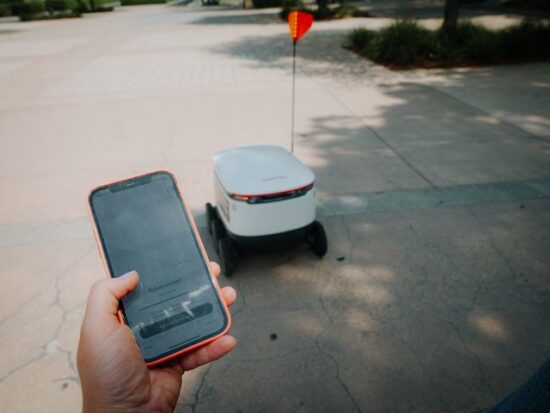
Can India’s Digital Infrastructure Handle the Next Wave of AI Applications
Anshika Jain - Nov 06, 2026Artificial intelligence is entering a new phase. The first wave of adoption was largely driven by recommendation engines, automated customer support, predictive analytics and basic chatbots. The…

Who Owns AI-Generated Content? The Copyright Debate Facing Indian Creators
Anshika Jain - Nov 06, 2026Artificial intelligence has transformed the way creative content is produced. Writers use generative AI to develop articles and marketing copy, designers create illustrations from text prompts, musicians…
AI in Indian Schools: Can Automated Assessment Replace Traditional Evaluation
Anshika Jain - Nov 06, 2026Artificial intelligence is beginning to change how students learn, how teachers plan lessons and how schools evaluate academic progress. In India, where classrooms often have large student…
Most from this category

Cybersecurity Challenge: Are Indian Businesses Prepared for AI-Powered Attacks
Anshika Jain - Nov 06, 2026
Deepfake Investment Scams: Fraudsters Use Fake Celebrity Endorsements to Target Investors
Anshika Jain - Nov 06, 2026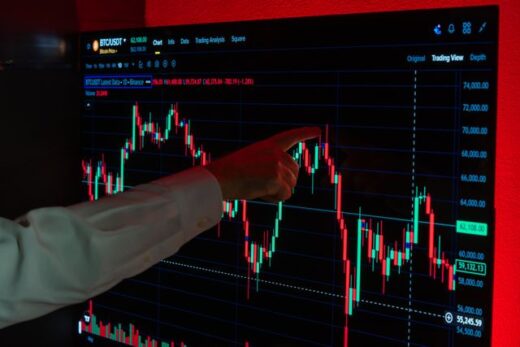
AI-Generated Financial Advice: Who Is Responsible When an Investor Loses Money
Anshika Jain - Nov 06, 2026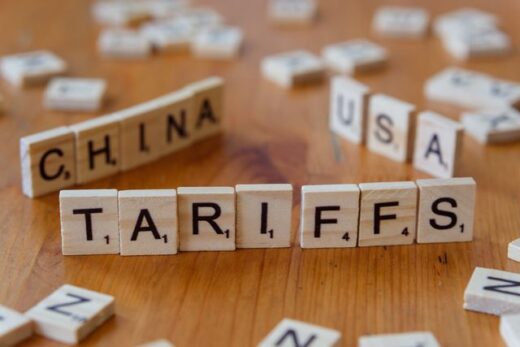
Why Are Indian Exporters Watching US Trade Policy More Closely in November
Anshika Jain - Nov 05, 2026
Cybersecurity Challenge: Are Indian Businesses Prepared for AI-Powered Attacks
Anshika Jain - Nov 06, 2026Deepfake Investment Scams: Fraudsters Use Fake Celebrity Endorsements to Target Investors
Anshika Jain - Nov 06, 2026AI-Generated Financial Advice: Who Is Responsible When an Investor Loses Money
Anshika Jain - Nov 06, 2026