

Computational Intelligence can curb crime: Experts at 4th International Conference on Next Generation Computing Technologies, UPES


- Computational Intelligence (CI) is an emerging area in fundamental and applied research, exploiting a number of advanced information processing technologies
- In total 115 quality research papers were presented at the conference
New Delhi, November 26, 2018: In the age of innovation where there is constant evolution of technologies, understanding various aspects of innovations in Computational Intelligence is necessary. An important aspect of this next gen technology is its ability to pre-empt crime thereby allowing enough time to the authorities to take preventive measures.
Focusing on experimental, theoretical and application aspects of innovations in Computational Intelligence, Next Generation Computing Technologies (NGCT) Society of School of Computer Science, UPES- Dehradun, organized 4th International Conference on Next Generation Computing Technologies- “Computational Intelligence”. The event was organised in collaboration with Springer, Inderscience Publishers, Uttarakhand State Council for Science & Technology (UCOST), Council of Scientific and Industrial Research (CSIR), Defence Research and Development Organisation (DRDO), Elsevier, Sumeru Infrastructures, Solitare Group of hotels, and Cetpa.
The national event brought together researchers and academicians from all over the world who presented their research papers and ideas on diversified themes like Information and Data Convergence, Image Processing Pattern Analysis and Machine Vision, E-Governance and Smart World, and Crime Prediction Support System – An AI Based Approach.
Prof. Deependra Kumar Jha, Vice-Chancellor-UPES inaugurated the conference and highlighted the importance of research in smart computation for better human life in his opening speech. Dr. Marchin Paprzyki, Polish Academy of Sciences, Poland delivered the key address and shared insights about Internet of things in the context of Cloud Computing. Padam Shri Prof. D. B. Pathak, IIT Bombay delivered his keynote on Challenges of the Digital Century in the second session, while Dr. Anurag Mishra, Delhi University, talked about Intelligent Techniques for Copyright Protection.
Prof. Deependra Kumar Jha, Vice-Chancellor-UPES, said “We are delighted to host International Conference on Next Generation Computing Technologies, which we have been organising since last four years. We are elated to see participation of change makers in the field of innovation, from across the world. Their valuable inputs, expertise and exchange of ideas will demystify concept of Computational Intelligence in a simplified and elaborate manner.”
Talking about his research on Crime Prediction Support System: An AI based approach, Prof. E.G. Rajan, Founder President of the Pentagram Research Centre (P) Ltd., Hyderabad, India said “A Crime Prediction Support System can be developed to help curb the crime rate in the country. A net centric cloud and physical infrastructure for government and private security agencies, emergency units and media with the idea of creating a safe and happy world is the need of the hour.”
The theme ‘Computational Intelligence’ is in line with the courses offered by UPES such as Artificial Intelligence and Machine learning, Cloud Computing and Virtualization, Internet of Things, Business Analytics and Optimization, Big data. The approximate strength of the students benefited from the conference is more than 1500.
Computer Science engineering course at UPES started in 2009 and offers courses in an academy-industry alliance between UPES-IBM India and UPES-Xebia, which is aimed at developing a dynamic platform for next generation of students to acquire high-end IT education at a graduate level. SCS offers 15 B.Tech, 2 BCA and 1 M.Tech course in basic computer engineering with specialisation in various areas. These courses are designed to impart knowledge that will help students understand just how significant the IT sector is. This curriculum is developed by IT specialists from IBM, Xebia, and the core UPES faculty, which ensures a well-structured flow and the provision of industry-relevant knowledge.
ABOUT UPES
Established in 2003 through the UPES Act, 2003 of the State Legislature of Uttarakhand, UPES is a UGC-recognized and NAAC-accredited University. UPES is globally recognized by QS Ratings with 5 Stars for both employability (placements) and campus facilities and 4 Stars for teaching. UPES offers industry-aligned and specialized graduate and postgraduate courses through its five schools: School of Engineering, School of Computer Science, School of Design, School of Law and School of Business. Given its industry-oriented programs and emphasis on holistic development, UPES graduates are a preferred choice for recruiters, ensuring a track record of 90% + placements over the last few years. UPES is driven by its core philosophy and purpose of delivering outstanding student outcomes.
You may be interested
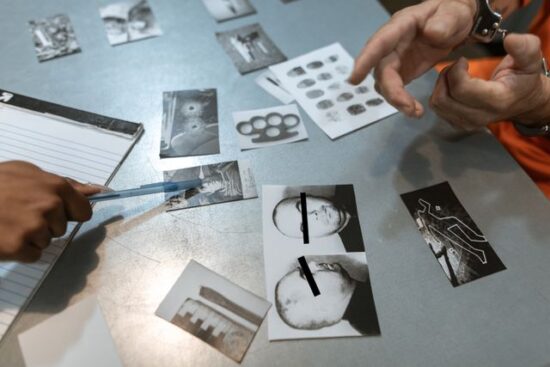
When a Case Is Solved Years Later: How Forensic Advances Can Reopen Cold Investigations
Anshika Jain - Oct 22, 2026Some criminal investigations remain unresolved for years or even decades. Witnesses may be unable to identify a suspect, investigators may exhaust the available leads, and physical evidence…

Gold Smuggling Through Airports: How Investigators Trace Possible Links
Anshika Jain - Oct 22, 2026International airports are essential gateways for tourism, trade and global connectivity. Every day, thousands of passengers, airline employees, ground handlers, cargo workers and service providers move through…

Why Restrictions on Journalists Covering Protests Raise Questions About Press Freedom
Anshika Jain - Oct 22, 2026Public protests are among the most visible expressions of democratic participation. They provide citizens with an opportunity to challenge government decisions, demand accountability, raise concerns about injustice…
Most from this category

Political Allegations Versus Verified Evidence: How Readers Can Separate Claims from Facts
Anshika Jain - Oct 22, 2026
Voter List Revision in India: How Can Citizens Verify That Their Names Have Not Been Omitted?
Anshika Jain - Oct 22, 2026
Jantar Mantar Controversy: Can a Protest Site Be Restricted Without Limiting Democratic Expression?
Anshika Jain - Oct 22, 2026
Six Years of Arrest Delays: What the Delhi Court’s MCOCA Criticism Reveals
Anshika Jain - Oct 21, 2026
Political Allegations Versus Verified Evidence: How Readers Can Separate Claims from Facts
Anshika Jain - Oct 22, 2026Voter List Revision in India: How Can Citizens Verify That Their Names Have Not Been Omitted?
Anshika Jain - Oct 22, 2026Jantar Mantar Controversy: Can a Protest Site Be Restricted Without Limiting Democratic Expression?
Anshika Jain - Oct 22, 2026