International Solar Alliance – A Change For The Better

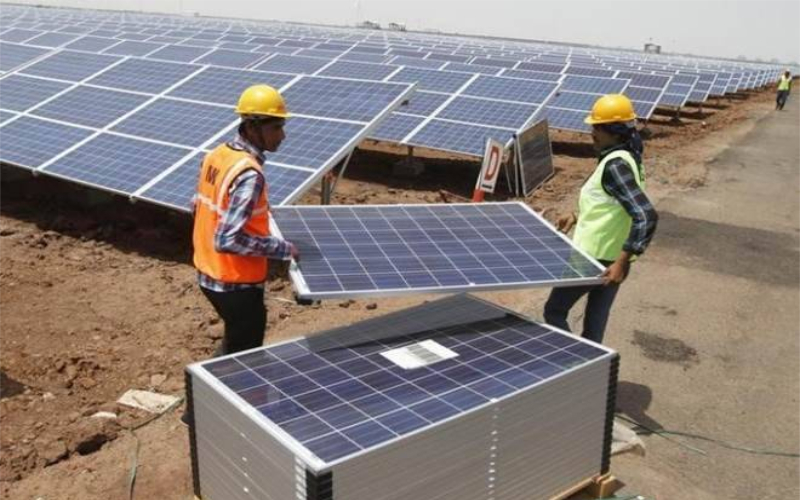

Man’s evolution has depended for millennia on harnessing the power of the sun, to grow the crops that feed us, to offer warmth and shelter, and to monitor the passage of seasons. As we enter a new Millennium in which our societies face critical challenges arising from climate change, our relationship with the sun is about to take a dramatic new turn. Solar energy is the future.
Sun – the brightest shining star in the solar system is also a very valuable source of energy. It is an unlimited resource, delivering around 430 quintillions, that’s 430 billion joules of energy to earth every hour, an amount that exceeds the planet’s annual energy needs!!
As global warming is increasing at a dramatic pace, many countries are desperately trying to harness the richest source of energy – the sun. While the list of countries trying to establish a network of solar energy harnessing centers is quite big, two countries are years ahead when compared with the rest of the world. These two countries are India and France. In the year 2015, India and France jointly announced an alliance aimed at improving solar facilities around the world. This alliance is known as the International Solar Alliance(ISA).
Started with just two member nations, at present this alliance has more than 120 members. This number is set to increase dramatically in the near future.
So, what are the key challenges that the International Solar Alliance will address?
The major obstacle that every country is facing is the cost of a solar network. Replacing the traditional sources of energy – the fuel and coal ain’t that easy. The cost of installation is simply too much to bear. This where the ISA will have to step in. Ensuring low cost and high availability of finance is the main responsibility of ISA.
The second most difficult thing is the skill for deploying such technologies. As all the instruments related to solar energy are recently made, the availability of skilled engineers is a challenge.
While every country is facing these challenges, one country which stands out for its tremendous progress in this field is INDIA. Initially, in 2016 India had kept the target of 20GW solar capacity by the year 2022. But because of the central government’s efforts and investment, the country achieved this milestone by 2018, four years ahead of schedule. India is now home to the world’s biggest solar park in the world. Bhadla Solar Park – located in Rajasthan, India, has a capacity of over 2.2 GW. Also, many other projects have been planned by the GOI.
While India is leading in this sector, we need every nation to contribute more to play an instrumental role in our new relationship with the sun!
You may be interested

Why Authorities Are Rethinking the Management of Large Public Demonstrations
Anshika Jain - Oct 15, 2026Large public demonstrations have become an important feature of modern democratic societies. From student movements and workers’ strikes to political rallies, environmental campaigns and protests demanding government…

TVK’s Bypoll Wins: What the Party’s First Electoral Test Reveals About Its Political Position
Anshika Jain - Oct 15, 2026The Tamilaga Vettri Kazhagam (TVK), led by Tamil Nadu Chief Minister C. Joseph Vijay, has cleared its first major electoral test since forming the state government. The…
Why Tribal Students Are Marching for Education and Equal Opportunities
Anshika Jain - Oct 15, 2026Education is widely recognised as a pathway to social mobility, economic independence and equal participation in society. For many tribal students in India, however, the journey towards…
Most from this category
Student Protests Over Hostel Facilities: Basic Infrastructure Is Political Issue
Anshika Jain - Oct 15, 2026
Campus Curfews and Women’s Freedom: Safety Rules Become a Discrimination?
Anshika Jain - Oct 15, 2026
When Opposition Leaders Face Detention: The Legal Boundaries of Political Protest
Anshika Jain - Oct 15, 2026
Why Internal Disagreements Within Constitutional Institutions Matter to Public Trust
Anshika Jain - Oct 14, 2026
Student Protests Over Hostel Facilities: Basic Infrastructure Is Political Issue
Anshika Jain - Oct 15, 2026Campus Curfews and Women’s Freedom: Safety Rules Become a Discrimination?
Anshika Jain - Oct 15, 2026When Opposition Leaders Face Detention: The Legal Boundaries of Political Protest
Anshika Jain - Oct 15, 2026