Stellar Engine – Can We Move The Sun?


Nothing in the universe is static. In the Milky Way, billions of stars orbit the galactic center. Some like our sun, are pretty consistent, keeping a distance of around 30,000 light-years from the galactic center! Most of them complete an orbit every 230 million years. This dance is not an orderly ballet, it’s more like a skating rink filled with drunk toddlers. This chaos makes the galaxy dangerous and this is where the stellar engine comes into the picture.
The earth’s solar neighborhood is constantly changing, with stars moving hundreds of kilometers every second. The only thing that protects is the vast distances between these objects. But we might get unlucky in the future. At some point, we could encounter a star going supernova or a massive object passing by and showering Earth with asteroids. If something like this were to happen, we would likely know thousands if not millions of years in advance. But the thing is, we still won’t be able to do anything about it.
The solution is to move our whole solar system out of the way. But wait… is that even possible? As of now, NO. Even if we’re to make it possible we would require a stellar engine, a megastructure used to steer a star through the galaxy. It’s the kind of thing that might be built by an advanced civilization with Dyson sphere-level technology that’s thinking about their future millions of years ahead of time!
How Stellar engine works but, how could we possibly move the hundreds of thousands of objects in the solar system?
Well, the good news is we can ignore all of that. We only need to move the Sun; all the other stuff is glued to it by gravity and will follow it wherever it decides to go. There are lots of ideas about what a stellar engine might look like and how it would work.
The simplest kind of stellar engine is the Shkadov thruster, a giant mirror! This engine works on the same principle as a rocket. Like rocket fuel, the photons released as solar radiation can carry momentum, not a lot but a bit. For example, if an astronaut turned on a flashlight in space, it would push them back very very slowly. A stellar engine will work a little better than a flashlight because the Sun produces a lot of photons. The estimated figure is – sun produces about 10 power 45 photons per second!
The basic idea of the Shkadov thruster is to reflect up to half of the solar radiation to create thrust, slowly push the Sun where we want it to go, reflecting the light just like a giant mirror. This megastructure can actually extend our Sun’s life, since lower mass stars burn slower, keeping the solar system inhabitable for many more billions of years.
Stellar engines are the kind of machines built by civilizations thinking not in terms of years or decades but eons. Since we know that our sun will die one day, a stellar engine could allow the far future descendants of humans to travel to other stars without ever having to venture into the terrifying dark abyss of interstellar space.
Until we build a stellar engine, we’re adrift and subject to the whims of the Galactic sea. We may not like where it leads us. Maybe our descendants will set sail and become an interstellar species for millions of years to come!!
You may be interested

Cyclone Akvan Strengthens Over the Bay of Bengal: Why Is Andhra Pradesh on High Alert
Anshika Jain - Nov 18, 2026Cyclone Akvan has intensified over the Bay of Bengal, putting coastal Andhra Pradesh and neighbouring regions on heightened alert. The developing weather system has raised concerns about…

Why Does a Strong US Dollar Sometimes Put Pressure on Indian Bullion Prices
Anshika Jain - Nov 18, 2026The US dollar plays an important role in determining the direction of international commodity markets, including gold and silver. Although India has a strong domestic market for…
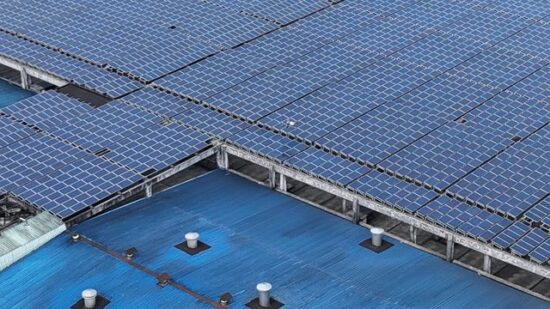
Can India’s Solar Industry Influence Long-Term Silver Demand
Anshika Jain - Nov 18, 2026India's rapidly expanding solar industry is creating an important connection between renewable energy development and the global silver market. Silver is widely recognised as a precious metal…
Most from this category

How US Federal Reserve Rate Expectations Are Influencing India’s Silver Market
Anshika Jain - Nov 18, 2026
Silver Falls Below Recent Highs: Is This a Buying Opportunity or a Warning for Investors
Anshika Jain - Nov 18, 2026
Silver Prices Crash in November 2026: Why Is the Precious Metal Losing Its Momentum
Anshika Jain - Nov 18, 2026

How US Federal Reserve Rate Expectations Are Influencing India’s Silver Market
Anshika Jain - Nov 18, 2026Silver Falls Below Recent Highs: Is This a Buying Opportunity or a Warning for Investors
Anshika Jain - Nov 18, 2026Silver Prices Crash in November 2026: Why Is the Precious Metal Losing Its Momentum
Anshika Jain - Nov 18, 2026