

The New Passwordless Future: Are Passkeys Ready to Replace Passwords?


For decades, passwords have been the default method of protecting online accounts. From email and social media to banking, shopping, education and workplace systems, users have become accustomed to creating, remembering and changing passwords. Yet passwords have always had a fundamental weakness: security depends heavily on how people create, store and use them.
People are expected to create passwords that are long and difficult to guess, avoid reusing them across websites, protect them from phishing attempts and update them when necessary. In reality, managing dozens of unique credentials can be difficult. Password managers have helped solve part of the problem, while multi-factor authentication has added another layer of protection, but the basic password has remained at the centre of digital identity.
Passkeys are now challenging that model. Built on the FIDO authentication standards, passkeys allow users to authenticate with a cryptographic credential stored on a device or securely synchronized across supported devices. Instead of typing a password, a person can typically approve a login using a fingerprint, face recognition, device PIN or another local unlock method.
The technology has moved beyond experimentation. In May 2026, the FIDO Alliance reported an estimated five billion passkeys in active use worldwide. Its 2026 research also found that 75% of surveyed consumers across ten countries had enabled a passkey on at least one account, while 68% of surveyed organizations with 500 or more employees were deploying, piloting or rolling out passkeys for employee authentication.
These numbers suggest that passwordless authentication is becoming a significant part of the digital security landscape. However, widespread adoption does not mean passwords will disappear overnight. Passkeys still face challenges involving compatibility, account recovery, user understanding, legacy systems and organizational migration.
The question is therefore no longer simply whether passkeys work. The more important question is whether the digital ecosystem is ready to make them a mainstream replacement for passwords.
What Exactly Is a Passkey?
A passkey is a passwordless authentication credential based on FIDO standards. Instead of asking a website to store and verify a password that the user types, passkey authentication relies on public-key cryptography.
When a passkey is created for an account, a cryptographic key pair is generated. The private key remains protected by the user’s device or passkey provider, while the corresponding public key is registered with the online service. During authentication, the service verifies a cryptographic response without requiring the user to reveal a conventional password.
From the user’s perspective, the process can feel extremely simple. A website may display a request to sign in, and the user confirms their identity using the same mechanism used to unlock their device, such as a fingerprint, facial recognition or PIN. The biometric information itself is generally used locally to unlock the credential rather than being sent to the website as the authentication secret.
This distinction is important. A passkey is not simply a password stored somewhere else. It is a different authentication architecture designed to avoid many of the weaknesses associated with passwords.
Why Passwords Have Become Difficult to Manage
Passwords remain useful, but their limitations have become increasingly visible as people accumulate more online accounts. A person may have separate credentials for banking, shopping, email, education, workplace applications, entertainment and social media.
The problem becomes more serious when users reuse passwords. If one service experiences a credential breach, stolen username and password combinations can potentially be tested against other services. Even a strong password becomes less useful when the same credential is used in multiple places.
Phishing creates another major problem. A password can be voluntarily entered into a fraudulent website that looks legitimate. Attackers do not necessarily need to break the password mathematically; they may simply persuade the user to reveal it.
NIST’s current Digital Identity Guidelines explicitly state that passwords are not phishing-resistant. The guidelines describe phishing resistance as the ability of an authentication protocol to prevent authentication secrets or valid authenticator outputs from being disclosed to an impostor verifier without relying on the user’s vigilance.
Passkeys approach this problem differently by binding authentication to cryptographic credentials and the legitimate service’s identity.
How Passkeys Change the Login Experience
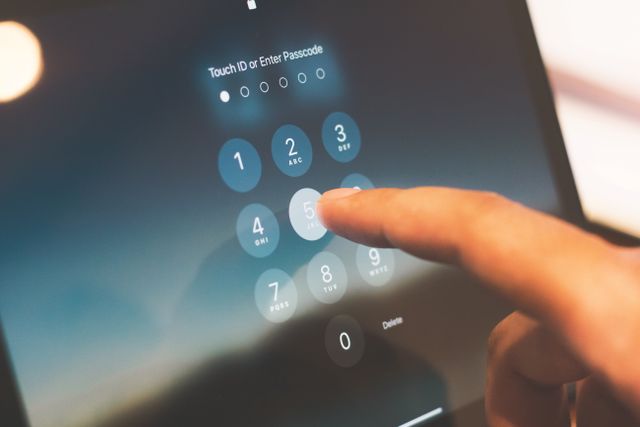
The biggest visible difference between passwords and passkeys is the user experience. A traditional login often requires a user to locate or remember a password, type it correctly and potentially enter an additional verification code. A passkey login can reduce the process to a device-level approval.
For users who already unlock their phones and computers with biometrics or a PIN, this can feel natural. There is no need to remember another long string of characters, and there is no conventional password to type into a fake website.
This simplicity is not only a convenience feature. Reducing the number of credentials that users have to manage can also change their security behaviour. If secure authentication is easier than password management, people may be less tempted to reuse passwords or choose predictable ones.
The FIDO Alliance’s 2026 research indicates that convenience is an important part of passkey adoption. The organization reported that 49% of surveyed consumers use passkeys whenever they can or most of the time.
Why Passkeys Are Considered More Resistant to Phishing
One of the strongest arguments for passkeys is their resistance to conventional credential phishing. A password can be copied. If a user enters a password into a fake login page, the attacker may be able to use that password elsewhere. A passkey works differently because authentication involves cryptographic proof tied to the legitimate website or service.
NIST’s authentication guidance recognizes phishing resistance as an important property of cryptographic authentication. It also notes that manually entered one-time passwords and similar out-of-band authentication codes do not qualify as phishing-resistant because an attacker can potentially relay the entered code to the real verifier.
This does not mean passkeys make every type of cyberattack impossible. Phishing can involve many techniques beyond stealing passwords, including manipulation, malicious software, fake support interactions and account-recovery attacks. Passkeys primarily address the problem of credential theft and replay rather than eliminating cybersecurity risk altogether.
The Role of Apple, Google and Microsoft
Passkeys have gained momentum partly because major technology ecosystems support the underlying standards. Apple, Google and Microsoft have all participated in the broader FIDO ecosystem, helping passkeys move beyond isolated demonstrations toward practical consumer authentication.
This ecosystem support matters because authentication systems become much more useful when users can move between different devices and services without being forced into incompatible technologies.
Passkeys can exist in different forms. Some are synchronized across a user’s devices through a passkey provider, while others can be device-bound. FIDO describes synced passkeys and device-bound passkeys as part of the broader passkey category.
Synchronization can make passkeys easier to use because users may be able to access credentials across multiple devices. Device-bound credentials can offer a different security and management model, particularly in environments where organizations want tighter control over authentication hardware.
The availability of these options means that the future of passwordless authentication is unlikely to consist of one identical passkey experience for everyone.
Are Passkeys Really Passwordless?
In the normal sense, yes. A user does not need to enter a traditional account password during passkey authentication. However, “passwordless” does not mean “without any security secret or device protection.” A device may still require a PIN, passcode or biometric authentication before it allows a passkey to be used.
This distinction sometimes creates confusion. A person may think that eliminating passwords means eliminating authentication. In reality, passkeys move authentication to a different layer.
Instead of asking a website to verify something the user remembers, the system can ask the user’s device to prove possession of a cryptographic credential, with the device’s local security mechanism controlling access to that credential. This can make authentication both simpler and structurally different from password-based login.
The Challenge of Account Recovery
One of the most important questions surrounding passkeys is what happens when a person loses access to their device. Passwords are frustrating because they must be remembered, but they can also be reset. A user who forgets a password can often request a reset email or another recovery method.
Passkeys require a different approach to recovery. If credentials are synchronized through a supported passkey provider, recovering access to that provider and its devices may help restore authentication. Device-bound passkeys require different recovery procedures.
This makes account recovery an important part of passwordless system design. Organizations cannot simply remove the password field and assume the problem is solved. They need reliable ways for legitimate users to recover accounts without creating an easy path for attackers.
NIST has specifically addressed syncable authenticators in its digital identity guidance, noting that correctly implemented syncable authenticators can provide phishing resistance while offering benefits such as cross-device support and simplified recovery.
What Happens When You Buy a New Phone?
Device changes are one of the practical situations users may worry about. Modern passkey systems increasingly consider multi-device use as part of their design. A synchronized passkey can potentially be made available on another supported device through the user’s passkey provider.
However, the exact experience depends on the platform, service and type of credential. This means users should understand which accounts have passkeys enabled and what recovery options those services provide. For businesses, device replacement is even more significant.
Employees may change phones, lose hardware, replace laptops or move between managed devices. A passwordless authentication system must therefore include administrative processes for enrollment, recovery and account deprovisioning. The technology can reduce password-related risks, but organizations still need strong identity-management policies.
The Business Case for Going Passwordless
For organizations, passkeys can potentially address both security and operational challenges. Password resets consume support resources. Employees who forget credentials may need assistance, while organizations must maintain password policies, reset mechanisms and security controls.
A passwordless approach can reduce dependence on these processes. It may also improve the login experience for employees and customers. The shift is already visible in enterprise environments. The FIDO Alliance’s 2026 workforce survey found that 68% of organizations surveyed across ten countries were deploying, piloting or rolling out passkeys for employee authentication.
The same research found that 82% said fully passwordless authentication was either already achieved or an active goal, although only 28% reported that it was already in place across most of their workforce. These figures show both momentum and unfinished work. Organizations may increasingly support passkeys while still operating mixed authentication environments.
Why Passwords Will Not Disappear Overnight
Despite the growth of passkeys, passwords are unlikely to vanish immediately. The internet contains an enormous number of legacy systems. Some websites were built before passkeys existed and may require substantial technical changes to support them.
There are also users who access services from older devices or environments where passkey support is limited. Businesses may need to maintain alternative authentication methods during long migration periods. International and organizational differences create another challenge.
A passkey experience that works smoothly for one group of users may require different recovery or device-management processes for another. For these reasons, the transition is likely to be gradual. Passkeys can become the preferred authentication method for many services while passwords continue to exist as a fallback or legacy option.
Passkeys Are Not a Complete Cybersecurity Solution
It is important not to treat passkeys as a universal answer to cybersecurity. A passkey can protect against many forms of credential theft, but users and organizations still face malicious software, social engineering, stolen devices, account-recovery attacks, fraudulent applications and other threats.
NIST has emphasized that phishing-resistant authentication is not a complete solution to every phishing problem. It addresses important aspects of credential compromise, but other security controls remain necessary.
Organizations therefore still need device security, access controls, monitoring, secure recovery mechanisms and appropriate authorization policies. For consumers, passkeys should be viewed as one part of a broader security strategy rather than a reason to ignore suspicious messages or unsafe applications.
Are Passkeys Ready for Everyday Users?
The evidence increasingly suggests that passkeys are moving into mainstream use rather than remaining an experimental technology. The FIDO Alliance’s 2026 report estimates that five billion passkeys are already in active use worldwide, while its survey found high awareness and adoption among consumers across the ten countries studied, including India.
The UK’s National Cyber Security Centre also announced in April 2026 that it would begin recommending passkeys wherever a service supports them, while recommending two-step verification where passkeys are not available. The organization said this shift followed technical and sociotechnical research and engagement with technology vendors and other organizations.
These developments indicate that passkeys are becoming an established authentication option. Nevertheless, readiness varies by service, device, organization and recovery system.
What the Passwordless Future Could Look Like
The passwordless future will probably not arrive as a single dramatic switch. Instead, users may gradually stop noticing passwords altogether. A person could open a banking application and authenticate with a device biometric. A student could access an education platform with a passkey.
An employee could sign into workplace systems without entering a corporate password. A customer could create an account using a passkey from the beginning rather than setting a password first. Behind these simple interactions, cryptographic credentials would handle authentication.
This could change the way people think about online security. Instead of teaching users to create increasingly complicated passwords, digital services could make secure authentication a mostly invisible part of the user experience.
Conclusion: A Significant Step Beyond Passwords
Passkeys represent one of the most important changes in online authentication in recent years. They address several longstanding problems associated with passwords by replacing shared secrets with cryptographic credentials and allowing users to authenticate through devices they already know how to unlock.
Their adoption is no longer theoretical. Billions of passkeys are now reported to be in active use, and organizations around the world are testing or deploying them. However, replacing passwords across the entire internet will take time. Legacy systems, account recovery, device changes, interoperability and user education all remain important considerations.
The future is therefore likely to be a gradual transition rather than an immediate end to passwords. Passkeys may increasingly become the preferred way to sign in, while passwords remain available for services that have not yet made the transition.
What makes the shift significant is not simply that users no longer have to remember another password. The larger change is that authentication can become more resistant to phishing while also becoming easier to use.
The passwordless future is already taking shape. The remaining question is not whether passkeys can work, but how quickly the broader digital ecosystem can make them simple, reliable and accessible enough for everyone.
Online Internship with Certificate
You may be interested

Asteroid Monitoring: How Scientists Track Objects That Pass Near Earth
Anshika Jain - Sep 22, 2026Earth is constantly moving through a busy region of space. Millions of objects orbit the Sun, including planets, comets, asteroids and smaller fragments left over from the…

India’s Private Space Sector: What Comes After the First Wave of Startups?
Anshika Jain - Sep 22, 2026India’s space sector has undergone a significant transformation over the past few years. For decades, space activities in the country were strongly associated with government institutions, particularly…
QR Code Scams: Why a Simple Scan Can Become a Security Risk
Anshika Jain - Sep 22, 2026QR codes have become one of the simplest ways to connect the physical and digital worlds. A small square pattern can open a website, display a restaurant…
Most from this category


The Race for Smaller AI Models: Why Efficient AI Could Matter More Than Bigger AI
Anshika Jain - Sep 22, 2026
AI-Generated Music, Images and Videos: New Opportunities and Creative Concerns
Anshika Jain - Sep 21, 2026
When Entertainment Meets Activism: Understanding Celebrity Social Campaigns
Anshika Jain - Sep 21, 2026
Why Old Internet Trends Are Suddenly Becoming Popular Again
Anshika Jain - Sep 22, 2026The Race for Smaller AI Models: Why Efficient AI Could Matter More Than Bigger AI
Anshika Jain - Sep 22, 2026AI-Generated Music, Images and Videos: New Opportunities and Creative Concerns
Anshika Jain - Sep 21, 2026