Airport Security After International Attacks: Passenger Safety and Travel Disruption?

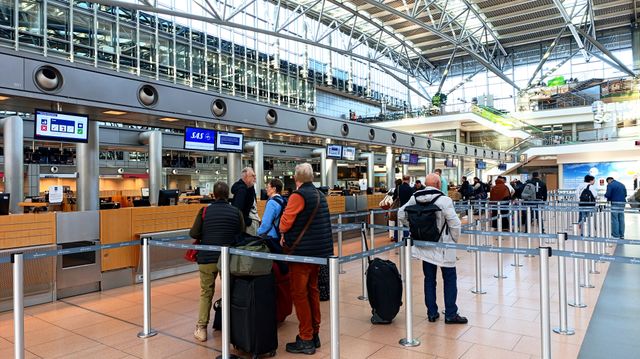

International attacks involving aviation infrastructure can transform airport security policies almost overnight. When an attack occurs, governments face immediate pressure to strengthen passenger screening, increase surveillance, review intelligence procedures, and reassure the public that air travel remains safe. However, these responses can also produce longer queues, missed flights, higher operating costs, and uncertainty for passengers and airlines. The challenge is not simply to introduce more security measures, but to determine which measures reduce genuine risks without creating unnecessary disruption.
Aviation security has evolved significantly in response to past attacks. The 1988 Lockerbie bombing accelerated changes in baggage screening and explosives detection, while the September 11, 2001, attacks led to extensive changes in passenger screening, cockpit protection, and airport access controls. Subsequent threats prompted further changes to screening technologies and procedures. This history demonstrates that security systems must adapt as threats evolve, but it also highlights the importance of evaluating new restrictions carefully.
The International Civil Aviation Organization (ICAO) recognises security and passenger facilitation as interconnected objectives. Its work addresses screening, travel-document verification, the identification of high-risk travellers, information sharing, and the efficient movement of passengers and cargo.
For governments, the central question is how to build an airport security system that is rigorous, responsive, and proportionate. Achieving this balance requires intelligence-led decisions, modern screening technology, trained personnel, international cooperation, transparent communication, and safeguards for passenger rights.
Why International Attacks Trigger Stricter Airport Security
The Immediate Government Response
Following a serious attack or credible threat, authorities may increase staffing, intensify screening, restrict access to certain airport areas, review flight operations, or introduce temporary travel procedures. These actions can be necessary when officials need time to assess whether a threat is isolated or part of a wider risk.
However, emergency measures are often introduced under intense public and political pressure. Governments may feel compelled to demonstrate visible action even when the effectiveness of a proposed restriction is uncertain. Additional checks can create a sense of reassurance, but the number of checks alone does not establish whether a system is more secure.
A stronger response begins with a structured threat assessment. Authorities need to evaluate the nature of the threat, the credibility of available intelligence, the locations potentially affected, and the likely consequences of different protective measures. This approach helps distinguish necessary emergency interventions from broad restrictions that may continue long after their original justification has weakened.
The Difference Between Aviation Security and Aviation Safety
Aviation security and aviation safety are related but distinct concepts. Aviation security focuses on preventing deliberate unlawful interference, including attacks, sabotage, and unauthorised access. Aviation safety concerns the prevention of accidents and the management of operational hazards.
An international attack can affect both areas, but the responses may differ. A security threat may require revised access controls or intelligence coordination, while an operational emergency may require changes to flight schedules, airport procedures, or airspace management. Clear responsibilities help ensure that governments, airport operators, airlines, and emergency services respond in a coordinated way.
The European Union’s civil aviation security framework establishes common standards for passenger and baggage screening, airport access controls, aircraft security checks, cargo screening, and staff training. These measures are designed to prevent unlawful interference while allowing authorities to adapt procedures as risks and technologies change.
The Cost of Excessive Security Measures
Passenger Delays and Missed Connections
Security procedures directly affect the passenger journey. Additional screening stages, reduced checkpoint capacity, equipment problems, and staffing shortages can increase waiting times, particularly during peak travel periods. Passengers may miss departures or connecting flights even when they have arrived at the airport with a reasonable amount of time to spare.
The consequences extend beyond inconvenience. Delays can disrupt business travel, tourism, family visits, medical journeys, and international education. When security measures are introduced without adequate operational planning, the resulting congestion can place pressure on airport staff and create additional difficulties for passengers who require assistance.
Passenger-experience data from the United Kingdom illustrate why operational performance matters. In its survey covering 2025, published on 26 August 2026, the UK Department for Transport reported that 86% of surveyed passengers were satisfied or very satisfied with security screening, while 63% said they had queued for no more than five minutes. The findings suggest that strong screening and a generally positive passenger experience can coexist, although results from selected UK airports should not be assumed to represent every airport worldwide.
Economic Consequences for Airports and Airlines
Security disruption can also create substantial costs for the aviation industry. Airports may need additional personnel, temporary facilities, updated equipment, and revised operating procedures. Airlines can face missed connections, aircraft and crew scheduling problems, passenger rebooking expenses, and pressure on customer-service teams.
International airports are important economic gateways. Their efficiency affects tourism, cargo transport, business investment, and connections between cities. Prolonged disruption can therefore affect sectors far beyond aviation itself.
This does not mean that governments should prioritise commercial efficiency over security. Rather, security planning should account for the full consequences of different interventions. A measure that offers little additional protection but causes extensive disruption may be less effective overall than a targeted intervention supported by reliable intelligence and adequate resources.
Risk-Based Security: A More Proportionate Approach
Moving Beyond Identical Checks for Every Situation
One possible way to balance security and passenger movement is to make security operations more responsive to assessed risks. Risk-based security uses relevant intelligence, threat assessments, operational information, and established screening standards to determine where additional attention may be needed.
This does not mean eliminating essential screening or treating passengers differently on the basis of stereotypes. Instead, it means deploying resources according to credible indicators and the nature of the threat while maintaining safeguards against discrimination and arbitrary decisions.
For example, an airport responding to a specific, credible threat may need to increase checks in a defined area or review particular operational procedures. Applying the same emergency restrictions indefinitely across every checkpoint may be less effective if the threat assessment changes. Regular reviews help authorities adjust their response as evidence develops.
The International Air Transport Association (IATA) advocates a more adaptive, risk-based, and data-driven approach to aviation security. Its security work emphasises the need to address evolving threats while improving the efficiency of screening and airport operations.
Risk-based systems nevertheless require strong governance. Governments must specify who can authorise additional measures, what evidence supports them, how long they should remain in place, and how their effectiveness will be evaluated. Without these safeguards, risk-based security could become inconsistent or difficult for passengers to challenge.
Intelligence Sharing and Early Threat Assessment
Accurate intelligence can help authorities identify emerging risks before they require widespread emergency restrictions. Information may come from national security agencies, international partners, aviation authorities, law enforcement, and airport operators. When relevant information is shared promptly and assessed carefully, authorities may be able to direct protective resources towards the areas that need them most.
International cooperation is particularly important because aviation networks cross national borders. A threat detected in one country may affect flights, passengers, or infrastructure elsewhere. Common standards and established communication channels help countries coordinate responses and reduce confusion among airlines and airports.
However, intelligence sharing must be accompanied by clear procedures for assessing reliability, protecting sensitive information, and correcting errors. Inaccurate or outdated information can lead to unnecessary restrictions or unfair treatment. Governments should therefore establish accountability mechanisms that allow decisions to be reviewed without exposing sensitive operational details.
How Technology Can Improve Security Without Increasing Delays
Advanced Screening and Automated Detection
Modern screening technologies can help airports identify potential threats more consistently and reduce unnecessary manual procedures. Depending on the equipment and regulatory framework, advanced systems may allow staff to examine baggage images more effectively, identify items requiring further assessment, or process passengers without requiring certain routine steps.
The potential advantage is not simply faster screening. Better detection and clearer image analysis may allow officers to focus their attention on cases that genuinely require additional examination. This can help improve both operational efficiency and the quality of security decisions.
The IATA Annual Security Report 2025 identifies advanced screening technologies, artificial intelligence, and more adaptable systems as important areas for the future of aviation security. It argues that innovation can support a more efficient and effective system, provided new methods address evolving threats.
Nevertheless, no screening technology should be assumed to eliminate risk. Equipment must be tested, maintained, calibrated, and integrated with appropriate human procedures. False alarms, technical failures, and poorly designed workflows can reduce the expected benefits. Governments should evaluate technologies using evidence about detection performance, reliability, accessibility, and their effects on passenger throughput.
Biometrics and Digital Travel Credentials
Biometric identity verification and digital travel credentials may simplify parts of the passenger journey. When properly implemented, these systems can help verify identity and reduce repetitive document checks at selected stages of travel. The IATA Global Passenger Survey 2025 highlights the increasing use of biometrics across airport processes, including security and immigration.
However, identity verification is not a replacement for all forms of security screening. Confirming that a traveller is who they claim to be does not, by itself, establish that a passenger or item presents no security risk. Biometric systems must operate alongside other appropriate safeguards.
Privacy is equally important. Governments and airport operators should clearly explain what information is collected, why it is required, how long it is retained, and which organisations can access it. Systems should include safeguards against identity errors, unauthorised use, data breaches, and discriminatory outcomes. Passengers should also have practical alternatives where legally required or appropriate, especially when they cannot use a biometric system successfully.
Artificial Intelligence and Operational Planning
AI could help airports forecast passenger demand, estimate checkpoint waiting times, identify operational bottlenecks, and allocate staff more effectively. By analysing historical traffic, flight schedules, and current queue conditions, planning systems may help managers open additional screening capacity before congestion becomes severe.
AI could also support the analysis of screening information, but decisions involving passengers’ rights and security consequences require appropriate human oversight. Systems must be evaluated for accuracy, bias, explainability, and resilience against manipulation. An algorithm should not become an unquestioned authority simply because it produces a rapid result.
The most useful role for AI is to improve decision support and operational planning while keeping accountable officials responsible for significant security decisions. This allows technology to reduce avoidable delays without creating an opaque system that passengers and regulators cannot meaningfully scrutinise.
International Coordination: Why One Country Cannot Solve the Problem Alone
Harmonising Standards Across Borders
Air travel depends on a network of interconnected airports, airlines, border agencies, and regulators. Inconsistent procedures between countries can complicate transfers, increase costs, and create uncertainty for passengers. Internationally aligned standards can help governments maintain a common baseline of protection while adapting procedures to local risks.
ICAO provides a global framework for aviation security and facilitation, including standards addressing unlawful interference, travel documents, border management, and the efficient movement of passengers and cargo. Its approach recognises that security and facilitation must be pursued together rather than treated as unrelated objectives.
Harmonisation does not require every airport to use identical equipment or operate exactly the same procedures. Countries have different infrastructure, threat environments, and legal requirements. The objective is to ensure that national systems meet appropriate standards, cooperate effectively, and recognise compatible security arrangements where justified.
Coordinating During an International Emergency
After an attack, inconsistent announcements from different authorities can increase confusion. Passengers may receive conflicting information about airport access, flight status, baggage procedures, or additional screening. Airlines may struggle to coordinate rebooking and assistance when rules change rapidly across several jurisdictions.
Governments can reduce this disruption by establishing communication protocols before a crisis occurs. Aviation authorities, airports, airlines, border agencies, and emergency services need clear responsibilities and channels for sharing verified information. Joint exercises can help identify gaps and improve coordination under pressure.
International coordination is also important when authorities consider closing airspace or changing routes because of conflict-related risks. ICAO’s guidance on civil aircraft operating over or near conflict zones addresses deliberate attacks, unintended impacts, risk assessments, and communication between states and industry.
These decisions require specialised risk assessment and should not be confused with routine passenger screening.
Protecting Passenger Rights and Public Confidence
Security Must Be Fair and Accountable
Airport security measures affect fundamental concerns involving privacy, equality, freedom of movement, and access to essential travel. Governments have a responsibility to protect passengers, but they must also ensure that screening procedures are applied fairly and lawfully.
Security decisions should be based on relevant evidence and established procedures rather than assumptions about a person’s ethnicity, religion, nationality, gender, or appearance. Australia’s Department of Home Affairs, for example, explicitly states that airport screening selection is not based on gender, ethnicity, religion, or employment.
Accountability is equally important when emergency measures are introduced. Governments should establish procedures for reviewing complaints, correcting errors, and assessing whether restrictions remain justified. Where security requirements permit, authorities should explain the general purpose of additional measures and provide clear information about passenger obligations.
Communicating Clearly During a Crisis
Public communication is an essential part of airport security. Passengers are more likely to cooperate when they understand what is expected, why procedures have changed, and how the changes may affect their journey. Unclear announcements, contradictory instructions, or unexplained restrictions can increase anxiety and slow down airport operations.
After a serious incident, authorities should distinguish verified facts from unconfirmed reports. They should provide practical information about airport access, check-in requirements, delays, cancellations, and passenger assistance without disclosing sensitive details that could undermine security.
Communication must also be consistent across agencies. When an airport, airline, and government department provide different instructions, passengers may make avoidable mistakes, creating further congestion. Coordinated updates and accessible information channels can reduce confusion while reinforcing public confidence.
Building a Balanced Airport Security Framework
Reviewing Emergency Measures Regularly
Emergency measures should have clear objectives and review arrangements. Governments need to assess whether a restriction is still necessary, whether it is achieving the intended security outcome, and whether a less disruptive alternative is available. The duration and scope of exceptional measures should be proportionate to the threat and consistent with applicable law.
Regular evaluation is especially important because security environments change. Intelligence may be updated, new vulnerabilities may be identified, and screening technologies may improve. A system that cannot adjust to new evidence risks either maintaining unnecessary restrictions or relaxing precautions before it is safe to do so.
Measuring Security and Passenger Experience Together
Governments should evaluate airport security using more than a single performance measure. Screening effectiveness, operational reliability, waiting times, passenger satisfaction, staff readiness, and compliance with regulations all provide useful information. These indicators should be considered together so that improvements in one area do not conceal weaknesses in another.
For example, shorter queues are not sufficient evidence of success if screening effectiveness deteriorates. Equally, a rise in passenger inconvenience does not automatically demonstrate improved protection. Authorities need reliable assessments of both security outcomes and operational performance to understand whether a policy is delivering its intended benefits.
The UK passenger-screening survey shows that many travellers can be satisfied with security procedures even when screening remains compulsory and some inconvenience is unavoidable. The policy objective should therefore be to make necessary screening effective, understandable, and reasonably efficient rather than to eliminate every delay.
Conclusion
Airport security after international attacks presents governments with a difficult but essential responsibility: protecting passengers while preserving the efficiency and accessibility of air travel. Stronger security measures may be necessary when credible threats emerge, but the effectiveness of a response depends on its relevance, implementation, and continued review rather than simply on the number of checks introduced.
Risk-based assessments, reliable intelligence sharing, modern screening technology, AI-assisted operational planning, and international coordination can help authorities direct resources towards genuine risks. At the same time, privacy safeguards, fair treatment, clear communication, and accountable decision-making are necessary to maintain public trust.
No screening system can eliminate every threat, and no single technology or policy can provide complete protection. A resilient approach combines multiple safeguards, trained personnel, reliable information, and the ability to adapt when circumstances change. Governments must also recognise that unnecessary disruption has real economic and human costs, particularly when emergency restrictions continue without adequate reassessment.
Ultimately, the best airport security system is not necessarily the one that creates the most visible restrictions. It is the one that reduces credible risks effectively, responds proportionately to changing threats, and allows passengers to travel with confidence. By treating security and passenger facilitation as complementary goals, governments can strengthen aviation protection without making disruption an unavoidable feature of international travel.
Online Internship with Certificate
You may be interested

Why Small Businesses Struggle With Cybersecurity: Cost of Protecting Customer Data
Anshika Jain - Oct 28, 2026Cybersecurity has become a fundamental business requirement in an economy where customer interactions, payments, communication, and record management increasingly take place online. Small businesses rely on websites,…

Subscription Traps in Digital Services: Recurring Payments Can Escape Consumers Attention
Anshika Jain - Oct 28, 2026Digital services have changed how consumers access entertainment, education, software, fitness programmes, cloud storage, news, and everyday utilities. Instead of purchasing a product once, users can subscribe…

Online Job Scams Targeting Freshers: How Fake Recruiters Exploit the Pressure to Find Work
Anshika Jain - Oct 28, 2026For fresh graduates and first-time job seekers, finding employment can be an emotionally demanding process. After completing a degree, diploma, or professional course, many candidates begin applying…
Most from this category

Digital Payment Fraud and Refund Delays: Where Does Consumer Protection Break Down?
Anshika Jain - Oct 28, 2026
Hospital Billing Transparency: Should Patients Receive Cost Estimates Before Treatment?
Anshika Jain - Oct 28, 2026
Counterfeit Medicines in Digital Marketplaces: Verification Steps Can Protect Buyers?
Anshika Jain - Oct 28, 2026
Food Adulteration Detection With AI: Can Portable Sensors Identify Unsafe Ingredients
Anshika Jain - Oct 27, 2026
Digital Payment Fraud and Refund Delays: Where Does Consumer Protection Break Down?
Anshika Jain - Oct 28, 2026Hospital Billing Transparency: Should Patients Receive Cost Estimates Before Treatment?
Anshika Jain - Oct 28, 2026Counterfeit Medicines in Digital Marketplaces: Verification Steps Can Protect Buyers?
Anshika Jain - Oct 28, 2026