Digital Payment Fraud and Refund Delays: Where Does Consumer Protection Break Down?

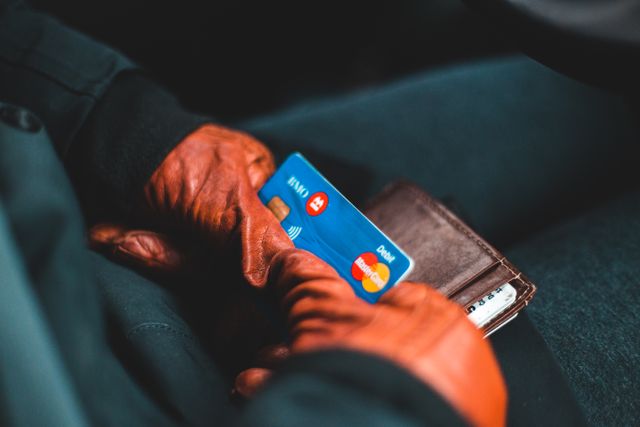

Digital payments have become an essential part of everyday financial life. Consumers use mobile payment applications, debit and credit cards, internet banking, digital wallets, and instant bank transfers to pay for groceries, utility bills, travel bookings, subscriptions, online shopping, and a wide range of services. These technologies have made transactions faster and more convenient, reducing the need to carry cash and allowing businesses to receive payments almost instantly. However, the same digital infrastructure that enables convenience can also expose consumers to fraud, disputed transactions, failed payments, and lengthy refund delays.
For consumers, the problem is not limited to losing money through a fraudulent transaction. Difficulties often continue after the incident, when they attempt to report the problem, obtain a refund, establish responsibility, or understand why their complaint has not been resolved. A payment may be debited even though the merchant has not received it, an unauthorised transaction may go unnoticed until money has left an account, or a legitimate refund may remain pending across several financial institutions. In each case, the consumer may struggle to determine which organisation is responsible for taking action.
These situations raise an important question: where does consumer protection break down in digital payment systems? The answer is rarely limited to a single failure. Weak fraud prevention, confusing complaint procedures, fragmented responsibility, poor communication, inadequate evidence, and slow dispute resolution can combine to leave consumers without timely relief. Even when a formal protection mechanism exists, it may be difficult to use effectively if consumers do not understand the process or cannot obtain a clear explanation of the outcome.
India provides a particularly relevant setting for examining these challenges because digital payments, including instant payment systems, have expanded rapidly. Regulatory frameworks, payment-system rules, banking procedures, and consumer grievance mechanisms offer several layers of protection, but the practical experience of resolving a complaint can vary according to the transaction type and the circumstances of the case.
Understanding these gaps is essential for improving trust in digital finance. Consumer protection should not end when a payment application provides a transaction reference number. It should extend through fraud reporting, investigation, communication, dispute resolution, and appropriate reimbursement where the applicable rules support it.
Understanding Digital Payment Fraud and Refund Delays
Digital payment fraud occurs when someone uses deception, unauthorised access, stolen credentials, or other improper methods to obtain money through an electronic transaction. The methods can include phishing messages, fake customer-support calls, fraudulent payment links, impersonation, malicious applications, account takeover, and social engineering. In many cases, fraudsters manipulate victims into authorising a transaction themselves, making the circumstances more complicated than a straightforward unauthorised debit.
Refund delays involve a different but sometimes connected problem. A consumer may pay for an order that is cancelled, return a defective product, experience a failed payment, or become entitled to a refund under a merchant’s policy or applicable law. The refund may then take longer than expected because of merchant processing, payment-network settlement, bank procedures, verification requirements, or a dispute over whether the refund is actually due.
These categories should not be confused. A failed transaction, an unauthorised debit, a merchant dispute, and a delayed refund may involve different rules, evidence requirements, and resolution channels. For example, a payment debited from a bank account during a technical failure may require a different process from a purchase that the consumer willingly authorised but later disputed because the goods were not delivered.
This distinction matters because consumers are often directed to a generic customer-service channel regardless of the underlying problem. When the complaint is classified incorrectly at the beginning, the consumer may be asked to submit irrelevant documents, contact the wrong organisation, or repeat the same explanation to several support teams. Effective protection begins with identifying the actual nature of the transaction and directing the complaint to the appropriate process.
Why Digital Payment Fraud Continues to Affect Consumers
One of the most persistent challenges is that digital fraud frequently exploits human trust rather than a technical weakness in the payment system itself. Fraudsters may impersonate bank employees, delivery agents, government officials, merchants, or customer-support representatives. They can create urgency by claiming that an account will be blocked, a refund will expire, or a payment must be verified immediately. Under pressure, consumers may disclose confidential information or follow instructions that allow fraudsters to move money.
Digital payment systems can process legitimate transactions within seconds, but that speed also creates a narrow window for intervention after fraud is detected. Once money moves through multiple accounts or intermediaries, identifying the recipient and attempting to restrict further transfers may become more difficult. The ability to recover funds can depend on how quickly the incident is reported, whether the receiving account still holds the money, and the legal and operational procedures available to the institutions involved.
Another problem is the gap between technical authentication and informed consent. A transaction may pass an authentication check because the consumer entered a one-time password, approved a request, or used a payment application. Yet the consumer may have done so after being deceived about the purpose of the transaction. Authentication can establish that a particular action was completed using the required credentials, but it does not automatically establish that the consumer understood the transaction or was free from manipulation.
This creates a difficult challenge for banks and payment providers. They must protect consumers from unauthorised activity while recognising that some fraudulent transactions are technically approved by the account holder under deceptive circumstances. Fraud investigation therefore needs to consider transaction records, complaint details, suspicious patterns, and the context of the reported incident rather than treating successful authentication as the end of the inquiry.
Where Consumer Protection Breaks Down
Fragmented Responsibility Across Banks, Apps, and Merchants
A digital payment often involves several organisations. The consumer may use one application to initiate the transaction, a bank account to fund it, a payment service provider to process it, and a separate merchant to receive the money. If something goes wrong, each organisation may control only part of the transaction record or investigation process.
This fragmented structure can make it difficult for consumers to establish who should resolve the complaint. A bank may ask the customer to contact the payment application, while the application directs the customer to the bank or merchant. The merchant may claim that the payment has not been received, even though the consumer’s account shows a debit. As the consumer moves between support channels, valuable time may be lost.
The problem is not necessarily that every organisation refuses to help. In some cases, each participant follows its own procedures but lacks visibility into the others’ actions. The result can still be an unacceptable experience for the consumer, who is left coordinating an investigation that should be supported by the institutions involved.
A stronger protection system would provide a clear first point of contact, identify the organisation responsible for the next action, and allow relevant transaction information to move securely between authorised participants. Consumers should not have to understand the technical structure of a payment network before they can report a problem.
Slow and Unclear Complaint Resolution
Reporting a digital payment problem is only the first step. Consumers also need an acknowledgement, a complaint reference, a realistic resolution timeline, and updates that explain what is happening. When support channels provide only automated responses or repeatedly request the same information, consumers may feel that their complaint has entered a system without meaningful progress.
A vague message stating that a case is under review offers little reassurance if it does not explain which stage the investigation has reached or whether further information is needed. Similarly, closing a complaint without explaining the decision can prevent consumers from understanding whether the institution considered the evidence or whether an appeal is possible.
Effective complaint handling requires clear communication as well as internal investigation. A provider should distinguish between a case that is awaiting technical reconciliation, one that requires information from a merchant, and one that has reached a decision. These differences matter because the next steps and likely timelines may not be the same.
Complaint systems should also account for consumers who cannot easily navigate mobile applications or submit documents digitally. Accessible telephone support, written complaint channels, and assistance for people with disabilities or limited digital literacy can make formal protections more usable.
Confusing Liability and Refund Rules
Consumers may assume that every fraudulent debit automatically qualifies for a refund. In practice, the outcome can depend on the transaction type, how the payment was authorised, when the consumer notified the relevant institution, the evidence available, and the rules applicable to that payment method. A refund for a failed transaction may follow a different process from reimbursement for an unauthorised electronic banking transaction or compensation for a merchant’s failure to deliver a product.
When these distinctions are not communicated clearly, consumers may struggle to understand their rights. Some may give up because they believe recovery is impossible, while others may expect an immediate refund even though the case requires investigation. Both outcomes undermine trust.
Institutions should explain the applicable process in plain language, including the information required, the relevant timelines, the circumstances that affect liability, and the route for escalation. This information should be provided early in the complaint process rather than only after a dispute has been rejected.
Weak Visibility Into Refund Status
Refund delays are particularly frustrating because consumers may have no way to determine whether a refund has been initiated, processed, transmitted, or credited. A merchant may state that a refund has been issued, while the consumer’s account still shows no credit. The payment provider may display a pending status without explaining what remains unresolved.
Different stages of a refund should be clearly distinguished. A merchant’s decision to approve a refund is not necessarily the same as the payment being processed by its payment provider or credited to the consumer’s account. If an intermediary is responsible for the delay, the consumer should not have to rely solely on the merchant’s initial confirmation.
A transparent refund-tracking system could display the current stage, the party responsible for the next action, and the expected date of completion where that date can reasonably be estimated. If the expected date is missed, the system should explain the delay and provide a clear escalation route. This would make the process more accountable without falsely promising that every refund can be completed instantly.
The Indian Regulatory Framework for Digital Payment Protection
India has established several mechanisms relevant to digital payment safety and consumer grievances. The Reserve Bank of India regulates important aspects of payment systems and banking, while the National Payments Corporation of India operates retail payment infrastructure, including the Unified Payments Interface, under the applicable regulatory framework. Banks, payment service providers, merchants, and other participants also have responsibilities according to the services they provide and the rules governing each transaction.
The Reserve Bank of India has issued a framework on customer liability in unauthorised electronic banking transactions. Under the applicable rules, a customer’s liability can depend on factors such as whether the transaction resulted from a bank’s deficiency, whether a third-party breach occurred, and how promptly the customer reported the unauthorised transaction. The precise treatment depends on the circumstances and the relevant requirements. Consumers should therefore report suspicious debits immediately rather than waiting for a merchant or payment application to resolve the issue.
For digital payment complaints, users should first notify their bank or the relevant payment service provider through an official channel and retain the complaint reference. For UPI-related issues, the payment application generally provides an in-app complaint route, while escalation may depend on the nature of the dispute and the stage at which it remains unresolved. A consumer should not assume that reporting an issue to a merchant automatically fulfils the requirement to notify the bank of an unauthorised transaction.
The RBI Integrated Ombudsman Scheme provides an escalation mechanism for eligible complaints against covered regulated entities when the consumer has first approached the relevant institution and the complaint meets the scheme’s conditions. The appropriate route depends on the organisation involved, the complaint’s subject, and whether the applicable procedural requirements have been satisfied. Consumers should consult current RBI guidance and official complaint channels to determine eligibility.
Where the problem concerns an online purchase, service deficiency, misleading representation, or a merchant’s failure to provide a refund that is due, consumer-protection mechanisms may also be relevant. The National Consumer Helpline can provide guidance and facilitate grievance handling, while eligible disputes may be pursued through the appropriate consumer commission process. These routes are not interchangeable: a bank-related unauthorised transaction and a merchant-related refund dispute may require different complaint procedures.
The existence of these mechanisms is important, but their practical effectiveness depends on awareness, accessibility, coordination, and timely decisions. Consumers should not have to discover the correct escalation route only after several unsuccessful attempts to obtain help.
Why Refund Delays Can Cause Financial Harm
A delayed refund is not always a minor inconvenience. For households operating on limited budgets, money tied up in a disputed transaction may be needed for rent, groceries, medicines, transport, or other essential expenses. Even when the amount is eventually returned, the delay can create overdraft charges, missed payments, or the need to borrow money.
The financial consequences may be particularly serious when a payment fails during a time-sensitive transaction. A consumer may need to pay again to secure a booking, complete a purchase, or access an essential service. If the original amount remains blocked or debited, the consumer temporarily loses access to funds that may be needed elsewhere.
Repeated refund delays can also impose administrative costs. Consumers may spend hours contacting customer support, collecting screenshots, visiting bank branches, submitting written complaints, and following up on reference numbers. These activities consume time that could otherwise be spent on work or personal responsibilities. For people with limited internet access or digital literacy, the process can be even more difficult.
The broader effect is a loss of confidence in digital payments. Consumers who experience repeated unresolved problems may return to cash, avoid online purchases, or hesitate to use digital services for higher-value transactions. Improving refund reliability is therefore not only a customer-service issue; it is also important for the long-term credibility of digital financial infrastructure.
The Evidence Consumers Should Preserve
Good documentation can significantly improve the clarity of a payment complaint. Consumers should retain the transaction reference, date and time, amount, relevant bank statement entry, merchant order number, and any confirmation received from the payment application. If the transaction is disputed, screenshots of the relevant status messages and copies of correspondence may help establish the sequence of events.
Consumers should also record the complaint reference and the date on which the bank, payment provider, or merchant was notified. If a refund has allegedly been issued, they should request the available refund reference or transaction identifier and share it through an official bank or payment-provider channel for tracing. The exact identifiers available will vary by payment method and provider.
Documentation should be collected without exposing confidential information unnecessarily. Consumers should never share their banking passwords, one-time passwords, UPI PINs, card security codes, or other authentication credentials with someone claiming to investigate a complaint. Legitimate complaint handling should not require the consumer to disclose a secret credential that authorises payments.
It is equally important to avoid deleting relevant messages or uninstalling the payment application before preserving necessary evidence. If the incident involves suspected fraud, consumers should secure their account, contact the bank immediately, and follow its instructions for blocking compromised payment instruments or access credentials.
How Banks and Payment Providers Can Improve Protection
Financial institutions and payment providers are positioned to make complaint handling more consistent by establishing clear internal responsibilities and sharing relevant information securely. A consumer should be able to report a suspicious transaction without needing to identify every intermediary involved. The institution receiving the complaint should help route it to the appropriate team or explain clearly why another channel is required.
Fraud monitoring should also move beyond detecting unusual amounts alone. Patterns involving repeated small transfers, rapid movement of funds, suspicious new beneficiaries, or changes in account behaviour may provide useful signals when evaluated appropriately. Automated systems can help prioritise potentially harmful activity, but they should be designed to minimise false positives and provide a route for human review.
Payment providers can improve refund processes by giving merchants and consumers consistent transaction statuses. Instead of using a single label such as “processing,” systems could clarify whether the refund has been approved, initiated, sent for processing, or credited. Where a transaction cannot be completed, the system should explain the relevant next step and provide an expected timeline based on the applicable rules.
Accountability should extend to the quality of complaint outcomes. Institutions can monitor how long different categories of complaints take to resolve, how frequently customers must contact support, how often decisions are reversed after escalation, and whether vulnerable consumers face additional barriers. These measures can reveal weaknesses that raw transaction-success rates fail to capture.
The Role of Merchants and Online Platforms
Merchants have a responsibility to communicate cancellation and refund policies before a purchase and to honour legitimate refund obligations. Policies should explain the circumstances in which refunds are available, how they are initiated, and the expected processing period. A merchant should not claim that a refund has been completed if it has only approved the request internally.
Online platforms can also support consumers by maintaining clear complaint channels, preserving transaction records, identifying repeat offenders, and preventing fraudulent sellers from using new accounts to evade enforcement. When a transaction involves a third-party merchant, the platform should clarify whether it is handling the refund directly or whether the merchant must take action.
Refund policies should be written in language that consumers can understand. Conditions hidden in long legal documents or presented only after a cancellation can create unnecessary disputes. Clear communication is particularly important for subscriptions, travel bookings, digital services, and products that are returned after delivery.
However, merchants should not be held automatically responsible for every payment failure. A failed transfer may result from a bank or payment-network issue, while a merchant refund dispute may involve contractual questions unrelated to the payment infrastructure. A fair system identifies the source of the problem and directs responsibility accordingly instead of assuming that one party is at fault in every case.
Building a More Reliable Consumer Protection System
A stronger digital payment protection system should combine prevention, fast reporting, transparent investigations, and effective escalation. Fraud prevention can reduce the number of incidents, but no system can eliminate every risk. Consumers therefore need a dependable process for recovering funds where they are entitled to reimbursement and for obtaining a reasoned decision when a claim is rejected.
One improvement would be a unified complaint-tracking experience across participating institutions. Such a system could allow consumers to view the complaint’s current stage, see which organisation is responsible for the next action, and receive updates when additional information is required. It would not remove the need for different legal procedures, but it could reduce confusion caused by disconnected customer-service channels.
Clear and enforceable service timelines are equally important. Different transaction types require different treatment, so one universal refund deadline may not be appropriate for every situation. However, providers should communicate the relevant timeframe, comply with applicable regulatory requirements, and explain delays when they occur. Where a complaint remains unresolved, the consumer should be told how to escalate it and what evidence may be required.
Consumer education must also become more practical. Awareness campaigns should explain how to recognise payment scams, report unauthorised transactions, distinguish between payment authorisation and a legitimate refund, and use official complaint channels. This information should be available through banking applications, payment interfaces, merchant websites, and accessible public guidance.
Finally, accountability should be evaluated through outcomes rather than policy statements alone. Regulators and institutions can examine complaint-resolution times, unresolved cases, repeated customer contacts, fraud losses, and the effectiveness of reimbursement procedures. These indicators can help identify where protection works in principle but fails in practice.
Conclusion
Digital payment fraud and refund delays reveal a central weakness in consumer protection: a transaction can be completed within seconds, while resolving the harm caused by that transaction may require multiple complaints, repeated explanations, and uncertain waiting periods. The problem becomes more serious when banks, payment applications, merchants, and other intermediaries operate separate systems without giving consumers a clear route to resolution.
Consumer protection should extend beyond secure payment technology. It must include understandable liability rules, prompt fraud reporting, transparent refund tracking, accessible complaint channels, and meaningful escalation when an institution fails to resolve a dispute. Consumers should know where to report a problem, which organisation is responsible for the next step, and what outcome they can reasonably expect under the applicable rules.
Banks and payment providers need to improve coordination, merchants must communicate and honour legitimate refund obligations, and regulators must ensure that formal safeguards remain accessible and effective. Consumers, in turn, can reduce risks by protecting authentication credentials, reporting suspicious transactions immediately, and preserving relevant evidence.
Ultimately, trust in digital payments depends not only on how efficiently money moves but also on how reliably the system responds when something goes wrong. A digital financial ecosystem becomes genuinely consumer-friendly when speed, security, transparency, and accountability work together.
Online Internship with Certificate
You may be interested

Why Small Businesses Struggle With Cybersecurity: Cost of Protecting Customer Data
Anshika Jain - Oct 28, 2026Cybersecurity has become a fundamental business requirement in an economy where customer interactions, payments, communication, and record management increasingly take place online. Small businesses rely on websites,…

Subscription Traps in Digital Services: Recurring Payments Can Escape Consumers Attention
Anshika Jain - Oct 28, 2026Digital services have changed how consumers access entertainment, education, software, fitness programmes, cloud storage, news, and everyday utilities. Instead of purchasing a product once, users can subscribe…

Online Job Scams Targeting Freshers: How Fake Recruiters Exploit the Pressure to Find Work
Anshika Jain - Oct 28, 2026For fresh graduates and first-time job seekers, finding employment can be an emotionally demanding process. After completing a degree, diploma, or professional course, many candidates begin applying…
Most from this category
Hospital Billing Transparency: Should Patients Receive Cost Estimates Before Treatment?
Anshika Jain - Oct 28, 2026
Counterfeit Medicines in Digital Marketplaces: Verification Steps Can Protect Buyers?
Anshika Jain - Oct 28, 2026
Food Adulteration Detection With AI: Can Portable Sensors Identify Unsafe Ingredients
Anshika Jain - Oct 27, 2026

Hospital Billing Transparency: Should Patients Receive Cost Estimates Before Treatment?
Anshika Jain - Oct 28, 2026Counterfeit Medicines in Digital Marketplaces: Verification Steps Can Protect Buyers?
Anshika Jain - Oct 28, 2026Food Adulteration Detection With AI: Can Portable Sensors Identify Unsafe Ingredients
Anshika Jain - Oct 27, 2026