

Iran Conflict Update: Why the Strait of Hormuz Remains Critical to the Global Economy


The conflict involving Iran has once again placed the Strait of Hormuz at the centre of global economic attention. The narrow maritime passage between Iran and the Arabian Peninsula is not simply a regional shipping route. It is one of the most important energy corridors in the world, connecting major oil and gas producers in the Persian Gulf with international markets across Asia and beyond. Any sustained disruption in this corridor can therefore affect crude oil prices, fuel costs, inflation, shipping insurance, industrial production and household expenses far beyond the Middle East.
The current situation has demonstrated how quickly geopolitical tensions can become economic problems. Recent attacks on tankers and heightened security risks around the Strait have pushed oil prices sharply higher. On October 8, Brent crude rose above $105 per barrel as concerns over shipping attacks and Middle Eastern supply disruptions intensified. At the same time, oil exports have shown that the global energy system can adapt through alternative routes, inventories and changes in shipping patterns. This has prevented an even larger supply shock, but it has not eliminated the underlying vulnerability.
Understanding why the Strait of Hormuz matters requires looking beyond the question of whether the waterway is completely closed. The larger issue is whether ships can pass through it safely, predictably and economically. Even when physical supplies continue moving, higher insurance premiums, longer routes, security requirements and delays can create a substantial economic shock.
Why the Strait of Hormuz Is So Important
The Strait of Hormuz is a narrow waterway connecting the Persian Gulf with the Gulf of Oman and the Arabian Sea. At its narrowest point, it is only about 21 nautical miles wide, with relatively narrow navigable channels for commercial shipping. Despite its geographical size, its economic importance is enormous. The International Energy Agency estimates that around 20 million barrels per day of crude oil and petroleum products moved through the Strait in 2025, representing roughly 25% of global seaborne oil trade.
The significance becomes even greater because many of the world’s largest energy exporters depend on this route. Saudi Arabia, the United Arab Emirates, Kuwait, Iraq, Qatar, Bahrain and Iran all use the Strait to varying degrees for their energy exports. While Saudi Arabia and the UAE possess alternative pipeline infrastructure, other Gulf producers have far fewer practical options for bypassing Hormuz.
The destination of these energy shipments is also important. Approximately 80% of oil and oil products passing through the Strait have historically been destined for Asian markets. China, India, Japan and South Korea are therefore particularly exposed to disruptions in this corridor. This means that an event occurring in a relatively narrow section of the Middle East can influence energy security and inflation across some of the world’s largest economies.
The Current Iran Conflict Has Changed the Risk Calculation
The current conflict has demonstrated that the global economy does not need a complete physical closure of the Strait to experience significant disruption. The perception of insecurity can itself alter shipping behaviour, insurance costs and energy prices.
Recent reporting indicates that tanker attacks around Hormuz reached their highest weekly level since the beginning of the Iran war. At the same time, shipping traffic through the Strait has fallen significantly. Reuters reported on October 8 that only seven commodity vessels passed through the corridor on October 6, the lowest daily level since July 23, while crude flows through the Strait fell to approximately 10.1 million barrels per day, around 74% of pre-war levels.
Yet the situation is more complicated than simply measuring how much oil passes through the Strait. Gulf producers have increasingly used alternative pipelines, ship-to-ship transfers and other logistical arrangements to maintain exports. This explains why regional oil exports can remain relatively strong even when traffic through Hormuz is under pressure.
The distinction is important for understanding modern energy markets. A geopolitical crisis can reduce the efficiency of global energy transportation without immediately eliminating the underlying supply of crude. The result can be a logistics-driven price shock rather than a straightforward physical shortage.
Why Oil Prices React So Quickly
Oil is traded in a global market, which means prices respond not only to actual shortages but also to expectations about future availability. When traders believe that a major supply corridor could become more dangerous, they begin pricing in the possibility of future disruption.
The result can be a sharp increase in crude prices even before substantial volumes disappear from the market. On October 8, Brent crude rose by more than 5% amid renewed concerns about shipping attacks and Middle Eastern supplies.
This mechanism is particularly important in the case of Hormuz because the corridor carries such a large proportion of global energy shipments. If market participants believe that millions of barrels per day could become unavailable, refiners, traders and governments have an incentive to secure alternative supplies early.
That behaviour can reinforce price increases. Refiners may compete for available crude from other regions, shipping companies may charge higher rates for risky routes, insurers may increase premiums and governments may begin drawing strategic reserves. The result is a chain reaction extending far beyond the original conflict zone.
The Hidden Importance of LNG
Oil is not the only energy market affected by Hormuz. Natural gas, particularly liquefied natural gas, represents another major vulnerability.
Qatar is one of the world’s largest LNG exporters, and a significant portion of its exports must pass through the Strait of Hormuz. The IEA estimates that more than 110 billion cubic metres of LNG passed through the Strait in 2025, representing almost one-fifth of global LNG trade. Around 93% of Qatar’s LNG exports and 96% of the UAE’s LNG exports transited the Strait.
Unlike crude oil, LNG has fewer practical alternatives when a major export corridor becomes unavailable. The infrastructure required to liquefy, transport and regasify natural gas is highly specialized, and existing LNG production facilities cannot simply redirect their output through an alternative pipeline.
This creates a significant vulnerability for countries dependent on imported gas. An extended disruption could affect electricity generation, industrial production and heating markets, particularly in countries that have limited alternative LNG suppliers.
The IEA has already described the Middle East crisis as a major supply shock for global gas markets, noting that disruption to LNG flows through Hormuz produced significant price volatility.
Why India Is Particularly Interested in Hormuz
For India, the Strait of Hormuz is strategically important because the country is a major energy importer and has substantial exposure to global oil prices. Even when Indian refiners are able to obtain crude from multiple suppliers, a major disruption in one of the world’s largest energy corridors can raise the global benchmark price.
This matters because crude oil influences much more than petrol and diesel prices. Petroleum products are embedded in transportation, agriculture, manufacturing, logistics, aviation, chemicals and consumer goods. When energy becomes more expensive, businesses often face higher operating costs, which can eventually be reflected in consumer prices.
India’s large and growing economy also means that energy security has a direct relationship with economic growth. A prolonged oil-price shock could increase the country’s import bill, put pressure on inflation and affect the balance of payments.
The Asian orientation of Hormuz’s energy flows makes this particularly relevant. The IEA estimates that China and India together received 44% of crude oil exports passing through the Strait in 2025. Consequently, developments in the waterway are closely watched by Asian refiners and policymakers.
Shipping Costs Are Becoming an Economic Problem
The economic impact of the conflict is not limited to the price of crude oil. Shipping itself becomes more expensive when a maritime corridor is considered dangerous.
Tankers operating near conflict zones can face higher insurance premiums, additional security requirements and longer waiting periods. Some shipping companies may decide that the financial risks of entering a particular area are too high, while others may demand higher freight rates to compensate for the additional danger.
This creates what economists sometimes describe as a logistics shock. Even if the physical supply of oil remains available, the cost of moving it from producer to consumer increases.
Recent market analysis has highlighted precisely this phenomenon. Middle Eastern oil exports have recovered substantially, but prices have remained elevated because logistical risks and bottlenecks continue to affect the market.
The distinction between supply shortage and transportation disruption is crucial. A global economy can experience high energy prices even when sufficient crude exists somewhere in the system if that crude cannot be transported efficiently to the places where it is needed.
Inflation Can Spread Through Multiple Channels
Higher energy prices have traditionally been one of the fastest ways for geopolitical conflicts to spread into everyday economic life.
The first impact is usually visible in fuel prices. But the consequences can continue through transportation and logistics. Trucks, ships and aircraft all depend heavily on energy, meaning higher fuel costs can increase the price of moving goods.
Manufacturers are also affected because energy is an input into industrial production. Petrochemicals, plastics, fertilizers and numerous other industrial products are directly or indirectly linked to hydrocarbons.
Agriculture can also experience higher costs because diesel is widely used for farm machinery and transportation, while natural gas is important for fertilizer production.
The final effect is therefore broader than the price displayed at a petrol station. An extended energy shock can gradually increase the cost of producing, transporting and selling goods throughout the economy.
Central Banks Face a Difficult Choice
Energy-driven inflation can also create a difficult situation for central banks. If higher oil prices push inflation upward, monetary authorities may face pressure to maintain restrictive interest rates or delay rate cuts.
However, higher interest rates cannot produce more oil or reopen a maritime corridor. This creates a policy dilemma because monetary tightening can reduce demand and inflation but may also weaken economic growth.
The longer an energy shock continues, the more complicated this balance becomes. Temporary price increases may eventually disappear when shipping conditions normalize. Persistent disruptions, however, can become embedded in inflation expectations and corporate pricing decisions.
This is one reason financial markets monitor the Strait of Hormuz so closely. Investors are not simply watching crude oil. They are assessing the potential effects on inflation, interest rates, currencies, government finances and corporate earnings.
Alternative Routes Provide Some Protection
The global energy system is not completely dependent on the Strait without alternatives. Saudi Arabia and the UAE have infrastructure that can redirect some crude exports away from Hormuz. The IEA estimates that approximately 3.5 million to 5.5 million barrels per day of alternative pipeline capacity is potentially available.
These alternatives have become increasingly important during the conflict. Gulf producers have also adjusted logistics, including greater use of routes and shipping arrangements that reduce their dependence on direct transit through the Strait.
However, alternative infrastructure cannot fully replace Hormuz. The capacity is limited compared with the enormous volumes that normally move through the corridor. More importantly, LNG exports from Qatar and the UAE have far fewer alternative pathways.
Therefore, alternative routes can reduce the severity of a disruption, but they cannot completely eliminate the strategic importance of the Strait.
Strategic Oil Reserves Can Absorb Part of the Shock
Another buffer comes from strategic petroleum reserves. Governments maintain emergency inventories precisely because unexpected disruptions can occur.
When energy markets experience severe supply stress, countries can release reserves to increase available supply and reassure markets. Such measures can reduce immediate price pressure and provide governments with time to find alternative sources.
However, strategic reserves are not a permanent replacement for normal trade. Inventories can be depleted, and rebuilding them later can itself increase demand and put pressure on prices.
The International Monetary Fund has noted that energy markets have adjusted during the current crisis through a combination of new supply, inventory drawdowns and reduced demand, while Gulf countries have also rerouted critical supplies. This demonstrates the resilience of the global system, but it also shows how many separate mechanisms are required to compensate when a major energy corridor becomes unreliable.
The Conflict Is Also Changing Energy Security Strategy
The importance of Hormuz is encouraging governments to reconsider what energy security actually means. In the past, energy security often focused primarily on maintaining adequate fuel supplies. Today, it increasingly includes shipping infrastructure, pipelines, strategic reserves, diversified suppliers, cybersecurity, maritime security and renewable energy.
Countries that depend heavily on one supplier or one shipping corridor face greater vulnerability. As a result, governments are increasingly interested in diversifying energy imports and investing in infrastructure capable of absorbing supply disruptions.
The conflict also strengthens the economic argument for renewable energy and electrification. Solar, wind, battery storage and electric vehicles cannot immediately replace oil and gas in every sector, but reducing dependence on imported hydrocarbons can gradually reduce exposure to geopolitical energy shocks.
This does not mean that fossil fuels will suddenly disappear from the global economy. Instead, energy diversification can be understood as a form of economic risk management.
What Happens If Hormuz Remains Unstable?
The most important question for the global economy is not necessarily whether the Strait remains completely closed. It is whether shipping can return to predictable and commercially viable conditions.
If attacks continue, shipping companies may remain reluctant to operate normally even if governments guarantee military protection. Insurance costs could stay elevated, freight rates could remain high and traders could continue to build geopolitical risk into oil prices.
If security improves, however, shipping flows could gradually normalize. Greater confidence would reduce risk premiums, improve logistics and potentially lower oil prices even without a dramatic increase in physical supply.
This explains why diplomatic developments can have an immediate economic effect. Markets react not only to what has already happened but also to expectations about what may happen next.
The Broader Global Economic Consequences
The Strait of Hormuz represents a broader lesson about globalization. Modern economies depend on highly specialized networks in which a relatively small geographical location can influence global markets.
A narrow waterway can affect energy prices in Asia, inflation in Europe, transportation costs in Africa, manufacturing expenses in North America and monetary policy around the world.
The current conflict has also demonstrated that economic resilience depends on redundancy. Alternative pipelines, strategic reserves, diversified energy suppliers, flexible shipping networks and lower energy intensity can all reduce the impact of geopolitical disruptions.
But resilience has a cost. Maintaining unused pipeline capacity, emergency inventories and alternative supply chains requires long-term investment. Businesses and governments therefore face a difficult calculation between minimizing costs during stable periods and preparing for disruptions that may occur only occasionally.
Conclusion
The Strait of Hormuz remains critical to the global economy because it connects some of the world’s most important energy-producing countries with some of its largest energy-consuming markets. Its importance is not simply a matter of geography. It reflects the concentration of global oil and LNG trade through a narrow and strategically sensitive corridor.
The current Iran conflict has demonstrated that even partial disruption can create major economic consequences. Oil prices can rise because of uncertainty, shipping costs can increase because of security risks, LNG markets can tighten because alternative routes are limited, and inflation can spread through transportation and industrial supply chains. Recent attacks and falling transit levels have once again shown how quickly maritime security can become an international economic issue.
At the same time, the global energy system has shown considerable adaptability. Alternative pipelines, strategic inventories, rerouted shipments and changes in production have helped prevent a complete energy crisis. The IMF has emphasized that these adjustment mechanisms have helped contain the broader economic shock.
The long-term lesson is therefore not simply that the world is dependent on one waterway. It is that global economic stability depends on the reliability of interconnected infrastructure. As long as large volumes of oil and LNG move through the Strait of Hormuz, developments around Iran and the Gulf will remain closely linked to global energy prices, inflation, trade and economic growth.
For policymakers, businesses and consumers, the Strait of Hormuz is consequently more than a geopolitical flashpoint. It is a reminder that in an interconnected global economy, the security of a single maritime corridor can become a question of worldwide economic stability.
Online Internship with Certificate
You may be interested

What Students Will Learn From the New NCERT Governance and Public Policy Chapter
Anshika Jain - Oct 08, 2026The way students learn about government and democracy is changing as school education increasingly moves beyond memorising constitutional terms and political institutions. The inclusion of governance and…

The New Era of Drone Warfare: How Technology Is Changing Modern Conflicts
Anshika Jain - Oct 08, 2026Modern warfare is entering a technological phase in which relatively small, inexpensive and increasingly intelligent unmanned systems can influence battles far beyond their physical size. Drones, once…
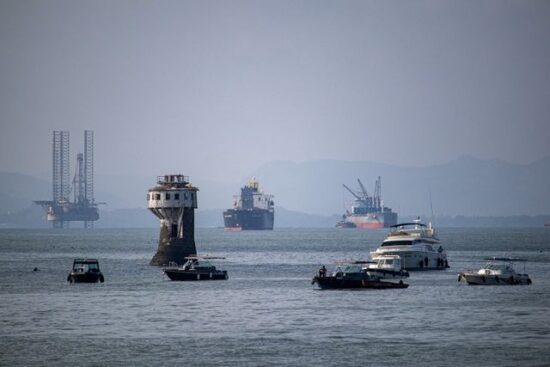
Oil, Shipping and Conflict: Why Tensions Around the Strait of Hormuz Matter to India
Anshika Jain - Oct 08, 2026Tensions around the Strait of Hormuz have consequences far beyond the Middle East. For India, the narrow maritime corridor connecting the Persian Gulf with the Gulf of…
Most from this category
Why Technology, Energy and Defence Are Becoming Important Parts of India-US Economic Relations
Anshika Jain - Oct 08, 2026
Digital Payments Under Pressure: Can India Maintain a Low-Cost UPI Ecosystem?
Anshika Jain - Oct 08, 2026

Flydubai Flight Incident: How an Injured Captain Helped Regain Control of the Aircraft
Anshika Jain - Oct 05, 2026
Why Technology, Energy and Defence Are Becoming Important Parts of India-US Economic Relations
Anshika Jain - Oct 08, 2026Digital Payments Under Pressure: Can India Maintain a Low-Cost UPI Ecosystem?
Anshika Jain - Oct 08, 2026UPI and Merchant Charges: Why Traders Are Calling for “No UPI Day”
Anshika Jain - Oct 05, 2026