

Rare Earth Minerals and Global Politics: Technology Companies Watching China Closely

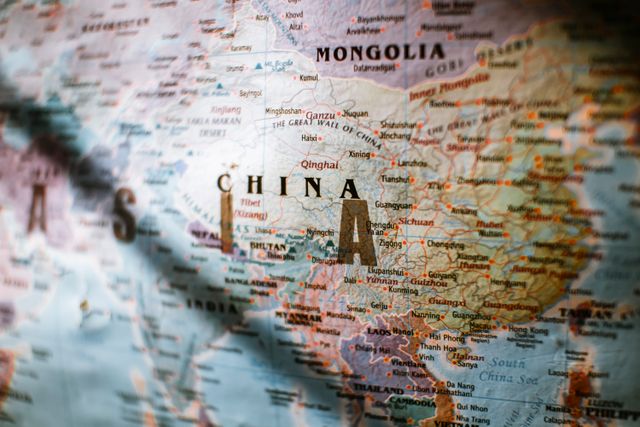

The global technology industry depends on materials that most consumers rarely think about. Smartphones, electric vehicles, wind turbines, advanced medical equipment, robotics, military systems and artificial intelligence infrastructure all require specialised minerals to function. Among these resources, rare earth elements have become particularly important because of their unique magnetic, optical and electronic properties. Although they are not necessarily scarce in the Earth’s crust, extracting and processing them economically is technically demanding. Their importance has increased as countries compete to develop advanced technologies, strengthen domestic manufacturing and secure reliable sources of critical materials.
China has become the central player in this competition. Its influence extends beyond mining to the more complex stages of refining, separation, metal production and permanent magnet manufacturing. This position gives the country a significant role in global supply chains and makes its trade policies important to technology companies worldwide. Manufacturers are therefore watching China’s decisions closely, not simply because they need access to minerals, but because disruptions can affect production schedules, investment decisions, product costs and long-term business strategies. Rare earth minerals have consequently become an important subject in international trade negotiations and geopolitical discussions.
Understanding Rare Earth Minerals and Their Technological Importance
Rare earth elements consist of 17 metallic elements: the 15 lanthanides, along with scandium and yttrium. Each has distinct chemical and physical characteristics that make it useful in particular industrial applications. Neodymium and praseodymium are especially important for manufacturing powerful permanent magnets, while dysprosium and terbium can improve the performance of magnets under demanding temperature conditions. Other rare earth elements are used in specialised applications involving displays, lasers, optical equipment, sensors and advanced industrial materials.
One of the most important uses is the production of neodymium-iron-boron magnets, commonly known as NdFeB magnets. These magnets are powerful relative to their size and are used in electric vehicle motors, wind turbine generators, industrial robots, computer components and other precision equipment. Their ability to deliver high magnetic performance makes them valuable in products where reducing weight and improving efficiency are important. As industries move towards electrification and automation, demand for these materials is becoming increasingly significant.
Rare earth elements are also relevant to the expansion of artificial intelligence infrastructure. AI data centres require servers, cooling systems, power equipment and sophisticated electronic components. Rare earth elements are not the primary material in every semiconductor or AI processor, but they support various technologies used across the wider infrastructure, including high-performance motors, sensors, specialised electronics and precision manufacturing equipment. This distinction matters because the global AI industry depends on a broad industrial ecosystem, not only on the chips that perform calculations.
Why China Holds Such a Powerful Position
China’s influence in the rare earth industry developed through decades of investment in mining, processing infrastructure, technical expertise and manufacturing capacity. The country established a large industrial ecosystem that connects mineral extraction with chemical processing, metal production and finished components. This integrated structure has helped Chinese companies achieve economies of scale and build strong relationships with manufacturers that require a consistent supply of specialised materials.
The International Energy Agency’s 2026 assessment highlights the concentration of the global supply chain. In 2024, China accounted for approximately 60 per cent of global mined production of magnet rare earths, around 91 per cent of refined output and approximately 94 per cent of sintered permanent magnet production. These figures demonstrate why the issue cannot be understood through mining statistics alone. A country may possess mineral deposits and operate mines, but it may still depend on another country to separate, refine and convert those materials into industrial products.
Rare earth processing is particularly challenging because the elements often occur together and have similar chemical properties. Separating them requires specialised chemical processes, industrial equipment, technical knowledge and careful environmental management. Building these facilities requires substantial investment and time. China has developed considerable experience and capacity in these stages, creating a competitive advantage that cannot be replaced quickly by simply opening mines in other countries.
How Export Controls Turned Rare Earths into a Geopolitical Issue
Rare earth minerals became a more visible international political issue as governments began using trade restrictions and export licensing as instruments of economic and national security policy. China introduced export controls on selected rare earth elements and related products in April 2025. The measures covered seven elements, including samarium, gadolinium, terbium, dysprosium, lutetium, scandium and yttrium, along with associated materials and products. Additional controls announced later in 2025 expanded the potential scope to further elements, related technologies and certain products manufactured using Chinese-origin materials.
These decisions raised concerns among international manufacturers because export controls can affect the availability and timing of essential industrial inputs. A licensing system does not necessarily mean that all exports are prohibited. Instead, shipments may require government approval, documentation and verification of the intended end user and application. However, uncertainty over approval timelines can create difficulties for businesses that depend on predictable deliveries and operate manufacturing systems with limited inventories.
The International Energy Agency reported that China’s 2025 controls caused significant short-term disruption to some manufacturers outside China. Companies in the automotive and industrial sectors experienced difficulties securing certain permanent magnets, and some manufacturers had to reduce production or temporarily interrupt operations. Although export flows subsequently recovered in several areas, the episode demonstrated how concentrated supply chains can expose companies to decisions made far beyond their own markets.
The situation continued to evolve during 2026. On 9 November 2026, Reuters reported that China had extended the suspension of certain expanded rare earth export controls until 10 January 2027. This development provided additional relief to businesses concerned about the broader restrictions announced in 2025. However, it did not eliminate the underlying dependence on Chinese processing and manufacturing capacity, nor did it mean that every existing export licensing requirement had disappeared. The distinction between suspended measures and continuing controls is important for companies planning their procurement strategies.
Why Technology Companies Are Monitoring China Closely
Technology companies are watching China because rare earth availability can influence the production of many products, even when the minerals represent only a small part of their total manufacturing costs. A shortage of a specialised magnet or refined material can delay the completion of an entire product. Manufacturers cannot always replace a particular component immediately because alternative materials may have different performance characteristics, require product redesign or need additional safety and quality testing.
Electric vehicle manufacturers are among the most exposed businesses. Many electric motors use high-performance permanent magnets containing neodymium and praseodymium, with dysprosium or terbium added in certain applications. These materials help manufacturers develop compact and efficient motors. If supplies become uncertain, companies may face higher procurement costs, production delays or pressure to redesign components. Some manufacturers are exploring alternative motor technologies that reduce or avoid dependence on rare earth magnets, but these alternatives involve engineering and commercial trade-offs.
Consumer electronics companies also have reasons to monitor developments. Smartphones, laptops, speakers, cameras, wearables and other devices use specialised magnets and components in different ways. A disruption in the supply of a particular material may not stop the entire electronics industry, but it can affect specific components and suppliers. Companies with large global production networks therefore need to understand where their materials originate and whether their suppliers rely on Chinese processing.
The aerospace and defence industries face another set of concerns. High-performance magnets and specialised materials are used in sensors, guidance systems, aircraft equipment, communication systems and other advanced applications. These products often require strict technical specifications and reliable traceability. Replacing a supplier can involve lengthy qualification procedures, making supply security particularly important.
AI infrastructure companies are also paying attention. Their exposure is not limited to the production of AI chips. Data centres require cooling systems, electrical equipment, backup systems, motors and other industrial components. As investment in computing infrastructure expands, companies must consider the availability of materials used throughout the supporting equipment ecosystem. Rare earths are one part of this wider industrial dependency.
The Difference Between Mining and Controlling the Supply Chain
A major misunderstanding in discussions about rare earth independence is the assumption that discovering new deposits automatically solves the supply problem. Mining is only the first stage of a much longer industrial process. Extracted ore must be processed into concentrates, separated into individual rare earth oxides, converted into metals or alloys and, in many applications, manufactured into finished magnets. Each stage requires different infrastructure and technical capabilities.
This distinction explains why countries with mineral resources can remain dependent on China. They may have access to raw materials but lack sufficient separation facilities, specialised refining plants or commercial-scale magnet manufacturing. If extracted minerals are sent abroad for processing, the country that owns the mine may still depend on external suppliers for the components needed by its technology industry.
The International Energy Agency’s 2026 report identifies this imbalance in the pipeline of projects outside China. Planned mining capacity is expanding, but refining and separation capacity is developing more slowly. The gap is even more pronounced in the downstream production of metals, alloys and finished magnets. This means that diversification must cover the entire value chain rather than concentrate only on the extraction of raw materials.
For technology companies, the practical question is therefore not simply whether a mineral can be sourced from another country. They must determine whether the alternative supplier can deliver the required material in the correct chemical form, quantity, quality and timeframe. They also need confidence that the supplier can maintain production during periods of market volatility.
How the United States, Europe and Japan Are Responding
Governments outside China are increasingly treating rare earths as strategic resources. The United States has supported domestic mining, refining and magnet manufacturing projects while encouraging private investment in critical mineral supply chains. The Mountain Pass mine in California, operated by MP Materials, is an important part of the country’s effort to strengthen domestic rare earth production. However, expanding mining alone is not enough; the country also needs reliable processing and downstream manufacturing capacity.
Australia has an important role because of its mineral resources and established rare earth industry. Companies such as Lynas Rare Earths have developed processing capabilities outside mainland China, including facilities in Malaysia. These operations demonstrate that alternative supply chains are possible, although building them at a scale capable of meeting global demand remains a substantial challenge.
Japan has focused on supply diversification, technological innovation, recycling and international partnerships. Its experience with rare earth supply disruptions has encouraged businesses to reduce dependence on a single source. Japanese manufacturers have also invested in material efficiency and alternative technologies that can reduce the quantity of rare earths required in certain products.
European countries are pursuing similar objectives through critical raw material policies, industrial investment and cooperation with international partners. Their challenge is to create commercially competitive processing and manufacturing facilities while meeting environmental standards and maintaining access to reliable raw materials. These efforts are important, but new projects require time, funding, skilled workers and long-term customer commitments.
India’s Opportunity in the Rare Earth Industry
India has an opportunity to strengthen its position in the global rare earth supply chain. The country has identified critical minerals as important to its energy transition, manufacturing ambitions and strategic industries. Its mineral resources, engineering capabilities, growing electric vehicle market and expanding electronics sector provide a foundation for developing a stronger domestic industry.
However, India’s challenge is similar to that of several other countries: mineral availability does not automatically translate into control over the complete supply chain. The country needs investment in exploration, extraction, separation, refining, metal production and permanent magnet manufacturing. Developing expertise in these stages could help reduce import dependence and create opportunities for domestic companies.
India can also benefit from international partnerships. Cooperation with countries that have established mining and processing capabilities could support technology transfer, research and access to alternative sources of supply. Such partnerships would be particularly valuable if they help build capabilities within India rather than simply shift dependence from one overseas supplier to another.
Recycling is another promising area. Electronic waste, discarded electric motors, wind turbine components and industrial equipment can contain recoverable rare earth materials. Developing efficient collection, sorting and recycling systems could create a secondary source of supply while reducing the need for new extraction. However, recycling requires suitable technology, economically viable recovery processes and consistent access to waste materials. It should be treated as one part of a wider supply strategy rather than an immediate replacement for primary production.
The Environmental Challenge Behind Rare Earth Independence
Reducing dependence on a dominant supplier also requires countries to address the environmental consequences of rare earth production. Mining and processing can generate waste, consume water and require chemicals that must be handled carefully. Poorly managed operations may contaminate soil and water or create long-term risks for surrounding communities. The environmental performance of the industry is therefore an important consideration for governments, investors and technology companies.
Countries seeking alternative supply chains face a difficult balance. They want to establish domestic processing capacity, but they must also ensure that new facilities follow strict environmental and safety standards. Projects that ignore these responsibilities can create public opposition, regulatory delays and financial liabilities. Responsible production may increase initial costs, but it can improve long-term reliability and make suppliers more attractive to international manufacturers.
Technology companies are increasingly expected to understand the environmental and social conditions behind the materials they purchase. Supply-chain transparency can help businesses identify potential risks, verify the origin of minerals and demonstrate responsible sourcing. As sustainability requirements become more important in international markets, the ability to provide traceable and responsibly produced materials may become a competitive advantage.
Can the World Reduce Its Dependence on China?
The global rare earth industry is likely to become more diversified, but replacing China’s position will not happen quickly. New mines can increase the availability of raw materials, yet the construction of separation plants, metal facilities and magnet factories requires significant capital and specialised knowledge. Companies must also secure customers willing to purchase materials from new suppliers, even when initial production costs are higher than those offered by established Chinese manufacturers.
One possible development is the creation of regional supply chains. Countries may work together to connect mining resources, processing facilities and manufacturing industries across several markets. This approach could reduce the risks associated with relying on a single country while allowing businesses to benefit from specialised expertise in different regions.
Another development is the use of alternative materials and product designs. Engineers are investigating motors that use fewer rare earth magnets or avoid them entirely. Manufacturers are also exploring ways to improve magnet efficiency, reduce material waste and recover valuable elements from used products. These innovations could lower demand growth in some applications, although they are unlikely to eliminate the need for rare earths across the wider technology industry.
Stockpiling may provide temporary protection against supply disruptions, particularly for materials used in strategically important industries. However, inventories cannot replace a functioning industrial supply chain indefinitely. Companies and governments will still need dependable suppliers, processing capacity and long-term investment.
The Future of Rare Earth Minerals and Global Technology Competition
Rare earth minerals are likely to remain an important part of international economic and technology competition. Their strategic value comes not only from their use in advanced products but also from the difficulty of replacing them and the concentration of processing capacity. As demand for electric vehicles, renewable energy systems, robotics, advanced electronics and digital infrastructure increases, the importance of reliable access to these materials will grow.
China’s position gives it substantial influence, but it also creates incentives for other countries to develop alternative supply chains. The next phase of competition will involve more than securing mineral deposits. It will depend on investment in refining, advanced manufacturing, recycling, research and international cooperation. Countries that develop capabilities across several stages of the value chain will be better positioned to support their technology industries.
For businesses, the lesson is that supply-chain security must become a long-term strategic priority. Technology companies need to understand their dependence on critical materials, assess the risks associated with individual suppliers and invest in alternatives before a disruption occurs. Governments, meanwhile, must create policies that encourage industrial development without overlooking environmental responsibility or international trade relationships.
Conclusion: Why China’s Rare Earth Industry Matters to the World
Rare earth minerals have moved from being specialised industrial materials to becoming important resources in global politics and technology strategy. China’s dominance in refining and permanent magnet production means that its export policies, industrial decisions and diplomatic relationships can influence manufacturers across several sectors. Even temporary restrictions or licensing delays can create uncertainty for businesses that depend on continuous supplies.
The global response is gradually taking shape through new mining projects, alternative processing facilities, international partnerships, recycling initiatives and research into substitute technologies. However, genuine diversification will require investment across the complete supply chain rather than a narrow focus on mineral extraction. For technology companies, watching China closely is ultimately about protecting the future of manufacturing, innovation and economic competitiveness in an increasingly interconnected world.
Online Internship with Certificate
You may be interested

India and the Indo-Pacific: Maritime Security and Critical Minerals Becoming Priorities
Anshika Jain - Nov 25, 2026The Indo-Pacific has become one of the most important regions in global politics, international trade and technological competition. It connects major economic centres across Asia, Africa, Europe…

US-China Technology Rivalry: Advanced AI Chips Becoming a Major Diplomatic Issue
Anshika Jain - Nov 25, 2026The competition between the United States and China is no longer limited to tariffs, manufacturing capacity or military influence. It increasingly extends into advanced technologies that could…

Future of Global AI Regulation: Can Countries Agree on Common Technology Rules
Anshika Jain - Nov 25, 2026Artificial intelligence is transforming economies, industries and international relations at an extraordinary pace. Generative AI systems can create text, images, videos and computer code, while advanced models…
Most from this category

Russia’s Economic Relations With Asia: Trade Partnerships Reduce Impact of Western Sanctions
Anshika Jain - Nov 25, 2026
Trump, Xi and Putin at APEC 2026: Could Their Meeting Reshape Global Trade and Security
Anshika Jain - Nov 25, 2026
MS Dhoni Retires from IPL: Chennai Super Kings Appoint Legendary Captain as Team Mentor
Anshika Jain - Nov 24, 2026
ASEAN–India Discussions on 17 November 2026: Maritime Security and Investment
Anshika Jain - Nov 24, 2026
Russia’s Economic Relations With Asia: Trade Partnerships Reduce Impact of Western Sanctions
Anshika Jain - Nov 25, 2026Trump, Xi and Putin at APEC 2026: Could Their Meeting Reshape Global Trade and Security
Anshika Jain - Nov 25, 2026MS Dhoni Retires from IPL: Chennai Super Kings Appoint Legendary Captain as Team Mentor
Anshika Jain - Nov 24, 2026