

AI-Generated Music, Images and Videos: New Opportunities and Creative Concerns

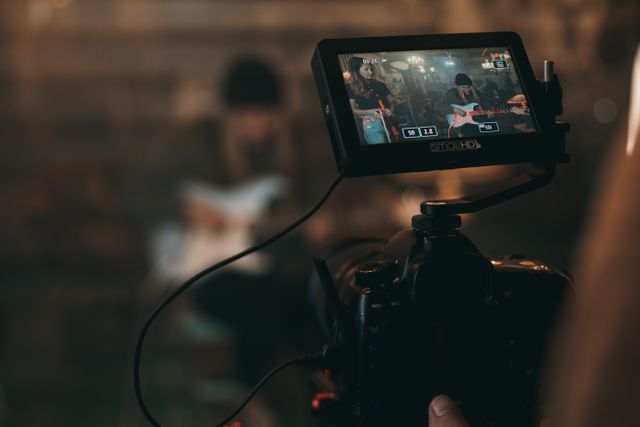

Artificial intelligence is changing the way creative content is imagined, produced and distributed. Music, images and videos that once required specialised equipment, professional software and significant production time can now be created or significantly assisted by AI-powered tools. A person can describe an idea in natural language and receive an image, generate a musical composition from a written prompt, or create a short video from a script. These capabilities are making creative production more accessible while also creating difficult questions about originality, ownership, artistic identity and responsible use.
The growth of generative AI has created a new relationship between humans and creative technology. Instead of using software only as a tool for editing or production, creators can increasingly collaborate with systems capable of generating new content. This does not mean that human creativity is disappearing. Rather, the creative process is changing, with people increasingly working as directors, editors, curators and idea developers alongside AI systems.
At the same time, the rapid development of generative AI has created concerns that cannot be ignored. Questions surrounding copyright, consent, training data, misinformation, deepfakes and the economic impact on creative professionals are becoming increasingly important. Understanding both the opportunities and the challenges is essential as AI-generated media becomes part of everyday digital culture.
The Rise of Generative AI in Creative Industries
Generative AI refers to artificial intelligence systems that can create new content based on patterns learned from large datasets and instructions provided by users. Modern generative systems can work with text, images, audio and video, allowing creators to move between different forms of media more easily.
The technology has evolved quickly. Earlier creative AI systems often performed narrow tasks such as image enhancement, background removal, noise reduction or automated editing. Newer systems can generate substantial portions of an entire creative project from a relatively simple prompt.
This shift is particularly important because it lowers some of the technical barriers associated with content creation. A beginner who does not know how to operate professional design software can experiment with visual concepts through natural-language instructions. Similarly, someone without formal musical training can explore melodies, arrangements or sound concepts using AI-assisted music tools.
The result is a broader creative environment in which technical knowledge remains valuable but is no longer the only gateway to experimentation.
AI-Generated Images and Visual Creativity
AI image generation has become one of the most visible applications of generative artificial intelligence. Users can describe a scene, character, environment or visual style and receive generated images based on that description.
For designers, marketers, educators and independent creators, this can accelerate the early stages of creative work. A marketing team can explore several visual concepts before selecting one for further development. An educator can create illustrative material for a lesson, while a game developer can use AI-generated concepts during the early stages of world building.
AI-generated imagery can also help people visualise ideas that might otherwise be difficult or expensive to produce. Historical scenes, imaginary environments, conceptual products and educational illustrations can be explored without organising a traditional photo shoot.
However, image generation also creates concerns about originality and artistic identity. Generated images can resemble existing artistic styles, and questions may arise about whether an AI system has learned from copyrighted material without the creators’ permission. These issues have contributed to ongoing legal and industry discussions about the relationship between generative AI and creative works.
AI-Generated Music and the Changing Creative Process
Music generation is another rapidly developing area. AI systems can produce melodies, harmonies, rhythms and complete musical arrangements based on textual descriptions or musical inputs.
For independent creators, this can reduce the cost of experimentation. A filmmaker working on a small project may use AI-assisted tools to explore background music ideas. A game developer can experiment with different musical moods for different environments. Content creators may also use AI to create temporary tracks during the editing process.
AI-generated music can be useful for prototyping as well. A musician may use AI to explore a musical direction before recreating or refining the concept manually. In this model, AI becomes part of the brainstorming process rather than a complete replacement for the musician.
The technology nevertheless raises important questions about voice, likeness and artistic identity. Systems that imitate recognisable voices or musical characteristics can create concerns about consent and commercial exploitation. The ability to generate convincing audio also increases the potential for misleading or deceptive content.
AI-Generated Videos and the Transformation of Production
Video production traditionally involves multiple stages, including scripting, filming, acting, sound recording, editing and visual effects. Generative AI is beginning to influence many of these stages.
AI video tools can generate short sequences from text or images, modify existing footage and assist with editing. These capabilities can be particularly useful for concept development, advertising, educational demonstrations and experimental filmmaking.
For small creators, AI-assisted video production can reduce the resources required to test an idea. A creator may be able to visualise a scene before hiring actors, arranging locations or investing in equipment. This can make the development process faster and potentially reduce production costs.
However, AI-generated video also creates one of the most serious challenges in the digital environment: synthetic media can become difficult to distinguish from authentic recordings. Deepfake technology can be used to create realistic images or videos of people appearing to say or do things they never actually said or did.
The creative potential of AI video therefore exists alongside significant concerns about misinformation, impersonation and digital trust.
The Democratization of Creativity
One of the strongest arguments in favour of generative AI is that it can make creative experimentation accessible to more people.
Traditional creative industries often require access to expensive equipment, software, studios or professional networks. AI tools cannot eliminate all of these requirements, but they can reduce the barriers associated with initial experimentation.
A student can create a visual concept without owning professional design equipment. An aspiring filmmaker can develop a storyboard using generated visuals. A beginner interested in music can explore different arrangements without immediately purchasing a complete recording setup.
This can encourage experimentation and allow people to discover creative interests that they may not have explored otherwise.
The technology can therefore become particularly relevant in education. Students can use generative AI to visualise concepts, experiment with storytelling and explore multimedia communication. The educational value, however, depends on students understanding how to use these systems responsibly rather than simply accepting generated content without evaluation.
AI as a Creative Assistant Rather Than a Replacement
The most useful way to understand generative AI may be as a creative assistant. Instead of treating AI as an autonomous artist, creators can use it for brainstorming, experimentation, editing and repetitive tasks.
A designer can generate several rough concepts and then refine one manually. A musician can experiment with arrangements before creating the final composition. A filmmaker can use generated scenes to test visual storytelling before beginning production.
This approach keeps human decision-making at the centre of the process. The person remains responsible for defining the objective, evaluating the output and deciding what belongs in the final work.
Human creativity also involves experiences, emotions, cultural understanding and personal perspectives that cannot be reduced to generating technically convincing content. AI can produce combinations of patterns, but the meaning attached to those combinations often comes from human interpretation.
The Question of Copyright and Ownership
Copyright is one of the most complicated issues surrounding generative AI. Traditional copyright frameworks were developed around human authorship and identifiable creative works. Generative AI introduces situations in which a person provides a prompt but the system produces the final output.
This creates questions about who owns the resulting content and under what circumstances it receives copyright protection. Laws and legal interpretations vary across jurisdictions, and the regulatory landscape continues to develop.
Another major issue concerns the material used to train AI systems. Generative models are often developed using very large datasets containing text, images, audio and other forms of information. Creators and rights holders have raised questions about whether copyrighted works should be used for training and whether permission or compensation should be required.
These debates are likely to continue as courts, governments, technology companies and creative industries attempt to establish clearer rules.
The Problem of Voice and Likeness
AI can increasingly reproduce aspects of a person’s voice or appearance. This can create legitimate creative applications, such as restoring historical voices, producing authorised digital characters or helping performers create controlled variations of their work.
However, unauthorised imitation can create serious problems. A person’s voice or appearance can be used to make content that appears authentic even when the person never participated in its creation.
This has implications for entertainers, public figures and ordinary individuals. As synthetic media becomes more convincing, audiences may need stronger methods for verifying whether audio or video is genuine.
Consent and transparency are therefore becoming important principles for responsible AI-generated media.
AI and the Future of Creative Employment
The effect of generative AI on creative jobs is another major concern. Some tasks that once required human professionals can now be automated or accelerated by AI.
This does not necessarily mean that entire creative professions will disappear. Instead, job roles may change. Designers may spend less time creating repetitive visual variations and more time developing concepts and maintaining brand identity. Editors may use AI for routine tasks while focusing more heavily on storytelling and quality control.
The demand for human creativity may also shift toward skills that AI finds difficult to replicate consistently, such as strategic thinking, cultural understanding, emotional storytelling, collaboration and creative direction.
Education and professional development will therefore become important. Creative workers may increasingly need to understand both traditional creative skills and AI-assisted workflows.
The Importance of Human Creativity
AI-generated content can look impressive, but technical quality does not automatically create artistic meaning. Creativity involves intention, context and interpretation.
A song becomes meaningful partly because of the story behind it, the emotions it communicates and the cultural context in which it is experienced. A photograph can represent a particular moment in a person’s life. A film can reflect the experiences and perspectives of its creators.
AI can help generate content, but humans still decide what that content means and how it should be used.
This is why the future of creativity is unlikely to be defined simply by humans versus machines. A more realistic model is collaboration, where people use AI to expand their creative possibilities while retaining responsibility for the final work.
AI Literacy for Students and New Creators
As generative AI becomes easier to access, understanding how it works will become an important part of digital literacy. Students need to learn not only how to generate content but also how to evaluate it.
AI systems can produce inaccurate information, inconsistent visuals, misleading audio and fabricated references. Users therefore need to check outputs rather than assuming that generated content is automatically correct.
Students can also benefit from learning about copyright, attribution, privacy, consent and responsible use. These skills will become increasingly relevant across education and employment.
Digital learning platforms can play a role by teaching students how to use AI tools alongside traditional creative and analytical skills. The objective should not simply be to generate more content but to help learners become thoughtful creators who understand the opportunities and limitations of the technology.
The Challenge of Misinformation
The ability to generate realistic images, audio and video creates new challenges for information ecosystems. A fabricated video can potentially be presented as evidence of an event that never happened. A synthetic voice can be used to imitate another person. A generated photograph can depict a fictional event in a realistic way.
This makes media literacy increasingly important. People may need to verify the source of digital content, examine context and look for independent confirmation before accepting emotionally powerful material as authentic.
Technology companies are also exploring methods for identifying and labelling AI-generated content. However, no single detection method should be treated as a complete solution. Detection technologies can evolve alongside generation technologies, creating an ongoing technical challenge.
Responsible Use of Generative AI
Responsible AI-generated creativity requires attention to more than technical capability. Users need to consider whether they have permission to use a person’s identity, whether generated content could mislead audiences and whether their work unfairly imitates another creator.
Transparency can also be useful. In contexts where audiences might reasonably assume that content is authentic, identifying AI-generated or significantly AI-altered material can help maintain trust.
For educational and professional environments, organisations may also need clear policies about acceptable AI use. Students and employees should understand when AI assistance is permitted, when disclosure is required and how original human contributions should be represented.
A New Creative Economy
Generative AI could contribute to a broader creative economy in which more people can produce professional-looking content. Independent creators may be able to develop advertisements, music, illustrations and videos without large production teams.
This could create new opportunities for small businesses, educators, game developers, filmmakers and digital entrepreneurs. At the same time, greater content production could create a crowded digital environment in which originality and attention become even more difficult to achieve.
When everyone can produce content quickly, the ability to develop distinctive ideas may become more valuable. Human storytelling, brand identity, cultural understanding and authentic experiences may become important ways for creators to distinguish their work.
The Future of AI-Generated Creativity
The development of AI-generated music, images and videos is still evolving. Tools are becoming faster, more capable and easier to use, while governments, courts, technology companies and creative communities continue to debate appropriate rules.
Future creative workflows may combine human ideas, AI-generated drafts, traditional editing and professional expertise. A filmmaker might use AI during pre-production, a musician might use it for experimentation, and a designer might use it to explore concepts before producing a final human-directed design.
The central issue will not simply be whether AI can create content. It will be how society chooses to use that capability.
Conclusion
AI-generated music, images and videos are opening new possibilities for creativity by reducing technical barriers, accelerating experimentation and giving more people access to sophisticated creative tools. Students, independent creators, businesses, educators and professional artists can use generative AI to explore ideas that previously required considerable time, equipment and expertise.
At the same time, the technology raises serious questions about copyright, consent, artistic identity, employment, misinformation and digital trust. These challenges cannot be solved by technology alone. They require thoughtful policies, responsible platforms, informed creators and audiences capable of evaluating digital content critically.
The future of creative work is therefore likely to involve a combination of artificial intelligence and human judgement. AI can generate possibilities, but people remain responsible for choosing ideas, adding meaning, evaluating quality and deciding how content should be used.
As generative AI becomes part of everyday creative life, the most important skill may not be simply knowing how to generate an image, song or video. It may be knowing why it should be created, how it should be used and what responsibility comes with putting it into the world.
Online Internship with Certificate
You may be interested
When Entertainment Meets Activism: Understanding Celebrity Social Campaigns
Anshika Jain - Sep 21, 2026Entertainment has always had a powerful relationship with public attention. Actors, musicians, athletes, television personalities and digital creators can reach millions of people through films, television, sporting…

Climate Migration: Why Environmental Disasters Can Displace Families
Anshika Jain - Sep 21, 2026Climate change is no longer only an environmental concern. It is increasingly influencing where people live, how communities plan their futures, and whether families can remain safely…

Floods, Landslides and Early-Warning Systems: Lessons for Himalayan Communities
Anshika Jain - Sep 21, 2026The Himalayan region is one of the world's most environmentally sensitive mountain systems, stretching across several countries and supporting millions of people through rivers, agriculture, tourism, forests,…
Most from this category

Women Entrepreneurs in India: Digital Platforms and New Business Opportunities
Anshika Jain - Sep 21, 2026
Electric Vehicles and Battery Recycling: The Next Challenge for Clean Transportation
Anshika Jain - Sep 18, 2026
Women Entrepreneurs in India: Digital Platforms and New Business Opportunities
Anshika Jain - Sep 21, 2026Why Students Need Digital Safety Education Alongside Academic Knowledge
Anshika Jain - Sep 21, 2026Celebrity Branding: How Public Figures Build Businesses Beyond Films
Anshika Jain - Sep 18, 2026