

Why Viral Screenshots Are Becoming a New Source of Misinformation

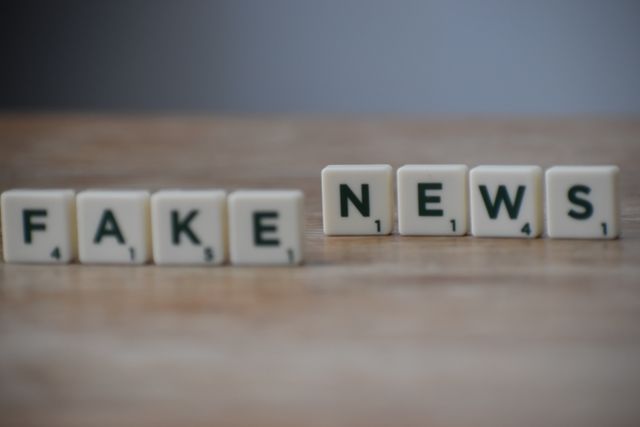

A screenshot can appear to be one of the simplest forms of digital evidence. It may show a social media post, a private conversation, a news headline, a comment, a government announcement, a celebrity statement, or a message from an apparently official account. Because the content is presented as an image, people often perceive it as something that has already been captured and therefore verified. That assumption is increasingly becoming a problem.
Screenshots have become an important part of online communication because they are easy to create, save, crop, edit, and share across different platforms. A person can capture a post on one platform and upload the image to another without providing a link to the original source. The screenshot can then travel through social media, messaging applications, group chats, and online communities independently of the context in which it was originally created.
This makes screenshots useful communication tools, but it also creates opportunities for misinformation. A genuine screenshot can be presented without its original context, an old screenshot can be presented as recent, a fabricated conversation can be designed to look authentic, or a real post can be selectively cropped to change its meaning.
The challenge is becoming more significant as artificial intelligence and image-editing tools make digital manipulation easier. UNESCO has highlighted the growing importance of media and information literacy as AI-generated and manipulated content makes it increasingly difficult to distinguish reliable information from misleading material.
The problem is therefore not simply that some screenshots are fake. The deeper issue is that screenshots can remove the information people need to determine whether what they are seeing is genuine, current, complete, and correctly interpreted.
Why Screenshots Feel More Trustworthy
People naturally use visual evidence when evaluating information. A screenshot appears to provide something concrete: there is a visible username, profile picture, timestamp, message, headline, or statement. Compared with a text message saying, “Someone posted this,” an image showing the supposed post can feel much more convincing.
However, a screenshot is not the same thing as an independently verified source. It is simply a visual representation of something that allegedly appeared somewhere else. This distinction is easy to overlook because screenshots imitate the appearance of original digital environments. A fabricated conversation can contain familiar messaging-app elements.
A fake social media post can reproduce fonts, profile pictures, usernames, and interface elements. A manipulated news screenshot can imitate the design of a recognised publication. The visual appearance creates an impression of authenticity even when the underlying information has not been verified.
This is one reason visual misinformation deserves particular attention. First Draft, an organisation specialising in information disorder and verification, has documented how images containing fabricated quotes, exaggerated statistics, and inflammatory language can spread rapidly because they are easy to share and difficult for conventional text-based monitoring systems to track.
A Screenshot Can Be Real and Still Be Misleading
One of the most important lessons about screenshots is that misinformation does not always require a completely fabricated image. A genuine screenshot can become misleading when it is separated from its original context. Imagine that someone takes a screenshot of a real social media post from several years ago and shares it during a current event without mentioning its date.
The screenshot itself may be authentic, but the way it is presented can create a false impression that the post is recent. The same problem can occur with photographs, news articles, government announcements, videos, and public statements. A real piece of content can be connected to the wrong event, location, person, or time period. UNESCO’s media and information literacy resources identify false context as an important category of misleading content.
In such cases, the underlying material may be genuine, but the surrounding framing changes how people interpret it. This makes verification more complicated than simply asking whether an image has been edited. The more useful question is whether the screenshot accurately represents the original information and whether it is being presented in the correct context.
The Rise of Fake Conversations
Fabricated conversations are particularly powerful because they can imitate private communication. A screenshot showing two people apparently exchanging messages may contain statements that sound believable. If the names and profile photographs are familiar, viewers may immediately assume that the conversation happened.
Yet a conversation screenshot can be created or modified without the involvement of either person shown in it. First Draft documented examples of false WhatsApp conversations circulating as misinformation, including screenshots that appeared to show real individuals discussing political matters.
The organisation noted that screenshots of both real and false conversations were among the types of material circulating in misinformation monitoring. The format itself creates a sense of intimacy. A public statement can be questioned, but a supposedly private message may appear to reveal what someone “really” thinks. This makes fake conversation screenshots particularly effective at attracting attention.
The Screenshot Without the Link
Another reason screenshots are becoming powerful misinformation vehicles is that they can remove the connection to the original source. When someone shares a direct link, a reader may be able to open the source, examine the surrounding text, check the date, inspect the account, and compare the claim with additional information.
A screenshot removes much of that opportunity. It can circulate independently through messaging applications or social networks where the original source is difficult to locate. Once repeatedly reposted, the image can acquire a life of its own.
People may encounter the same screenshot from several different accounts and interpret repeated exposure as confirmation. However, ten accounts sharing the same image do not necessarily represent ten independent sources. They may all have copied the same original post. This creates an important distinction between repetition and verification.
Viral Sharing Can Remove Context
Social media encourages rapid communication. A user may see an interesting screenshot, find it surprising or emotionally powerful, and share it before checking where it came from. Once an image begins spreading, subsequent users may add their own captions, interpretations, or claims.
The original screenshot may therefore become surrounded by layers of commentary that were not present when the underlying content was first created. A statement originally posted as a joke might later be presented as serious. A fictional conversation might be presented as evidence. An old announcement might be presented as breaking news. A partial screenshot might be treated as the complete exchange.
With every repost, the distance between the original source and the current interpretation can increase. This is one reason UNESCO emphasises habits such as pausing before sharing, questioning sources, and diversifying information sources as part of media and information literacy.
Cropping Can Change the Meaning
A screenshot does not necessarily have to be digitally altered to become misleading. Cropping alone can change what viewers understand. A long social media post might contain a statement followed by a correction. If someone screenshots only the original statement, the correction disappears.
Similarly, a conversation might contain several messages that provide important context. Sharing only one line can make the exchange appear very different from the complete conversation.
News websites and social media platforms also provide contextual information around posts, including dates, replies, quoted material, links, and account information. A screenshot can exclude these details. This means that the absence of information can sometimes be as misleading as fabricated information.The viewer sees something that may be technically accurate but incomplete.
Fake Headlines and News Screenshots
Screenshots of supposed news articles are another growing concern. A fabricated headline can be designed to resemble the website of a legitimate publication. The image may include a familiar logo, headline structure, photograph, and typography.
Because viewers often recognise the publication’s visual identity before reading the details, a convincing design can create an immediate impression of credibility. A screenshot may also show a genuine article but replace or alter its headline. This becomes particularly difficult during breaking news events, when people are already searching for updates and may have limited time to verify each claim.
A screenshot that looks like a news report can therefore travel faster than a correction because it requires almost no explanation. Someone can simply write, “Breaking,” attach the image, and send it to hundreds of people.
Artificial Intelligence Is Increasing the Complexity
Generative artificial intelligence has introduced another layer to the screenshot problem. Modern AI systems can generate realistic text, images, voices, and other forms of synthetic media. UNESCO has warned that AI-generated content is making the distinction between authentic and artificial information increasingly difficult and has emphasised the importance of critical thinking and media literacy.
AI can potentially assist in creating fabricated social media posts, conversations, headlines, profile images, and other visual material. At the same time, conventional editing software can accomplish many forms of manipulation without AI. The important lesson is that people should not focus only on whether something “looks AI-generated.”
A screenshot can be misleading even if no AI was involved. Verification should therefore focus on the source, context, timing, consistency, and supporting evidence rather than relying exclusively on visual impressions.
Why Emotional Screenshots Spread Quickly
Screenshots often become viral because they are designed, intentionally or unintentionally, around emotional reactions. A shocking statement can generate anger. A surprising conversation can generate curiosity. A supposed celebrity confession can generate excitement. A political claim can create outrage. A health-related warning can generate fear.
Emotion can reduce the amount of time people spend evaluating information. When something feels urgent, people may share it because they believe others need to know immediately. This creates a cycle in which emotional content receives rapid distribution before verification occurs.
The problem is not that emotional information is always false. Genuine events can be emotionally powerful. The issue is that strong emotional reactions can make people less likely to pause and investigate. This is why media literacy increasingly focuses not only on identifying false information but also on understanding how information affects attention and behaviour.
Why Screenshots Are Difficult to Fact-Check
Traditional fact-checking often relies on locating the original source, comparing statements, checking dates, examining documents, and finding independent evidence. A screenshot can make each of these steps more difficult. The original post may have been deleted. The account may have changed its username.
The screenshot may not include the date. The image may have been cropped. The original conversation may be private. The content may have circulated through closed messaging groups. Visual misinformation can also escape some automated monitoring systems because the important claim exists inside an image rather than searchable text.
First Draft’s research into misinformation monitoring noted that misleading images containing text can be particularly difficult to track because conventional text-based approaches may not capture the information contained within those images. This is why human verification remains important even as platforms develop increasingly sophisticated automated systems.
The Importance of Source Verification
The first question to ask when encountering a viral screenshot is not “Does this look real?” A more useful question is “Where did this come from?” If the screenshot supposedly shows a social media post, users can try to locate the original account. If it claims to show a news article, they can search the publication’s website.
If it presents a government announcement, the relevant government department’s official communication channels can be checked. The date is equally important. A screenshot from 2022 can become misleading when circulated in 2026. A statement from before an important event may have a completely different meaning when viewed after that event.
Users should also compare the claim with independent sources rather than relying on multiple copies of the same screenshot. The objective is not to become suspicious of every image. It is to develop a habit of verification when a claim is important, surprising, controversial, or potentially harmful.
Digital Literacy Is Becoming Visual Literacy
Traditional digital literacy often focused on understanding websites, passwords, privacy settings, online communication, and basic computer skills. The modern information environment requires something broader.
People increasingly need to understand how visual content can be edited, cropped, reframed, copied, and redistributed. This makes visual literacy an increasingly important component of media and information literacy.
UNESCO has emphasised that media and information literacy helps people critically analyse digital content, recognise misinformation, understand AI-generated material, and make more informed decisions online.
For students, this skill is particularly valuable. Young people encounter screenshots through social media, group chats, educational communities, gaming platforms, entertainment accounts, and online discussions. Learning how to question digital evidence should therefore become part of modern education rather than being treated as a specialised journalism skill.
The Role of Social Media Platforms
Users have an important role in slowing misinformation, but platforms also influence how information spreads.
Social networks determine how content is recommended, ranked, displayed, and shared. Their systems can affect which screenshots become visible to large audiences.
Platforms can support users through reporting systems, contextual labels, source information, media-literacy initiatives, and mechanisms that help distinguish original content from reposted material.
UNESCO has argued for stronger media and information literacy within digital environments and has also worked with platforms and other stakeholders to improve users’ ability to recognise manipulated content.
However, no platform-level solution can eliminate misinformation completely. Users will continue to encounter content that requires personal judgment.
The strongest information environment is therefore likely to involve a combination of platform responsibility, professional journalism, fact-checking, education, and individual verification habits.
Screenshots Can Also Be Valuable Evidence
It is important not to treat screenshots as inherently unreliable.
Screenshots can document online events, preserve evidence of posts that may later be deleted, record conversations when appropriately and lawfully shared, and help journalists or researchers understand how information circulated.
The problem arises when a screenshot is treated as self-authenticating.
A screenshot can be evidence, but its evidentiary value depends on context and verification.
Journalists and researchers may examine metadata, archived pages, timestamps, account histories, independent records, and other sources to determine whether a screenshot accurately represents an event.
For ordinary users, the same principle can be applied at a simpler level: identify the source, check the date, look for the original content, and compare important claims with independent reliable information.
Building Better Digital Habits
The growing importance of screenshots does not mean people need to become professional investigators every time they open social media.
Instead, digital users can develop a basic habit of slowing down when content triggers a strong emotional response or makes an extraordinary claim.
A screenshot that says something shocking should invite verification rather than immediate sharing. A supposed news headline should be compared with the publication’s actual website. A political or public statement should be checked against the person’s verified account or official records where available. A health claim should be compared with reliable health authorities or qualified professional sources.
These habits create a small pause between seeing information and spreading it.
That pause can be extremely valuable.
The Future of Trust in a Screenshot-Driven Internet
As digital communication becomes increasingly visual, the ability to interpret screenshots will become part of everyday information literacy.
The challenge will become even more complex as AI-generated content, synthetic identities, manipulated videos, fabricated conversations, and automated content production become more accessible.
The future of trustworthy digital communication may therefore depend less on whether an image looks convincing and more on whether its origin can be established.
This represents a broader change in how people understand evidence online. In the past, a screenshot might have been treated as proof because it appeared to show exactly what happened. Increasingly, people will need to ask what existed before the screenshot, what information has been removed, who created it, when it was captured, and whether independent evidence supports the claim.
The goal should not be permanent distrust. Excessive skepticism can be just as unhelpful as unquestioning belief. Instead, digital literacy should encourage proportional skepticism: the more significant the claim, the more carefully it should be verified.
Conclusion
Viral screenshots are becoming an important source of misinformation because they combine the persuasive power of visual content with the speed and reach of social media. They can imitate conversations, news reports, official announcements, public statements, and social media posts while separating those materials from the original context that allows people to evaluate them.
Some screenshots are completely fabricated. Others are genuine but outdated, cropped, selectively presented, or placed in a misleading context. This makes the problem more complicated than simply identifying edited images.
The rise of generative AI adds another layer to this challenge, but the fundamental solution remains broader than AI detection. People need stronger media and information literacy skills that encourage them to question sources, check dates, locate original material, compare independent evidence, and pause before sharing emotionally powerful claims.
Screenshots will remain an important part of digital communication because they are convenient, portable, and easy to understand. The objective should not be to stop using them. Instead, users need to understand that a screenshot is a representation of information, not automatic proof of its truth.
In an increasingly visual internet, knowing how to read an image is no longer enough. People also need to understand its origin, context, timing, purpose, and journey through the digital environment. That ability will become an increasingly important part of being an informed and responsible digital citizen.
Online Internship with Certificate
You may be interested

Data Breaches and Consumers: What Happens After Personal Information Is Leaked?
Anshika Jain - Sep 25, 2026Personal information has become one of the most valuable forms of data in the digital economy. Every time people create an online account, purchase a product, register…

Deepfake Fraud: How Criminals Are Using Fake Faces and Voices
Anshika Jain - Sep 25, 2026Artificial intelligence has changed the way digital images, videos, and voices can be created. A technology that was once associated mainly with entertainment and experimental media can…
The Rise of Anonymous Creators: Why Some Influencers Hide Their Identity
Anshika Jain - Sep 25, 2026For years, social media influence was closely associated with visibility. Influencers appeared on camera, shared their daily lives, built personal brands around their names, and encouraged audiences…
Most from this category

Synthetic Influencers: Can AI-Generated Personalities Build Real Audiences?
Anshika Jain - Sep 25, 2026

The New Battle Over Content Moderation on Social Platforms
Anshika Jain - Sep 25, 2026Synthetic Influencers: Can AI-Generated Personalities Build Real Audiences?
Anshika Jain - Sep 25, 2026From Influencer to Entrepreneur: The New Indian Creator Economy
Anshika Jain - Sep 24, 2026