

Ten Years After the Surgical Strikes: How Has India’s Security Strategy Changed?

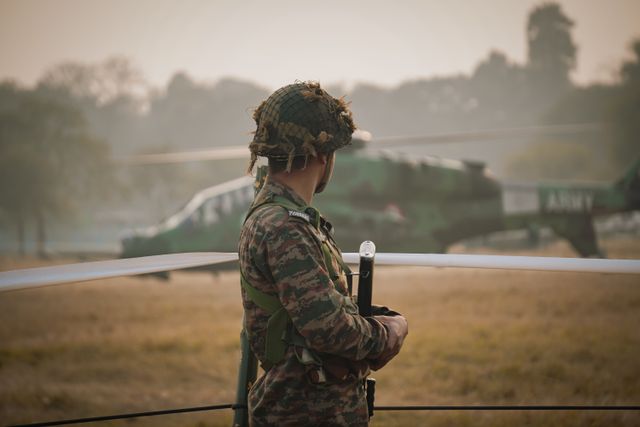

Ten years ago, on the night of September 28–29, 2016, India carried out what became known as the Surgical Strikes across the Line of Control (LoC), targeting terrorist launch pads in Pakistan-occupied Kashmir. The operation followed the deadly Uri terrorist attack, in which 19 Indian soldiers were killed. More than a military operation, the strikes came to represent a significant moment in India’s approach to cross-border terrorism and national security.
A decade later, India is marking the anniversary at a very different strategic moment. The security environment has evolved considerably since 2016, with the country confronting not only conventional and cross-border threats but also drones, cyberattacks, electronic warfare, disinformation, satellite-based surveillance and increasingly complex forms of hybrid warfare.
The evolution is particularly visible when the 2016 operation is compared with the Balakot airstrike of 2019 and Operation Sindoor of 2025. While the Surgical Strikes demonstrated the willingness to cross the LoC to target terrorist infrastructure, subsequent operations have involved greater use of air power, precision weapons, intelligence integration, air defence, unmanned systems and multi-domain military capabilities. Analysts have described this as a broader evolution in India’s military doctrine rather than simply a repetition of the 2016 model.
The tenth anniversary therefore provides an opportunity to examine how India’s security strategy has changed, what capabilities have expanded, and what new challenges have emerged.
From Strategic Restraint to a More Proactive Posture
The most important change since 2016 has been in the way India has publicly articulated its response to terrorism originating across its borders.
The Surgical Strikes followed a period in which India’s response to terrorist attacks was generally associated with diplomatic pressure, intelligence operations, security measures and conventional military preparedness. The 2016 operation demonstrated that India was prepared to undertake overt military action against terrorist launch infrastructure across the LoC.
The subsequent Balakot airstrike in February 2019 further expanded this approach. Unlike the 2016 operation, which relied primarily on ground-based special forces, Balakot involved air power and targeted a location deeper inside Pakistan. The operation followed the Pulwama terrorist attack that killed 40 Central Reserve Police Force personnel.
Operation Sindoor in May 2025 represented another stage in this evolution. Following the Pahalgam terrorist attack in April 2025, India conducted strikes against terrorist infrastructure in Pakistan and Pakistan-occupied Jammu and Kashmir. According to the Ministry of Defence, the operation involved coordinated action by the armed forces and demonstrated capabilities across air, land, maritime, cyber, space and information domains.
The progression from 2016 to 2019 and then to 2025 indicates that India’s response framework has become increasingly multidimensional. Military action is now considered alongside intelligence, diplomacy, economic measures, technological capabilities and information operations.
From One Operation to a Broader Security Doctrine
The significance of the Surgical Strikes lies partly in the fact that they established a precedent. The operation demonstrated that a terrorist attack could be followed by a military response designed to impose costs beyond India’s immediate territory.
Over the following decade, this principle was developed through different operational experiences.
The Balakot operation demonstrated the use of air power for counter-terrorism objectives. Operation Sindoor went further by combining precision strikes, air defence, drones, electronic warfare and coordinated action by different branches of the military.
This does not mean that India has abandoned diplomatic or conventional approaches. Rather, the security strategy has become broader, with military capabilities forming one component of a larger national-security framework.
The government’s own 2026 assessment describes the evolution as involving stronger intelligence integration, border surveillance, counter-terrorism investigations, action against terror financing, modernization of security forces, cyber capabilities and international diplomatic cooperation.
This broader framework is important because terrorism today is rarely confined to a physical battlefield. Financing networks, digital communication, social media, drones and cyber infrastructure can all become part of the security challenge.
Intelligence Has Become Central to the Strategy
One of the clearest changes over the past decade has been the growing importance of intelligence and surveillance.
The security environment along the LoC and in Jammu and Kashmir increasingly involves small groups, difficult terrain, covert infiltration routes and the use of technology by militant networks. Detecting threats before they materialise has consequently become as important as responding after an attack.
Recent assessments of the decade since the Surgical Strikes point to improvements in intelligence gathering, surveillance and coordination among security agencies. The use of drones, satellite imagery and other surveillance technologies has expanded the ability of security forces to monitor difficult terrain and identify potential infiltration routes.
This represents a fundamental change in counter-insurgency operations. Rather than relying predominantly on the physical deployment of large numbers of troops, modern security operations increasingly depend on information superiority.
The objective is to know where a threat is emerging, identify its network, understand its movement and respond before it can develop into a larger attack.
The Drone Revolution
Perhaps no technology has changed the security landscape as rapidly as the drone.
A decade ago, drones were present in military planning but did not occupy the same central position that they do today. By 2026, unmanned aerial systems have become an important part of surveillance, reconnaissance, targeting, logistics and combat operations.
Drones have also transformed the threat environment. Small unmanned aircraft can potentially be used to transport weapons, conduct surveillance, attack military installations or disrupt civilian counter-drone capabilities. India’s military response incorporated layered air defence and electronic warfare systems designed to detect and counter incoming drones and missiles. Subsequent modernization efforts have placed additional emphasis on counter-drone technology. infrastructure. Their relatively low cost compared with conventional aircraft makes them particularly attractive to non-state actors.
Operation Sindoor reinforced the importance of counter-drone capabilities. India’s military response incorporated layered air defence and electronic warfare systems designed to detect and counter incoming drones and missiles. Subsequent modernization efforts have placed additional emphasis on counter-drone technology.
This means that India’s security strategy increasingly has to address both high-end military threats and low-cost asymmetric technologies.
Air Defence Has Become a Strategic Priority
The 2025 conflict also highlighted the importance of air defence.
Modern warfare is no longer limited to fighter aircraft and traditional missiles. Countries must now prepare for combinations of drones, cruise missiles, ballistic missiles, electronic warfare and other precision systems.
India’s experience during Operation Sindoor accelerated attention towards integrated air-defence networks. Systems such as the Army’s Akashteer and the Indian Air Force’s Integrated Air Command and Control System form continued development and acquisition of longer-range air-defence capabilities. The experience of Operation Sindoor has contributed to a greater emphasis on detecting and responding to aerial threats as quickly and sea, but increasingly also cyber, space and information domains. Satellites provide surveillance and communications. Cyber capabilities can disrupt or protect critical networks. Electronic warfare can interfere with communications and sensors part of a broader effort to connect sensors, command structures and defensive weapons.
India has also continued development and acquisition of longer-range air-defence capabilities. The experience of Operation Sindoor has contributed to a greater emphasis on detecting and responding to aerial threats as quickly as possible.
For national security planners, the lesson is clear: possessing offensive weapons alone is insufficient. Protecting military bases, infrastructure and population centres against increasingly sophisticated attacks is equally important.
The Rise of Multi-Domain Warfare
The security strategy of 2016 was largely understood through the lens of ground-based counter-terrorism. A decade later, the concept of warfare has become considerably broader.
Modern military operations can involve land, air and sea, but increasingly also cyber, space and information domains. Satellites provide surveillance and communications. Cyber capabilities can disrupt or protect critical networks. Electronic warfare can interfere with communications and sensors. Information operations can shape public perceptions during a conflict.
Operation Sindoor demonstrated the increasing importance of this integrated approach. India’s Ministry of Defence described the operation as involving capabilities across traditional and emerging domains, including cyber, space and information warfare.
This represents an important transformation in India’s security planning. Future conflicts may not begin with conventional battlefield action. They could involve simultaneous activity across several domains, requiring decisions to be taken quickly and coordinated across military and civilian institutions.
Greater Integration Among the Armed Forces
Another major development has been the push towards greater integration among the Army, Navy and Air Force.
India created the position of Chief of Defence Staff in 2020 with the objective of improving coordination between the three services and strengthening higher defence management. The experience of Operation Sindoor provided an important operational test of this structure.
The International Institute for Strategic Studies has noted that Operation Sindoor was India’s first major military operation since the creation of the CDS position and demonstrated increased cooperation between the Army and Air Force.
Greater integration is also visible in logistics, intelligence sharing, surveillance and operational planning.
The objective is to move away from three services operating largely within separate institutional structures and towards a system in which military capabilities can be combined according to the requirements parts of the Kashmir Valley have become relatively quieter compared with the period immediately following of a particular operation.
The process, however, remains ongoing. The development of theatre commands and other aspects of deeper jointness continue to be areas of institutional reform and debate.
Jammu and Kashmir: A Changing Security Picture
The security situation in Jammu and Kashmir has also changed significantly over the past decade.
Government data cited in recent reporting show a substantial reduction in the number of terrorism-related incidents compared with 2016. However, the nature and geography of the threat have also evolved. Recent reporting suggests that while parts of the Kashmir Valley have become relatively quieter compared with the period immediately following 2016, security challenges have increasingly appeared in parts of the Jammu region.
This to small militant groups seeking concealment. The challenge is therefore not necessarily the presence of large militant formations but the ability of small networks to infiltrate, remain creates a different operational challenge for security forces.
The terrain in parts of Jammu is mountainous and heavily forested, offering potential advantages to small militant groups seeking concealment. The challenge is therefore not necessarily the presence of large militant formations but the ability of small networks to infiltrate, remain hidden and launch attacks.
Security forces have responded with greater emphasis on intelligence-led operations, surveillance, area domination and technology-assisted monitoring. Drones and satellite imagery have become increasingly important in this environment.
The changing geography of the threat demonstrates why security strategies cannot remain static.
Defence Manufacturing and Strategic Autonomy
The decade has also witnessed a greater emphasis on domestic defence production. India has sought to reduce dependence on foreign suppliers by expanding indigenous manufacturing of missiles, artillery systems, drones, electronic systems and other military equipment.
The concept of defence self-reliance has become closely connected with strategic autonomy. The argument is that a country facing a major security crisis should not be excessively dependent on external suppliers for critical military equipment or spare parts.
Operation Sindoor reinforced this priority. The Ministry of Defence highlighted the use of Indian-made systems during the operation and linked defence modernization with the broader objective of strategic autonomy.
However, self-reliance is a long-term process. India continues to import several sophisticated military platforms and technologies. The challenge is to expand domestic capability while maintaining access to advanced technologies that may not yet be available entirely within the country.
Counter-Terrorism Has Expanded Beyond the Battlefield
Another major change is the growing emphasis on dismantling terrorist networks rather than focusing solely on armed militants.
Terrorist organisations depend on recruitment, financing, communication systems, logistics, safe houses and international networks. Disrupting these systems can be as important as conducting physical operations.
India’s counter-terrorism architecture has therefore expanded to include financial investigations, intelligence coordination, cyber monitoring, international cooperation and stronger legal mechanisms.
The government has described action against terror financing and greater inter-agency coordination as important components of its security framework.
International diplomacy has also become an important part of the strategy, particularly India’s efforts to highlight terrorism as a global security issue and strengthen cooperation against terrorist financing and networks.
The Information War
The nature of conflict has also changed because information itself has become a strategic domain.
During military crises, governments and armed forces must manage not only battlefield operations but also misinformation, manipulated images, fake videos and competing narratives.
The widespread use of social media means that information can travel around the world within seconds. A fabricated video or misleading claim can influence public perceptions before authorities have an opportunity to establish the facts.
This has made information verification, strategic communication and cyber security increasingly important components of national security.
The challenge is particularly difficult because modern conflicts can involve simultaneous military action and information campaigns. Security institutions therefore increasingly need capabilities that extend beyond conventional military operations.
From Surgical Strikes to Deterrence
The broader strategic question after ten years is whether these developments have changed India’s deterrence posture.
The 2016 operation established that India was prepared to conduct a limited cross-border operation following a major terrorist attack. Balakot expanded the geographical and operational dimensions of that response. Operation Sindoor demonstrated an even more complex combination of precision strikes, air defence, electronic warfare, drones and joint military capabilities.
Indian officials have presented this progression as evidence of a more assertive counter-terrorism policy. Prime Minister Narendra Modi, speaking ahead of the tenth anniversary, described the current approach as one of zero tolerance towards terrorism and cited the Surgical Strikes and Operation Sindoor as examples.
At the same time, deterrence is not determined by military operations alone. It depends on intelligence, military readiness, diplomatic relationships, economic resilience and the ability to manage escalation.
The experience of 2025 demonstrated that military action between two nuclear-armed neighbours carries risks that require careful management.
The New Security Challenges
The transformation of India’s strategic planning. The security environment along the northern borders requires a different combination of capabilities from those India’s security strategy does not mean that the country faces fewer security challenges. In many respects, the challenges have become more complicated.
Cross-border terrorism remains an important concern, while drone infiltration, cyberattacks, satellite warfare, electronic warfare and information manipulation create new vulnerabilities.
China also remains a central factor in India’s strategic planning. The security environment along the northern borders requires a different combination of capabilities from those needed to address terrorism along the western frontier.
India consequently has to prepare for multiple contingencies at the same time. Its military must be capable of counter-insurgency operations, conventional warfare, high-altitude deployments, maritime operations and increasingly technology-intensive forms of conflict.
This is pushing defence planning towards greater flexibility, faster decision-making and technological modernization.
Ten Years On: What Has Really Changed?
The most significant transformation since the Surgical Strikes is that India’s security strategy has moved from a largely reactive framework towards a broader model combining deterrence, intelligence, technology, military preparedness and diplomatic engagement.
The 2016 operation was a relatively focused military action involving special forces. A decade later, India’s security architecture encompasses surveillance networks, drones, precision weapons, integrated air defence, electronic warfare, cyber capabilities, space assets, intelligence coordination and joint operations.
The change can also be seen institutionally. The creation of the Chief of Defence Staff, the emphasis on jointness, defence-industrial reforms and greater integration between intelligence and security agencies all reflect an effort to create a more coordinated national-security system.
Yet the transformation remains unfinished. Theatre integration, advanced indigenous technologies, counter-drone systems, cyber defence and intelligence coordination will require continued investment and institutional adaptation.
Conclusion
Ten years after the Surgical Strikes, India’s security strategy looks markedly different from the one that existed in 2016.
The strikes of September 2016 established a new operational template by demonstrating India’s willingness to conduct overt action against terrorist infrastructure across the LoC. The Balakot airstrike of 2019 expanded that template into the air domain, while Operation Sindoor in 2025 demonstrated a much broader combination of precision weapons, intelligence, air defence, electronic warfare, drones and tri-service coordination.
The security environment has simultaneously become more technologically complex. Threats can emerge through conventional military forces, terrorist networks, drones, cyber systems or information platforms. As a result, India’s response increasingly depends on the ability to combine military power with intelligence, technology, diplomacy and domestic defence production.
The tenth anniversary of the Surgical Strikes is therefore not merely a commemoration of an operation conducted in 2016. It is also a marker of a decade-long transformation in India’s understanding of national security.
The central lesson of the past ten years is that modern security cannot depend on one weapon, one service or one type of operation. It requires continuous intelligence, technological superiority, institutional coordination, economic resilience and the ability to respond to rapidly changing threats.
India’s security strategy in the years ahead will be shaped by how effectively it can integrate these capabilities while managing the risks of escalation in a region where conventional military competition exists alongside nuclear deterrence. The transition that began with the Surgical Strikes has therefore become a much larger project: building a security architecture designed not only to respond to yesterday’s threats, but also to anticipate the forms of conflict that may define tomorrow.
Online Internship with Certificate
You may be interested

Water Security: The Next Major Challenge for Growing Cities
Anshika Jain - Sep 29, 2026For much of modern history, cities have been built around the assumption that water will remain available. Rivers, reservoirs, groundwater, pipelines and treatment plants have allowed urban…

The Growing Importance of Subsea Internet Cables in Global Security
Anshika Jain - Sep 29, 2026For most people, the internet appears to exist in the air. A video call, bank transaction, cloud application or message can travel across continents in seconds, creating…

AI and Misinformation: Is Truth Becoming Harder to Verify?
Anshika Jain - Sep 29, 2026The internet has always had a misinformation problem, but artificial intelligence is changing the scale, speed and sophistication of the challenge. False information once required time, money…
Most from this category





US–Iran Tensions: What Are the Economic Consequences for the World?
Anshika Jain - Sep 29, 2026The Falling Rupee: What Does It Mean for Ordinary Indians?
Anshika Jain - Sep 29, 2026From Cash to QR Codes: How Everyday Payments Are Changing
Anshika Jain - Sep 28, 2026