

The New Era of Drone Warfare: How Technology Is Changing Modern Conflicts

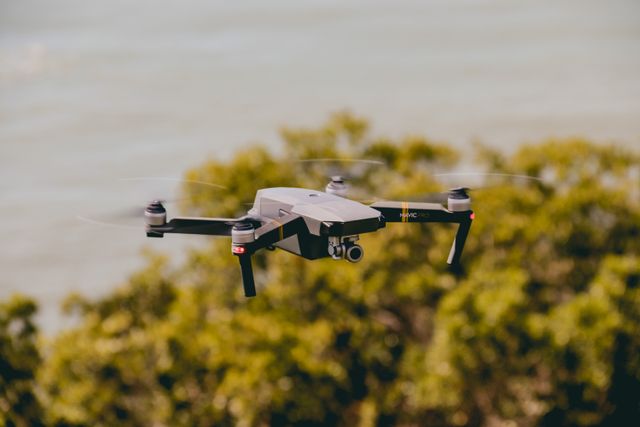

Modern warfare is entering a technological phase in which relatively small, inexpensive and increasingly intelligent unmanned systems can influence battles far beyond their physical size. Drones, once associated primarily with surveillance and limited precision strikes, have become central components of reconnaissance, battlefield coordination, electronic warfare, logistics, air defence and long-range attacks. Their growing importance is changing how militaries think about territory, manpower, equipment and the cost of conducting war.
The transformation is particularly visible in the Russia-Ukraine war, where both sides have continuously adapted unmanned aerial systems and counter-drone technologies. The experience has demonstrated that drones are not simply another category of military equipment. They are part of a broader technological ecosystem involving artificial intelligence, sensors, satellite communications, electronic warfare, data networks and rapid manufacturing. Research from SIPRI notes that armed uncrewed aerial vehicles are increasingly being used for long-range precision strikes, saturation attacks, reconnaissance, first-person-view operations and coordinated swarm missions.
Recent developments suggest that this transformation is spreading beyond Ukraine. The use of drone technology in the 2026 Iran conflict and the growing interest of major militaries in low-cost autonomous systems indicate that drone warfare is becoming a defining feature of contemporary military planning. The question is no longer whether drones will be used in future conflicts, but how deeply they will be integrated into military operations.
From Supporting Technology to a Core Military Capability
Traditional military doctrine generally treated unmanned aircraft as supporting systems. They were valuable for surveillance, reconnaissance and intelligence collection, but conventional aircraft, missiles, artillery and ground forces remained at the centre of combat operations.
That balance is changing. Modern drones can perform multiple roles across different ranges and levels of complexity. Small systems can provide frontline reconnaissance, while larger unmanned platforms can conduct longer-range surveillance or carry substantial payloads. One-way attack drones can function as relatively inexpensive precision weapons, while sophisticated systems can operate alongside conventional aircraft and other unmanned platforms.
The result is a battlefield where the distinction between sensor and weapon is becoming increasingly blurred. A drone may identify a target, transmit its location, support an artillery strike and potentially conduct an attack itself. This compression of the intelligence-to-strike cycle can dramatically increase the speed at which military forces respond to battlefield developments.
The Australian Army Research Centre describes the experience of Ukraine as evidence that uncrewed systems operating across air, land and maritime environments are reshaping tactical, operational and strategic approaches to warfare.
The Ukraine War as a Drone-Warfare Laboratory
The war in Ukraine has become one of the most important real-world environments for studying modern drone warfare. Both Ukraine and Russia have deployed large numbers of unmanned systems and continuously modified their technology in response to battlefield conditions.
One of the most important lessons has been the speed of technological adaptation. A drone design that works effectively in one period may become significantly less useful once the opposing side develops a countermeasure. Jamming, interception, camouflage, signal detection and other defensive measures can rapidly change the effectiveness of particular systems.
This has created an unusually fast technological cycle. Military units provide feedback from the battlefield, engineers modify systems, manufacturers produce new versions and operators test them again. The process resembles the development cycle of commercial technology more closely than the traditional multi-year procurement models associated with major weapons platforms.
Research from Carnegie Endowment has described the Ukraine conflict as a sustained technological competition in which both sides continuously introduce new unmanned systems, countermeasures and operating methods.
The Economics of Low-Cost Warfare
Perhaps the most important change created by drones is economic rather than purely technological.
Traditional precision weapons and advanced military aircraft can cost enormous amounts to design, manufacture and operate. A relatively inexpensive unmanned system can potentially force an opponent to spend substantially more on detection and interception.
This creates an unusual economic problem for defence planners. If a low-cost drone can threaten a high-value aircraft, radar system, ammunition depot or infrastructure facility, using an expensive interceptor against every incoming drone may not be sustainable.
This does not mean inexpensive drones can simply replace advanced weapons. Their capabilities, reliability and survivability vary considerably. However, the cost imbalance has encouraged militaries to reconsider how they allocate defensive resources.
The emerging concept is sometimes described as “precise mass,” where large numbers of comparatively affordable systems can be deployed to create operational effects. Analysts at the Council on Foreign Relations have argued that the Ukraine and Iran conflicts demonstrate how high-volume use of low-cost, increasingly autonomous systems is becoming a regular characteristic of modern warfare.
Artificial Intelligence Is Changing Drone Capabilities
Artificial intelligence is becoming increasingly important because modern drone warfare generates enormous quantities of data.
Cameras, infrared sensors, radar, navigation systems and other technologies can collect information faster than human operators can manually process it. AI can help identify objects, interpret imagery, support navigation and prioritize information for military personnel.
The significance of AI therefore extends beyond giving a drone an ability to “fly by itself.” It can influence the entire operational chain, from detecting a potential target to determining how information should be communicated to commanders.
Recent developments in Ukraine demonstrate this direction. AI-enabled systems are increasingly being developed to operate in environments where conventional GPS and communications links may be unreliable. Some newer systems use computer vision and alternative navigation methods to continue functioning when electronic warfare interferes with traditional navigation signals.
This represents a major shift because future drones may depend less on continuous human control and more on onboard processing.
Autonomy and the Human Role
Increasing autonomy also raises one of the most difficult questions surrounding drone warfare: how much control should remain with human operators?
A remotely controlled drone requires a human to interpret information and make decisions. A highly autonomous system may be able to navigate, recognize objects and perform parts of a mission with limited human intervention.
There are significant operational reasons for increasing autonomy. Communications can be disrupted, satellite navigation can be jammed and operators can become vulnerable to enemy detection. An autonomous system may continue operating when its connection to a human controller is interrupted.
However, greater autonomy also raises questions about accountability and international humanitarian law. Decisions involving the use of lethal force involve distinctions between military targets and civilians and require judgments about proportionality and necessity.
SIPRI has warned that the rapid development of autonomous and AI-integrated armed UAVs is creating regulatory challenges, with existing international mechanisms covering only parts of the emerging technology landscape.
Electronic Warfare Has Become a Central Battlefield
The rise of drones has simultaneously increased the importance of electronic warfare. Drones often depend on communication links, navigation signals and data networks. An adversary that can disrupt these systems may be able to reduce the effectiveness of an unmanned platform without physically destroying it.
The Ukraine conflict has demonstrated how contested the electromagnetic environment can become. GPS interference, communications jamming and attempts to locate control signals have become important elements of the battlefield.
This has created a technological race between drone developers and electronic-warfare specialists. As defensive systems improve, drone designers attempt to develop more resilient communications, alternative navigation methods and greater onboard autonomy.
The result is an iterative competition. A drone is not simply evaluated according to its range or payload. Its ability to function in an environment where communications and navigation are actively contested can be equally important.
The Rise of Counter-Drone Warfare
Every major technological change in warfare eventually creates a corresponding defensive industry. The expansion of drones has therefore produced rapid growth in counter-drone technology.
Traditional air defence systems were largely designed around aircraft and missiles. Small drones create different challenges because they can be difficult to detect, inexpensive to deploy and numerous enough to overwhelm conventional defensive systems.
Modern counter-drone strategies increasingly involve multiple layers of detection and response. Radar, optical sensors, electronic warfare systems, interceptors and other technologies can be combined to identify and neutralize different types of threats.
Recent defence research has emphasized integrated sensors, electronic warfare, real-time data sharing, layered protection and affordable interceptors as important components of modern counter-drone systems. The objective is increasingly to create a balanced defence architecture rather than relying on a single expensive weapon.
Drone Swarms and the Concept of Mass
The next major stage in drone warfare may involve greater coordination between multiple autonomous systems. A swarm is not simply a large number of drones operating simultaneously. The more advanced concept involves systems sharing information, coordinating movement or distributing tasks across a network.
The military significance of swarms comes from their ability to create complexity. An adversary may find it more difficult to determine which system represents the primary threat, while a large number of platforms can potentially overwhelm limited defensive resources.
However, true autonomous swarming remains technically and operationally difficult. Communication reliability, coordination, identification, electronic warfare and command authority all present challenges.
Nevertheless, the development of swarm concepts indicates how warfare could evolve from individual platforms toward networked groups of relatively inexpensive systems.
Drones Are Changing the Battlefield Beyond the Air
The drone revolution is not limited to aerial systems. Uncrewed ground and maritime systems are also becoming increasingly important. Ground robots can potentially support logistics, surveillance and hazardous operations, while unmanned maritime systems can perform reconnaissance and other missions in contested waters.
This creates a broader concept of uncrewed warfare in which air, land and maritime systems can share information.
The combination of these systems with satellites, sensors, AI and command networks could create a battlefield where machines continuously collect and distribute information across different domains. This represents a fundamental shift from platform-centric warfare toward network-centric warfare.
The Changing Role of Soldiers
Drones are not necessarily eliminating the need for soldiers. Instead, they are changing what soldiers do and how they operate. Small unmanned systems can give individual units access to capabilities that were previously available primarily to larger formations. A frontline unit can potentially observe terrain beyond its immediate line of sight, identify threats and coordinate actions using relatively compact technology.
At the same time, drone operators have become important military specialists. The skills required to operate, modify and maintain sophisticated unmanned systems are increasingly becoming part of modern military organizations.
The human factor therefore remains critical. Technology can provide information and reach, but leadership, decision-making, training, morale and organizational adaptability continue to determine how effectively technology is used. Research on lessons from Ukraine emphasizes that human resilience and leadership remain decisive even as drones and artificial intelligence become increasingly important.
Defence Procurement Is Changing
The rise of drones is also challenging traditional defence procurement. Large military platforms often take many years to design, test and acquire. Drone technology evolves much faster. A system that is considered advanced today may be outdated relatively quickly because software, sensors, communications technology and countermeasures continue to evolve.
This has encouraged greater interest in modular designs, rapid production and battlefield-driven innovation. Ukraine has demonstrated the value of shortening the distance between military users and technology companies.
Recent investment in Ukrainian defence technology startups reflects growing demand for systems that can be rapidly adapted to battlefield requirements. For governments, the challenge is to maintain sufficient quality and reliability while allowing technological systems to evolve quickly.
Drones and the Future of Air Defence
One of the most significant consequences of drone warfare is that it forces countries to reconsider air defence. Traditional air defence systems are expensive and often designed to protect against high-value aircraft and missiles. A large number of relatively cheap drones can create a difficult cost problem.
Future defence networks are therefore likely to combine different technologies depending on the type of threat. Expensive interceptors may remain necessary for sophisticated missiles or aircraft, while cheaper solutions may be used against smaller unmanned systems.
Artificial intelligence can also play a role in identifying threats and coordinating defensive responses. Recent European initiatives are already exploring AI-assisted systems capable of connecting sensors, radar, image recognition and multiple counter-drone technologies. The broader objective is to build defence systems that are both technically effective and economically sustainable.
The Strategic Impact on Major Powers
The drone revolution is also changing the strategic calculations of major military powers. Countries with large conventional forces are increasingly investing in unmanned systems because drones can provide additional capabilities without requiring every mission to place a human pilot at risk.
At the same time, countries with smaller defence budgets can use relatively inexpensive drones to create asymmetric challenges for stronger opponents. This makes drone technology particularly important in conflicts where one side has a significant advantage in conventional military hardware.
The proliferation of commercially available components also contributes to this trend. Sensors, processors, cameras, communications equipment and manufacturing technologies developed for civilian markets can sometimes be adapted for military purposes. This creates both opportunities and security challenges for governments attempting to regulate sensitive technologies.
The Legal and Ethical Challenge
Technological innovation is moving faster than many existing international frameworks.
The growing use of AI-enabled drones raises questions about accountability, civilian protection and the limits of autonomous decision-making. International humanitarian law already establishes important principles governing armed conflict, but applying these principles to increasingly autonomous systems can be complex.
The central ethical question is not simply whether a machine can make a decision. It is whether humans can maintain meaningful responsibility and control over the use of force.
As autonomy increases, governments will face pressure to establish clearer standards for human oversight, testing, deployment and accountability.
The debate is likely to become more important as autonomous systems become cheaper and more widely available.
From Weapons to an Entire Defence Ecosystem
Perhaps the most important lesson from the new era of drone warfare is that drones should not be understood as isolated weapons.
Their effectiveness depends on a wider technological ecosystem involving satellite communications, sensors, AI, electronic warfare, data networks, manufacturing capacity and trained personnel.
A sophisticated drone without reliable intelligence may have limited value. A powerful sensor without an effective communications network may fail to deliver information. A large fleet without suitable countermeasures can become vulnerable.
The most capable military organizations will therefore be those that can integrate multiple technologies into a coherent operational system.
This is why modern warfare is increasingly becoming a competition between ecosystems rather than simply between individual weapons.
What the Future of Drone Warfare Could Look Like
The future battlefield is likely to contain a mixture of human-operated aircraft, autonomous drones, robotic ground systems, unmanned maritime platforms, satellites and AI-enabled command networks.
Drones will probably become smaller, more autonomous, more resistant to electronic interference and easier to manufacture at scale. AI will increasingly assist navigation, recognition, planning and coordination.
At the same time, counter-drone technology will develop rapidly. Radar, electronic warfare, directed-energy systems, interceptors and other defensive technologies will continue to evolve in response to new threats.
This creates a continuous cycle of innovation. Every new capability produces a countermeasure, which then encourages another technological adaptation.
The result will not be a battlefield dominated exclusively by autonomous machines. Instead, future conflicts are likely to involve increasingly complex cooperation between people and machines.
Conclusion
The new era of drone warfare is changing modern conflict by altering the relationship between technology, cost, speed and military power. Drones have evolved from supporting surveillance tools into important components of reconnaissance, precision strike, electronic warfare, logistics and air defence.
The experience of Ukraine has demonstrated how quickly unmanned systems can evolve when manufacturers, military units and software developers continuously adapt to battlefield conditions. More recent conflicts are reinforcing the same trend, with low-cost systems, autonomy and AI becoming increasingly important to military planning.
Yet the drone revolution does not mean conventional military capabilities have become irrelevant. Aircraft, missiles, artillery, tanks, naval forces and human soldiers continue to play major roles. What is changing is how these capabilities interact with unmanned systems.
The defining feature of future warfare may therefore not be the replacement of humans by machines, but the emergence of highly connected military ecosystems in which humans and autonomous technologies operate together.
The strategic advantage will increasingly belong to countries that can innovate rapidly, manufacture at scale, protect their networks, counter enemy drones and integrate artificial intelligence without losing effective human control.
Drone warfare is consequently more than a new chapter in military technology. It represents a broader transformation in how conflicts are fought, how defence systems are designed and how military power is measured in the twenty-first century.
Online Internship with Certificate
You may be interested

What Students Will Learn From the New NCERT Governance and Public Policy Chapter
Anshika Jain - Oct 08, 2026The way students learn about government and democracy is changing as school education increasingly moves beyond memorising constitutional terms and political institutions. The inclusion of governance and…
Oil, Shipping and Conflict: Why Tensions Around the Strait of Hormuz Matter to India
Anshika Jain - Oct 08, 2026Tensions around the Strait of Hormuz have consequences far beyond the Middle East. For India, the narrow maritime corridor connecting the Persian Gulf with the Gulf of…
Iran Conflict Update: Why the Strait of Hormuz Remains Critical to the Global Economy
Anshika Jain - Oct 08, 2026The conflict involving Iran has once again placed the Strait of Hormuz at the centre of global economic attention. The narrow maritime passage between Iran and the…
Most from this category

Why Technology, Energy and Defence Are Becoming Important Parts of India-US Economic Relations
Anshika Jain - Oct 08, 2026
Digital Payments Under Pressure: Can India Maintain a Low-Cost UPI Ecosystem?
Anshika Jain - Oct 08, 2026

Flydubai Flight Incident: How an Injured Captain Helped Regain Control of the Aircraft
Anshika Jain - Oct 05, 2026
Why Technology, Energy and Defence Are Becoming Important Parts of India-US Economic Relations
Anshika Jain - Oct 08, 2026Digital Payments Under Pressure: Can India Maintain a Low-Cost UPI Ecosystem?
Anshika Jain - Oct 08, 2026UPI and Merchant Charges: Why Traders Are Calling for “No UPI Day”
Anshika Jain - Oct 05, 2026