Delhi’s Poor Air Quality: Pollution Episodes Require More Than Emergency Restrictions?

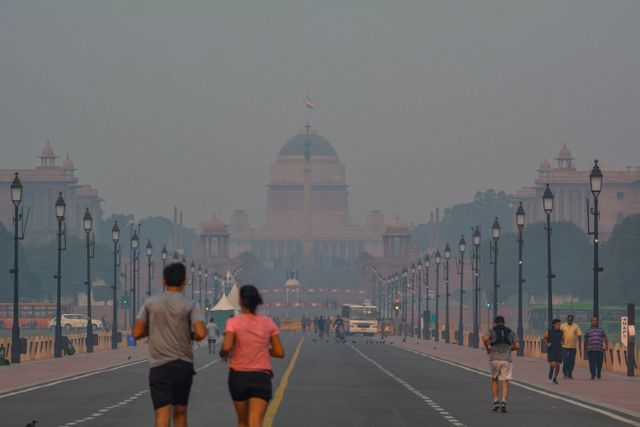

Delhi’s air pollution problem is often discussed most urgently when the Air Quality Index (AQI) rises sharply, visibility declines, and residents begin experiencing irritation in their eyes, throat, and respiratory system. During these periods, authorities may introduce emergency measures such as restrictions on construction activity, limits on certain vehicles, temporary school adjustments, and controls on industrial operations. These interventions are important because they can reduce some sources of pollution during severe episodes. However, they do not address the deeper conditions that allow dangerous pollution levels to return.
Delhi’s air quality is not the result of a single activity or one seasonal event. It reflects the combined impact of road transport, construction dust, industrial emissions, power generation, waste burning, household fuel use, regional agricultural activity, and weather conditions that influence how pollutants disperse. The relative contribution of these sources changes across locations, seasons, and weather patterns. This makes pollution management a complex environmental and public-health challenge rather than a problem that can be solved through temporary restrictions alone.
The recurring nature of Delhi’s pollution episodes reveals a significant gap between emergency response and long-term prevention. Restrictions introduced during severe conditions may help reduce immediate emissions, but cleaner air requires changes in transport systems, urban planning, industrial technology, waste management, energy use, and regional coordination. It also requires reliable monitoring and public-health planning throughout the year.
Understanding why emergency restrictions are insufficient is essential for developing an approach that protects residents not only during extreme pollution episodes but also during the months when air quality remains unhealthy without attracting the same level of attention.
Understanding Delhi’s Air Pollution Problem
Delhi experiences a combination of particulate pollution and gaseous pollutants, including fine particulate matter (PM2.5), coarse particulate matter (PM10), nitrogen dioxide, sulphur dioxide, carbon monoxide, and ground-level ozone. Among these, PM2.5 receives particular attention because its small particles can penetrate deep into the respiratory system and contribute to serious health problems.
PM2.5 can originate directly from combustion sources, including vehicles, industrial operations, waste burning, and certain heating activities. It can also form in the atmosphere through chemical reactions involving gases such as nitrogen oxides, sulphur dioxide, ammonia, and volatile organic compounds. This means that pollution is not limited to visible smoke or dust. Some harmful particles develop through atmospheric chemistry after their precursor emissions have already entered the air.
PM10 includes larger particles that can arise from road dust, construction activities, soil disturbance, and other mechanical processes. Although these particles are generally larger than PM2.5, they can still affect respiratory health and contribute to poor visibility and environmental degradation.
Delhi’s air pollution is also influenced by its geographical and meteorological conditions. During colder months, lower temperatures, weaker winds, temperature inversions, and a shallow atmospheric boundary layer can limit the vertical and horizontal dispersion of pollutants. Emissions that might disperse more effectively under different weather conditions can therefore accumulate closer to the ground.
This interaction between emissions and weather helps explain why pollution levels can rise rapidly even when the sources themselves have not increased by the same proportion. It also explains why emergency restrictions may produce different results depending on the prevailing atmospheric conditions.
Why Pollution Episodes Become More Severe During Winter
Weather Conditions Trap Pollutants Near the Ground
Winter pollution episodes in Delhi are closely associated with atmospheric conditions that reduce the movement and dilution of pollutants. During a temperature inversion, a layer of warmer air can sit above cooler air near the surface, limiting vertical mixing. Pollutants released close to the ground become concentrated within a relatively shallow layer of air.
Low wind speeds can further reduce dispersion. When emissions continue to enter the atmosphere while the air remains relatively stagnant, concentrations of particulate matter and other pollutants may increase. Fog and high humidity can also influence particle growth and visibility, although fog and air pollution are not identical phenomena.
These conditions are particularly important because they can intensify the effects of existing emissions. Even if some sources reduce their activity, pollution may remain high when atmospheric ventilation is poor. Emergency restrictions can therefore reduce the amount of new pollution entering the atmosphere without immediately removing pollutants that have already accumulated.
Regional Pollution Adds to Local Emissions
Delhi’s air quality cannot be understood within the boundaries of the National Capital Territory alone. The city is part of a larger regional airshed that includes neighbouring areas of Haryana, Uttar Pradesh, Rajasthan, and other parts of northern India. Air pollutants and their precursor gases can move across administrative boundaries, making regional coordination essential.
Seasonal agricultural residue burning in parts of northern India can contribute to pollution episodes under particular weather and transport conditions. However, it is misleading to treat crop-residue burning as the sole explanation for Delhi’s poor air quality. Local transport, industrial emissions, road dust, construction, waste burning, and other sources contribute throughout the year.
The relative influence of each source changes according to wind direction, atmospheric stability, timing, and the location of emission sources. Effective pollution management must therefore combine city-level action with regional planning rather than relying on measures implemented only within Delhi.
Why Emergency Restrictions Are Necessary but Insufficient
The Role of the Graded Response Action Plan
Delhi-NCR uses the Graded Response Action Plan (GRAP) to introduce progressively stricter pollution-control measures as air quality deteriorates. The framework divides conditions into four stages: Poor, Very Poor, Severe, and Severe+. Depending on the pollution level and forecasts, authorities can restrict dust-generating activities, regulate certain vehicles, control industrial operations, and introduce additional emergency measures.
The framework is designed to respond to worsening air quality before conditions become even more dangerous. In September 2026, the Commission for Air Quality Management (CAQM) approved a revised GRAP schedule, strengthening and reorganising several measures related to vehicles, dust, diesel generator sets, and waste management.
The importance of this system became visible again in October 2026. On October 21, Delhi’s daily average AQI reached 244, placing it in the Poor category. CAQM consequently invoked Stage I measures across the National Capital Region, including stricter enforcement of construction dust controls, waste management rules, vehicle pollution standards, and industrial emission requirements.
GRAP is valuable because it establishes an organised response instead of leaving authorities to make isolated decisions during every pollution episode. However, it is primarily an emergency management framework. Its purpose is to limit additional emissions when air quality deteriorates, not to eliminate all the structural sources responsible for recurring pollution.
Restrictions Often Begin After Pollution Has Already Accumulated
One limitation of emergency restrictions is that they are frequently introduced when pollution has already reached a concerning level. Even if construction activities are stopped or certain vehicles are restricted, pollutants accumulated in the atmosphere do not disappear immediately.
Particulate matter can remain suspended in the air, while secondary particles continue to form through atmospheric chemical reactions. If wind speeds remain low and the boundary layer stays shallow, the reduction in emissions may take time to translate into a visible improvement in AQI.
Research examining Delhi’s winter pollution management has highlighted this challenge. A Council on Energy, Environment and Water (CEEW) assessment of the 2021 winter found that air quality improved when multiple restrictions were implemented together and weather conditions became more favourable. However, pollution deteriorated again after restrictions were lifted. The study also emphasised the importance of year-round emissions control rather than depending primarily on seasonal emergency measures.
This demonstrates why restrictions should be activated through reliable forecasting and supported by continuous pollution reduction. Waiting until the city enters a severe pollution category limits the time available for preventive action.
Temporary Measures Can Disrupt Daily Life Without Resolving Root Causes
Emergency restrictions can affect construction workers, transport operators, small businesses, factories, schools, and households. A construction ban, for example, may reduce dust emissions temporarily, but it can also interrupt employment and delay essential infrastructure projects. Vehicle restrictions may create difficulties for commuters when reliable public transport alternatives are unavailable.
These consequences do not mean that restrictions should be avoided during dangerous pollution episodes. They mean that emergency measures should be designed alongside long-term alternatives. Workers need cleaner construction practices, commuters need accessible public transport, industries need affordable emission-control technology, and municipalities need reliable waste-management systems.
Without these supporting changes, restrictions can become repetitive interventions that impose costs without producing lasting improvements.
The Major Sources That Require Year-Round Attention
Road Transport and Vehicle Emissions
Road transport remains an important target for pollution reduction in Delhi-NCR. Cars, two-wheelers, buses, trucks, and other vehicles release nitrogen oxides, particulate matter, and other pollutants. Older or poorly maintained vehicles can contribute disproportionately to emissions, while traffic congestion increases fuel consumption and creates additional exposure for people living or working near busy roads.
A sustainable transport strategy must go beyond restricting selected vehicle categories during pollution episodes. Delhi needs a reliable public transport network that makes buses and metro services convenient, affordable, and accessible. Better last-mile connectivity can reduce dependence on private vehicles, while improved walking and cycling infrastructure can support shorter journeys without motorised transport.
Traffic management is equally important. Poorly designed intersections, roadside parking, bottlenecks, and inefficient freight movement can increase congestion. Integrated traffic signals, improved road design, better freight scheduling, and stronger enforcement of vehicle-emission standards can reduce unnecessary emissions throughout the year.
The transition towards cleaner vehicles also requires supporting infrastructure. Electric buses, charging facilities, cleaner commercial fleets, and effective vehicle inspection systems can help reduce transport-related pollution over time. However, electrification must be accompanied by cleaner electricity generation and responsible battery management to ensure that environmental benefits extend across the wider energy system.
Construction and Road Dust
Construction activity and resuspended road dust contribute to particulate pollution, particularly in rapidly developing urban areas. Dust can originate from uncovered construction materials, demolition debris, poorly maintained roads, exposed soil, and the movement of heavy vehicles.
Temporary construction bans may be necessary during severe episodes, but dust prevention should be integrated into routine construction management. Building sites need covered materials, controlled loading and unloading, appropriate barriers, and effective dust-suppression systems. Construction waste should be transported in covered vehicles and processed through authorised facilities.
Road maintenance also deserves greater attention. Damaged surfaces, unpaved shoulders, accumulated roadside dust, and poorly managed excavation sites can continuously add particles to the atmosphere. Mechanical sweeping, effective waste collection, appropriate road surfacing, and regular maintenance can reduce these emissions more consistently than occasional water sprinkling.
The revised GRAP framework and October 2026 directions specifically emphasise construction and demolition waste management, road dust suppression, mechanised sweeping, and enforcement against open burning. These measures are useful, but their effectiveness depends on implementation throughout the year rather than only when AQI levels become poor.
Industrial Emissions and Power Generation
Industries, brick kilns, thermal power plants, and other combustion-based operations can release particulate matter and gases that contribute to both direct and secondary pollution. Industrial emissions are particularly important because gases released into the atmosphere can participate in chemical reactions that form fine particles.
Long-term industrial pollution control requires continuous monitoring, properly maintained pollution-control equipment, compliance with fuel standards, and penalties for violations. Authorities must also ensure that industrial units cannot avoid regulations simply by operating outside frequently monitored areas.
Cleaner production technologies can help reduce emissions without requiring industries to stop operating. Energy-efficient equipment, cleaner fuels, process improvements, and modern emission-control systems can support a gradual transition towards less polluting industrial activity. Small and medium-sized enterprises may require financial and technical assistance to adopt these technologies.
Power generation also needs attention. Diesel generator sets, particularly when used regularly because of unreliable electricity supply, can add to local pollution. Improving electricity reliability and promoting cleaner backup systems can reduce dependence on highly polluting generators.
Waste Burning and Municipal Management
Open burning of municipal waste, leaves, plastics, and other materials releases particulate matter and harmful gases. Landfill fires can create prolonged pollution events, affecting nearby residential areas and adding to the wider regional pollution burden.
Waste burning is not simply an enforcement issue. It is also connected to weaknesses in collection, segregation, transportation, recycling, and disposal systems. When households and commercial establishments lack reliable waste services, materials may be dumped or burned in open spaces.
Municipal authorities need to strengthen door-to-door collection, source segregation, composting, recycling, and scientific disposal. Construction and demolition waste must be handled separately from ordinary municipal waste, while landfill sites require fire prevention systems and regular monitoring.
A city that manages its waste effectively can prevent a continuous source of pollution rather than repeatedly responding to visible burning incidents after they occur.
Why Regional Coordination Is Essential
Delhi’s pollution cannot be controlled effectively through isolated decisions made by the Delhi government alone. The National Capital Region includes multiple urban centres, industrial clusters, transport corridors, construction zones, and agricultural areas across neighbouring states. Emissions generated in one location can influence air quality in another, depending on wind direction and atmospheric conditions.
This regional dimension makes coordination between Delhi, Haryana, Uttar Pradesh, Rajasthan, and central authorities essential. The Commission for Air Quality Management provides an institutional framework for coordinating pollution-control measures across the NCR. Its responsibilities include issuing directions, reviewing action plans, and monitoring implementation by relevant agencies.
In February 2026, CAQM reviewed a major expert assessment of pollution sources based on studies conducted between 2015 and 2025. The assessment identified PM2.5 as the dominant pollutant affecting Delhi’s AQI and highlighted the combined influence of local emissions and pollution transported across the wider airshed. It also emphasised the importance of secondary particulate matter formed from gaseous emissions from transport, industries, power plants, and biomass burning.
This finding is important because it challenges the idea that Delhi’s pollution can be explained through one visible source. A regional approach must address emissions from multiple sectors, including agriculture, industrial activity, transport, energy production, and waste management.
Agricultural residue management is one area where coordinated action is particularly important. Farmers need practical alternatives to burning, including access to machinery, timely crop-residue collection, suitable markets for agricultural biomass, and financial incentives. Awareness campaigns alone cannot solve the problem if farmers do not have affordable and convenient alternatives within the narrow period between harvesting and sowing.
Regional transport planning also matters. Freight corridors, public transport connections, cleaner commercial vehicles, and coordinated traffic management can reduce emissions across city boundaries. Pollution-control policies must therefore be designed around the movement of air and economic activity, not simply administrative borders.
The Public-Health Consequences of Repeated Pollution Exposure
Delhi’s pollution problem is not limited to a few weeks of visible smog. Repeated exposure to polluted air can affect health even when conditions do not reach the most extreme AQI categories. Fine particulate matter can enter deep into the lungs, and some particles may pass into the bloodstream. Long-term exposure is associated with increased risks of respiratory and cardiovascular diseases, while short-term exposure can aggravate existing health conditions.
Children, older adults, pregnant women, and people with asthma, chronic obstructive pulmonary disease, or cardiovascular conditions may be particularly vulnerable. Children face additional concerns because their lungs and immune systems are still developing, and they may spend considerable time outdoors during school and recreational activities.
Emergency responses often focus on limiting exposure when pollution becomes severe. School outdoor activities may be restricted, construction workers may be advised to reduce exposure, and public health advisories may recommend avoiding strenuous outdoor exercise. These measures can reduce immediate risks, but they do not protect residents from repeated exposure throughout the year.
A stronger public-health strategy requires regular communication about local air quality, accessible healthcare services, respiratory health monitoring, and better protection for people whose occupations require outdoor work. Construction workers, traffic police personnel, street vendors, sanitation workers, and delivery workers may spend several hours outside even during unhealthy conditions. Employers and public agencies should provide appropriate protective measures and reduce unnecessary exposure wherever possible.
Health planning must also recognise that the AQI is a communication tool rather than a complete description of individual exposure. Pollution levels can differ considerably between neighbourhoods, roadsides, industrial areas, and indoor environments. More localised monitoring can help identify communities that experience consistently higher exposure.
The Importance of Better Monitoring and Pollution Forecasting
Long-term pollution management requires accurate information about where pollutants originate, how they move, and which interventions produce measurable improvements. Without reliable data, authorities may introduce restrictions that are visible but do not sufficiently address the most important sources in a particular area.
Air quality monitoring stations provide information about pollutant concentrations, while source-apportionment studies help estimate the contribution of different emission categories. Emissions inventories, satellite observations, weather forecasts, traffic information, and industrial monitoring can provide additional evidence for pollution management.
Forecasting systems are especially useful because they allow authorities to act before pollution reaches dangerous levels. Delhi already uses the Air Quality Early Warning System and the Decision Support System to support air quality decisions. A 2025 CEEW assessment examined these systems and highlighted their role in integrating data and producing information for decision-making.
The next step should be to strengthen the connection between forecasting and enforcement. If forecasts indicate that unfavourable weather will coincide with high emissions, authorities can intensify dust control, inspect industrial facilities, manage traffic, and prevent open burning before pollution accumulates. Such anticipatory action is more useful than waiting for an AQI threshold to be crossed.
Technology can also improve accountability. Digital monitoring systems, remote sensing, automated industrial emission monitoring, and geotagged inspection records can help authorities identify violations and track whether corrective actions have been completed. However, technology must be supported by independent verification, transparent data, and consequences for non-compliance. A monitoring dashboard cannot improve air quality if its warnings do not lead to effective action.
Building a Long-Term Clean-Air Strategy for Delhi
A lasting improvement in Delhi’s air quality requires a shift from seasonal crisis management to continuous emissions reduction. This means setting measurable targets for transport, industry, construction, waste management, energy use, and regional pollution sources. Every sector needs a clear implementation schedule, responsible agencies, and transparent reporting of progress.
Urban planning should be treated as a central part of air pollution policy. Poorly connected residential areas can increase dependence on private vehicles, while the concentration of employment and services in limited locations can create heavy daily traffic. Mixed-use neighbourhoods, accessible public transport, safe walking routes, and well-planned freight movement can reduce the need for unnecessary travel.
The electricity system also has a role. Cleaner power generation, reliable electricity distribution, and reduced dependence on diesel generators can help lower emissions. Industrial areas need practical pathways towards cleaner energy and modern production equipment. Municipal authorities must treat waste collection and dust management as essential public services rather than occasional pollution-control activities.
Public participation is equally important. Residents can contribute by avoiding waste burning, maintaining vehicles, using public transport where practical, and reporting visible pollution violations. However, individual behaviour should not be presented as a substitute for institutional responsibility. The largest structural changes depend on government planning, industrial compliance, infrastructure investment, and coordinated regional governance.
Finally, air pollution policy should be evaluated through long-term outcomes rather than the number of restrictions announced. Authorities need to assess whether annual and seasonal PM2.5 concentrations are falling, whether pollution hotspots are improving, whether emissions from major sectors are declining, and whether vulnerable communities are experiencing lower exposure. Such measures provide a more meaningful assessment of progress than temporary improvements during a particular weather period.
Conclusion
Delhi’s recurring poor air quality demonstrates why emergency restrictions, although necessary, cannot serve as the complete solution to the city’s pollution crisis. Measures under GRAP can limit emissions during dangerous episodes, protect residents from some immediate risks, and create a structured response for authorities. However, they cannot independently resolve the long-term problems associated with transport emissions, industrial pollution, construction dust, waste burning, agricultural residue management, and regional atmospheric movement.
A lasting solution requires year-round action supported by reliable monitoring, scientific source analysis, cleaner infrastructure, stronger enforcement, and cooperation across the National Capital Region. Transport systems must become more sustainable, industries need cleaner technologies, construction practices must control dust continuously, and municipalities must improve waste management. Regional authorities must also work together to reduce emissions that move across administrative boundaries.
Most importantly, air quality should be treated as a public-health and urban-development priority rather than a seasonal emergency. Delhi needs a pollution-control system that prevents emissions before they accumulate, identifies responsibility across sectors, and measures success through sustained reductions in exposure. Emergency restrictions can help a city manage a pollution episode, but only structural reform can help it prevent the next one.
Online Internship with Certificate
You may be interested

Overtourism and Mountain Infrastructure: India’s Tourist Destinations
Anshika Jain - Oct 30, 2026India's mountain destinations attract millions of visitors every year because of their scenic landscapes, pleasant climate, cultural heritage, adventure opportunities, and spiritual significance. Places such as Shimla,…

Can Digital Platforms Be Held Accountable for Addictive Design
Anshika Jain - Oct 30, 2026Digital platforms have transformed how people communicate, learn, shop, work, and consume entertainment. Social media applications, video-sharing services, online games, and content-streaming platforms provide instant access to…

Protest Rights and Police Accountability: Independent Inquiry Establish
Anshika Jain - Oct 30, 2026Public demonstrations are an important part of democratic life. They allow citizens to express disagreement, demand government action, challenge policies, and draw attention to social, economic, and…
Most from this category

Voter-List Revision in Delhi: Electoral Accuracy Be Balanced With Citizens’ Right to Vote?
Anshika Jain - Oct 30, 2026
Acid Sale Regulation in India: Why Is Enforcement Still a Major Public-Safety Question?
Anshika Jain - Oct 29, 2026
Census 2027 and Caste Enumeration: India’s Next Census Change About Public Policy?
Anshika Jain - Oct 29, 2026
Voter-List Revision in Delhi: Electoral Accuracy Be Balanced With Citizens’ Right to Vote?
Anshika Jain - Oct 30, 2026Jio Platforms’ Market Debut: Its Listing Mean for India’s Telecom
Anshika Jain - Oct 30, 2026Acid Sale Regulation in India: Why Is Enforcement Still a Major Public-Safety Question?
Anshika Jain - Oct 29, 2026