Overtourism and Mountain Infrastructure: India’s Tourist Destinations

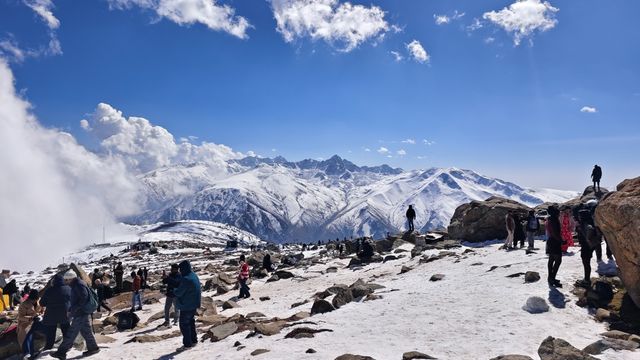

India’s mountain destinations attract millions of visitors every year because of their scenic landscapes, pleasant climate, cultural heritage, adventure opportunities, and spiritual significance. Places such as Shimla, Manali, Mussoorie, Nainital, Dharamshala, Leh, and several Himalayan valleys have become major tourism centres. Tourism supports local businesses, creates employment, generates revenue, and provides opportunities for communities that might otherwise have limited economic options. However, the rapid growth of visitor numbers has also placed increasing pressure on fragile mountain environments and infrastructure that was not designed to accommodate such large seasonal crowds.
During peak travel periods, popular hill stations often experience traffic congestion, overflowing parking areas, water shortages, waste accumulation, construction pressure, and overcrowded public spaces. Roads become congested, hotels and restaurants consume substantial quantities of water, and natural areas receive more visitors than their ecosystems can comfortably absorb. These challenges are particularly serious in mountainous regions, where steep terrain, unstable slopes, limited road networks, and sensitive water systems make infrastructure expansion difficult and environmentally costly.
This situation has intensified the debate over whether India’s tourist destinations should introduce carrying-capacity limits. Carrying capacity refers to the level of tourism activity a destination can sustain without causing unacceptable environmental damage, infrastructure failure, or deterioration in residents’ quality of life and visitor experience. The concept does not necessarily mean closing destinations to tourists. Instead, it involves determining how many visitors an area can reasonably accommodate, where they can travel, when access should be managed, and what infrastructure and conservation measures are necessary.
India’s mountain tourism debate therefore raises an important policy question: should visitor numbers continue to be determined primarily by market demand, or should destinations establish measurable limits based on ecological conditions and infrastructure capacity? Addressing this question requires balancing environmental protection, local livelihoods, tourism development, and the long-term safety of mountain communities.
Why India’s Mountain Destinations Are Under Increasing Pressure
Mountain tourism has expanded because of improved road connectivity, growing disposable incomes, online travel platforms, social media exposure, and the popularity of short holidays. Destinations that were once visited mainly by seasonal travellers are now accessible to larger numbers of tourists throughout the year. Weekend travel, adventure tourism, pilgrimage journeys, destination weddings, and work-from-hills arrangements have added to this demand.
Social media has also influenced travel patterns. Photographs and videos of particular viewpoints, cafés, roads, lakes, and mountain villages can quickly turn relatively quiet locations into popular attractions. Visitors often concentrate around a small number of highly promoted sites rather than distributing themselves across a wider region. This creates localised overcrowding even when the overall destination appears capable of receiving more tourists.
The challenge is intensified by the seasonal nature of mountain tourism. A hill station may have sufficient infrastructure for ordinary weekday demand but struggle during long weekends, school holidays, festivals, and summer vacations. Roads, parking facilities, public toilets, waste collection systems, water supply networks, and emergency services must then handle sudden increases in demand. Building infrastructure for the highest possible visitor numbers throughout the year can be financially and environmentally inefficient, while failing to manage peak demand can overwhelm essential services.
Understanding Carrying Capacity in Mountain Tourism
Carrying capacity is not simply a fixed number of tourists that a destination can accommodate. It is a combination of environmental, physical, social, and managerial limits. Each dimension measures a different aspect of tourism pressure, and an effective destination policy must consider them together.
Environmental carrying capacity concerns the ability of ecosystems to absorb tourism-related disturbances without losing essential functions. Mountain forests, alpine meadows, wetlands, rivers, glaciers, and wildlife habitats can be affected by littering, noise, construction, vehicle emissions, water extraction, and unregulated visitor movement. Some ecosystems recover slowly from disturbance, making even temporary increases in visitor pressure significant.
Physical carrying capacity relates to the infrastructure available to support visitors. Roads, bridges, parking spaces, drinking-water systems, sewage treatment plants, public toilets, accommodation facilities, and emergency services all have practical limits. A destination may be able to attract thousands of additional visitors commercially, but that does not mean its water supply or drainage network can support them safely.
Social carrying capacity examines the level of tourism that residents and visitors can accept without serious deterioration in everyday life or the quality of the destination experience. Residents may experience rising rents, traffic, noise, crowded markets, pressure on public resources, and restricted access to familiar community spaces. Visitors themselves may find that overcrowding reduces the very tranquillity and natural beauty that attracted them.
Finally, managerial carrying capacity concerns the ability of local authorities to regulate tourism effectively. Even when a destination has adequate roads and accommodation, weak waste management, limited enforcement, poor coordination, or inadequate monitoring can make tourism unsustainable. Carrying capacity must therefore be treated as a dynamic planning tool rather than a permanent visitor quota.
The Environmental Consequences of Unregulated Tourism
Mountain ecosystems are especially sensitive because their geography and climate create conditions in which environmental damage can be difficult to reverse. Steep slopes, fragile soils, high-altitude vegetation, and narrow valleys limit the capacity of natural systems to absorb disturbances. When large numbers of visitors arrive without adequate management, pressure can accumulate across several interconnected environmental systems.
One major concern is land degradation. Increased footfall on popular trails can compact soil, damage vegetation, widen paths, and accelerate erosion. Construction of hotels, roads, parking areas, and commercial buildings may require slope cutting or vegetation removal. When development takes place without adequate geological and environmental assessment, it can increase vulnerability to landslides and drainage problems.
Water resources face another significant challenge. Mountain settlements often depend on springs, streams, local catchments, and limited distribution systems. Hotels, restaurants, holiday homes, and tourism facilities can increase water demand sharply during peak seasons. If extraction exceeds the sustainable availability of local sources, residents may face shortages and natural water systems may experience additional stress. Wastewater that is not properly treated can also contaminate rivers and streams.
Waste generation becomes particularly visible in crowded destinations. Plastic packaging, disposable food containers, bottles, and other discarded materials can accumulate along roads, trekking routes, riversides, and public viewpoints. In remote mountain areas, collection and transportation are expensive because settlements are scattered and road access is limited. When waste treatment capacity is inadequate, dumping and burning may create further environmental and health risks.
Vehicle emissions and congestion add to the pressure. Narrow mountain roads are often unable to accommodate large volumes of private cars, taxis, buses, and tourist vehicles simultaneously. Long traffic queues increase fuel consumption, noise, and local air pollution. These effects undermine environmental quality while making emergency access more difficult.
Tourism
India’s mountain destinations attract millions of visitors every year because of their scenic landscapes, pleasant climate, cultural heritage, adventure opportunities, and spiritual significance. Places such as Shimla, Manali, Mussoorie, Nainital, Dharamshala, Leh, and several Himalayan valleys have become major tourism centres. Tourism supports local businesses, creates employment, generates revenue, and provides opportunities for communities that might otherwise have limited economic options. However, the rapid growth in visitor numbers has also placed increasing pressure on fragile mountain environments and infrastructure that was not designed to accommodate such large seasonal crowds.
During peak travel periods, popular hill stations often experience traffic congestion, overflowing parking areas, water shortages, waste accumulation, construction pressure, and overcrowded public spaces. Roads become congested, hotels and restaurants consume substantial quantities of water, and natural areas receive more visitors than their ecosystems can comfortably absorb. These challenges are particularly serious in mountainous regions, where steep terrain, unstable slopes, limited road networks, and sensitive water systems make infrastructure expansion difficult and environmentally costly.
This situation has intensified the debate over whether India’s tourist destinations should introduce carrying-capacity limits. Carrying capacity refers to the level of tourism a destination can sustain without causing unacceptable environmental damage, infrastructure failure, or deterioration in residents’ quality of life and visitor experience. The concept does not necessarily mean closing destinations to tourists. Instead, it involves determining how many visitors an area can reasonably accommodate, where they can travel, when access should be managed, and what infrastructure and conservation measures are necessary.
India’s mountain tourism debate therefore raises an important policy question: should visitor numbers continue to be determined primarily by market demand, or should destinations establish measurable limits based on ecological conditions and infrastructure capacity? Addressing this question requires balancing environmental protection, local livelihoods, tourism development, and the long-term safety of mountain communities.
Why India’s Mountain Destinations Are Under Increasing Pressure
Mountain tourism has expanded because of improved road connectivity, growing disposable incomes, online travel platforms, social media exposure, and the popularity of short holidays. Destinations that were once visited mainly by seasonal travellers are now accessible to larger numbers of tourists throughout the year. Weekend travel, adventure tourism, pilgrimage journeys, destination weddings, and work-from-hills arrangements have added to this demand.
Social media has also influenced travel patterns. Photographs and videos of particular viewpoints, cafés, roads, lakes, and mountain villages can quickly turn relatively quiet locations into popular attractions. Visitors often concentrate around a small number of highly promoted sites rather than distributing themselves across a wider region. This creates localised overcrowding even when the overall destination appears capable of receiving more tourists.
The challenge is intensified by the seasonal nature of mountain tourism. A hill station may have sufficient infrastructure for ordinary weekday demand but struggle during long weekends, school holidays, festivals, and summer vacations. Roads, parking facilities, public toilets, waste collection systems, water supply networks, and emergency services must then handle sudden increases in demand. Building infrastructure for the highest possible visitor numbers throughout the year can be financially and environmentally inefficient, while failing to manage peak demand can overwhelm essential services.
Understanding Carrying Capacity in Mountain Tourism
Carrying capacity is not simply a fixed number of tourists that a destination can accommodate. It is a combination of environmental, physical, social, and managerial limits. Each dimension measures a different aspect of tourism pressure, and an effective destination policy must consider them together.
Environmental carrying capacity concerns the ability of ecosystems to absorb tourism-related disturbances without losing essential functions. Mountain forests, alpine meadows, wetlands, rivers, glaciers, and wildlife habitats can be affected by littering, noise, construction, vehicle emissions, water extraction, and unregulated visitor movement. Some ecosystems recover slowly from disturbance, making even temporary increases in visitor pressure significant.
Physical carrying capacity relates to the infrastructure available to support visitors. Roads, bridges, parking spaces, drinking-water systems, sewage treatment plants, public toilets, accommodation facilities, and emergency services all have practical limits. A destination may be able to attract thousands of additional visitors commercially, but that does not mean its water supply or drainage network can support them safely.
Social carrying capacity examines the level of tourism that residents and visitors can accept without serious deterioration in everyday life or the quality of the destination experience. Residents may experience rising rents, traffic, noise, crowded markets, pressure on public resources, and restricted access to familiar community spaces. Visitors themselves may find that overcrowding reduces the tranquillity and natural beauty that attracted them.
Finally, managerial carrying capacity concerns the ability of local authorities to regulate tourism effectively. Even when a destination has adequate roads and accommodation, weak waste management, limited enforcement, poor coordination, or inadequate monitoring can make tourism unsustainable. Carrying capacity must therefore be treated as a dynamic planning tool rather than a permanent visitor quota. A 2025 study of the Char Dham region in the Western Himalaya similarly highlights the need to connect tourism capacity with environmental, social, and management conditions.
The Environmental Consequences of Unregulated Tourism
Mountain ecosystems are especially sensitive because their geography and climate create conditions in which environmental damage can be difficult to reverse. Steep slopes, fragile soils, high-altitude vegetation, and narrow valleys limit the capacity of natural systems to absorb disturbances. When large numbers of visitors arrive without adequate management, pressure can accumulate across several interconnected environmental systems.
One major concern is land degradation. Increased footfall on popular trails can compact soil, damage vegetation, widen paths, and accelerate erosion. Construction of hotels, roads, parking areas, and commercial buildings may require slope cutting or vegetation removal. When development takes place without adequate geological and environmental assessment, it can increase vulnerability to landslides and drainage problems.
Water resources face another significant challenge. Mountain settlements often depend on springs, streams, local catchments, and limited distribution systems. Hotels, restaurants, holiday homes, and tourism facilities can increase water demand sharply during peak seasons. If extraction exceeds the sustainable availability of local sources, residents may face shortages and natural water systems may experience additional stress. Wastewater that is not properly treated can also contaminate rivers and streams.
Waste generation becomes particularly visible in crowded destinations. Plastic packaging, disposable food containers, bottles, and other discarded materials can accumulate along roads, trekking routes, riversides, and public viewpoints. In remote mountain areas, collection and transportation are expensive because settlements are scattered and road access is limited. When waste treatment capacity is inadequate, dumping and burning may create further environmental and health risks.
Vehicle emissions and congestion add to the pressure. Narrow mountain roads are often unable to accommodate large volumes of private cars, taxis, buses, and tourist vehicles simultaneously. Long traffic queues increase fuel consumption, noise, and local air pollution. These effects undermine environmental quality while making emergency access more difficult.
Recent Developments: Carrying Capacity Is Becoming a Policy Priority
The debate is no longer limited to environmental researchers and tourism planners. On October 27, 2026, the Supreme Court considered a report from its Central Empowered Committee (CEC) concerning environmental protection in Himachal Pradesh. The committee recommended immediate carrying-capacity studies for major tourist destinations and temporary restrictions wherever necessary. It also called for periodically updated, binding limits on visitors, vehicles, and accommodation beds, supported by scientific assessments and enforceable planning controls.
The report highlighted a major gap in destination planning: Himachal Pradesh’s Tourism Department had not conducted carrying-capacity studies for several important locations, including Shimla, Manali, Dharamshala, Dalhousie, Solang, Kasol, Chandratal, Spiti, and the Great Himalayan National Park. It also noted that registered hotels increased from 2,784 in 2016 to 5,311 in 2026, while registered homestays grew from 876 to 6,743 over the same period. These figures indicate how quickly accommodation capacity has expanded without equivalent evidence that local infrastructure and ecosystems can sustain the growth.
The committee’s recommendations also reflect a wider concern that tourism pressure is extending beyond established hill stations into ecologically sensitive areas. The issue is therefore not simply the number of tourists entering a state. It is the concentration of visitors, vehicles, accommodation, and construction in locations where environmental limits may already be under stress.
Uttarakhand has also moved towards carrying-capacity assessment. In 2025, the state announced assessments for destinations including Nainital, Kainchi Dham, and Bhowali. The reported objective was to evaluate infrastructure and determine how many visitors and vehicles these locations could sustainably accommodate. The concern was especially relevant to Nainital, where more than 7,500 four-wheelers were reported to enter the city daily during peak tourist periods.
These developments suggest that carrying-capacity limits are increasingly being considered as practical planning instruments rather than abstract environmental concepts. However, recommendations and proposed assessments must eventually be translated into transparent rules, reliable monitoring, and consistent enforcement.
Why Expanding Infrastructure Alone Cannot Solve Overtourism
A common response to overcrowding is to build wider roads, additional parking areas, more hotels, and improved transport facilities. Infrastructure investment is necessary in many mountain regions, particularly where residents lack reliable public transport, sanitation, healthcare, or emergency services. However, expanding infrastructure without assessing ecological limits can create a cycle in which improved accessibility attracts more visitors, leading to further congestion and construction.
Wider roads may reduce travel time initially, but they can also encourage more private vehicles to enter a destination. Additional hotels increase accommodation capacity but also raise demand for water, electricity, sewage treatment, and waste collection. If these supporting services do not expand sustainably, infrastructure development may simply transfer pressure from roads to other essential resources.
Construction itself can create environmental risks. Mountain roads and buildings require careful geological assessment because slope stability, drainage patterns, soil conditions, and seismic vulnerability vary considerably between locations. Poorly planned excavation, blocked natural drainage channels, and excessive construction on unstable slopes can increase disaster risks. The Himachal Pradesh CEC report has specifically highlighted concerns about slope excavation, landslide risks, and the need for stronger scrutiny of infrastructure projects.
The objective should therefore be to improve infrastructure quality and resilience rather than continuously increase its capacity to accommodate unlimited tourist growth. Public transport, sewage treatment, water conservation, waste processing, and emergency access may provide greater long-term benefits than simply building additional roads and accommodation.
Should India Introduce Mandatory Tourist Limits?
India should introduce carrying-capacity limits for destinations where scientific assessments demonstrate that unrestricted visitor growth threatens environmental stability, public safety, or essential infrastructure. However, these limits should not be imposed through arbitrary statewide numbers. A small Himalayan village, a large hill station, a pilgrimage centre, and a high-altitude trekking route have very different physical and ecological conditions.
Destination-specific limits would provide a more practical approach. Authorities could establish daily visitor ceilings, vehicle-entry restrictions, accommodation permissions, and seasonal access controls based on the available evidence. For example, a sensitive trekking route might require advance registration and a daily entry quota, while a crowded hill station could use parking restrictions and shuttle services to control vehicle pressure.
Such limits should also be flexible. Carrying capacity can change with rainfall, snowfall, road damage, water availability, forest-fire risk, and seasonal environmental conditions. A destination that can accommodate a particular number of visitors during one season may need stricter restrictions during periods of ecological stress or emergency conditions.
The restrictions should also apply to commercial development, not only tourists. If authorities limit visitor entry but continue approving hotels and resorts without examining water availability, sewage capacity, and slope stability, the underlying problem remains unresolved. Accommodation beds, construction activity, vehicle numbers, and visitor arrivals must be considered as interconnected parts of destination planning.
Using Technology to Monitor Tourism Pressure
Digital technology can make carrying-capacity management more accurate and responsive. Traditional visitor estimates often depend on hotel registrations, transport records, manual counting, or occasional surveys. These methods may not capture short-term visitor surges, day tourists, unregistered accommodation, or the movement of people between nearby attractions.
Integrated tourism monitoring systems could combine entry-point data, parking information, accommodation registrations, public transport usage, and environmental indicators. This would help authorities estimate visitor concentration at different times and identify locations approaching infrastructure limits. Digital permits and advance booking systems could regulate access to sensitive areas, while real-time dashboards could display congestion and temporary restrictions.
Geographic Information Systems (GIS) and satellite-based monitoring could help identify construction expansion, land-use changes, vegetation loss, and vulnerable slopes. Sensors could monitor water levels, air quality, rainfall, and waste-related conditions. When combined with reliable historical information, these systems could help officials anticipate pressure before it becomes a crisis.
Artificial intelligence could also support tourism forecasting by analysing seasonal travel patterns, weather conditions, public holidays, transport bookings, and historical visitor data. Predictive models might estimate when a destination is likely to experience overcrowding and help authorities adjust shuttle services, staffing, parking arrangements, and entry permissions.
However, technology should support public decision-making rather than replace it. Monitoring systems require accurate data, independent verification, transparent rules, and privacy safeguards. Digital access must also remain inclusive so that local residents, small businesses, and visitors without sophisticated smartphones are not unfairly excluded.
Protecting Local Communities and Tourism-Based Livelihoods
Carrying-capacity limits must be designed with local communities in mind. Tourism is an important source of income for hotel owners, taxi operators, restaurant workers, guides, artisans, homestay operators, and small traders. A sudden restriction on visitor numbers without economic planning could reduce household income and create opposition to environmental regulations.
The solution is not to protect tourism revenue at the expense of mountain ecosystems, but to ensure that local communities benefit from a more sustainable tourism model. Authorities could support community-owned accommodation, local food businesses, regional handicrafts, certified guides, and nature-based tourism enterprises. This would help distribute tourism income more widely instead of concentrating it among large commercial operators.
High-value, lower-volume tourism may be appropriate in particularly sensitive locations, provided it does not become a policy that excludes ordinary Indian travellers through unnecessarily expensive permits. The focus should be on reducing environmental pressure while maintaining fair access and local economic opportunities.
Residents should also participate in deciding how tourism is managed. Local communities understand seasonal water shortages, road bottlenecks, waste problems, and changes in traditional livelihoods. Their participation can improve the accuracy of carrying-capacity assessments and make enforcement more socially acceptable. Uttarakhand’s Tourism Policy 2023 explicitly recognises the importance of sustainable tourism, carrying-capacity analysis, accurate visitor information, and high-value, low-volume tourism planning.
Building a National Framework for Sustainable Mountain Tourism
India needs a coordinated approach that connects tourism policy with environmental protection, urban planning, disaster management, and infrastructure development. State governments should prepare destination-level carrying-capacity assessments using common scientific principles while allowing local conditions to determine the actual limits.
These assessments should examine water availability, sewage treatment, waste-processing capacity, road conditions, parking, emergency access, accommodation growth, slope stability, biodiversity, and community needs. They should also be updated periodically because tourism demand and environmental conditions change over time.
The central government can support states through technical standards, research funding, data systems, and guidelines for environmentally sensitive destinations. The Ministry of Tourism and relevant environmental and disaster-management authorities should coordinate with state departments, local bodies, scientific institutions, and community organisations. A Parliamentary committee report discussed through the Press Information Bureau in 2026 also recommended studying the contribution of unregulated tourism to forest fires in Himalayan regions and considering carrying-capacity limits, stricter construction norms near forests, and seasonal restrictions on activities that increase fire risk.
Most importantly, carrying-capacity findings must influence actual planning permissions and enforcement. A study that recommends limits but has no effect on hotel approvals, vehicle access, land-use decisions, or waste-management requirements will have little practical value. Publicly available reports, measurable indicators, periodic reviews, and clear accountability for local authorities are necessary to make the system effective.
Conclusion: Mountain Tourism Must Grow Within Ecological Limits
India’s mountain destinations should introduce scientifically determined carrying-capacity limits wherever visitor pressure exceeds the sustainable ability of local ecosystems and infrastructure. Unregulated tourism can create short-term economic gains, but excessive construction, water stress, waste accumulation, traffic congestion, and environmental degradation can weaken the very landscapes on which the tourism industry depends.
However, carrying-capacity limits should not become arbitrary restrictions or a substitute for responsible infrastructure investment. They must be destination-specific, regularly updated, transparent, and developed with the participation of local communities. Authorities should regulate not only the number of visitors but also vehicle movement, accommodation growth, construction activity, and the use of natural resources.
The recent recommendations concerning Himachal Pradesh and carrying-capacity assessments in Uttarakhand demonstrate that this issue is becoming increasingly important in India’s tourism and environmental policy. The next challenge is to turn scientific assessments into enforceable planning decisions and effective local management.
Ultimately, the success of mountain tourism should not be measured only by annual visitor numbers or hotel occupancy rates. It should also be measured by the condition of forests, rivers, roads, slopes, public services, and local communities. India’s mountain destinations do not need unlimited tourism growth to remain economically valuable. They need a model that allows visitors to experience these landscapes while ensuring that future generations can enjoy them too.
Online Internship with Certificate
You may be interested

Can Digital Platforms Be Held Accountable for Addictive Design
Anshika Jain - Oct 30, 2026Digital platforms have transformed how people communicate, learn, shop, work, and consume entertainment. Social media applications, video-sharing services, online games, and content-streaming platforms provide instant access to…

Protest Rights and Police Accountability: Independent Inquiry Establish
Anshika Jain - Oct 30, 2026Public demonstrations are an important part of democratic life. They allow citizens to express disagreement, demand government action, challenge policies, and draw attention to social, economic, and…

Voter-List Revision in Delhi: Electoral Accuracy Be Balanced With Citizens’ Right to Vote?
Anshika Jain - Oct 30, 2026An accurate voter list is one of the foundations of a credible democratic election. It ensures that eligible citizens can exercise their voting rights, prevents duplicate registrations,…
Most from this category
Delhi’s Poor Air Quality: Pollution Episodes Require More Than Emergency Restrictions?
Anshika Jain - Oct 30, 2026
Acid Sale Regulation in India: Why Is Enforcement Still a Major Public-Safety Question?
Anshika Jain - Oct 29, 2026
Census 2027 and Caste Enumeration: India’s Next Census Change About Public Policy?
Anshika Jain - Oct 29, 2026
Delhi’s Poor Air Quality: Pollution Episodes Require More Than Emergency Restrictions?
Anshika Jain - Oct 30, 2026Jio Platforms’ Market Debut: Its Listing Mean for India’s Telecom
Anshika Jain - Oct 30, 2026Acid Sale Regulation in India: Why Is Enforcement Still a Major Public-Safety Question?
Anshika Jain - Oct 29, 2026