Gold and Silver Prices Fall Before Diwali: Should Buyers Wait or Purchase Now


Gold and silver prices have experienced a sharp correction in the weeks leading up to Diwali 2026, creating an important buying decision for Indian households. The decline has attracted attention because it comes just days before Dhanteras, traditionally one of the most popular occasions for purchasing precious metals. For families planning to buy jewellery, coins or silver utensils, lower market prices may appear to offer an opportunity. However, the recent volatility also raises a question: could prices fall further before the festive season begins?
The correction has been particularly noticeable in silver, which has declined more sharply than gold. In October 2026, domestic gold futures fell by approximately 7%, while silver futures dropped close to 20%. Although both metals experienced some recovery in early November, the broader market remains sensitive to interest-rate expectations, crude oil movements, geopolitical developments and changes in investor demand.
For buyers, the decision is not simply about predicting the lowest possible price. Jewellery purchases, wedding requirements and festive gifting often involve fixed timelines, while investment purchases can be planned differently. Understanding what caused the correction, how gold and silver may behave in the coming weeks, and what additional charges affect the final purchase price can help households make a more informed decision.
What Happened to Gold and Silver Prices Before Diwali 2026?
The decline in precious-metal prices has been significant enough to influence festive buying decisions. According to the India Bullion and Jewellers Association (IBJA), the price of 999-purity gold declined by ₹542 per 10 grams between the morning and evening sessions on November 3, reaching ₹1,37,576 per 10 grams. Silver prices also fell by ₹875 per kilogram during the same period, reaching ₹1,76,425 per kilogram.
The movement in silver has been more pronounced over the recent correction. On November 3, IBJA’s indicative silver rate was ₹1,77,300 per kilogram in the morning session, down ₹2,672 from the previous evening’s rate. Compared with October 28, the price had declined by ₹16,142 per kilogram. These figures demonstrate the extent of the recent volatility, particularly for buyers considering silver bars, coins and household articles.
The futures market has also reflected substantial pressure. During October, MCX gold futures declined approximately 7%, while silver futures fell close to 20%. The sharp correction followed a period of strong gains earlier in the year, when both metals had attracted considerable investment demand.
However, the decline has not been uniform every day. Gold prices showed an upward movement in some domestic markets on November 4, reflecting changing international trends and investor activity ahead of the US midterm election developments and other economic data. This suggests that buyers are dealing with a volatile market rather than a guaranteed downward trend.
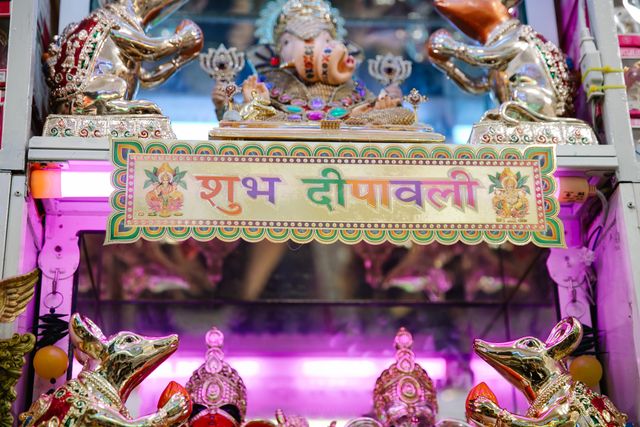
Dhanteras falls on November 6, while Diwali will be celebrated on November 8, 2026. The short gap between the latest price movements and the festive buying period makes timing particularly important for households planning purchases.
Why Are Gold and Silver Prices Falling?
The recent correction is the result of several international and domestic factors. Precious metals respond to changes in interest rates, currency movements, inflation expectations, geopolitical developments and investor positioning. When several of these factors move against bullion simultaneously, prices can decline even when long-term demand remains strong.
Expectations of Higher US Interest Rates
One of the major pressures on gold and silver has come from changing expectations about US monetary policy. Gold does not generate interest income, unlike government bonds and bank deposits. When investors expect interest rates to remain high or increase, the opportunity cost of holding gold becomes greater.
Higher interest rates can also support the US dollar by making dollar-denominated assets more attractive. Since international gold and silver prices are generally quoted in dollars, a stronger dollar can make these metals more expensive for buyers using other currencies and potentially reduce global demand.
Recent market commentary has highlighted expectations of a possible Federal Reserve rate increase in December as a factor weighing on precious metals. Investors have been monitoring inflation indicators, energy prices and economic data to understand whether the central bank may maintain a restrictive monetary policy.
Rising Crude Oil Prices and Inflation Concerns
Crude oil prices have also contributed to uncertainty in the bullion market. Higher oil prices can increase transportation and production costs, potentially creating additional inflationary pressure. If investors believe inflation will remain persistent, they may expect central banks to keep interest rates higher for longer.
This creates a complicated environment for gold. Although the metal is commonly considered a store of value during inflationary periods, higher interest rates can reduce its appeal compared with interest-bearing investments.
Recent market reports linked the rebound in oil prices and renewed inflation concerns to pressure on gold and silver futures ahead of the festive season.
Profit Booking After a Strong Rally
Another reason behind the correction is profit booking. Gold and silver had experienced substantial gains earlier in 2026, encouraging investors to lock in profits when prices reached elevated levels.
When a large number of investors sell simultaneously, prices can fall quickly. The impact can become stronger when leveraged traders reduce their positions or when exchanges increase margin requirements. Such selling does not necessarily mean that the long-term demand for precious metals has disappeared. It may instead reflect a change in short-term market positioning.
Silver is particularly vulnerable to sharp movements because it generally experiences greater price volatility than gold. Its smaller market size and combination of investment and industrial demand can amplify both upward and downward price movements.
Concerns About Global Industrial Demand
Silver is different from gold because it has extensive industrial applications. It is used in solar panels, electronics, electrical equipment and several manufacturing processes. Consequently, its price is influenced not only by investor interest but also by expectations about industrial production.
If investors become concerned about global economic growth or manufacturing activity, they may anticipate weaker industrial demand for silver. This can create additional selling pressure.
Gold, by comparison, is more closely associated with investment demand, jewellery consumption, central-bank purchases and safe-haven buying. This difference helps explain why silver’s recent correction has been considerably sharper than gold’s.
Could Gold and Silver Prices Fall Further Before Diwali?
The possibility of additional declines cannot be ruled out, but predicting the exact direction of precious-metal prices over a few days is difficult. International bullion prices can change rapidly in response to economic data, central-bank commentary, currency movements and geopolitical developments.
If expectations of higher US interest rates strengthen, gold and silver could remain under pressure. A stronger dollar may also restrict international demand, while continued profit booking could increase short-term volatility.
Silver may experience larger price fluctuations because of its industrial exposure and relatively high volatility. Even if gold stabilises, silver could continue to react sharply to changes in manufacturing expectations and investment demand.
However, a further decline is not inevitable. If the US dollar weakens, expectations of higher interest rates ease or geopolitical uncertainty increases, precious metals could recover. Strong physical demand during the festive and wedding seasons may also provide some support to domestic prices.
Buyers should therefore avoid assuming that a recent correction guarantees another price reduction. A market that has already fallen significantly can stabilise or rebound unexpectedly, especially when international economic developments change.
Why Gold and Silver Prices May Behave Differently
Although gold and silver are both precious metals, their market characteristics are different. Understanding these differences is important for households deciding which metal to purchase during the festive season.
Gold is widely used for jewellery, investment and wealth preservation. Central banks also hold gold as part of their reserves, giving it an additional source of institutional demand. During periods of economic or geopolitical uncertainty, investors may increase their allocation to gold because it is widely recognised as a store of value.
Silver has a broader industrial role. Its demand is influenced by investment activity as well as manufacturing requirements. This creates opportunities for price growth when industrial demand is strong, but it can also increase downside risk when global economic conditions weaken.
The recent October correction illustrates this difference. While gold futures declined approximately 7%, silver futures fell close to 20%. The larger fall in silver shows why buyers should not assume that the two metals will recover at the same speed or by the same percentage.
For households purchasing jewellery or coins for traditional use, the choice may depend primarily on personal requirements. For those buying precious metals as investments, risk tolerance and the intended holding period should receive greater attention.
Should Buyers Purchase Gold Before Diwali or Wait?
For households planning to purchase gold jewellery, coins or bars for Dhanteras and Diwali, the recent correction may provide some relief compared with the higher prices seen earlier in the year. However, waiting for a perfect buying opportunity can be difficult because short-term price movements are unpredictable.
The decision should depend on the purpose of the purchase. If a family needs jewellery for a wedding, a planned gift or a specific festive occasion, postponing the purchase solely to speculate on a small additional price decline may not be practical. In such cases, the recent correction could offer an opportunity to complete a necessary purchase while comparing prices across reliable jewellers.
Buyers who have flexibility may consider purchasing in stages rather than spending the entire budget at one time. This approach reduces the risk of committing the full amount immediately before another market decline. It also avoids the problem of waiting indefinitely for a price that may never arrive.
For people buying gold as a long-term investment, the focus should be on the overall allocation within their savings rather than on predicting the exact lowest price. Gold can play a role in portfolio diversification, but its price can fluctuate significantly. It should not be treated as an asset that guarantees returns over a particular period.
The recent correction may make gold more accessible to some buyers, but it does not automatically mean that the metal is undervalued. A sensible purchase decision should consider the household’s financial requirements, budget and investment horizon.
Should Buyers Purchase Silver Now or Wait?
Silver’s recent fall has been considerably sharper than gold’s, which may make it attractive to buyers who were previously discouraged by higher prices. However, its volatility also makes the timing decision more difficult.
For households purchasing silver utensils, coins or articles for traditional use, the correction may provide an opportunity to compare prices and complete planned purchases. As with gold, the practical value of buying now depends on whether the item is needed for the festive occasion or whether the purchase can be postponed.
Investment buyers should be more cautious. Silver’s price is influenced by industrial demand, global manufacturing activity, investment flows and currency movements. A decline driven by concerns about industrial demand may continue if those concerns become stronger.
Staggered purchases can help reduce the impact of short-term volatility. Instead of buying the entire quantity in one transaction, buyers with a longer investment horizon may spread purchases over several periods. However, this does not eliminate the possibility of losses if prices continue declining.
Silver should generally be assessed separately from gold rather than treated as a lower-priced substitute. Its industrial exposure and greater price swings mean that it can behave differently during changing economic conditions.
What Is the Difference Between Bullion Rates and the Final Jewellery Bill?
One important issue for festive buyers is that the published gold and silver rates are not necessarily the final prices they will pay at a jewellery store. IBJA benchmark rates are useful for understanding market movements, but they generally exclude GST and jewellery-making charges.
The final bill depends on the metal’s purity, weight, jeweller’s applicable selling rate, making charges and taxes. For jewellery, the design and manufacturing process can have a substantial effect on the total cost.
For example, two necklaces containing the same quantity and purity of gold may have different final prices because their designs and making charges differ. Buyers should therefore compare the complete invoice value rather than relying only on the advertised rate per 10 grams.
GST is another cost to consider. Buyers should ask the jeweller to clearly show the taxable value and applicable tax on the invoice. For silver articles, the final amount also depends on purity, manufacturing or processing charges and the seller’s pricing structure.
A lower benchmark gold rate does not always translate into an equally large reduction in the final jewellery bill. Understanding the full price breakdown can prevent confusion and help buyers compare different retailers more accurately.
Important Checks Before Buying Gold and Silver
Purity verification is essential when purchasing precious metals. Buyers should check the purity grade and relevant hallmarking information before completing the transaction. For gold jewellery, the Bureau of Indian Standards (BIS) hallmark and its associated identification details help consumers verify the declared purity.
Gold jewellery is commonly sold in different purity levels, including 18-carat, 22-carat and 24-carat forms. Pure 24-carat gold is generally used for investment products such as bars and coins, while jewellery is often manufactured using alloys to improve durability. Buyers should select the purity that suits the intended use.
Silver buyers should also verify the declared purity and request a proper invoice. Hallmarking and purity-related information should be checked rather than relying only on verbal assurances from the seller.
The invoice should clearly mention the weight, purity, rate, making charges, taxes and other applicable costs. Buyers should also understand the jeweller’s exchange and buyback policies, particularly when purchasing jewellery that may later be exchanged or resold.
These checks are important because jewellery is not always resold at the original purchase price. Making charges and certain taxes may not be recovered, while deductions can apply depending on the product and the jeweller’s policies.
Gold Jewellery, Coins or Digital Gold: Which Is Better?
The best purchase format depends on whether the objective is traditional use, gifting, wealth preservation or investment. Jewellery is often preferred during festivals because it combines cultural significance with personal use. However, it involves making charges and may not be the most cost-efficient option for someone whose primary objective is investment.
Gold coins and bars can be more suitable for buyers who want physical gold without the additional design-related costs associated with jewellery. Nevertheless, they still require attention to purity, premiums, storage and resale conditions.
Gold exchange-traded funds and other regulated market-linked products offer a different way to obtain exposure to gold prices without physically storing the metal. These products may be useful for investors who prefer financial-market instruments, although they involve expenses, market risks and product-specific conditions.
Digital gold is another option available through several platforms, but buyers should examine the provider’s structure, storage arrangements, redemption conditions, applicable charges and regulatory protections. Digital gold products should not automatically be assumed to have the same regulatory framework as exchange-traded funds or other regulated investment products.
Silver investment products also have different structures, including physical silver and exchange-traded instruments. The appropriate option depends on the buyer’s need for physical possession, investment horizon and willingness to accept price fluctuations.
How the Festive Season Could Influence Domestic Demand
Dhanteras and Diwali traditionally create an important period for precious-metal purchases in India. Gold jewellery, coins and silver articles are often bought as part of family traditions, religious practices, gifting and long-term savings.
The festive season can support physical demand even when international prices are volatile. Some households may increase purchases when prices decline, while others may postpone buying if they expect a further correction. The final effect on demand depends on household budgets, price expectations and consumer confidence.
Wedding-season demand can also influence the market. Families planning weddings may have fixed requirements and may purchase gold regardless of short-term price movements. This creates a source of demand that is different from speculative investment activity.
However, seasonal demand does not guarantee that prices will rise. International markets, currency movements and interest-rate expectations continue to influence domestic rates. Indian buyers are therefore exposed to both local demand conditions and global price developments.
What Could Influence Gold and Silver Prices After Diwali?
The outlook after Diwali will depend on several international economic developments. Federal Reserve policy will remain an important factor because changes in US interest rates can influence the dollar, bond yields and investment demand for non-interest-bearing assets.
Crude oil prices will also matter. If energy prices remain elevated, inflation expectations could stay firm, potentially influencing interest-rate expectations and precious-metal sentiment. If oil prices decline and inflation pressures ease, the market may reassess the likely path of monetary policy.
Geopolitical developments are another important variable. Gold can attract safe-haven demand during periods of heightened uncertainty, while silver may respond to both investment demand and expectations about industrial activity.
The rupee-dollar exchange rate will continue to influence domestic prices. Even if international gold prices decline, a weaker rupee can reduce the benefit for Indian buyers. Conversely, a stronger rupee can make imported precious metals relatively less expensive in domestic currency terms.
For silver, industrial demand from solar energy, electronics and manufacturing will remain particularly important. A stronger global manufacturing outlook may support demand, while a slowdown could place additional pressure on prices.
Conclusion: Should Buyers Wait or Purchase Now?
The fall in gold and silver prices before Diwali 2026 has created an opportunity for Indian households to reconsider their festive purchases. Gold has experienced a meaningful correction, while silver has fallen more sharply, offering some relief to buyers after the strong price increases seen earlier in the year. However, the recent market recovery also shows that prices can change direction quickly.
For households with fixed requirements, such as wedding jewellery, festive gifting or traditional purchases, buying within a planned budget may be more practical than trying to identify the exact market bottom. Comparing jewellers, checking purity and understanding making charges can have a meaningful impact on the final purchase cost.
Buyers who have flexibility may consider staggered purchases to reduce the risk of committing their entire budget at one price. Those purchasing silver as an investment should be especially careful because its greater volatility can create larger short-term gains as well as losses.
Ultimately, there is no guaranteed answer to whether prices will be lower tomorrow or after Diwali. The better decision is to match the purchase with its purpose, financial capacity and time horizon. A price correction can create an opportunity, but disciplined buying and careful verification remain more reliable than attempting to predict every short-term movement in the precious-metals market.
Online Internship with Certificate
You may be interested

Diwali Pollution Debate: Who Is Responsible for the Post-Festival Air Quality Crisis
Anshika Jain - Nov 04, 2026Diwali is celebrated across India with lights, family gatherings, sweets and festive traditions. However, the festival also brings an annual environmental debate into focus: why does air…
US Midterm Election Results: What Could Change for Indian Investors
Anshika Jain - Nov 04, 2026The 2026 United States midterm election results have introduced a new political equation in Washington, with potentially important consequences for global financial markets. Democrats have secured control…
Can Falling Crude Oil Prices Become a Trigger for an Indian Stock Market Rally
Anshika Jain - Nov 04, 2026Falling crude oil prices can provide a significant boost to the Indian stock market because India depends heavily on imported crude to meet its energy requirements. When…
Most from this category


Sensex and Nifty at Two-Month Highs: Is the Rally Sustainable
Anshika Jain - Nov 04, 2026India’s Telecom Market After Jio Platforms’ Listing: Consumer Value
Anshika Jain - Nov 03, 2026