

Climate Finance in November 2026: Who Will Pay for the Transition to a Low-Carbon Economy


The transition to a low-carbon economy is no longer simply an environmental ambition. It has become a major financial, industrial and development challenge for governments, businesses and communities worldwide. Countries must invest in renewable energy, electric mobility, modern electricity grids, energy-efficient buildings, cleaner manufacturing and climate-resilient infrastructure. At the same time, they must prepare for the consequences of climate change, including extreme heat, floods, droughts, rising sea levels and disruptions to agriculture.
The central question is how this transformation will be financed. Developing economies often face the greatest climate-related vulnerabilities, yet many have limited public budgets, expensive borrowing costs and competing development priorities. Wealthier economies generally have greater financial capacity, while private investors are increasingly interested in clean-energy markets but often prefer projects that offer predictable returns. This creates a major financing gap between the scale of investment required and the money currently available.
In November 2026, the debate around climate finance remains particularly important as countries assess their climate commitments, discuss international cooperation and consider how to mobilise funding for the next phase of decarbonisation. The issue is not only how much money should be provided, but also who should contribute, who should receive it, whether it should be offered as grants or loans, and how financial responsibility should be shared fairly.
What Is Climate Finance and Why Does It Matter?
Climate finance refers to the money invested or provided to support activities that reduce greenhouse gas emissions, strengthen resilience to climate change or help communities recover from climate-related damage. It includes funding for renewable energy projects, electric public transport, energy-efficient industries, sustainable agriculture, flood protection, water management and climate-resilient housing.
There are two major dimensions of climate finance. The first is mitigation finance, which supports the transition away from high-emission activities. Investments in solar and wind power, battery storage, green hydrogen, electric vehicles and cleaner industrial technologies fall into this category. The second is adaptation finance, which helps communities prepare for climate impacts that are already occurring or are expected to become more severe. Flood-resistant infrastructure, drought-tolerant agriculture, early-warning systems and improved urban drainage are examples.
A third area, often discussed alongside these two, is finance for addressing loss and damage. This concerns support for countries and communities experiencing climate-related destruction that cannot be fully prevented through mitigation or adaptation. For vulnerable economies, rebuilding after floods, cyclones and other disasters can create significant financial pressure.
Climate finance therefore has a wider purpose than funding renewable energy installations. It is intended to support an economic transformation while protecting livelihoods, infrastructure and development opportunities.
The Global Climate Finance Debate in November 2026
The international climate finance discussion has become increasingly focused on the difference between financial promises and actual delivery. At COP29 in 2024, countries agreed on a new collective climate finance goal under which developed countries would take the lead in providing at least $300 billion annually to developing countries by 2035. The agreement also called for all actors to work together to scale up finance from public and private sources to at least $1.3 trillion annually by 2035.
These figures represent two related but different ambitions. The $300 billion target is the central goal for developed-country leadership, while the $1.3 trillion figure represents a broader mobilisation ambition involving multiple sources of finance. The distinction matters because not every dollar mobilised has the same financial value for a recipient country. A grant, a low-interest loan, a commercial loan and a private investment can all support climate projects, but they create very different obligations and risks.
The OECD’s May 2026 report found that developed countries provided and mobilised $136.7 billion in climate finance for developing countries in 2024, exceeding the previous $100 billion annual goal for the third consecutive year. Private finance mobilised through public climate finance reached $30.5 billion in 2024. Although this represents progress, the figures do not by themselves establish whether funding is reaching the most vulnerable countries in adequate amounts or on affordable terms.
November 2026 has brought the issue into sharper focus through COP31 in Antalya, Türkiye. A standalone Climate Finance Work Programme was adopted at the conference, following negotiations over the need to examine not just the volume of climate finance but also its quality, accessibility and predictability. Developing countries, including India, have pushed for stronger accountability and greater attention to public and concessional funding.
The COP31 discussions also reflect disagreement over how responsibility should be distributed. Developing countries argue that historical emissions and unequal financial capacity must be considered. Wealthier countries and financial institutions emphasise the need to mobilise private investment and expand the range of funding sources. The challenge is to translate these competing positions into a system that provides sufficient and affordable finance.
Who Should Pay for the Low-Carbon Transition?
Developed Countries and Historical Responsibility
One of the strongest arguments in international climate negotiations is that countries with greater historical contributions to greenhouse gas emissions and stronger financial resources should take the lead in supporting the transition in developing economies. Industrialised countries benefited from decades of fossil-fuel-based economic growth, while many developing nations are still expanding access to electricity, transport, housing and industrial infrastructure.
Under the Paris Agreement, developed countries are expected to provide financial resources to assist developing countries with mitigation and adaptation. This responsibility is central to the debate over whether climate finance should be treated primarily as voluntary assistance or as part of an agreed international obligation.
However, the question of responsibility is not limited to historical emissions. The global economy has changed, and emerging economies now account for a significant share of current emissions and investment activity. Negotiations therefore involve difficult questions about how contributions should be shared without weakening the principle that countries have different capacities and circumstances.
National Governments and Domestic Budgets
National governments must also finance a substantial part of their own low-carbon transition. Public spending is essential for infrastructure that may not immediately generate commercial returns, including electricity transmission networks, flood-control systems, public transport and climate-resilient rural infrastructure.
Governments can use taxation, public investment programmes, green bonds, subsidies and development banks to support these activities. They can also create regulations that encourage private investment in cleaner technologies. However, public budgets are limited, especially in developing countries where governments must simultaneously fund healthcare, education, employment programmes, housing and poverty reduction.
This is why international climate finance is important. External support can reduce the burden on national budgets and make it possible to invest in climate projects without sacrificing essential development priorities.
Private Companies and Institutional Investors
Private finance is expected to play a major role in scaling up the low-carbon transition. Banks, pension funds, insurance companies, investment funds, infrastructure developers and multinational corporations can provide substantial capital for renewable energy, electric mobility, energy storage and sustainable industrial production.
Private investors generally look for predictable revenue, manageable risk and a reasonable return. Solar and wind projects with long-term power-purchase agreements may attract investment more easily than adaptation projects whose benefits are difficult to measure in financial terms. A flood-protection system may prevent enormous future losses, but it may not generate a direct revenue stream that attracts conventional investors.
This difference explains why private capital cannot replace public climate finance. Governments and development institutions must often provide grants, guarantees, concessional loans or other forms of risk-sharing support to make essential projects financially viable.
Multilateral Development Banks and International Funds
Multilateral development banks, including the World Bank and regional development banks, can help bridge the gap between public commitments and private investment. They provide loans, technical assistance, guarantees and blended-finance structures for projects that may otherwise struggle to attract funding.
International climate funds also support countries that face financial and technical barriers. The Green Climate Fund, for example, provides support for mitigation and adaptation projects in developing countries. The Global Environment Facility and other specialised mechanisms also contribute to climate-related programmes.
These institutions are particularly important when projects involve long construction periods, uncertain returns or significant social benefits. Their financing can reduce risk and make it easier for national governments and private investors to participate.
India’s Climate Finance Challenge: Who Is Already Paying?
India’s low-carbon transition is being financed largely through domestic resources, including government expenditure, private investment, commercial bank lending and public-sector enterprises. International funding is important, but it currently represents a smaller share of the country’s overall climate investment.
The Landscape of Green Finance in India 2026, published by Climate Policy Initiative, provides a useful picture of this funding structure. It estimates that tracked mitigation finance reached approximately ₹6.69 lakh crore (US$81.9 billion) in FY2023–24, while tracked adaptation finance reached around ₹1.51 lakh crore (US$18.5 billion). Domestic sources accounted for approximately 88% of tracked mitigation finance and 95% of adaptation finance. The figures cover selected sectors and activities rather than every climate-related financial flow in India.
These findings show that Indian taxpayers, domestic businesses, financial institutions and public-sector organisations are already carrying a substantial share of the financing responsibility. Private domestic capital has been particularly important for mitigation investments, including renewable energy and energy efficiency. Adaptation, meanwhile, remains heavily dependent on public funding because many resilience projects do not generate direct commercial revenue.
India’s Economic Survey 2025–26 identifies climate finance as a major constraint on achieving climate ambitions. It highlights the need for stronger development banks, deeper domestic financial markets, more effective municipal financing and predictable international concessional finance. It also argues that climate ambitions must be supported by adequate finance and technology, particularly when countries are balancing energy security and economic development.
Renewable Energy Needs Long-Term Investment
India’s expansion of solar and wind energy requires substantial investment beyond the construction of generating facilities. Renewable energy projects also need transmission lines, electricity storage, modern distribution networks and technologies that can balance variable power generation. Without these supporting systems, additional renewable capacity may not translate into reliable electricity supply.
The financing requirement is therefore broader than the cost of installing solar panels or wind turbines. Battery storage, pumped-storage hydropower, grid modernisation and domestic manufacturing capacity all require long-term capital. Investors must also consider land availability, regulatory approvals, power-purchase agreements and the financial condition of electricity distribution companies.
Adaptation Needs More Public Support
India also faces significant financing requirements in agriculture, water security, disaster management, healthcare and urban infrastructure. Heat-resistant buildings, flood-control systems, drought-resilient farming and early-warning networks protect communities, but their benefits may not produce predictable commercial revenue.
The Climate Policy Initiative’s 2026 assessment shows that adaptation finance in India remains predominantly domestic and public. This creates a challenge for local governments, particularly municipalities and rural institutions that may have limited revenue and borrowing capacity. International grants and concessional funding can help fill this gap without creating excessive debt.
What Makes Climate Finance Difficult to Access?
The availability of global capital does not guarantee that developing countries can obtain it at affordable rates. Many climate projects face high borrowing costs, complicated approval procedures, uncertain revenue models and limited access to specialised technical expertise. Smaller projects may also struggle to meet the documentation and reporting requirements of international financial institutions.
The cost of capital is especially important. A renewable energy project in a country with low borrowing costs may be commercially viable, while an otherwise similar project in a developing economy may become expensive because lenders perceive greater currency, regulatory or payment risks. This can make clean technologies more costly precisely where investment is urgently needed.
Climate finance is also unevenly distributed. Large solar and wind projects often attract investment because they have clearer revenue models and established technologies. Projects involving climate-resilient agriculture, local water management, urban heat reduction and community adaptation can find it harder to secure private funding. The result is a financing imbalance in which commercially attractive mitigation projects receive greater attention than essential resilience investments.
At COP31, UN Climate Change Executive Secretary Simon Stiell highlighted the risk that vulnerable developing countries can become trapped in a cycle of debt, climate disasters and rising borrowing costs. He argued that finance must be affordable, easier to access and better aligned with national development systems. He also emphasised that grants and highly concessional finance remain critical for least developed countries and small island developing states.
How Climate Finance Can Be Structured More Fairly
The debate should not be reduced to choosing between government funding and private investment. A workable climate finance system requires different financial instruments for different types of projects.
Grants are particularly important for adaptation projects, disaster preparedness and initiatives in low-income communities where there may be no direct financial return. Concessional loans, which carry lower interest rates or more favourable repayment conditions, can support infrastructure projects that generate long-term economic benefits but cannot afford commercial borrowing costs.
Commercial loans and equity investment can finance projects with stronger revenue potential, including renewable power generation, electric transport and industrial efficiency. Guarantees and blended-finance arrangements can reduce specific risks and encourage private investors to participate in projects they might otherwise avoid.
Green bonds offer another route for raising capital. Governments, public-sector institutions and companies can issue bonds to finance eligible environmental projects. However, credible reporting is essential to ensure that the money is used for its stated purpose and that environmental claims are supported by measurable results.
The Reserve Bank of India’s 2025 Directions on climate finance and climate-related risk management, updated in October 2026, provide a regulatory framework for commercial banks to assess climate risks and improve the flow of credit to green activities while addressing greenwashing concerns. Such measures can help make climate finance more credible, although banks still need suitable projects, reliable data and appropriate risk-sharing arrangements.
What Is Happening at COP31 in November 2026?
COP31 in Antalya has placed the quality and accountability of climate finance at the centre of negotiations. Developing countries have pushed for a stronger process to examine whether developed-country commitments are being delivered in ways that are predictable, accessible and suitable for their needs.
The adoption of a standalone Climate Finance Work Programme on November 9 was an important development. The programme responds to demands from developing countries, including India, for closer scrutiny of climate finance obligations under the Paris Agreement. However, proposals for separate discussions on tripling adaptation finance and climate-related trade measures were dropped from the adopted agenda, illustrating the continuing disagreements among negotiating groups.
The COP30 Presidency also presented an updated report on November 8 outlining possible pathways to mobilise between US$1.27 trillion and US$1.41 trillion annually for developing countries by 2035. The report builds on the Baku to Belém Roadmap and identifies ways to expand finance through public institutions, private investment and international financial cooperation. These figures describe potential mobilisation pathways, not money that has already been committed or delivered.
As of November 17, negotiations remain unresolved. A first draft of the possible COP31 agreement has exposed disagreements over stronger climate finance support, the transition away from fossil fuels and the responsibilities of different countries. The draft is still under negotiation and should not be treated as a final agreement.
For developing countries, the critical test will be whether these discussions lead to clear financial commitments and practical delivery arrangements. New targets will have limited value if funding remains difficult to access or arrives mainly in the form of expensive loans.
The Importance of a Just Transition
The shift towards a low-carbon economy will affect workers, industries and communities differently. Coal-dependent regions, traditional manufacturing centres and businesses linked to fossil fuels may experience significant economic changes as cleaner technologies expand. If governments focus only on building renewable energy capacity without supporting affected workers, the transition could create new inequalities.
Climate finance must therefore support employment, skill development, industrial diversification and social protection. Workers in conventional energy industries may need opportunities to retrain for jobs in solar manufacturing, battery technology, electric vehicle maintenance and energy infrastructure. Coal-dependent communities may require investment in alternative industries, local businesses and public services.
Small and medium-sized enterprises also need access to affordable financing. Large corporations can often raise capital through financial markets, but smaller businesses may struggle to purchase energy-efficient equipment or adopt cleaner production methods. Dedicated credit facilities, technical assistance and targeted financial incentives can help these enterprises participate in the transition.
A just transition means that the costs and benefits of climate action are distributed fairly. It recognises that environmental progress should not come at the expense of employment, affordable energy or essential development needs.
Conclusion: Climate Finance Must Become a Shared Responsibility
The transition to a low-carbon economy requires more investment than individual governments or businesses can provide independently. Developed countries must take the lead in meeting international climate finance commitments, particularly through grants and affordable funding for vulnerable developing economies. National governments must strengthen domestic financial systems, while private companies and institutional investors should expand their participation in commercially viable climate projects. Multilateral development banks and international climate funds must help reduce investment risks and improve access to capital.
India’s experience demonstrates why this responsibility must be shared. Domestic public and private investment is already supporting renewable energy, energy efficiency and climate adaptation, but substantial gaps remain in infrastructure, industrial transformation and resilience. International finance can help India accelerate its transition without placing excessive pressure on public budgets or increasing the cost of development.
The November 2026 climate negotiations have again highlighted that the debate is not simply about raising more money. It is about determining who contributes, who benefits, what financial conditions apply and whether funding reaches the communities that need it most. A successful climate finance system must be transparent, predictable, affordable and responsive to different national circumstances.
Ultimately, the low-carbon transition should not become an additional financial burden for countries already facing climate vulnerability and development challenges. It should be a shared global investment in economic security, cleaner technology, sustainable employment and a more resilient future.
You may be interested

Cyclone Akvan Strengthens Over the Bay of Bengal: Why Is Andhra Pradesh on High Alert
Anshika Jain - Nov 18, 2026Cyclone Akvan has intensified over the Bay of Bengal, putting coastal Andhra Pradesh and neighbouring regions on heightened alert. The developing weather system has raised concerns about…

Why Does a Strong US Dollar Sometimes Put Pressure on Indian Bullion Prices
Anshika Jain - Nov 18, 2026The US dollar plays an important role in determining the direction of international commodity markets, including gold and silver. Although India has a strong domestic market for…
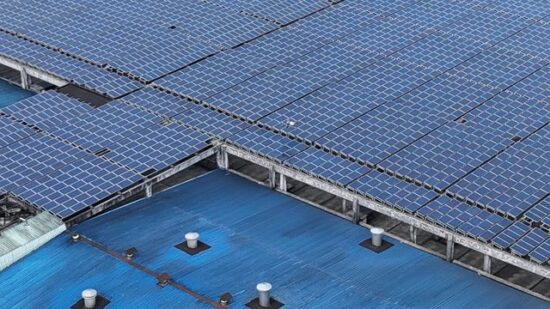
Can India’s Solar Industry Influence Long-Term Silver Demand
Anshika Jain - Nov 18, 2026India's rapidly expanding solar industry is creating an important connection between renewable energy development and the global silver market. Silver is widely recognised as a precious metal…
Most from this category

How US Federal Reserve Rate Expectations Are Influencing India’s Silver Market
Anshika Jain - Nov 18, 2026
Silver Falls Below Recent Highs: Is This a Buying Opportunity or a Warning for Investors
Anshika Jain - Nov 18, 2026
Silver Prices Crash in November 2026: Why Is the Precious Metal Losing Its Momentum
Anshika Jain - Nov 18, 2026

How US Federal Reserve Rate Expectations Are Influencing India’s Silver Market
Anshika Jain - Nov 18, 2026Silver Falls Below Recent Highs: Is This a Buying Opportunity or a Warning for Investors
Anshika Jain - Nov 18, 2026Silver Prices Crash in November 2026: Why Is the Precious Metal Losing Its Momentum
Anshika Jain - Nov 18, 2026