

A building collapse in Delhi’s Vivek Vihar reportedly killed two people on 17 November

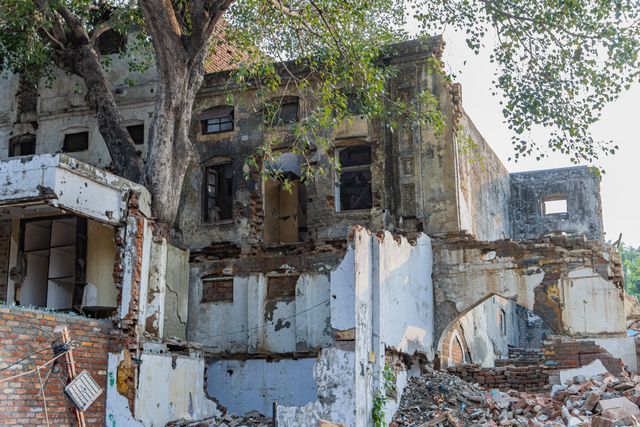

A tragic building collapse in Delhi’s Vivek Vihar area claimed two lives and left four people injured on the morning of 17 November 2026. The incident occurred in Gali Number 6 of Jwala Nagar, in East Delhi’s Shahdara district, when an old residential building suddenly collapsed, trapping occupants beneath the debris. The victims included a three-year-old child and a 35-year-old man. The incident prompted an emergency response involving Delhi Police, fire services, medical teams and other rescue personnel.
The collapse has once again brought attention to the safety of ageing buildings in densely populated urban neighbourhoods. Concerns about structural deterioration, delayed maintenance, unauthorised construction and the monitoring of potentially dangerous properties have become particularly important in Delhi, where many residential areas contain buildings that have stood for several decades. The Vivek Vihar incident also raised questions about the safety of structures located close to railway tracks and the responsibilities of property owners and civic authorities in identifying possible hazards.
What Happened in Vivek Vihar on 17 November?
The building collapsed at approximately 10 am on Tuesday, 17 November, in Gali Number 6 of Jwala Nagar, an area under the jurisdiction of Vivek Vihar police station. The structure was an old ground-plus-one-storey building, with reports also referring to a partially constructed upper portion. Several people were inside when the building came down, leaving occupants trapped beneath the fallen material.
According to police information, a call reporting the collapse was received at approximately 10:09 am. The Delhi Fire Service also received an emergency call shortly after 10 am, following which response teams were dispatched to the location. The sudden nature of the collapse and the possibility that people remained trapped underneath the debris made the first stage of the operation particularly urgent.
Initial reports indicated that six to seven people had been rescued from the site. Police and emergency personnel worked to remove the occupants from the damaged structure and arrange medical assistance. The injured were transported to Dr Hedgewar Hospital with the assistance of ambulance services. As rescue operations progressed, officials confirmed that two people had died and four others had sustained injuries.
The incident caused concern among residents of the surrounding neighbourhood, many of whom gathered near the site as emergency personnel carried out the operation. The collapse also raised immediate questions about the condition of the remaining structure and whether other people could still be trapped underneath the debris.
Two People Lost Their Lives in the Incident
The collapse resulted in the deaths of a three-year-old child, identified in reports as Laddu alias Devansh, and a 35-year-old man identified as Pintu. The child was reportedly on the first floor of the building, while the adult victim was on the ground floor when the structure collapsed.
The loss of a young child and an adult in the same incident has highlighted the human consequences of unsafe residential structures. Buildings are not simply physical properties; they are homes and workplaces occupied by families, tenants and workers who depend on them for everyday safety. When a structure fails without warning, people inside may have very little opportunity to escape.
Four other occupants were identified as injured. They were named in reports as Khushbu, Vikesh, Akash and Dalip, also known as Dimpa. Emergency teams transported the injured to hospital for treatment. Initial official accounts stated that all six occupants identified in the immediate rescue operation had been brought out from the debris.
The incident was especially distressing because the building reportedly accommodated tenants. People living in rented properties may have limited information about a building’s construction history, structural condition or previous repair work. Their safety therefore depends not only on their own awareness but also on responsible property management and effective enforcement of building regulations.
An Old Building With a History of Structural Concerns
One of the most important aspects of the Vivek Vihar collapse was the age and reported condition of the building. Officials and subsequent news reports described the structure as approximately 40 to 50 years old. It was located in Gali Number 6 of Jwala Nagar and stood relatively close to a railway track.
According to information shared by district officials, the building had reportedly developed cracks over the years. Residents also alleged that visible damage had existed for a considerable period and that concerns about the building’s condition had been raised earlier. These accounts have drawn attention to the importance of responding to early signs of structural deterioration rather than waiting for a major failure.
An old building does not automatically become unsafe simply because of its age. Its condition depends on the quality of its original construction, the materials used, the loads placed on the structure, exposure to environmental conditions and the quality of maintenance over time. However, ageing buildings require appropriate inspections because construction materials and structural components can deteriorate after decades of use.
Cracks in walls, ceilings or supporting elements can sometimes indicate ordinary surface damage, but they may also signal deeper structural problems. The seriousness of a crack depends on its location, pattern, size and whether it is expanding. Without a professional structural assessment, occupants and property owners may not be able to determine whether visible damage represents a serious safety risk.
The allegations that the building had developed cracks over time have therefore become a significant part of the investigation and public discussion surrounding the collapse.
Possible Role of Railway Vibrations
The building’s proximity to a railway line became another important issue after the collapse. Reports stated that the structure stood approximately 24 metres from the railway track. The Municipal Corporation of Delhi’s preliminary assessment identified vibrations caused by passing trains as a possible contributing factor to the deterioration of the building.
According to reports quoting District Magistrate Ajay Kumar, repeated vibrations may have contributed to the development of cracks in the old structure. Local residents also described feeling vibrations when trains passed along the nearby track. These observations have raised questions about the long-term effects of repeated vibration on ageing buildings.
However, it is important to distinguish a possible contributing factor from a confirmed cause. Railway vibrations alone cannot be declared responsible for the collapse without a detailed technical investigation. Structural design, foundation conditions, construction quality, material deterioration, alterations to the building and maintenance history may all need to be examined before the exact sequence of failure can be established.
The Municipal Corporation’s preliminary report also described the structure’s construction and its location on land identified as railway property. These findings have added a land-use and regulatory dimension to the case. A complete investigation will need to establish the relevant property records, construction history and responsibility for maintaining the structure.
How the Structure Collapsed
Preliminary accounts from officials suggested that a portion of the building’s overhang, commonly called a chajja, collapsed onto the roof below. This was reportedly followed by the failure of additional structural components, resulting in the collapse of the larger structure.
The Municipal Corporation’s report described the building as having a ground floor, a first floor and a partially constructed second-floor section. It also referred to the use of stone slabs and iron girders in the construction. Reports indicated that the first-floor ceiling and the supporting components associated with the partially constructed upper portion gave way.
Such failures can develop when one structural component loses its ability to support the weight placed on it. In a building, roofs, beams, columns, walls and foundations work together to transfer loads safely towards the ground. If an important component becomes weakened or fails, the remaining structure may experience additional stress.
The sequence described in preliminary official accounts provides an initial explanation of how the collapse may have progressed. It should not, however, be treated as a final engineering conclusion. Establishing the precise failure mechanism requires a technical examination of the debris, construction materials, structural layout and condition of the remaining portions.
Rescue Operations and Emergency Response
Following the collapse, Delhi Police, the Delhi Fire Service, ambulance teams and other emergency personnel reached the location. The Municipal Corporation of Delhi, district administration and National Disaster Response Force were also reported to have participated in the response and subsequent assessment.
The immediate priority was to locate and rescue anyone trapped beneath the fallen material. Emergency personnel worked to remove debris and reach the occupants who had been inside the building. The injured were transported to hospital for medical attention, while officials monitored the site to determine whether further searches were required.
Rescue operations at building-collapse sites can be difficult because debris may contain unstable walls, slabs, beams and other heavy construction materials. Removing one section without assessing the surrounding structure can create additional risks for both trapped occupants and rescue personnel. Teams must therefore balance the urgency of reaching survivors with the need to prevent further collapse.
Officials also indicated that the remaining portion of the structure had to be checked during the debris-removal process. Cracks were reportedly noticed in the portion that remained after the collapse. This made a careful assessment of the site important before the area could be considered safe.
The incident demonstrated the importance of coordination between police, fire services, medical teams, disaster-response personnel and civic authorities. A rapid response can help save lives, but long-term safety also requires proper inspection and follow-up action after the immediate emergency has ended.
Questions Raised About Building Ownership and Land Status
The Vivek Vihar collapse also brought attention to questions surrounding the land on which the building stood. The Municipal Corporation’s incident report identified the property as being situated on railway land that had allegedly been encroached upon. The building was reportedly located in the Mukesh Nagar-Jwala Nagar area, close to the railway corridor.
This finding has made the question of land ownership and construction permissions an important part of the wider investigation. Residents and officials have reportedly differed over aspects of the property’s ownership, while local representatives and civic officials raised concerns about structures located along the railway line.
The distinction between ownership, occupation and construction permission is important in urban property disputes. A person may occupy a building without having complete legal authority over the land, while the presence of a structure for several decades does not by itself establish that every aspect of its construction or use complies with applicable rules.
Following the collapse, district authorities directed officials to verify land ownership along the railway corridor. The Municipal Corporation was also asked to identify other potentially unsafe structures in the locality and examine their condition. These steps are significant because the safety of nearby buildings cannot be assessed separately from questions about land use, construction standards and maintenance responsibilities.
A proper investigation should establish the relevant land records and determine whether the building had received the required permissions. It should also examine who was responsible for repairs and whether any earlier notices or warnings had been issued.
Police Investigation and Arrests
The incident led to a police investigation into the circumstances surrounding the collapse and the responsibilities of those associated with the property. Initial reports identified Surendar Singh as the building’s owner. Police subsequently arrested him in connection with the case.
Further reporting on 19 November stated that the building’s co-owner, Veer Singh, had also been arrested. The arrests brought the investigation into the property owners’ possible responsibilities into sharper focus. Police were examining the circumstances that led to the collapse and the role of those responsible for the building’s maintenance.
An arrest during an investigation should not be treated as a final determination of guilt. The legal process requires investigators to establish the relevant facts, examine evidence and determine whether any applicable laws were violated. The condition of the building, its construction history, the allegations of ignored warnings and the findings of technical assessments may all be relevant to the proceedings.
The investigation is also important for understanding whether the collapse resulted from avoidable negligence, structural deterioration, construction-related problems or a combination of factors. Establishing responsibility is necessary not only for legal accountability but also for identifying gaps that may put occupants of other buildings at risk.
A Wider Pattern of Building Collapses in Delhi
The Vivek Vihar incident occurred amid a series of building-collapse reports in Delhi during the preceding weeks. The national capital has several densely populated neighbourhoods where old residential buildings, commercial properties, workshops and mixed-use structures exist close to one another.
Reports in November described a deadly collapse in the Hauz Qazi area of Old Delhi, while another building-collapse incident in Paharganj on 15 November left several people injured. Earlier, a building collapse in Harsh Vihar had also resulted in fatalities. These incidents have intensified concerns about the condition of older structures and the need for regular safety inspections.
Each collapse may involve different circumstances, and it would be incorrect to assume that all these incidents share the same cause. Nevertheless, repeated incidents in a relatively short period highlight the importance of examining broader building-safety practices across the city.
Urban areas often experience pressure from population growth, limited housing availability and the increasing use of older properties. A building originally designed for a particular purpose may undergo changes over time, including additional floors, internal alterations or conversion into commercial spaces. If such changes are not properly assessed, they may affect the structure’s ability to carry its intended loads.
The challenge for civic authorities is to identify dangerous buildings before an accident occurs. This requires updated property records, regular inspections, clear reporting channels and timely action when serious structural problems are identified.
Why Regular Structural Inspections Matter
The collapse has renewed attention to the importance of professional structural inspections, especially for buildings that have been in use for several decades. A visual examination by occupants may identify obvious cracks or damage, but it cannot replace a technical assessment by a qualified structural engineer.
A structural inspection can examine the condition of beams, columns, slabs, foundations and load-bearing walls. It can also assess whether the building has undergone unauthorised modifications or whether additional construction has placed excessive weight on the original structure. Where necessary, engineers may recommend repairs, strengthening measures, restrictions on occupancy or evacuation.
Regular inspections are particularly important when a building shows signs of deterioration, experiences repeated vibration or has been modified after its original construction. Property owners should not ignore complaints about structural damage, especially when occupants report expanding cracks, falling plaster, sagging ceilings or unusual movement.
Tenants also need accessible ways to report safety concerns. Many renters may not have the authority or financial ability to arrange structural repairs themselves. Local authorities therefore play an important role in receiving complaints, inspecting properties and taking action where a serious risk is identified.
Challenges for Civic Authorities in Identifying Unsafe Buildings
The Vivek Vihar collapse has raised questions about how potentially dangerous structures are identified and monitored. Reports following the incident indicated that the building had not previously been formally declared dilapidated by the Municipal Corporation. This has prompted scrutiny of the inspection process, particularly in neighbourhoods containing ageing buildings close to railway infrastructure.
A major challenge is the number of structures that civic authorities may need to monitor. Delhi contains residential colonies with narrow lanes, mixed ownership arrangements and buildings constructed under different regulatory conditions. Maintaining accurate information about every property’s age, structural condition and construction history can be difficult without coordinated records and regular field inspections.
However, the scale of the challenge makes systematic monitoring more important, not less. Authorities can prioritise buildings based on age, visible deterioration, previous complaints, unauthorised additions and environmental conditions that may affect structural stability. Reports from residents should be recorded and followed up rather than treated as isolated complaints.
Coordination between municipal departments, district administrations, railway authorities and other relevant agencies is also essential when buildings are located near public infrastructure or on land with disputed ownership. Clear responsibility and timely communication can help prevent safety concerns from falling between departments.
The Importance of Public Awareness and Tenant Safety
The incident also demonstrates why residents and tenants need greater awareness of basic building-safety warning signs. People living in older properties should take visible structural changes seriously and report them to the appropriate authorities or property managers. Repeated cracking, unusual sounds, water leakage affecting structural components, sagging ceilings and visible movement in walls may require professional assessment.
At the same time, residents should avoid attempting structural repairs themselves when a building may be unstable. If there are signs of an immediate danger, occupants should move away from the affected area and contact emergency services or local authorities. Safety decisions should be based on professional assessment rather than assumptions that a building will remain standing because it has been occupied for many years.
Property owners have a responsibility to maintain buildings in a condition that does not expose occupants to unreasonable risks. This responsibility includes arranging appropriate inspections, responding to complaints and ensuring that repairs or alterations are carried out by qualified professionals.
For tenants, access to reliable information about a property’s condition can be difficult. Stronger enforcement, transparent inspection procedures and effective complaint mechanisms can help reduce the gap between the responsibilities of property owners and the safety needs of occupants.
Conclusion
The building collapse in Vivek Vihar on 17 November 2026 was a tragic incident that claimed the lives of a three-year-old child and a 35-year-old man, while leaving four others injured. The collapse of the old structure in Jwala Nagar exposed serious concerns about ageing buildings, structural maintenance, possible railway-related vibrations and the monitoring of properties in densely populated parts of Delhi.
Preliminary reports pointed to the building’s age, visible cracks and possible structural deterioration. The Municipal Corporation also raised questions about its location near a railway track and the possibility that repeated vibrations had contributed to its weakening. However, the exact cause must be established through a detailed technical and legal investigation. Police action against the property owners and directions to inspect nearby structures indicate that the incident has consequences beyond the immediate rescue operation.
Preventing similar tragedies requires more than responding quickly after a building collapses. It requires identifying unsafe structures before they fail, ensuring that property owners fulfil their maintenance responsibilities, improving coordination among civic agencies and giving tenants effective ways to report dangerous conditions. The deaths in Vivek Vihar serve as a painful reminder that building safety must remain a continuous public responsibility, not merely a concern that receives attention after lives have already been lost.
Online Internship with Certificate
You may be interested
MS Dhoni Retires from IPL: Chennai Super Kings Appoint Legendary Captain as Team Mentor
Anshika Jain - Nov 24, 2026Indian cricket witnessed the end of a remarkable chapter on 17 November 2026, when Mahendra Singh Dhoni officially brought his Indian Premier League (IPL) playing career to…
ASEAN–India Discussions on 17 November 2026: Maritime Security and Investment
Anshika Jain - Nov 24, 2026India and the Association of Southeast Asian Nations (ASEAN) strengthened their regional engagement on 17 November 2026, when Prime Minister Narendra Modi participated in the 23rd ASEAN–India…
Nine deaths and 25 injuries reported in a bus accident in Uttarakhand’s Tehri Garhwal
Anshika Jain - Nov 24, 2026A tragic road accident in Uttarakhand's Tehri Garhwal district claimed nine lives and left 25 people injured on the morning of 17 November 2026. A passenger bus…
Most from this category
Tamil Nadu’s proposed shipbuilding cluster in Thoothukudi was highlighted on 17 November.
Anshika Jain - Nov 24, 2026
SpiceJet passenger disruption at Mumbai Airport, with cancellations reported on 18 November
Anshika Jain - Nov 24, 2026


Tamil Nadu’s proposed shipbuilding cluster in Thoothukudi was highlighted on 17 November.
Anshika Jain - Nov 24, 2026SpiceJet passenger disruption at Mumbai Airport, with cancellations reported on 18 November
Anshika Jain - Nov 24, 2026Cement Sector Earnings in Q3 FY27: Can Higher Prices Offset Rising Costs
Anshika Jain - Nov 20, 2026