
India and the Indo-Pacific: Maritime Security and Critical Minerals Becoming Priorities

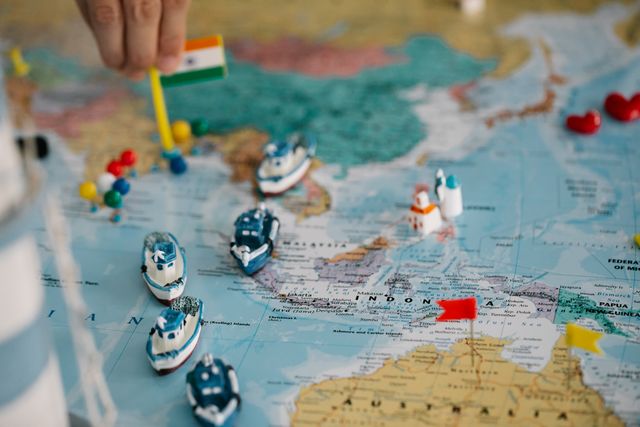

The Indo-Pacific has become one of the most important regions in global politics, international trade and technological competition. It connects major economic centres across Asia, Africa, Europe and the Americas through extensive maritime routes. These waters support the movement of energy resources, manufactured products, industrial materials and essential commodities. They are also home to important shipping corridors, strategic ports, undersea communication cables and valuable marine resources. As competition among major powers increases, the security of these maritime networks has become a central concern for countries that depend on international trade.
For India, the Indo-Pacific is particularly significant because its economic development and national security are closely connected to the Indian Ocean. The country depends on maritime routes for energy imports, commercial exports and access to international markets. At the same time, India’s growing ambitions in electric mobility, renewable energy, electronics, advanced manufacturing and defence require reliable access to critical minerals. These materials are essential for producing batteries, permanent magnets, specialised electronics and other strategic technologies.
Maritime security and critical minerals may appear to be separate policy areas, but they are increasingly connected. Minerals must be transported through international shipping networks, processed using specialised technologies and converted into products that support modern industries. Disruptions to sea routes or concentrated mineral supply chains can therefore affect industrial production and national security simultaneously. India is responding by strengthening naval capabilities, developing partnerships with Indo-Pacific countries and investing in domestic critical mineral production.
Why the Indo-Pacific Matters to India’s National Security
India’s geographical position gives it a significant role in the Indian Ocean. Its long coastline, island territories and proximity to major international shipping routes place the country near important maritime corridors connecting the Middle East, Africa, Southeast Asia and the wider Pacific. The Strait of Hormuz, Bab el-Mandeb Strait and Strait of Malacca are particularly important because they connect major energy-producing and consuming regions. Any disruption in these locations can affect shipping schedules, energy prices and the availability of essential goods.
The Indian Ocean is not simply a commercial transportation route. It is also an important strategic environment where countries maintain naval forces, develop port infrastructure and compete for regional influence. China’s growing economic and maritime presence across the Indo-Pacific has attracted attention in New Delhi, particularly because the Indian Ocean is central to India’s energy security and regional interests. China’s overseas infrastructure investments and expanding naval capabilities have encouraged India to strengthen its maritime awareness and cooperation with regional partners.
India’s Indo-Pacific approach is not limited to military competition. It also emphasises freedom of navigation, respect for international law, regional connectivity, disaster response and economic cooperation. India has promoted the idea of a free, open, inclusive and rules-based Indo-Pacific, while maintaining relationships with countries that have different political and economic interests. This approach allows New Delhi to support maritime stability without formally aligning its entire foreign policy with any single strategic bloc.
The importance of this wider perspective was highlighted at the Indian Navy’s Indo-Pacific Regional Dialogue in November 2026. Defence Minister Rajnath Singh emphasised the need for diversified supply chains, reliable maritime infrastructure, stronger maritime awareness and cooperation among regional partners. His remarks reflected India’s growing understanding that maritime security is connected not only to naval strength but also to economic resilience and the ability to manage disruptions.
Maritime Security: Protecting the Routes That Support Global Trade
Maritime security involves protecting sea routes, ports, ships, coastal infrastructure and offshore resources from threats that can disrupt international commerce. Traditional military threats remain important, but the modern maritime environment also includes piracy, illegal fishing, human trafficking, drug smuggling, cyberattacks, maritime terrorism and interference with commercial shipping. Natural disasters and environmental incidents can create additional risks for coastal communities and maritime infrastructure.
For India, protecting merchant vessels is particularly important because interruptions to shipping can affect the availability and cost of essential imports. Crude oil, natural gas, fertilisers, industrial materials and consumer products depend on reliable transportation networks. A disruption near a major chokepoint can increase insurance premiums, delay shipments and force companies to use longer routes. These changes can eventually affect manufacturing costs, inflation and the competitiveness of Indian businesses.
The growing importance of unmanned systems, drones, satellite surveillance and cyber technologies has also changed maritime security requirements. Threats may emerge from vessels that do not follow normal commercial patterns, attacks on port information systems or attempts to interfere with communication infrastructure. Traditional patrols remain essential, but governments increasingly require integrated surveillance systems that combine information from ships, aircraft, satellites, coastal radar and intelligence networks.
India has strengthened its maritime monitoring architecture through the Indian Navy, Indian Coast Guard and specialised information-sharing mechanisms. The Information Fusion Centre–Indian Ocean Region, established in 2018, supports maritime information exchange with partner countries and organisations. It helps develop a clearer understanding of commercial vessel movements and unusual maritime activity. Such information-sharing systems are important because no single country can independently monitor every part of the Indian Ocean.
The Indian Navy and India’s Expanding Maritime Role
The Indian Navy plays a central role in protecting India’s maritime interests and contributing to regional security. Its responsibilities include monitoring important sea routes, supporting anti-piracy operations, protecting offshore assets and assisting vessels during emergencies. Naval deployments also help India maintain a presence in strategically important areas and respond to situations that could threaten maritime commerce.
India has increasingly participated in bilateral and multilateral naval exercises with countries such as the United States, Japan, Australia, France and several Indian Ocean partners. These exercises improve communication, coordination and operational familiarity between participating forces. The Malabar naval exercise, involving Quad partners, is one example of cooperation that supports interoperability and maritime understanding. However, India’s wider maritime engagement also includes humanitarian assistance, disaster relief, training and capacity-building activities.
The Andaman and Nicobar Islands are particularly important to India’s maritime strategy. Located near the western approaches to the Strait of Malacca, they provide a strategically valuable position for monitoring maritime movements between the Indian Ocean and the Pacific. Strengthening infrastructure and surveillance capabilities in this region can improve India’s ability to observe important shipping corridors and respond to emerging security challenges.
India’s maritime role is also connected to its regional development partnerships. Through initiatives such as SAGAR, which stands for Security and Growth for All in the Region, and the broader MAHASAGAR vision, India has sought to strengthen cooperation with countries across the Indian Ocean and beyond. These initiatives recognise that regional security depends on the capabilities of smaller maritime states as well as those of major naval powers.
The Quad: Connecting Maritime Security With Economic Resilience
The Quadrilateral Security Dialogue, commonly known as the Quad, brings together India, Australia, Japan and the United States. The partnership focuses on practical cooperation across maritime security, economic resilience, technology, infrastructure and regional development. It is not a formal military alliance, and its members maintain their own foreign policy priorities. Nevertheless, the Quad has become an important platform for coordinating responses to shared Indo-Pacific challenges.
In May 2026, the Quad Foreign Ministers’ Meeting in New Delhi announced several initiatives that directly connect maritime security with economic security. The partners launched the Indo-Pacific Maritime Surveillance Collaboration to strengthen information sharing and maritime domain awareness, initially focusing on the Indian Ocean Region. They also announced a Quad Critical Minerals Initiative Framework intended to coordinate investment and strengthen supply chains through mining, processing and recycling.
These initiatives are significant because they recognise that maritime and economic vulnerabilities are interconnected. Better surveillance can help identify suspicious vessel activity, illegal fishing and disruptions to commercial shipping. More diversified mineral supply chains can reduce the risks associated with depending on a limited number of suppliers. Cooperation on port infrastructure, energy security and undersea cables can further strengthen the systems that support regional trade.
The Quad’s agenda continued to develop during the November 2026 leaders’ meeting in Manila. The four countries welcomed progress on maritime surveillance, cable connectivity, cybersecurity and other regional initiatives. This demonstrates that the partnership is increasingly concerned with the infrastructure and supply networks that support economic stability, rather than focusing exclusively on traditional naval security.
Why Critical Minerals Have Become a Strategic Priority
Critical minerals are natural resources that are important for economic development, advanced manufacturing and national security but may face supply risks. Their importance depends on how essential they are to particular industries, how difficult they are to replace and how concentrated their production or processing is. Different countries maintain different critical mineral lists according to their industrial requirements and strategic priorities.
Lithium, cobalt, nickel and graphite are important for several battery technologies, while rare earth elements are used in powerful permanent magnets, specialised electronics and advanced industrial equipment. Copper is essential for electrical infrastructure, power networks and renewable energy systems. Other minerals, including gallium, germanium and certain specialty metals, are important in semiconductor, optical and defence applications.
These materials support technologies that are central to India’s economic transformation. Electric vehicles require battery materials and specialised motor components. Wind turbines use advanced electrical systems and, in many designs, permanent magnets. Telecommunications infrastructure, aerospace equipment, medical technologies and defence systems also depend on a range of specialised minerals. As India expands its manufacturing capacity, reliable access to these resources becomes increasingly important.
The strategic problem is that mineral resources and industrial processing capabilities are not evenly distributed across countries. A nation may possess mineral deposits but lack the facilities needed to separate, refine and convert them into usable industrial materials. China has developed a particularly strong position in several critical mineral processing and rare earth manufacturing segments. This concentration has encouraged governments to diversify suppliers and develop domestic capabilities.
China’s Influence and the Challenge of Supply Chain Dependence
China’s role in critical mineral supply chains has become an important consideration for India and other major economies. Its influence extends beyond mineral extraction to processing, refining and the manufacturing of components such as rare earth permanent magnets. These stages require specialised equipment, technical expertise, investment and industrial infrastructure, making them difficult to establish quickly in alternative locations.
The issue became particularly visible following China’s export restrictions on selected rare earth elements and related products in 2025. Such measures raised concerns among manufacturers in the automotive, electronics, renewable energy and defence sectors. Export licensing requirements can create uncertainty even when shipments are not completely prohibited, because businesses must consider approval timelines, documentation and the possibility of changing trade conditions.
India has its own exposure to this challenge. A government assessment published in July 2026 stated that India imported all its requirements for sintered neodymium-iron-boron permanent magnets, despite having upstream capabilities in rare earth mining, separation and oxide refining. Government figures also indicated that China supplied approximately 90.4 per cent of India’s permanent magnet imports by volume in financial year 2024–25. This illustrates the difference between possessing mineral resources and controlling the complete manufacturing chain.
For India, reducing dependence does not mean abandoning international trade. Instead, the objective is to create more reliable sourcing options, expand domestic processing and manufacturing, and develop partnerships with countries that possess complementary mineral resources and technical capabilities. Diversification can reduce the risk of a sudden supply disruption while strengthening India’s position in global manufacturing networks.
India’s Critical Mineral Strategy and Domestic Manufacturing Plans
India has introduced several initiatives to improve its critical mineral security. The National Critical Mineral Mission provides a framework for strengthening exploration, mining, processing, recycling and international cooperation. It recognises that access to minerals must be supported by investment across the complete industrial value chain. This approach is particularly important for sectors such as electric mobility, renewable energy, electronics and defence.
A major development was the government’s approval in November 2025 of a ₹7,280 crore scheme to promote domestic manufacturing of sintered rare earth permanent magnets. The scheme aims to establish 6,000 metric tonnes per annum of integrated manufacturing capacity, covering the production chain from rare earth oxides to finished magnets. Its purpose is to reduce import dependence and build domestic capabilities in a strategically important industrial segment.
The Union Budget for 2026–27 also announced dedicated rare earth corridors in Odisha, Kerala, Andhra Pradesh and Tamil Nadu. These corridors are intended to support mining, processing, research and manufacturing activities. By developing connected industrial ecosystems, India can potentially reduce the gap between mineral extraction and the production of advanced materials.
Recent industry developments indicate that these plans are beginning to attract commercial interest. In November 2026, Coal India outlined plans to expand into critical minerals and advanced materials, including a proposed integrated permanent magnet facility in partnership with the Non-Ferrous Materials Technology Development Centre. The company is also exploring domestic mineral resources, overseas opportunities and partnerships to strengthen its supply of raw materials. Such projects demonstrate the growing interest in connecting India’s mineral resources with downstream manufacturing.
However, building a competitive industry will require more than financial incentives. India must develop advanced processing technologies, skilled workers, reliable infrastructure, research capabilities and long-term relationships with industrial customers. Environmental safeguards will also be essential, particularly because mineral extraction and processing can create waste and place pressure on local ecosystems.
The Connection Between Maritime Security and Critical Mineral Supply Chains
The relationship between maritime security and critical minerals is becoming more important because international mineral supply chains depend heavily on transportation networks. Minerals extracted in one country may be processed in another and converted into finished components in a third. These materials must cross borders through ports, shipping corridors and logistics systems before reaching manufacturers.
Any disruption to a major maritime route can therefore affect the availability of industrial materials. For example, instability near the Strait of Hormuz can influence energy supplies and shipping costs, while problems in the Red Sea and Bab el-Mandeb region can force commercial vessels to change routes. Longer journeys increase transportation expenses and can delay deliveries of essential inputs. Manufacturers operating with limited inventories may then face production difficulties.
The security of ports and undersea cables is also important. Ports are essential for handling mineral shipments, industrial equipment and finished products, while undersea cables carry the digital communications that support international financial transactions, logistics management and industrial coordination. Damage to these systems can affect trade even when ships and physical cargo remain safe.
This connection explains why India increasingly views maritime infrastructure, digital connectivity and mineral diversification as parts of a wider economic security strategy. Protecting sea routes is not only about preventing military threats. It is also about ensuring that the materials, technologies and information required by modern industries can move reliably across international networks.
India’s Strategic Partnerships Across the Indo-Pacific
India cannot build complete independence in every critical mineral or maritime capability. Its strategy therefore depends on cooperation with countries that have different resources, technologies and industrial strengths. Australia, for example, has significant mineral resources and established capabilities in mining and processing. Japan contributes advanced manufacturing expertise, while the United States offers technological, financial and strategic cooperation. Southeast Asian countries also have important roles in mineral production, processing and regional logistics.
These relationships can help India diversify mineral sourcing, attract investment and develop new industrial capabilities. They can also support maritime surveillance, port development, naval exercises and information sharing. The Quad provides one framework for this cooperation, while bilateral agreements and other regional institutions offer additional channels.
At the same time, India must preserve its strategic autonomy. Its Indo-Pacific policy is not based on excluding every country with competing interests from regional cooperation. India continues to engage with ASEAN-led platforms and supports an inclusive regional order in which international law and freedom of navigation are respected. This approach is important because the Indo-Pacific includes countries with different political systems, security priorities and economic relationships.
A successful partnership strategy must also consider the needs of smaller island and coastal states. Their ports, communication networks and maritime monitoring capabilities are essential to regional stability. Cooperation that provides training, infrastructure and access to technology can strengthen the entire maritime environment while creating trust among participating countries.
Challenges India Must Address
Despite growing investment and international cooperation, India faces several challenges in strengthening its Indo-Pacific position. Maritime surveillance across a vast ocean requires continuous investment in ships, aircraft, satellites, coastal radar and information-sharing systems. These capabilities must be supported by trained personnel, reliable communication networks and coordination between military and civilian agencies.
Critical mineral development presents a different but equally demanding challenge. Mining projects can take years to become operational, while processing facilities require specialised technologies and significant capital. India must also create competitive markets for domestically produced materials. If local production costs remain too high or quality standards are inconsistent, manufacturers may continue relying on established international suppliers.
Environmental responsibility is another essential consideration. Mineral extraction can affect land, water resources and local communities, while port development and maritime industrial activities can place pressure on coastal ecosystems. A sustainable strategy must balance national security and economic development with responsible resource management.
India must also avoid treating supply-chain diversification as a purely geopolitical exercise. Commercial viability, technical quality, transparent regulations and stable international partnerships will determine whether new projects succeed. Building several reliable sources of supply is more effective than replacing dependence on one country with dependence on another.
Conclusion: A Broader Strategy for India’s Security and Economic Future
India’s growing focus on maritime security and critical minerals reflects a major change in the way national security is understood. Economic stability increasingly depends on secure sea routes, reliable ports, resilient communication infrastructure and uninterrupted access to essential industrial materials. The Indo-Pacific connects all these priorities, making it central to India’s long-term development and international position.
By strengthening the Indian Navy, expanding maritime information sharing, engaging with the Quad and supporting regional cooperation, India is working to protect the routes that sustain its economy. At the same time, initiatives such as the National Critical Mineral Mission, rare earth manufacturing scheme and dedicated mineral corridors aim to reduce supply-chain vulnerabilities and strengthen domestic industrial capabilities.
These efforts will take time to deliver their full results. India must continue investing in technology, research, processing infrastructure, skilled workers and responsible resource management. Its international partnerships must also remain commercially practical and inclusive.
Ultimately, India’s Indo-Pacific strategy is about more than maritime influence or access to minerals. It is about building the resilience required to support a modern economy, protect national interests and contribute to regional stability. Countries that can secure both the movement of goods across oceans and the supply of materials needed for advanced technologies will hold an important advantage in the next phase of global economic competition.
Online Internship with Certificate
You may be interested

US-China Technology Rivalry: Advanced AI Chips Becoming a Major Diplomatic Issue
Anshika Jain - Nov 25, 2026The competition between the United States and China is no longer limited to tariffs, manufacturing capacity or military influence. It increasingly extends into advanced technologies that could…

Future of Global AI Regulation: Can Countries Agree on Common Technology Rules
Anshika Jain - Nov 25, 2026Artificial intelligence is transforming economies, industries and international relations at an extraordinary pace. Generative AI systems can create text, images, videos and computer code, while advanced models…
Rare Earth Minerals and Global Politics: Technology Companies Watching China Closely
Anshika Jain - Nov 25, 2026The global technology industry depends on materials that most consumers rarely think about. Smartphones, electric vehicles, wind turbines, advanced medical equipment, robotics, military systems and artificial intelligence…
Most from this category

Russia’s Economic Relations With Asia: Trade Partnerships Reduce Impact of Western Sanctions
Anshika Jain - Nov 25, 2026
Trump, Xi and Putin at APEC 2026: Could Their Meeting Reshape Global Trade and Security
Anshika Jain - Nov 25, 2026
MS Dhoni Retires from IPL: Chennai Super Kings Appoint Legendary Captain as Team Mentor
Anshika Jain - Nov 24, 2026
ASEAN–India Discussions on 17 November 2026: Maritime Security and Investment
Anshika Jain - Nov 24, 2026
Russia’s Economic Relations With Asia: Trade Partnerships Reduce Impact of Western Sanctions
Anshika Jain - Nov 25, 2026Trump, Xi and Putin at APEC 2026: Could Their Meeting Reshape Global Trade and Security
Anshika Jain - Nov 25, 2026MS Dhoni Retires from IPL: Chennai Super Kings Appoint Legendary Captain as Team Mentor
Anshika Jain - Nov 24, 2026