

AI and Misinformation: Is Truth Becoming Harder to Verify?

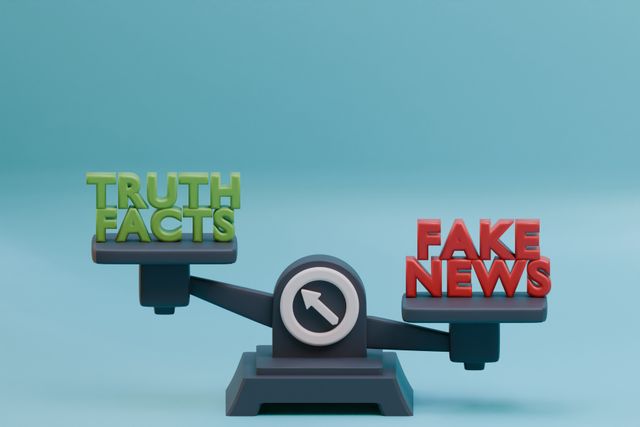

The internet has always had a misinformation problem, but artificial intelligence is changing the scale, speed and sophistication of the challenge. False information once required time, money and technical expertise to produce convincingly. Today, generative AI tools can create realistic images, videos, voices and written narratives within seconds. At the same time, AI-powered chatbots are increasingly being used by people as information and fact-checking tools, even though those systems can themselves produce inaccurate or misleading answers.
The result is a difficult paradox. Humanity has access to more information than at any previous point in history, yet determining which information deserves to be trusted can be increasingly difficult.
Recent developments in 2026 demonstrate how quickly this problem is evolving. A recent Full Fact analysis found that AI chatbots produced dozens of significant errors when asked about false claims circulating online, including claims involving AI-generated images, wars and public figures. Researchers identified 39 major errors during the first five months of their testing, with 67 separate incorrect responses associated with those errors.
At the same time, governments, technology companies, journalists and researchers are developing new methods to identify synthetic content and establish where digital material originated. The European Union’s transparency requirements for AI-generated content became applicable in August 2026, requiring relevant providers and deployers to address the marking and labelling of AI-generated or manipulated material.
These developments raise an important question: Is AI making truth harder to verify, or is it also giving society better tools to defend itself against misinformation? The answer is increasingly complex. AI is simultaneously creating new problems and providing some of the tools needed to solve them.
The New Era of Synthetic Information
Misinformation is not new. False stories, propaganda, rumours and manipulated photographs existed long before social media. What has changed is the ability to produce convincing false material at extraordinary speed.
Generative AI can write apparently authoritative articles, create realistic photographs, imitate voices, generate video and translate messages into multiple languages. A person attempting to spread false information no longer needs advanced graphic-design or video-editing skills. This has lowered the cost of creating misinformation.
The technology can also make false information more personalised. Instead of distributing one generic false message to millions of people, an automated system can generate different versions aimed at different audiences. Messages can be adapted to local languages, cultural references and individual interests.
This creates what researchers increasingly describe as a more fragmented information environment. People may encounter different versions of the same supposed event, each designed to appear credible to a particular audience.
The problem is therefore no longer simply that people can create fake information. It is that they can create large volumes of apparently credible information and distribute it rapidly.
Deepfakes Have Changed the Meaning of “Seeing Is Believing”
For decades, photographs and videos carried a special authority. A written claim could be dismissed as an opinion, but visual evidence was often treated as proof. Artificial intelligence has weakened that assumption.
Deepfake technology can produce videos in which individuals appear to say things they never said or perform actions that never happened. Voice-cloning systems can imitate a person’s speech, while image-generation tools can create realistic photographs of events that never occurred. This has implications for politics, journalism, criminal investigations, financial fraud and personal reputation.
The danger is not limited to convincing people that a fabricated event is real. A second danger is what researchers sometimes call the “liar’s dividend”: once people know that realistic synthetic media exists, genuine evidence can also be dismissed as fake.
A real recording can be challenged simply by claiming that it was generated by AI. This creates a particularly difficult environment for journalism and public institutions because verification increasingly requires more than examining the content itself.
AI Can Create Misinformation Without Intending To
Not all AI misinformation is produced by people deliberately attempting to deceive others. Large language models can generate incorrect information without malicious intent. They may confidently provide inaccurate details, invent sources, misunderstand questions or combine unrelated facts into a plausible but false answer.
This phenomenon is commonly associated with AI “hallucinations”. The problem becomes more serious when users assume that a conversational AI system is functioning like a traditional search engine or a professional fact-checker.
A search engine generally directs users towards sources. A chatbot can instead provide a polished answer in its own voice. The answer may look authoritative even when the underlying information is incomplete or incorrect.
Recent research published in Scientific Reports in September 2026 found substantial differences between AI models in their susceptibility to misinformation during repeated conversations. Researchers tested seven widely used large language models and found that models could sometimes accept false statements after sustained exposure or argumentative pressure. The study also found significant differences in how effectively individual models corrected their own mistakes. This research reinforces an important principle: fluent language is not the same thing as factual reliability.
When AI Becomes the Fact-Checker
One of the most important developments in the information ecosystem is that people are increasingly using AI to verify information produced elsewhere.
A user might receive a suspicious social-media post and ask an AI chatbot whether it is true. They might upload a photograph and ask where it came from. They may ask an AI assistant to analyse a news story or determine whether a quotation is authentic. This can be useful, but it creates a circular verification problem.
If the AI system itself has incomplete information, relies on weak sources or misunderstands the evidence, it can reinforce rather than correct misinformation.
A 2026 study of professional fact-checkers found that many organisations are adopting generative AI as an assistive technology, but human-led verification remains important because fact-checkers reported persistent problems involving hallucinations, source traceability, uncertainty and uneven performance across languages. The implication is significant. AI can make fact-checking faster, but speed cannot replace evidence.
The Problem of AI-Generated “Evidence”
Traditional misinformation often involved a false claim attached to a real photograph or an old video presented as a recent event. AI introduces a different category: evidence that never existed.
A fabricated photograph may show a fictional protest. A generated video may depict a politician making a fictional statement. A synthetic audio recording may appear to capture a conversation that never occurred. The challenge for verification systems is that there may be no original event to investigate.
This is why provenance has become increasingly important. Instead of asking only whether an image looks authentic, investigators increasingly need to establish where the file came from, who created it, when it was created, how it was edited and whether there is an identifiable chain of custody.
Researchers working on AI-mediated verification have argued that authenticity systems need to pay greater attention to source credibility, traceable origins and institutional accountability rather than relying exclusively on the appearance of content.
Metadata and Digital Provenance
One response to synthetic media is to make digital content easier to trace. Metadata can contain information about when and how a file was created or modified. Content-provenance systems can go further by attaching cryptographically verifiable information to digital material.
The basic idea is straightforward: instead of trying to determine whether a piece of content “looks real”, systems can provide information about its origin and history.
This approach is particularly important because visual detection alone has limitations. As generative models improve, distinguishing AI-generated content from authentic content simply by looking at pixels, audio or language becomes increasingly difficult.
The European Union’s AI Act is moving towards greater transparency in this area. Its Article 50 transparency obligations, applicable from August 2, 2026 for relevant systems, include requirements concerning the marking and labelling of certain AI-generated or manipulated content, including deepfakes.
Such measures do not guarantee that every piece of synthetic content will be identified, but they represent a shift towards treating provenance has been considerable interest in AI detectors designed to determine whether a photograph, video, audio recording and disclosure as part of digital trust.
Why AI Detection Alone Is Not Enough
There has been considerable interest in AI detectors designed to determine whether a photograph, video, audio recording or article was generated by artificial intelligence. These systems can be useful, but they are not a universal solution.
Generative AI models change rapidly. A detection technique that works well against one generation of models may perform less effectively against another. Content can also be edited after generation, making detection more difficult. Language creates another challenge. Detection tools may perform differently across languages, dialects and writing styles.
This is particularly important for countries with multilingual populations. A verification system developed primarily around English-language content may not provide the same reliability when applied to regional languages.
Consequently, the future of verification is unlikely to depend on one magical AI detector. It will require multiple layers of evidence, including provenance, source verification, contextual analysis, human expertise and technical detection.
Social Media Amplifies the Problem
Artificial intelligence does not operate in isolation. Its impact is magnified by social-media platforms. A false story can be created by AI and distributed through a platform’s recommendation system within minutes. If the content triggers strong emotions, it may receive more engagement and spread faster.
This creates an uncomfortable relationship between misinformation and attention. Content designed to provoke anger, fear or surprise can attract more clicks and shares than careful explanations. AI can then produce large amounts of similarly provocative content at very low cost.
A 2026 analysis from the World Economic Forum warned that AI and digital platforms can enable forms of cognitive manipulation that target emotional responses and make it harder for societies to maintain a shared understanding of facts.
The challenge therefore involves not only the technology used to generate content but also the economic and algorithmic systems through which content is distributed.
The Rise of “AI Slop”
Another emerging problem is the enormous volume of low-quality AI-generated content sometimes described as “AI slop”.
This material may not always be deliberately false. Some of it is simply poorly researched, repetitive or meaningless. But large quantities of low-quality content can make reliable information harder to find.
Search engines, social platforms and recommendation systems increasingly have to process enormous volumes of automatically generated material. If synthetic content begins to dominate online information environments, genuine reporting can become harder to discover.
This creates an information-quality problem even when there is no deliberate deception. The issue was highlighted by Full Fact’s review of misinformation trends, which observed a significant increase in AI involvement in the fact-checking workload during 2025 and expected AI-generated material to become an even larger part of the information environment in 2026.
The Risk to Journalism
Professional journalism plays an important role in establishing facts, but journalism itself creates a paradox. Society needs stronger verification at precisely faces increasing pressure.
Newsrooms must verify information quickly while competing with social-media accounts and AI-generated content that can publish instantly.
At the same time, shrinking newsrooms mean fewer journalists are available to conduct expensive investigative and verification work.
This creates a paradox. Society needs stronger verification at precisely the time when some institutions responsible for providing it are under economic pressure.
AI can help journalists search documents, translate material, identify patterns and process large datasets. It can also help fact-checkers prioritise claims for investigation.
But the technology must remain an assistant rather than an unquestioned authority.
The responsibility for publishing a factual claim ultimately requires human editorial judgment.
The Political Dimension
AI-generated misinformation has particular significance during elections and political crises.
A fabricated video released shortly before an election may spread before journalists have time to verify it. Even if the video is subsequently debunked, the correction may reach fewer people than the original falsehood.
The problem is particularly difficult because political information often involves emotionally charged subjects.
Recent elections around the world have provided examples of fabricated political images, cloned voices and synthetic videos being used to influence public conversations. In 2026, concerns about AI-generated deepfakes have become part of preparations for major electoral contests, including the US midterm elections.
The challenge for democratic societies is therefore not simply to remove false content. It is to develop systems that allow citizens to establish what happened without giving. An inaccurate answer can have consequences that are much more serious than an incorrect answer governments, companies or AI systems excessive power to decide what people are allowed to believe.
The Health Misinformation Challenge
Health information presents another serious challenge.
People may use AI to ask about symptoms, medications, treatments or medical research. An inaccurate answer can have consequences that are much more serious than an incorrect answer about entertainment or everyday trivia.
Research published in 2026 examining expert assessments of AI-generated disinformation found that the perceived threat differed by subject. Experts rated AI-generated text particularly highly as a threat in the health domain, while video deepfakes were considered especially threatening in political contexts.
This suggests that misinformation cannot be treated as a single problem.
Different areas require different verification mechanisms. Health claims may require medical evidence and qualified professionals. Political claims may require primary documents and reliable reporting. Financial claims may require regulatory filings and market data.
The verification process must therefore be appropriate to the subject matter.
The Global and Language Problem
AI misinformation is also becoming increasingly global.
Content can be generated, translated and distributed across borders almost instantly. A false narrative created in one country can appear in another country’s language within minutes.
This can help bridge that gap by translating and analysing content, but it can also worsen the problem makes international cooperation more important.
It also highlights a weakness in current verification infrastructure. Some languages have large numbers of professional journalists, fact-checkers and digital resources. Others have far fewer.
AI can help bridge that gap by translating and analysing content, but it can also worsen the problem when models perform poorly in less-resourced languages.
A genuinely global approach to information integrity therefore requires investment in multilingual verification rather than focusing almost exclusively on English-language content.
Can Regulation Solve the Problem?
Governments are increasingly responding with regulation, transparency requirements and platform obligations.
The European Union’s AI Act is one of the most significant examples. Its transparency framework requires relevant AI-generated or manipulated content to be appropriately marked or labelled, with specific obligations concerning deepfakes and certain synthetic publications.
Other countries are considering disclosure requirements, fact-checking systems and rules governing synthetic media.
However, regulation has limitations.
Technology develops faster than legislation. A rule written for one generation of AI systems may become outdated as capabilities change.
There is also a difficult balance between combating deliberate deception and protecting legitimate expression. Satire, artistic work, parody, political commentary and fictional content may all use synthetic media without intending to deceive.
Effective regulation therefore needs to focus on transparency, accountability and demonstrable harm rather than attempting to eliminate every form of synthetic content.
The Importance of Human Judgment
As AI becomes more capable, the instinctive response may be to create another AI system to verify it.
That approach can be useful, but it cannot eliminate the need for human judgment.
Verification is ultimately a process of comparing claims against evidence.
A journalist may need to contact a witness. A researcher may need to examine an original document. A scientist may need to inspect the underlying data. A court may need to establish the chain of custody of evidence.
These are not merely computational tasks.
AI can help humans perform them faster, but the final assessment often requires context, professional standards and accountability.
Recent research involving professional fact-checkers found that human-led workflows remain important precisely because AI systems can introduce uncertainty and have difficulties with source traceability.
A New Definition of Digital Literacy
The rise of AI means that digital literacy must evolve.
Knowing how to search need to ask where a piece of information came from, whether the original source exists, whether multiple independent sources confirm it and whether the evidence has been taken Google or identify a suspicious website is no longer sufficient.
People increasingly need to ask where a piece of information came from, whether the original source exists, whether multiple independent sources confirm it and whether the evidence has been taken out of context.
They also need to understand that an apparently authentic photograph may be synthetic and that a confident AI-generated answer may still be wrong.
Perhaps most importantly, people need to become comfortable with uncertainty.
Not every claim can be verified immediately. Sometimes the most responsible answer is that there is insufficient evidence to know.
That may sound unsatisfying, but acknowledging uncertainty is an essential part of distinguishing reliable information from misinformation.
The Future of Trust
The central question is therefore not whether AI will make truth impossible to establish.
Truth itself does not become less real because technology makes deception easier.
What changes is the cost of verification.
In the past, a person could often make a preliminary judgment from the appearance of a photograph, the credibility of a publication or the confidence transparent methodologies and institutions capable of establishing facts of a speaker. Increasingly, those signals are insufficient.
The future information environment will depend more heavily on provenance, independent sources, transparent methodologies and institutions capable of establishing facts.
This could eventually produce a stronger information ecosystem.
If digital content routinely carries reliable information about its origin, if platforms improve their handling of synthetic material, if journalists have better verification technology and if citizens become more sophisticated about evaluating evidence, AI could ultimately strengthen information integrity as well as threaten it.
Conclusion
Artificial intelligence is making misinformation faster, cheaper and more convincing. At the same time, it is creating powerful tools for detecting manipulation, tracing digital content and assisting professional fact-checkers.
The latest developments in 2026 demonstrate both sides of this transformation. AI systems themselves can generate misinformation or provide incorrect answers when asked to verify claims, while governments and technology companies are developing new transparency and provenance mechanisms. Recent research has also shown that different AI models vary substantially in their susceptibility to repeated misinformation and their ability to correct errors.
The central challenge is therefore not simply “AI versus truth”. It is how society builds reliable systems for establishing facts in an environment where both genuine and synthetic information can be produced at enormous scale.
The answer will require more than technology. It will require journalism, scientific standards, transparent AI development, responsible platform design, regulation, education and human judgment.
Perhaps the most important lesson is that verification cannot be outsourced completely.
An AI-generated image may look authentic. A chatbot’s answer may sound authoritative. A video may appear to provide undeniable evidence. But appearance, confidence and technological sophistication are not substitutes for evidence.
In the emerging information environment, the ability to ask “How do we know this is true?” may become one of the most important forms of digital literacy.
AI may make that question harder to answer. But it also gives society new tools to answer it—provided those tools are used with transparency, skepticism and human oversight.
Online Internship with Certificate
You may be interested

Why Do Heavy Rains Disrupt Transport Beyond the Monsoon Season?
Anshika Jain - Oct 23, 2026Heavy rainfall is often associated with India's monsoon season, when roads become waterlogged, railway services face delays and flights are diverted or cancelled. However, transport disruption is…

Women’s Safety After Dark: Why Street Design, Police Response Must Work Together
Anshika Jain - Oct 23, 2026A city’s safety cannot be measured only by its crime statistics, the number of police stations it operates or the cameras installed across its streets. For women,…

Paper Leaks and Accountability: Competitive Examinations More Trustworthy?
Anshika Jain - Oct 23, 2026Competitive examinations are among the most consequential gateways to education and employment in India. Examinations such as NEET, JEE, CUET, UGC-NET, UPSC and various government recruitment tests…
Most from this category

AI in Examinations: Institutions Detect Cheating Without Accusing Students?
Anshika Jain - Oct 23, 2026

Missing Children and Delayed Investigations: Inter-State Police Coordination Improve?
Anshika Jain - Oct 23, 2026
When a Case Is Solved Years Later: How Forensic Advances Can Reopen Cold Investigations
Anshika Jain - Oct 22, 2026
AI in Examinations: Institutions Detect Cheating Without Accusing Students?
Anshika Jain - Oct 23, 2026Medical Intern Stipend Protests: India’s Healthcare Training System
Anshika Jain - Oct 23, 2026Missing Children and Delayed Investigations: Inter-State Police Coordination Improve?
Anshika Jain - Oct 23, 2026