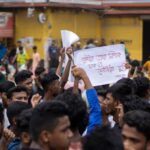

BJP Attempts to Strengthen Its Connection With Young Indians


India’s political landscape is undergoing an important generational shift. Young Indians are no longer simply being viewed as a future constituency; they are increasingly becoming an influential political force in the present. In 2026, this transformation has become particularly visible as concerns over employment, competitive examinations, education, corruption, digital rights and economic opportunities have pushed young people into the centre of national political debate.
For the Bharatiya Janata Party (BJP), which has built much of its political communication around Prime Minister Narendra Modi’s image, development and a vision of a modern India, connecting with this generation has become increasingly important. Recent youth-led protests, especially those surrounding examination irregularities and employment opportunities, have demonstrated that younger Indians can organise rapidly through social media and turn specific grievances into nationwide political conversations.
The BJP is therefore attempting to strengthen its connection with India’s young population through a combination of digital outreach, campus engagement, youth programmes, social-media communication and a more informal political style.
The timing is significant. Reuters recently reported that Prime Minister Narendra Modi has turned increasingly toward Instagram and more relatable digital content to appeal to young voters following widespread Gen Z-led protests. The report noted that nearly 400 million Gen Z voters could become an important political constituency ahead of the 2029 general election.
The BJP’s challenge, however, goes beyond gaining followers on social media. Young Indians are demanding something more fundamental: credible employment opportunities, fair examinations, affordable education, entrepreneurship, transparency and a political system willing to listen to them.
Why India’s Youth Matters More Than Ever
India has one of the world’s largest young populations. According to a July 2026 government factsheet, nearly 65% of India’s population is below the age of 35. The government describes this demographic advantage as a major component of India’s demographic dividend.
This makes India’s youth strategically important for every political party.
Young people influence elections not only through their own votes but also through families, social networks, online communities and public discourse. A politically active student can influence conversations among classmates, relatives and social-media followers.
The nature of youth participation has also changed.
Earlier, political parties could largely depend on rallies, posters, student organisations and television appearances to communicate with younger voters. Today’s Gen Z audience consumes political information through Instagram reels, YouTube videos, memes, short-form clips, influencers and messaging platforms.
This generation is also more accustomed to questioning institutions and comparing information from multiple sources.
For the BJP, which has historically been highly successful at using technology and social media for political communication, this presents both an opportunity and a challenge.
The Gen Z Protests Changed the Political Conversation
The most important reason for the BJP’s renewed focus on young Indians is the emergence of youth-led protests in 2026.
The recent demonstrations surrounding examination leaks, recruitment problems and employment opportunities demonstrated that young people could mobilise independently of traditional political parties.
Reuters reported that youth-led protests over alleged examination irregularities eventually contributed to the resignation of Union Education Minister Dharmendra Pradhan. The protests reflected wider concerns about exam corruption, unemployment and government accountability.
The movement was particularly significant because it was driven by a generation that communicates differently from previous political movements.
Instead of relying exclusively on established organisations, young protesters used memes, social media and online communities to build momentum. The protests therefore sent a message to political parties across India: young voters are not necessarily loyal to traditional political identities.
They can support a party, challenge it, organise against it or create new political movements depending on the issue. That has forced the BJP to rethink how it communicates with this generation.
BJP Admits It Needs Stronger Youth Engagement
The BJP’s response has already become visible at the organisational level.
Following the Gen Z protests at Delhi’s Jantar Mantar, the Delhi BJP decided to increase its engagement with young voters. NDTV reported that internal feedback suggested the party needed to respond more actively to youth concerns. The planned outreach involved BJP leaders, MLAs, ministers, the Bharatiya Janata Yuva Morcha (BJYM) and student organisations such as ABVP engaging with colleges and universities.
This is an important change in strategy.Rather than waiting for election campaigns to approach young voters, the party appears to be trying to establish a more continuous relationship with students and young professionals.
One of the early initiatives was a student interaction programme called Yuva Samvad, where students were invited to discuss education and related concerns.
Another initiative reported by The Tribune was titled “Gen Z with Modi”, bringing students from colleges and universities into direct engagement with BJP leaders. The programme sought to highlight examination reforms, higher-education expansion, startups and innovation.
The objective is clear: create a political conversation with young Indians before the next major national election rather than during the final months of an election campaign.
From Traditional Rallies to Instagram Reels
Perhaps the biggest change is taking place in the language of political communication.
Prime Minister Modi has traditionally used carefully produced speeches, public events and highly structured political messaging. But recent youth outreach has increasingly experimented with shorter, more informal and relatable content.
Reuters reported that Modi’s digital strategy now includes Instagram content featuring selfie-style videos, humour and pop-culture references, including the theme song from the popular television series Friends. BJP ministers and government departments have also reportedly adopted more casual and lightly edited digital formats, with outreach extending to platforms such as Snapchat.
This reflects an important understanding of how Gen Z consumes information.
Young people are unlikely to spend an hour watching a conventional political speech simply because it is politically important. They may, however, watch a 30-second video if it is entertaining, relatable or visually interesting.
Political communication is therefore becoming increasingly similar to digital content creation. The BJP’s challenge is to ensure that this transformation does not appear artificial. Young audiences can quickly distinguish between genuine communication and content that appears manufactured specifically for electoral purposes.
Authenticity May Be More Important Than Production Quality
The new generation’s relationship with politicians is different from that of previous generations.
Young Indians are surrounded by creators, influencers and online personalities who communicate directly with their audiences. Many of these creators use informal language, humour and spontaneous videos.
As a result, highly polished political advertisements may sometimes appear less authentic.The BJP’s new digital strategy appears to recognise this.
Selfie videos, short clips and informal interactions can create the impression that political leaders are more accessible.But authenticity cannot be manufactured indefinitely.
If a political party uses informal language online while ignoring serious concerns raised by students offline, young voters may perceive the strategy as cosmetic.
This is why the BJP’s youth outreach will ultimately be judged not only by how many views its videos receive but also by whether young people believe the party genuinely understands their problems.
Jobs Remain the Central Concern
Employment is arguably the biggest challenge in the BJP’s attempt to strengthen its relationship with young Indians.For millions of students, the transition from education to employment remains uncertain.
A degree does not automatically guarantee a job, and competition for government positions can be extremely intense.
Recent youth protests have demonstrated how deeply employment concerns are connected to examinations.For many young Indians, competitive examinations are not merely academic tests. They are gateways to stable careers, social mobility and financial security.
When allegations of paper leaks or unfair recruitment arise, the consequences can therefore be enormous.Reuters recently reported that youth unemployment remains a significant concern, with unemployment among young people substantially higher than the national average.
The BJP will therefore need to address employment not simply as an economic statistic but as a lived experience.
A young graduate asking, “What career can I build?” is looking for a concrete answer.
Education and Examination Reform Are Becoming Political Issues
The examination system has become another major point of concern.India’s competitive education environment places enormous pressure on students.
Millions compete for limited places in universities, medical colleges, government institutions and public-sector jobs.
When examinations are affected by alleged leaks, cheating or administrative failures, young people can feel that years of preparation have been wasted.
This explains why the recent protests were able to expand beyond a single examination issue.The problem became symbolic of a larger question: Can young Indians trust the systems that determine their future?
The BJP has attempted to respond by emphasising stronger examination safeguards and reforms.
Delhi BJP’s youth outreach following the protests specifically highlighted measures related to paper leaks, examination credibility, higher education and opportunities for startups and innovation.
The effectiveness of this message will depend on implementation.Young voters are likely to judge reforms based on their experience rather than announcements.
The Rise of the Politically Independent Young Voter
One of the most important changes in Indian politics is that younger voters may be less predictable.
Traditional political identities remain powerful in India, but Gen Z has demonstrated the ability to organise around specific issues rather than permanent party loyalty.
A young person may support the BJP’s economic policies while opposing its approach to education.Another may appreciate government infrastructure programmes but criticise employment conditions.
Someone else may support a political leader personally but protest against a specific government policy.This issue-based political behaviour makes youth outreach much more complicated.
The BJP cannot simply assume that its traditional ideological messaging will automatically appeal to every young voter.It needs to understand the diversity within India’s youth population.
Not All Young Indians Have the Same Priorities
India’s youth are not one homogeneous political group.A student in Delhi may have different concerns from a young farmer in Rajasthan.
A technology graduate in Bengaluru may prioritise startup funding and artificial intelligence.
A student preparing for a government examination in Uttar Pradesh may focus primarily on recruitment transparency.
A young entrepreneur may care about taxation and access to capital.A first-time voter in a smaller city may be more concerned about education, transport and employment.
The BJP’s challenge is therefore to create a youth strategy broad enough to address national concerns while remaining relevant at the local level.This is where grassroots organisations such as BJYM and ABVP can play an important role.
Social Media Is Becoming the New Political Battleground
The BJP has long been recognised for its sophisticated use of digital communication.But the Gen Z protests demonstrated that the same digital ecosystem can also empower political opponents.
Memes can challenge government narratives.Short videos can expose alleged administrative failures.
Hashtags can transform local grievances into national issues.Young users can create political content without belonging to a political party.This changes the balance of political communication.
In the past, political parties had much greater control over the message. Today, political narratives are created collectively by millions of users.
The BJP therefore needs not only to produce content but also to participate in conversations it does not control.
That can be uncomfortable for a highly centralised political communication system.
The Importance of Listening
One of the strongest messages emerging from the recent youth movement is the importance of listening.
Young people do not necessarily expect politicians to agree with every demand. They do expect their concerns to be acknowledged.
This is where the BJP’s new youth interactions could become particularly important.
Programmes such as Yuva Samvad can provide an opportunity for students to ask direct questions.
But these conversations will matter only if they result in meaningful policy responses.
If students repeatedly raise concerns about examination delays, recruitment processes, education costs or employment and receive only political slogans, trust could decline.
If, on the other hand, their feedback leads to measurable improvements, the BJP could strengthen its credibility among younger voters.
The RSS Is Also Sending a Message
The youth question has not been limited to the BJP.
The Rashtriya Swayamsevak Sangh (RSS), the BJP’s ideological parent organisation, has also been discussing the party’s relationship with Gen Z.
A recent editorial in Telangana Today interpreted RSS chief Mohan Bhagwat’s remarks as a caution to the BJP leadership about its attitude toward young people.
This is significant because the issue has moved beyond election strategy.
It is becoming a broader question about how India’s political establishment understands a generation that communicates differently, organises differently and expresses dissatisfaction differently.
Young Indians may reject labels that were politically effective with earlier generations.
They may also respond negatively when legitimate criticism is dismissed as anti-national or politically motivated.
The BJP therefore faces a delicate balancing act between maintaining its ideological identity and creating space for young Indians who do not fit neatly into traditional political categories.
Why the “Anti-National” Label Can Backfire
The recent youth protests have also generated debate over how political parties should respond to dissent.
Protest is not necessarily opposition to the nation.Young people protesting an examination system may be demanding a better examination system, not rejecting the country.
Students demanding jobs are not necessarily opposing economic development.This distinction matters.
The current political generation grew up in an era where patriotism is often central to political communication. But young voters may increasingly distinguish between patriotism and support for a particular government.
That distinction can become politically important.If young Indians believe that criticism of the government is being treated as criticism of India itself, they may become more resistant to official messaging.The BJP’s youth strategy will therefore need to leave room for disagreement.
Government Schemes and the Youth Narrative
The BJP can also point to a broader ecosystem of government programmes designed to engage and develop young Indians.
The government’s Mera Yuva Bharat (MY Bharat) platform, launched in October 2023, aims to provide young people with opportunities for volunteering, leadership, skill development and civic participation. A July 2026 government factsheet describes the platform as a digital bridge connecting youth with educational institutions, industry, nonprofit organisations and government opportunities.
The government also continues to emphasise entrepreneurship, innovation, digital infrastructure and skill development as important components of India’s development story.These initiatives provide the BJP with a policy foundation for its youth messaging.
However, the political challenge is converting awareness of schemes into personal experiences.A young person is more likely to support a programme if they have directly benefited from it.
The “Viksit Bharat” Message and Young India
The BJP has frequently presented young Indians as central to its vision of a developed India, or “Viksit Bharat.”
This message has obvious appeal.
Young people will live through the transformation of India over the next several decades.
They will become entrepreneurs, engineers, teachers, professionals, civil servants and political leaders.
The question is whether they believe they will have sufficient opportunities to participate in that transformation.
The BJP’s challenge is therefore to connect the abstract vision of a developed India with practical issues.
A developed India must mean good universities.
- It must mean reliable examinations.
- It must mean jobs.
- It must mean opportunities for entrepreneurship.
- It must mean affordable access to technology.
- It must mean mobility between education and employment.
For young voters, development is not merely about highways and large infrastructure projects. It is also about whether their own lives are improving.
Why the 2029 Election Is Already in the Background
Although India’s next general election is scheduled for 2029, political parties are already paying attention to the generation that will play a major role in determining its outcome.
The BJP’s recent digital strategy is therefore not simply a response to today’s protests.
It is part of a longer-term attempt to build a relationship with voters who will become increasingly important over the next election cycle.
Reuters reported that the BJP’s renewed digital outreach is explicitly connected to the political significance of Gen Z ahead of the 2029 general election.
This gives the party several years to experiment.
- It can test new communication styles.
- It can strengthen student engagement.
- It can recruit young political workers.
- It can develop youth-focused policy initiatives.
And it can identify which issues matter most to first-time voters.
The question is whether this process produces genuine engagement or simply a new layer of election marketing.
BJP’s Biggest Opportunity
The BJP’s biggest advantage is its existing organisational and digital infrastructure.
The party has a large network of workers, student organisations, youth organisations and social-media supporters.
It also has an unusually strong digital presence through Prime Minister Modi and senior party leaders.
This provides the BJP with an ability to communicate with young Indians at a scale that many political parties struggle to match.
If that infrastructure is combined with genuine listening, it could become a powerful youth-engagement model.
BJP’s Biggest Challenge
The biggest challenge is credibility.
Young Indians can be enthusiastic supporters of a political party one day and highly critical of it the next.
The recent protests demonstrated precisely that.
The BJP’s previous success among young voters cannot simply be assumed to continue indefinitely.
Every generation evaluates politics through its own experiences.
For today’s youth, those experiences include online education, competitive examinations, unemployment, startups, social media, artificial intelligence, rising aspirations and constant exposure to global trends.
Political messaging that worked a decade ago may not work in the same way today.
What Young Indians Are Likely to Expect
The new generation is likely to judge political parties through a combination of economic opportunity and personal freedom.
- They want jobs but also flexibility.
- They want education but also practical skills.
- They want political leadership but also transparency.
- They want national development but also individual opportunity.
- They want strong government institutions but also accountability.
They are comfortable with patriotism but may not accept the idea that patriotism requires political loyalty.
These expectations make youth politics more complex than traditional vote-bank calculations.
Can the BJP Rebuild Trust?
The answer will depend on what happens beyond social media.
A reel can attract attention.A selfie can create familiarity.A youth interaction can create goodwill.But long-term trust comes from results.
If examination reforms reduce paper leaks, young people will notice.If recruitment becomes faster and more transparent, they will notice.If employment opportunities improve, they will notice.
If startups receive meaningful support, they will notice.If students can communicate with policymakers without being dismissed, they will notice.
In other words, the BJP’s youth strategy will ultimately be judged in the real world.
Conclusion
The BJP’s renewed effort to strengthen its connection with young Indians represents one of the most important developments in India’s political landscape in 2026.
The immediate trigger has been a series of youth-led protests that exposed growing concerns over examination integrity, unemployment, education and government accountability. These protests demonstrated that Gen Z is capable of organising rapidly and challenging established political narratives.
In response, the BJP has begun expanding student outreach, including initiatives such as Yuva Samvad and “Gen Z with Modi”, while Prime Minister Narendra Modi and BJP ministers have adopted a more informal digital communication style aimed at younger audiences.
The strategy makes political sense. With nearly 65% of India’s population below the age of 35, young Indians represent one of the country’s most important demographic groups.
But the challenge is much deeper than learning how to make better Instagram reels.
Young Indians are asking difficult questions about their future.
Will there be enough jobs?
Can they trust competitive examinations?
Will education provide real career opportunities?
Can young entrepreneurs build successful businesses?
Will politicians listen when young people disagree with them?
These questions cannot be answered through digital campaigns alone.
The BJP has a major organisational advantage and a powerful digital ecosystem. If it can combine those strengths with genuine policy responsiveness and a willingness to listen to criticism, it could strengthen its relationship with India’s emerging generation.
But if youth outreach becomes primarily a marketing exercise, the party risks repeating the disconnect that recent protests have already exposed.
India’s young population is too large, too connected and too politically aware to be treated simply as a demographic statistic.
For the BJP—and for every political party in India—the future of politics may depend on understanding one fundamental reality:
Young Indians do not merely want to be spoken to. They increasingly want to be heard.
Online Internship with Certificate
You may be interested
Why Authorities Are Rethinking the Management of Large Public Demonstrations
Anshika Jain - Oct 15, 2026Large public demonstrations have become an important feature of modern democratic societies. From student movements and workers’ strikes to political rallies, environmental campaigns and protests demanding government…
TVK’s Bypoll Wins: What the Party’s First Electoral Test Reveals About Its Political Position
Anshika Jain - Oct 15, 2026The Tamilaga Vettri Kazhagam (TVK), led by Tamil Nadu Chief Minister C. Joseph Vijay, has cleared its first major electoral test since forming the state government. The…
Why Tribal Students Are Marching for Education and Equal Opportunities
Anshika Jain - Oct 15, 2026Education is widely recognised as a pathway to social mobility, economic independence and equal participation in society. For many tribal students in India, however, the journey towards…
Most from this category
Student Protests Over Hostel Facilities: Basic Infrastructure Is Political Issue
Anshika Jain - Oct 15, 2026
Campus Curfews and Women’s Freedom: Safety Rules Become a Discrimination?
Anshika Jain - Oct 15, 2026
When Opposition Leaders Face Detention: The Legal Boundaries of Political Protest
Anshika Jain - Oct 15, 2026
Why Internal Disagreements Within Constitutional Institutions Matter to Public Trust
Anshika Jain - Oct 14, 2026
Student Protests Over Hostel Facilities: Basic Infrastructure Is Political Issue
Anshika Jain - Oct 15, 2026Campus Curfews and Women’s Freedom: Safety Rules Become a Discrimination?
Anshika Jain - Oct 15, 2026When Opposition Leaders Face Detention: The Legal Boundaries of Political Protest
Anshika Jain - Oct 15, 2026