

Deepfakes and the Future of Online Crime


The rapid advancement of artificial intelligence has transformed countless aspects of modern life, from healthcare and education to business and entertainment. Among the most remarkable developments in recent years is the emergence of deepfake technology, a form of artificial intelligence capable of creating highly realistic images, videos, and audio recordings that can imitate real people with astonishing accuracy. While this technology has legitimate applications in filmmaking, education, and digital content creation, it has also raised serious concerns about its potential misuse.
As deepfake technology becomes more accessible and sophisticated, cybersecurity experts, law enforcement agencies, policymakers, and technology companies are increasingly warning about its role in the future of online crime. Criminals are beginning to exploit artificial intelligence tools to conduct fraud, identity theft, financial scams, political manipulation, reputational attacks, and cybercrime operations that are more convincing than ever before.
Unlike traditional forms of deception, deepfakes can create the illusion that a person said or did something they never actually did. This capability challenges fundamental assumptions about trust, authenticity, and digital evidence. In an era where video and audio recordings have long been considered reliable forms of proof, deepfakes threaten to blur the line between reality and fabrication.
The growing use of artificial intelligence in criminal activities has prompted urgent discussions about digital security, legal frameworks, public awareness, and technological safeguards. As societies become increasingly dependent on digital communication, understanding the implications of deepfakes has become essential. The future of online crime may be shaped not only by hackers and cybercriminals but also by artificial intelligence systems capable of manipulating reality itself.
Understanding Deepfake Technology
The term “deepfake” combines the concepts of deep learning and fake content.
Deepfakes are generated using advanced artificial intelligence models that analyze large amounts of data, including photographs, videos, voice recordings, and facial expressions. These systems learn how a person’s face moves, how their voice sounds, and how they express emotions.
Once trained, the AI can generate highly realistic synthetic media that appears authentic. A deepfake video may show a person speaking words they never actually said. Similarly, AI-generated audio can imitate someone’s voice with remarkable accuracy.
The quality of deepfake content has improved dramatically in recent years. What once required specialized expertise and powerful computing resources can now be created using widely available software tools and online services.
As technology continues to advance, distinguishing between authentic and fabricated content is becoming increasingly difficult. This presents significant challenges for individuals, organizations, and governments seeking to maintain trust in digital communications.
Why Deepfakes Are Attractive to Criminals
Criminals have always sought methods that maximize deception while minimizing risk.
Deepfake technology offers precisely this advantage. By creating convincing false identities, fabricated evidence, or impersonated communications, criminals can manipulate victims without needing physical proximity.
Traditional scams often rely on emails, text messages, or phone calls that can sometimes appear suspicious. Deepfakes add a new layer of credibility by incorporating realistic visual and audio elements.
A victim who might ignore a fraudulent email could respond differently if they receive a video message appearing to come from a trusted employer, family member, business executive, or government official.
The technology enables criminals to exploit trust on an unprecedented scale.
Furthermore, deepfakes can be produced rapidly and distributed globally through social media platforms, messaging applications, and digital communication networks.
This scalability increases both the reach and potential impact of criminal activities.
Financial Fraud and Business Scams
One of the most concerning applications of deepfake technology involves financial fraud.
Businesses increasingly rely on digital communication for decision-making, particularly in multinational organizations where executives may not interact face-to-face regularly. Cybercriminals can exploit this environment by creating fake audio or video messages that appear to originate from senior executives.
An employee receiving a convincing video instruction from a company leader may be more likely to authorize financial transactions or disclose sensitive information.
Voice-cloning technology presents additional risks. Criminals can replicate the voices of business leaders, colleagues, or clients to conduct fraudulent phone conversations.
Financial institutions may also become targets. Deepfakes could potentially be used to bypass identity verification systems that rely on facial recognition or voice authentication technologies.
As organizations adopt increasingly digital workflows, protecting against AI-powered impersonation will become a critical cybersecurity priority.
Identity Theft in the Age of Artificial Intelligence
Identity theft has long been a significant cybercrime concern, but deepfakes introduce new dimensions to this threat.
Traditionally, criminals relied on stolen documents, passwords, or personal information to impersonate victims. With deepfake technology, they can create realistic digital representations of individuals.
Social media profiles often provide sufficient photographs and videos to train artificial intelligence systems capable of generating convincing synthetic content.
Criminals may use these materials to create fake video calls, fraudulent verification submissions, or manipulated recordings that appear authentic.
The implications extend beyond financial crimes. Deepfake identity theft can affect personal relationships, professional reputations, and legal proceedings.
As digital identities become increasingly important in everyday life, protecting biometric information may become as critical as safeguarding passwords and financial credentials.
The concept of identity itself is evolving in response to technological advancements.
The Threat to Personal Reputation
Deepfakes pose a serious threat to individual reputations.
A fabricated video showing someone engaging in inappropriate, illegal, or controversial behavior can spread rapidly online before verification occurs. Even if the content is eventually proven false, reputational damage may already have occurred.
Public figures, business leaders, journalists, celebrities, and political candidates are particularly vulnerable. However, ordinary individuals are also at risk.
Personal disputes, workplace conflicts, harassment campaigns, and extortion schemes may increasingly involve manipulated digital content.
Victims often face significant challenges in disproving fabricated material, especially when audiences are unfamiliar with deepfake technology.
The speed at which information travels through digital platforms amplifies these risks.
Protecting reputations in the age of artificial intelligence requires both technological solutions and public awareness regarding the existence of manipulated media.
Deepfakes and Social Engineering Attacks
Social engineering involves manipulating people into revealing information or performing actions that benefit criminals.
Deepfakes significantly enhance the effectiveness of these attacks.
Traditional social engineering often depends on persuasion through written communication or voice calls. Deepfake technology enables criminals to create realistic visual interactions that strengthen credibility.
Imagine receiving a video call from someone who appears to be a trusted colleague requesting confidential information. Even cautious individuals may find such situations difficult to evaluate.
The combination of visual authenticity, emotional manipulation, and urgency can increase the success rate of fraudulent schemes.
Cybersecurity experts warn that social engineering attacks enhanced by artificial intelligence may become one of the most significant threats facing organizations and individuals in the coming years.
Human trust remains one of the most valuable targets for cybercriminals.
Political Manipulation and Misinformation
The potential impact of deepfakes extends beyond financial crimes.
Political misinformation represents one of the most widely discussed concerns associated with artificial intelligence-generated content. Fabricated videos or audio recordings involving political leaders can influence public opinion, create confusion, and undermine trust in democratic institutions.
During election periods, manipulated content can spread rapidly through social media platforms, reaching millions of users before fact-checking efforts can respond.
Even when false content is eventually debunked, its initial impact may persist.
The broader challenge lies in maintaining confidence in authentic information. As deepfakes become more common, citizens may begin questioning genuine recordings as well.
This phenomenon, sometimes referred to as the “liar’s dividend,” allows individuals to dismiss authentic evidence by claiming it is artificially generated.
The resulting erosion of trust poses significant challenges for societies that rely on informed public discourse.
Challenges for Law Enforcement
Law enforcement agencies face growing difficulties in addressing deepfake-related crimes.
Investigating cybercrime is already complex due to anonymity, international jurisdictions, and rapidly evolving technologies. Deepfakes introduce additional complications by making digital evidence harder to verify.
Determining the authenticity of recordings may require specialized forensic expertise and advanced technological tools.
Criminals often operate across multiple countries, complicating investigations and prosecutions. Legal frameworks may also struggle to keep pace with technological innovation.
Existing laws addressing fraud, impersonation, defamation, and cybercrime may not always adequately address the unique characteristics of AI-generated content.
Governments around the world are exploring regulatory approaches to address these challenges, but effective solutions remain a work in progress.
The legal landscape surrounding deepfakes is likely to continue evolving as technology advances.
Technology Companies and Detection Solutions
Technology companies are investing heavily in tools designed to identify and combat deepfakes.
Artificial intelligence can be used not only to create synthetic media but also to detect signs of manipulation. Researchers are developing systems capable of analyzing facial movements, audio patterns, metadata, and other indicators of authenticity.
Social media platforms increasingly recognize the need to address manipulated content. Some organizations have introduced policies aimed at identifying and removing harmful deepfakes.
However, the challenge resembles an ongoing technological arms race.
As detection systems improve, content generation technologies also become more sophisticated. Criminals continually adapt their methods to evade safeguards.
Maintaining trust in digital information will require continuous innovation and collaboration among technology companies, researchers, governments, and civil society organizations.
No single solution is likely to eliminate the problem entirely.
Building Public Awareness and Digital Literacy
Technology alone cannot solve the challenges posed by deepfakes.
Public awareness is equally important.
Individuals must understand that realistic-looking videos and audio recordings are no longer guaranteed evidence of authenticity. Critical thinking and verification practices are becoming essential skills in the digital age.
Users should approach sensational content with caution, verify information through multiple reliable sources, and avoid sharing unverified materials.
Educational institutions, employers, media organizations, and government agencies can play important roles in promoting digital literacy.
Awareness campaigns can help citizens recognize warning signs and understand the limitations of digital evidence.
The ability to evaluate information critically will become increasingly valuable as artificial intelligence continues to reshape communication environments.
Digital literacy is rapidly becoming a fundamental component of cybersecurity.
Conclusion
Deepfake technology represents one of the most significant challenges facing the digital world today. While artificial intelligence offers enormous benefits across numerous sectors, its misuse by cybercriminals introduces new risks that threaten financial security, personal privacy, public trust, and social stability.
From financial fraud and identity theft to reputational attacks and political misinformation, deepfakes are expanding the capabilities of online criminals in unprecedented ways. The technology enables sophisticated deception that exploits one of humanity’s most important resources: trust.
As deepfake creation tools become more accessible and realistic, societies must adapt. Governments, technology companies, cybersecurity professionals, educators, and citizens all have roles to play in addressing this evolving threat. Strong legal frameworks, advanced detection technologies, public awareness initiatives, and international cooperation will be essential components of an effective response.
The future of online crime will increasingly be shaped by artificial intelligence. Criminals will continue exploring new methods of deception, while defenders develop tools to detect and prevent abuse. This ongoing contest will influence how trust is established and maintained in digital environments.
Ultimately, the rise of deepfakes serves as a reminder that technology is neither inherently beneficial nor harmful. Its impact depends on how it is used. As artificial intelligence continues to transform society, the challenge will be ensuring that innovation strengthens human progress without undermining the foundations of truth, trust, and security upon which modern digital life depends.
Online Internship with Certificate
You may be interested
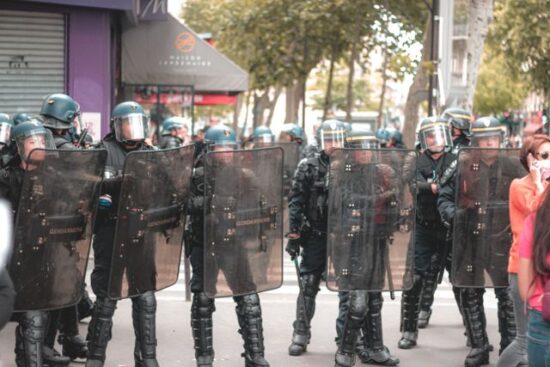
Why Authorities Are Rethinking the Management of Large Public Demonstrations
Anshika Jain - Oct 15, 2026Large public demonstrations have become an important feature of modern democratic societies. From student movements and workers’ strikes to political rallies, environmental campaigns and protests demanding government…

TVK’s Bypoll Wins: What the Party’s First Electoral Test Reveals About Its Political Position
Anshika Jain - Oct 15, 2026The Tamilaga Vettri Kazhagam (TVK), led by Tamil Nadu Chief Minister C. Joseph Vijay, has cleared its first major electoral test since forming the state government. The…

Why Tribal Students Are Marching for Education and Equal Opportunities
Anshika Jain - Oct 15, 2026Education is widely recognised as a pathway to social mobility, economic independence and equal participation in society. For many tribal students in India, however, the journey towards…
Most from this category

Student Protests Over Hostel Facilities: Basic Infrastructure Is Political Issue
Anshika Jain - Oct 15, 2026
Campus Curfews and Women’s Freedom: Safety Rules Become a Discrimination?
Anshika Jain - Oct 15, 2026
When Opposition Leaders Face Detention: The Legal Boundaries of Political Protest
Anshika Jain - Oct 15, 2026
Why Internal Disagreements Within Constitutional Institutions Matter to Public Trust
Anshika Jain - Oct 14, 2026
Student Protests Over Hostel Facilities: Basic Infrastructure Is Political Issue
Anshika Jain - Oct 15, 2026Campus Curfews and Women’s Freedom: Safety Rules Become a Discrimination?
Anshika Jain - Oct 15, 2026When Opposition Leaders Face Detention: The Legal Boundaries of Political Protest
Anshika Jain - Oct 15, 2026