Foreign Policy in the Age of Online Misinformation

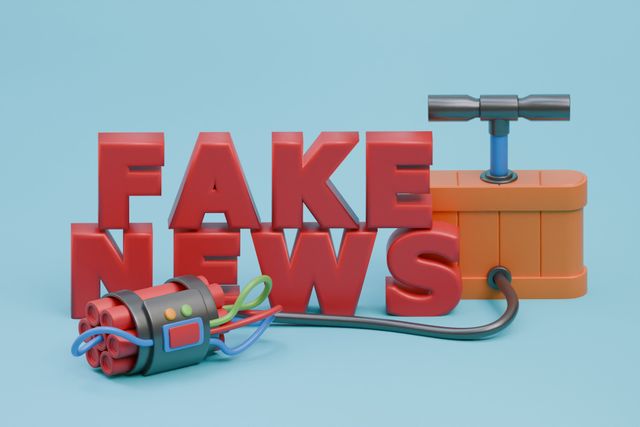

International crises have always involved a struggle over information. Governments explain their decisions, military officials release statements, journalists report events, and political leaders attempt to influence domestic and international opinion. What has changed dramatically is the speed, scale, and complexity with which information now travels. A video recorded during a conflict can reach millions of people before its location is verified, while an unconfirmed claim about a military attack can influence diplomatic conversations before officials have established what actually happened.
Online misinformation has consequently become an important challenge for foreign policy. False or misleading claims can distort public understanding of international events, intensify hostility between countries, damage diplomatic relationships, and make crisis management more difficult. In some situations, information campaigns may be deliberately organised to weaken an adversary, divide an opposing society, undermine confidence in public institutions, or influence how other governments respond to a conflict.
The United Nations has warned that misinformation, disinformation, and hate speech can threaten peace, security, democracy, and human rights. Its 2024 Global Principles for Information Integrity call for coordinated action involving governments, technology companies, independent media, researchers, and civil society while protecting fundamental freedoms.
The challenge for foreign policy is not simply to identify false statements. Governments must also understand how misleading narratives emerge, why people believe them, how digital platforms amplify them, and what happens when they become part of international decision-making. Responding effectively requires a combination of reliable public communication, independent verification, diplomatic coordination, technological safeguards, and respect for freedom of expression.
Understanding Misinformation and Its Role in Foreign Policy
The Difference Between Misinformation and Disinformation
Misinformation refers to false or inaccurate information that spreads regardless of whether the person sharing it intends to deceive others. Someone might circulate an old photograph believing it shows a recent military attack, or share an inaccurate report because it appears to come from a trustworthy account. The information may be harmful even when the person distributing it has no malicious intention.
Disinformation, by contrast, generally refers to false or manipulated information spread deliberately to mislead an audience. It may involve fabricated documents, misleading edits, impersonation of public officials, coordinated social media activity, or claims designed to create a false impression of events. Foreign information manipulation and interference, commonly abbreviated as FIMI in European policy discussions, describes a broader pattern of manipulative and coordinated behaviour that can threaten political processes, public trust, and international security.
These categories can overlap during a crisis. A deliberately fabricated claim may initially be distributed by an organised network, then shared by ordinary users who believe it is genuine. The original source may understand the deception, while subsequent participants spread the material without knowing its origins. As the claim moves between platforms, its context can disappear, making it increasingly difficult to identify where it began or why it was created.
Foreign policy officials therefore need to assess both the accuracy of a claim and the behaviour surrounding its distribution. A single mistaken post does not necessarily indicate a coordinated operation. However, repeated publication of nearly identical claims by connected accounts, the impersonation of official institutions, or the strategic release of manipulated media may justify a more extensive investigation.
Why International Crises Create Ideal Conditions for False Claims
Crises create an environment in which people urgently seek explanations but reliable information may be scarce. During an armed conflict, terrorist attack, border incident, diplomatic confrontation, or sudden political upheaval, governments may not immediately know what happened. Investigations take time, witnesses may provide contradictory accounts, and officials may be unable to disclose sensitive information.
This uncertainty creates an opening for speculation. A short video without a date or location can be presented as evidence of a current attack. An unverified casualty figure can become a headline. A statement from an unnamed source may be repeated as confirmed intelligence. When people are frightened or angry, emotionally powerful explanations may attract more attention than cautious reporting that acknowledges what remains unknown.
International crises also encourage audiences to interpret information through existing political loyalties. A claim that confirms a person’s beliefs about a rival country may be accepted without scrutiny, while contradictory evidence may be dismissed as propaganda. As a result, misinformation can spread not only because people lack facts, but also because the claims fit familiar narratives about national identity, historical grievances, security threats, or geopolitical competition.
The European External Action Service’s March 2026 report on foreign information manipulation describes how high-stakes, emotionally charged situations can create vulnerabilities that manipulation campaigns exploit. The report also identifies coordinated distribution across multiple platforms as an important feature of these activities.
How False Claims Spread During International Crises
The First Wave: Unverified Information Fills the Vacuum
The initial hours of an international crisis are often the most vulnerable period for information disorder. Newsrooms may have limited access to the affected area, government agencies may be checking competing reports, and eyewitnesses may be posting material before journalists can independently verify it. In this environment, an early claim can attract attention simply because it appears before a reliable explanation becomes available.
Consider a hypothetical border incident involving two neighbouring countries. An account publishes a video claiming that one country’s military has attacked civilian infrastructure inside the other country. The footage receives thousands of shares before investigators establish that it was recorded several years earlier in a different location. By the time the error is corrected, the original claim may already have influenced public debate, triggered hostile commentary, and prompted demands for retaliation.
The problem is not limited to fabricated media. Authentic images can also be misleading when presented with incorrect dates, locations, descriptions, or casualty figures. A genuine photograph from an earlier conflict can be used to imply that a new attack has occurred. A real statement from a government official can be shortened in a way that reverses its meaning. The material itself may be authentic, but the narrative surrounding it can still be false.
This is why verification must examine context as well as authenticity. Establishing that a video is real does not establish that the accompanying description is accurate. During a crisis, the source, date, location, original context, and independent corroboration of a claim are all essential to understanding what it actually demonstrates.
Social Media Algorithms and Emotional Amplification
Digital platforms enable information to travel across borders almost instantly. Their recommendation systems can expose users to content from people and organisations they do not follow, while reposting and sharing functions allow a claim to move rapidly between communities. This creates opportunities for accurate reporting, emergency warnings, and eyewitness documentation to reach large audiences. The same infrastructure can also amplify misleading content.
Content that provokes fear, anger, outrage, or surprise may attract strong reactions. When users repeatedly engage with a particular narrative, they may encounter more material reinforcing it, depending on the platform’s recommendation systems and their own activity. As a result, emotionally charged misinformation can become more visible than careful explanations that take longer to develop.
This does not mean that every widely shared false claim has been promoted by an algorithm or that all platforms behave identically. Its reach may also depend on the size of the original audience, the influence of public figures, coordinated sharing, language communities, and the wider news environment. Nevertheless, the structure of digital communication can make rapid amplification possible before verification catches up.
The United Nations’ Global Principles for Information Integrity highlight the importance of transparency, public empowerment, and healthier incentives within the information ecosystem. These principles recognise that addressing information disorder requires attention not only to individual posts but also to the systems through which information is created, distributed, and consumed.
Coordinated Networks and the Illusion of Public Consensus
Some influence operations seek to make a claim appear more widely accepted than it actually is. This can involve networks of inauthentic accounts, fabricated websites, impersonated news outlets, or multiple pages publishing closely related messages. The accounts may repeat the same allegation, circulate identical images, or direct users towards a common set of websites.
When a person encounters the same claim repeatedly, they may interpret repetition as evidence of credibility. If the allegation appears on social media, a website that resembles a news organisation, and a video-sharing platform, it may seem as though several independent sources have confirmed it. In reality, all three may trace back to the same original source.
Cross-platform distribution can also make coordinated campaigns harder to investigate. A post may begin in one language community, be translated into several others, and return to the original audience through accounts that appear independent. Each repetition can remove information about the original source while strengthening the impression that the claim is supported by widespread public discussion.
The EEAS’s 2026 report describes cross-posted content and coordinated inauthentic behaviour as recurring elements of foreign information manipulation. It also discusses how artificial intelligence can help operators produce content in multiple languages and increase the scale of their activities.
The diplomatic significance is substantial. A foreign ministry observing a sudden wave of online anger may mistakenly interpret it as a spontaneous expression of public opinion, when some of the apparent activity has been artificially amplified. Equally, genuine public anger should not automatically be dismissed as foreign interference. Distinguishing authentic debate from coordinated manipulation requires evidence, not assumptions based on whether a message supports or criticises a government.
Artificial Intelligence and the Changing Nature of Information Warfare
Deepfakes, Synthetic Images, and Fabricated Statements
Artificial intelligence has reduced the time, cost, and technical expertise required to create convincing synthetic media. Images can be generated to depict events that never happened, voices can be imitated, and videos can be manipulated to make public figures appear to say things they never said. Generative tools can also produce large quantities of written material tailored to different audiences.
During an international crisis, a fabricated recording of a leader announcing military mobilisation could generate confusion before its authenticity is checked. A synthetic image depicting civilian casualties could intensify public anger, while a fake diplomatic document could suggest that one government has secretly betrayed an ally. Even after such material is exposed, screenshots and copies may continue circulating without the correction.
The danger extends beyond the ability to fool people with a single realistic image or recording. Synthetic content can undermine trust in genuine evidence as well. When convincing fabrications become common, officials or other influential figures may dismiss authentic recordings as artificial. This creates a situation in which the public struggles both to recognise false material and to establish confidence in genuine documentation.
The EEAS reported a substantial increase in AI-related techniques within the foreign information manipulation incidents it documented for 2025. Its March 2026 report describes the use of AI to accelerate content creation and support multilingual distribution. These findings indicate that artificial intelligence is becoming an important part of the operational environment, although they should not be interpreted as evidence that every misleading claim is AI-generated.
Why Detection Tools Alone Are Not Enough
Automated detection systems can help identify suspicious media, repeated text patterns, manipulated files, and coordinated account behaviour. Digital forensic methods can examine image metadata, compare footage with known material, analyse audio characteristics, and search for earlier appearances of a video. Human investigators can combine these signals with geographic evidence, reliable reporting, and information from official sources.
However, detection tools have limitations. Media can be compressed, edited, or re-recorded in ways that reduce the usefulness of technical indicators. Detection systems may also produce false positives or fail to recognise unfamiliar generation methods. A tool that identifies certain forms of synthetic media cannot automatically determine whether an entire political claim is true or false.
The strongest response combines technical analysis with independent verification and transparent communication. When officials identify manipulated material, they should explain what has been verified, what remains uncertain, and what evidence supports the conclusion. Where definitive verification is not yet possible, acknowledging uncertainty is more credible than making a confident claim that later proves incorrect.
How Online Misinformation Can Reshape Foreign Policy
Escalating Diplomatic Tensions
False claims can place governments under pressure to respond before the facts are established. If a fabricated allegation suggests that a country has violated another state’s sovereignty, political leaders may face demands for sanctions, military readiness, diplomatic expulsions, or public condemnation. A delayed response can be portrayed as weakness, while an immediate response based on inaccurate information may intensify the crisis.
The danger is especially pronounced when national pride, historical disputes, or security fears are involved. In such circumstances, even a correction may struggle to reverse the political consequences of an allegation that has already attracted widespread attention. Officials may feel compelled to respond to public pressure rather than wait for a complete investigation.
Misinformation can also interfere with back-channel diplomacy. Negotiators may be trying to establish a ceasefire or prevent a border incident from escalating while online narratives portray compromise as surrender. If leaders fear that any concession will be interpreted as betrayal, the political space for negotiation may shrink.
A resilient foreign policy therefore needs procedures for verifying major allegations before taking consequential action. This does not mean governments should ignore emerging threats or delay urgent protective measures. It means separating immediate risk management from conclusions about responsibility, and preserving communication channels while evidence is being assessed.
Undermining Alliances and International Cooperation
International partnerships depend partly on confidence that governments will honour commitments and communicate reliably. False claims alleging that an ally has secretly withdrawn support, shared intelligence with an adversary, or abandoned a joint agreement can weaken that confidence. If leaders respond to unverified allegations without consulting their partners, misinformation may create the very disagreement that its originators intended to exploit.
Such campaigns can also complicate cooperation among international organisations. Different governments may receive contradictory reports, rely on different information sources, or disagree about whether a particular incident has been verified. These disagreements can delay joint statements, humanitarian coordination, sanctions decisions, or other collective responses.
The consequences may be particularly serious during humanitarian emergencies. Misleading claims about aid deliveries, civilian safety, or the conduct of humanitarian organisations can discourage assistance or endanger local workers. False information about evacuation routes or the location of safe facilities may also put vulnerable people at risk.
The United Nations identifies peace and security, humanitarian response, human rights, and democratic participation among the areas affected by information disorder. Its approach emphasises coordinated action and the need to protect the integrity of public information without undermining fundamental freedoms.
Influencing International Public Opinion
Foreign policy decisions are shaped not only by leaders and diplomats but also by public attitudes. Governments may face pressure from voters, business communities, civil society, and media organisations when responding to international events. A sustained false narrative can influence how a foreign population perceives another country, whether it supports humanitarian assistance, or how it evaluates an international agreement.
For example, a misleading campaign could portray a legitimate diplomatic negotiation as evidence of secret collusion. Another might falsely claim that an entire population supports an aggressive policy, encouraging hostility towards people who have little influence over their government’s decisions. Such narratives can blur the distinction between criticism of a government and prejudice against a national, ethnic, or religious community.
The result may be a more polarised public debate in which evidence is judged according to political identity rather than reliability. Diplomatic engagement then becomes harder because leaders operate in an environment where compromise is easily misrepresented and accurate explanations may be treated with suspicion.
Foreign policy communication must therefore address international audiences without treating them as passive targets. Providing accessible evidence, engaging independent journalists, and explaining the reasoning behind decisions can help build understanding. These efforts are most credible when governments acknowledge legitimate criticism instead of labelling every unfavourable report as misinformation.
How Governments Can Respond to Misinformation During a Crisis
Establish Rapid and Credible Official Communication
When reliable information is delayed, speculation can fill the gap. Governments can reduce this vulnerability by preparing crisis communication procedures before an emergency occurs. These procedures should identify which agencies are authorised to release information, how claims will be verified, how updates will be coordinated, and how uncertainty will be communicated to the public.
Speed matters, but credibility matters more. An official account that publishes unverified claims may lose public trust and unintentionally strengthen the misinformation it was intended to counter. Government agencies should distinguish confirmed facts from preliminary assessments and clearly indicate when an investigation is continuing. If new evidence changes the initial understanding, officials should correct the record promptly and explain why the assessment changed.
Consistency across government departments is also essential. If a foreign ministry, defence ministry, and national security agency issue contradictory statements, audiences may struggle to distinguish an ordinary difference in emphasis from a serious factual disagreement. Shared verification procedures and coordinated briefings can help prevent confusion while preserving the ability of relevant agencies to communicate their own responsibilities.
The United Nations’ crisis-communication guidance recommends reviewing communication strategies, detecting and analysing information threats, and determining an appropriate response. This provides a practical foundation for governments seeking to strengthen information integrity during rapidly developing events.
Strengthen Cooperation Between Governments and Independent Media
No single government can monitor every language, platform, and information network relevant to an international crisis. Cooperation between diplomatic services, independent journalists, research organisations, civil society groups, and technology companies can improve the speed and quality of verification.
Governments can share verified information, relevant technical evidence, and assessments of emerging threats with trusted partners. International organisations can help coordinate communication when an incident affects several countries. Independent news organisations can contribute local knowledge and investigative capacity, particularly where official sources have limited access or face credibility challenges.
However, cooperation must not turn journalism into a government messaging operation. Independent media should retain the freedom to question official accounts, investigate misconduct, and publish findings that governments may find uncomfortable. A response to disinformation becomes less credible if it suppresses legitimate criticism or relies exclusively on information from the authorities involved in the dispute.
Cross-border collaboration is most effective when participants agree on verification methods, respect professional independence, and distinguish evidence-based reporting from coordinated manipulation. It should help people assess claims rather than require them to accept one official interpretation without question.
Address Coordinated Manipulation Without Suppressing Legitimate Speech
Governments and technology companies can investigate networks involved in impersonation, coordinated inauthentic behaviour, fraudulent websites, or the distribution of manipulated media. Appropriate responses may include transparent platform enforcement, warnings about deceptive content, the removal of accounts that violate established rules, and lawful action against criminal conduct.
Such interventions need clear standards and independent oversight. A claim should not be treated as foreign disinformation simply because it criticises a government, challenges a military operation, or expresses an unpopular political opinion. Excessively broad restrictions can damage freedom of expression, weaken independent journalism, and make citizens more suspicious of official information.
The United Nations’ Global Principles for Information Integrity emphasise both the need to address information-related harms and the importance of protecting human rights, privacy, public participation, and independent media.
A balanced response focuses on demonstrable deception, coordinated manipulation, and harmful conduct rather than political disagreement itself. Where content is disputed but not demonstrably false, providing context, publishing supporting evidence, and enabling independent scrutiny may be more appropriate than demanding its removal.
Invest in Public Media Literacy and Digital Resilience
Long-term resilience depends on people’s ability to evaluate information independently. Media literacy should help individuals recognise emotionally manipulative headlines, distinguish reporting from commentary, identify original sources, and understand why an image or video may not prove the claim attached to it.
Education and public awareness initiatives are particularly important during international crises, when information may be incomplete and misleading material can spread across languages. Schools, universities, news organisations, and community groups can help people understand reverse-image searching, source verification, manipulated media, and the difference between an unverified allegation and a confirmed finding.
Public communication should also avoid treating audiences as incapable of making informed decisions. People are more likely to trust verification efforts when they can examine the evidence and understand how a conclusion was reached. Transparent corrections, accessible explanations, and opportunities to ask questions can strengthen public confidence more effectively than simply instructing citizens not to believe certain sources.
Media literacy cannot eliminate misinformation, and responsibility should not be placed entirely on individual users. Platforms, public institutions, and media organisations also have responsibilities to improve information quality and make trustworthy material easier to find. The United Nations’ framework identifies public empowerment, transparency, and independent media as important components of a healthier information environment.
The Future of Foreign Policy in an Information-Contested World
Integrate Information Assessment Into Diplomatic Decision-Making
Foreign ministries increasingly need to consider the information environment alongside traditional political, economic, and security assessments. Diplomatic teams can monitor emerging narratives, investigate the origins of influential claims, and assess whether online activity appears to be affecting public attitudes or government decisions.
This work should be integrated with established verification and intelligence procedures rather than treated as a substitute for them. Online popularity does not necessarily indicate public opinion, and the presence of coordinated accounts does not automatically prove that a foreign government directed an operation. Analysts must distinguish observed behaviour from assumptions about motive, sponsorship, and intended impact.
Information assessment can also help diplomats anticipate escalation. If an unverified allegation is spreading rapidly between countries, officials may be able to establish direct contact with their counterparts, exchange evidence, and issue a joint clarification before the claim influences policy decisions. Quiet diplomatic engagement may sometimes be more effective than a public confrontation that amplifies the original allegation.
Build International Standards for Transparency and Verification
Because digital information crosses national borders, fragmented responses can leave substantial gaps. Governments and international institutions can benefit from shared terminology, clearer procedures for documenting incidents, improved access to relevant research data, and cooperation on the verification of crisis-related media.
Technology companies also have a role in providing meaningful transparency about coordinated manipulation, content moderation, recommendation systems, and the availability of information for independent research. Such transparency must be balanced with legitimate privacy, security, and commercial considerations, but without sufficient evidence it is difficult to evaluate which interventions work or where additional safeguards are needed.
International cooperation should not require countries to adopt identical political positions. Its purpose should be to strengthen common methods for assessing evidence, identifying deceptive behaviour, protecting independent reporting, and reducing the risk that false claims contribute to conflict.
The growing role of artificial intelligence makes these efforts more urgent. As synthetic content becomes easier to produce and distribute, verification systems will need to adapt continuously. No single detection tool or regulatory measure will solve the problem. A durable approach combines technical capabilities, institutional trust, independent scrutiny, and public understanding.
Conclusion
Online misinformation has become a significant challenge for foreign policy because international crises combine uncertainty, emotional pressure, geopolitical competition, and an urgent demand for answers. False claims can spread through unverified eyewitness reports, misleading images, algorithmic amplification, coordinated account networks, and AI-generated media. Once these narratives influence public opinion or diplomatic calculations, their consequences can extend well beyond the digital environment.
Effective responses require more than denying allegations after they become popular. Governments need reliable crisis communication, independent verification, stronger cooperation with trusted international partners, transparent action against coordinated manipulation, and sustained investment in media literacy. They must also recognise that an inaccurate claim and a deliberate influence operation are not the same thing, and that legitimate criticism must remain protected.
Foreign policy in the digital age depends on the ability to act decisively without confusing speed with certainty. Governments must respond to immediate risks while allowing evidence to develop, preserve diplomatic communication even when public debate becomes hostile, and correct mistakes openly when new information emerges.
Ultimately, protecting information integrity is not about controlling every public conversation or eliminating disagreement. It is about ensuring that international decisions are made with the best available evidence, that citizens can evaluate competing claims independently, and that deliberate deception has less power to undermine trust and intensify conflict. In a world where information can travel faster than diplomacy, the ability to verify before reacting has become an essential element of international security.
Online Internship with Certificate
You may be interested

Why Small Businesses Struggle With Cybersecurity: Cost of Protecting Customer Data
Anshika Jain - Oct 28, 2026Cybersecurity has become a fundamental business requirement in an economy where customer interactions, payments, communication, and record management increasingly take place online. Small businesses rely on websites,…

Subscription Traps in Digital Services: Recurring Payments Can Escape Consumers Attention
Anshika Jain - Oct 28, 2026Digital services have changed how consumers access entertainment, education, software, fitness programmes, cloud storage, news, and everyday utilities. Instead of purchasing a product once, users can subscribe…

Online Job Scams Targeting Freshers: How Fake Recruiters Exploit the Pressure to Find Work
Anshika Jain - Oct 28, 2026For fresh graduates and first-time job seekers, finding employment can be an emotionally demanding process. After completing a degree, diploma, or professional course, many candidates begin applying…
Most from this category
Digital Payment Fraud and Refund Delays: Where Does Consumer Protection Break Down?
Anshika Jain - Oct 28, 2026
Hospital Billing Transparency: Should Patients Receive Cost Estimates Before Treatment?
Anshika Jain - Oct 28, 2026
Counterfeit Medicines in Digital Marketplaces: Verification Steps Can Protect Buyers?
Anshika Jain - Oct 28, 2026
Food Adulteration Detection With AI: Can Portable Sensors Identify Unsafe Ingredients
Anshika Jain - Oct 27, 2026
Digital Payment Fraud and Refund Delays: Where Does Consumer Protection Break Down?
Anshika Jain - Oct 28, 2026Hospital Billing Transparency: Should Patients Receive Cost Estimates Before Treatment?
Anshika Jain - Oct 28, 2026Counterfeit Medicines in Digital Marketplaces: Verification Steps Can Protect Buyers?
Anshika Jain - Oct 28, 2026