From Public Anger to Policy Reform: Do Protests Produce Lasting Institutional Change?

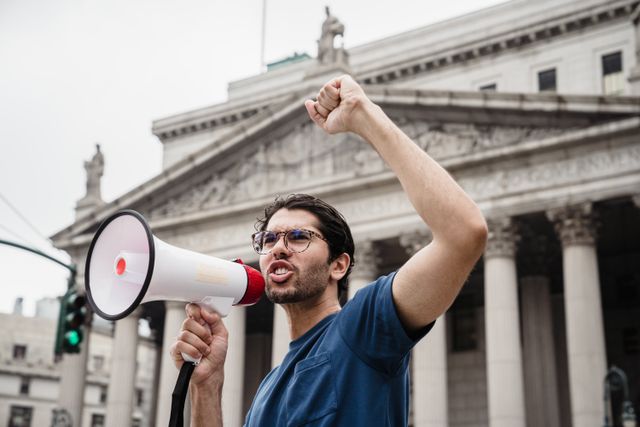

Public protests are among the most visible expressions of collective dissatisfaction in a democratic society. When citizens gather to oppose government decisions, demand justice, challenge corruption, or call for social and economic reform, they transform individual grievances into a public issue that institutions can no longer easily ignore. Demonstrations, marches, sit-ins, strikes, student movements, and digital campaigns can expose failures in governance and create pressure for political leaders to respond. However, the success of a protest cannot be measured solely by the size of a crowd or the intensity of public anger. The more important question is whether that energy produces lasting changes in the institutions responsible for making and implementing decisions.
Institutional change is more complex than announcing a policy concession or withdrawing an unpopular decision. It may require changes to legislation, administrative procedures, enforcement mechanisms, budget allocations, public service delivery, or the distribution of decision-making power. A government may agree to review a policy under public pressure without fundamentally changing the system that created the grievance. Similarly, a protest may secure an immediate victory while leaving the underlying causes of dissatisfaction unresolved.
The relationship between protest and reform is therefore neither automatic nor predictable. Some movements reshape national laws, expand civil rights, improve accountability, or change public expectations for generations. Others attract considerable attention but gradually lose momentum without achieving their principal objectives. Understanding why these outcomes differ requires examining the political environment, organisation of movements, responsiveness of institutions, public participation, and mechanisms that translate demands into enforceable reforms.
Understanding the Difference Between Protest Success and Institutional Change
Protest success can take several forms, and these outcomes should not be treated as equivalent. A demonstration may successfully attract media attention, force officials to issue a statement, secure the release of detained individuals, or persuade a government to suspend a controversial decision. These developments can be important achievements, especially when they prevent immediate harm. Nevertheless, they do not necessarily indicate that institutional practices have changed.
Institutional change occurs when new rules, procedures, incentives, or accountability mechanisms alter how an organisation operates over time. For example, a campaign against police misconduct may generate public discussion and official assurances, but lasting reform would require effective complaint procedures, impartial investigations, transparent reporting, and consequences for established wrongdoing. Similarly, a protest demanding improved public education may produce funding announcements, yet durable improvement depends on whether resources reach schools, teachers receive appropriate support, and learning outcomes improve.
This distinction reveals why the immediate visibility of a protest can be misleading. Public attention often concentrates on the moment when crowds assemble, political leaders respond, or a major announcement is made. Institutional implementation usually unfolds over a much longer period and receives less attention. A movement may appear successful during its most visible phase while its demands remain only partially implemented.
A comprehensive assessment must therefore examine not only what authorities promise but also what changes in practice. It must ask whether the reform is legally established, properly funded, consistently enforced, and protected against reversal. Lasting institutional change is demonstrated through sustained outcomes rather than temporary expressions of political responsiveness.
How Public Anger Becomes a Political Force
Public anger becomes politically influential when people recognise that their individual experiences reflect a wider problem. A delayed public service, rising living costs, corruption allegation, discriminatory rule, or perceived abuse of authority may initially affect separate individuals. When these experiences are communicated and connected, they can develop into a collective grievance that challenges the legitimacy of existing policies or institutions.
Protests provide a mechanism for making these grievances visible. They demonstrate that dissatisfaction extends beyond isolated complaints and can create pressure on elected representatives, administrative authorities, political parties, and regulatory institutions. The collective presence of protesters may also encourage individuals who previously felt powerless to participate in public discussion and demand explanations from decision-makers.
However, anger alone rarely provides a complete reform strategy. A movement must identify what it wants to change, which institution has the authority to make that change, and what practical steps would address the underlying problem. Broad demands such as justice, transparency, or accountability can unite large groups, but they may become difficult to translate into policy unless they are connected to specific proposals.
The transition from anger to influence also depends on whether political institutions consider the movement credible, representative, and capable of sustaining pressure. A government may respond quickly when a protest threatens electoral support, public order, or its political legitimacy. In other circumstances, authorities may ignore demands, attempt to divide the movement, or offer limited concessions designed to reduce immediate pressure. The political meaning of a protest therefore depends on the broader distribution of power as well as the strength of public participation.
Historical Evidence: When Protests Have Changed Institutions
History demonstrates that protest movements can contribute to major institutional transformations, although their achievements often result from a combination of public mobilisation, political negotiation, legal action, and sustained organising.
The American civil rights movement offers a prominent example. During the twentieth century, sustained activism, mass demonstrations, legal challenges, and community organising helped expose racial discrimination and pressure political institutions to respond. The Civil Rights Act of 1964 and the Voting Rights Act of 1965 represented major legislative achievements. These laws changed the formal legal framework governing discrimination and voting rights, although subsequent struggles over enforcement, representation, and equality demonstrated that legislation alone could not eliminate every structural barrier.
India’s independence movement also illustrates the relationship between collective mobilisation and institutional transformation. Mass movements, including civil disobedience campaigns, expanded political participation and challenged colonial authority. Independence in 1947 emerged from a complex historical process involving organised resistance, negotiations, changing international circumstances, and developments within the British Empire. The movement’s institutional significance extended beyond the transfer of power, influencing debates about democratic government, citizenship, rights, and the constitutional structure of independent India.
More recent protest movements reveal a less uniform pattern. The anti-corruption mobilisation in India in 2011 brought the issue of corruption and institutional accountability into national political debate. It contributed to public pressure surrounding the creation of a stronger anti-corruption framework, followed by the Lokpal and Lokayuktas Act, 2013. Yet the broader objective of eliminating corruption could not be achieved through legislation alone. Institutional appointments, investigative independence, administrative incentives, political accountability, and enforcement capacity remained important to the effectiveness of the framework.
These examples show that protests can help change laws and public expectations, but they rarely operate as the sole cause of reform. Political leadership, legal institutions, organised civil society, administrative capacity, and the wider social context often determine whether public mobilisation produces enduring outcomes.
The Role of Organisation and Leadership
A protest movement’s organisational structure can strongly influence its ability to secure lasting reform. Spontaneous demonstrations may emerge rapidly when a triggering event generates widespread anger. Their decentralised nature can encourage participation from people who do not belong to established political organisations. However, movements that lack coordination may struggle to maintain a consistent message, negotiate with authorities, or agree on realistic objectives once the initial mobilisation declines.
Organisation does not necessarily require a single leader or central command. Broad-based movements may rely on local groups, community organisations, professional associations, student networks, legal advocates, and civil society institutions. Their effectiveness depends on whether these participants can coordinate activities while maintaining sufficient trust and internal accountability. A movement that provides opportunities for meaningful participation may be better equipped to survive leadership changes and shifting political circumstances.
Leadership becomes particularly important during negotiations. Authorities may seek to identify representatives who can communicate demands and discuss possible solutions. If a movement has no accepted process for representation, internal disagreements may weaken negotiations or allow officials to engage selectively with participants whose demands are less challenging. Conversely, excessive centralisation can alienate supporters and make a movement vulnerable if a small number of leaders withdraw or lose credibility.
Successful movements often combine public mobilisation with policy expertise. Legal researchers can identify necessary legislative amendments, community organisations can explain the practical consequences of existing rules, and technical specialists can evaluate proposed reforms. This combination helps convert broad public demands into proposals that institutions can adopt, implement, and assess.
Media, Digital Platforms, and the Speed of Mobilisation
Digital communication has changed how protest movements form, spread information, and attract public attention. Social media platforms enable people to circulate videos, organise demonstrations, document alleged misconduct, and connect with participants across geographical boundaries. Online petitions and digital campaigns can make local grievances visible to national or international audiences, sometimes within hours.
This speed can create political pressure by reducing the ability of institutions to control public narratives. Visual evidence of an incident may trigger widespread debate, encourage journalists to investigate, and prompt officials to provide explanations. Digital networks can also support fundraising, legal assistance, volunteer coordination, and the dissemination of information about proposed reforms.
However, online visibility is not the same as institutional influence. A campaign may attract millions of views without developing a clear strategy, sustaining participation, or identifying the legal changes required. Digital attention can move quickly from one issue to another, making it difficult to maintain pressure during lengthy legislative or administrative processes. Algorithms may also reward emotionally charged content over detailed explanations, while misleading information can weaken a movement’s credibility.
A further challenge concerns unequal access to digital communication. People without reliable internet access, digital literacy, or strong representation in online spaces may find their concerns less visible. A campaign that appears nationally representative on social media may not fully reflect the experiences of affected communities.
For protests to produce lasting reform, digital mobilisation is most effective when it supports sustained public engagement, reliable documentation, offline organising, legal advocacy, and monitoring of government commitments. The decisive issue is not how widely a demand circulates but whether that demand becomes embedded in institutional decisions and practice.
Why Some Protests Fail to Produce Lasting Reform
One reason protests fail is that their objectives remain too broad or internally inconsistent. A movement may bring together people who oppose the same policy for different reasons but disagree about the alternative. Once the immediate target is removed, these differences can become more prominent. Without a shared reform agenda, the movement may struggle to maintain unity or evaluate whether its goals have been achieved.
Another obstacle is the gap between political promises and administrative implementation. Governments may announce commissions, reviews, funding commitments, or policy changes to reduce pressure. Yet implementation may depend on legislation, regulations, staffing, budget approvals, institutional cooperation, and coordination between different levels of government. If these requirements are not met, the apparent victory of a protest can remain largely symbolic.
Protests can also face resistance from institutions that benefit from existing arrangements. Officials may delay implementation, interpret new rules narrowly, or preserve established practices through informal procedures. In such circumstances, reform requires more than a public announcement. It may need independent monitoring, transparent reporting, judicial scrutiny, and mechanisms that allow affected people to challenge non-compliance.
Internal fragmentation can further weaken a movement. Disagreements over leadership, tactics, political alliances, or the distribution of resources may reduce public confidence. If protesters are perceived as representing only a narrow interest group, authorities may find it easier to dismiss their demands. Repression, intimidation, misinformation, and fatigue can also discourage continued participation.
Finally, some grievances are difficult to resolve through a single policy change because they arise from deep structural conditions. Inequality, institutional discrimination, corruption, and poor public service delivery may be sustained by multiple laws, economic incentives, social norms, and administrative practices. Meaningful progress in such areas usually requires long-term institutional reform rather than one dramatic political concession.
From Protest Demands to Laws and Administrative Reform
The transition from protest to policy reform generally involves several interconnected stages. Public mobilisation first places an issue on the political agenda. Officials may then respond through negotiations, public consultations, policy reviews, or legislative proposals. If an agreement emerges, it must be translated into a legally or administratively workable framework. Finally, institutions must implement the new arrangements and demonstrate that they produce the intended results.
Each stage creates opportunities for progress as well as failure. A government may acknowledge a problem without agreeing to change the policy. It may agree to amend a law but fail to allocate sufficient resources. New rules may be adopted while frontline officials continue to follow older practices. Even when implementation begins, weak monitoring may make it difficult to identify whether the reform is reaching the people it was intended to benefit.
The quality of the reform proposal is therefore important. A demand to improve transparency, for example, becomes more actionable when it specifies which records should be disclosed, which authority must disclose them, what exceptions are permitted, and how non-compliance can be challenged. A demand for better public services becomes more practical when it is linked to service standards, staffing requirements, funding, grievance procedures, and measurable outcomes.
Civil society organisations, professional associations, researchers, legal experts, and affected communities can help maintain this connection between public demands and institutional design. Their involvement can improve policy quality and provide independent scrutiny after public attention declines. It can also reduce the risk that authorities adopt superficial measures that satisfy immediate political pressure without addressing the original problem.
The Importance of Legal Accountability and Institutional Safeguards
Lasting reform often requires legal mechanisms that make commitments enforceable. A political statement may be reversed by a later administration, whereas a statutory obligation, properly designed regulatory framework, or legally protected right may be more difficult to disregard. Nevertheless, legislation is not self-executing. Its effectiveness depends on enforcement, institutional independence, accessible remedies, and the willingness of public authorities to comply with legal obligations.
Courts can contribute to reform by interpreting legal rights, reviewing administrative action, and requiring authorities to act within the law. Legislative bodies can debate and amend laws, examine government performance, and scrutinise public expenditure. Independent commissions and oversight institutions can investigate complaints or monitor specific aspects of administration within their statutory powers. These mechanisms help ensure that public pressure is translated into changes that can survive beyond the period of mass mobilisation.
Institutional safeguards also matter because reform should not depend entirely on the continued presence of protesters in the streets. If a new complaint mechanism is established, it needs clear jurisdiction, accessible procedures, adequate resources, and a process for responding to findings. If a policy is changed, affected people need to know how to use the new system and what remedies are available when officials fail to follow it.
Public participation can continue after the protest through consultations, community monitoring, legal challenges, elections, journalism, and civil society advocacy. This sustained engagement helps keep reform on the institutional agenda and reduces the possibility that earlier commitments will be quietly abandoned.
Measuring Whether Institutional Change Is Lasting
Determining whether a protest has produced lasting change requires clear measures of success. The number of participants, media coverage, official statements, or immediate concessions may indicate political influence, but they do not establish long-term institutional effectiveness. More meaningful evaluation examines whether laws have changed, administrative practices have improved, resources have been allocated, and the affected population has experienced measurable benefits.
The period after a protest is particularly important. Independent researchers, journalists, civil society groups, and public institutions can examine whether announced reforms have been implemented and whether their effects are sustained. Where reliable data are available, indicators such as complaint resolution times, enforcement rates, public service access, budget execution, or the frequency of recurring violations may help assess progress.
Evaluation must also account for unintended consequences. A reform may solve one problem while creating another, or it may benefit some groups more than others. A policy that appears successful at the national level may be implemented unevenly across regions. Public reporting and independent assessment can reveal these differences and support further improvements.
Institutional change should also be assessed in terms of resilience. A reform is more durable when it becomes part of routine administrative practice, enjoys broad legal and public support, and has clear mechanisms for accountability. It is less secure when it depends entirely on one political leader, a temporary budget allocation, or continuing public pressure without formal safeguards.
Conclusion
Public protests can play a powerful role in transforming collective anger into institutional reform, but their impact depends on what happens after the crowds disperse. Demonstrations can expose wrongdoing, shift political priorities, increase public awareness, and create pressure for legislative or administrative action. Historical experience shows that sustained movements can contribute to major changes in civil rights, democratic participation, and public accountability.
However, immediate political concessions should not be confused with lasting institutional change. Durable reform requires clear objectives, effective organisation, realistic policy proposals, legal and administrative implementation, adequate resources, and continuous monitoring. It also depends on institutions that can respond to public demands without abandoning due process, and on citizens who remain engaged beyond the initial moment of mobilisation.
The most consequential protests are therefore not necessarily those that generate the largest crowds or the most dramatic headlines. Their lasting significance lies in whether they change how institutions exercise power, protect rights, deliver services, and respond to public grievances. When collective action is connected to enforceable rules, transparent implementation, and sustained civic participation, public anger can become a catalyst for meaningful and lasting institutional change.
Online Internship with Certificate
You may be interested

Journalists Detained During Political Protests: The Press-Freedom Debate
Anshika Jain - Oct 20, 2026Political protests are among the most important moments for journalism. They bring public grievances into the open, expose disagreements between citizens and governments, and reveal how democratic…
Why India’s Voter-List Revision Has Triggered Nationwide Political Protests
Anshika Jain - Oct 20, 2026India's electoral system is one of the largest democratic exercises in the world, involving hundreds of millions of voters, extensive administrative coordination, and a constitutional institution responsible…

The Role of Independent Oversight in Cases Involving Police or Public Officials
Anshika Jain - Oct 20, 2026Public trust in the justice system depends not only on the laws that govern society but also on whether those laws are applied fairly by the people…
Most from this category

Why Legal Deadlines Matter in Criminal Investigations and Victim Compensation
Anshika Jain - Oct 20, 2026
From Public Complaints to Court Action: How Citizens Can Challenge Administrative Decisions
Anshika Jain - Oct 20, 2026
Why Authorities Are Rethinking the Management of Large Public Demonstrations
Anshika Jain - Oct 15, 2026
TVK’s Bypoll Wins: What the Party’s First Electoral Test Reveals About Its Political Position
Anshika Jain - Oct 15, 2026
Why Legal Deadlines Matter in Criminal Investigations and Victim Compensation
Anshika Jain - Oct 20, 2026From Public Complaints to Court Action: How Citizens Can Challenge Administrative Decisions
Anshika Jain - Oct 20, 2026Why Authorities Are Rethinking the Management of Large Public Demonstrations
Anshika Jain - Oct 15, 2026