India–Poland Relations: Partnerships Expand Beyond Traditional Trade and Diplomacy?

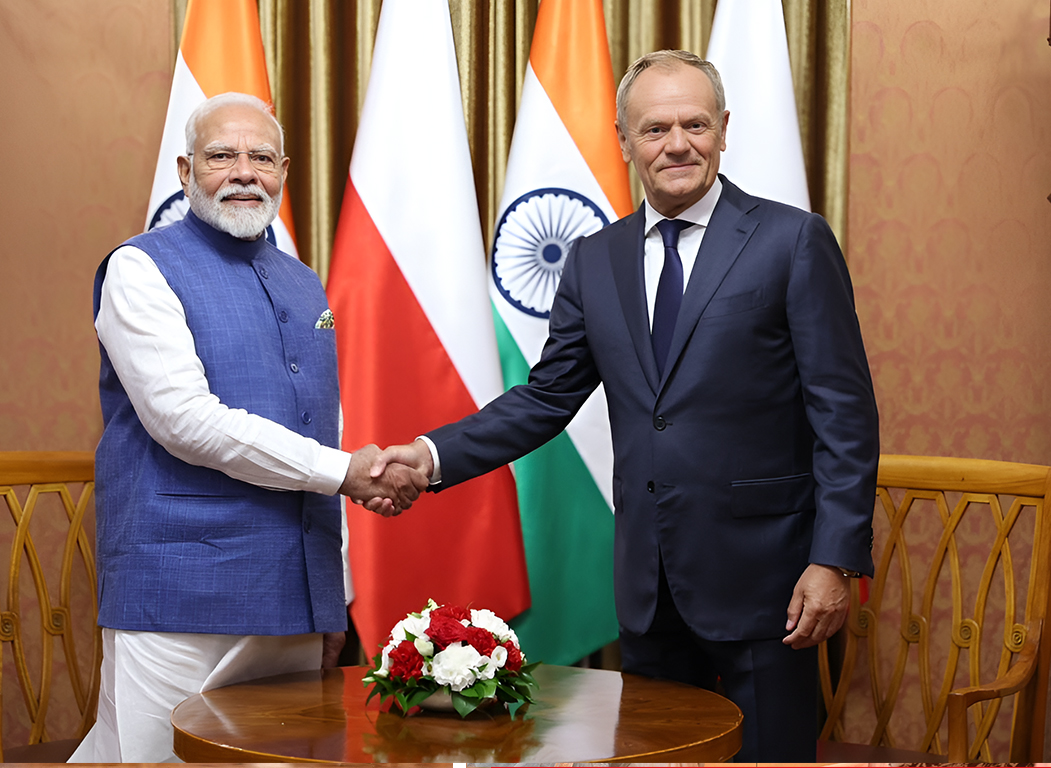

India–Poland relations are entering a new phase in which economic cooperation, technological innovation, defence collaboration, education, and people-to-people connections are becoming increasingly important alongside traditional diplomacy. For decades, the relationship has been shaped by trade, political engagement, and historical goodwill. Today, however, both countries have stronger reasons to develop a more comprehensive partnership that connects India’s expanding economy with Poland’s industrial capabilities and its position within the European Union.
A significant milestone came in August 2024, when Indian Prime Minister Narendra Modi visited Poland and the two countries elevated their bilateral relationship to a Strategic Partnership. The agreement introduced a five-year Joint Action Plan for 2024–2028, identifying cooperation across areas such as technology, agriculture, energy, connectivity, security, education, and culture.
The relationship gained further momentum during Polish Prime Minister Donald Tusk’s visit to India from 21 to 23 October 2026. The two governments endorsed a mid-term review of the existing action plan, set a target of doubling bilateral trade by 2030, and highlighted opportunities in artificial intelligence, semiconductors, defence, space, critical minerals, and clean energy. They also welcomed the conclusion of negotiations on the India–European Union Free Trade Agreement in January 2026, while calling for its early signing, ratification, and implementation.
These developments raise a broader question: can India and Poland build a partnership that extends beyond conventional exports, imports, and diplomatic visits? Their future relationship may depend on whether both countries can transform political commitments into long-term industrial projects, research collaborations, new investment, and practical opportunities for businesses and citizens.
The Historical Foundation of India–Poland Relations
From Diplomatic Friendship to Strategic Partnership
India and Poland established diplomatic relations in 1954, with India opening its embassy in Warsaw in 1957. Their relationship developed through changing international circumstances, including India’s postcolonial foreign policy and Poland’s political and economic transformation after 1989. Following Poland’s accession to the European Union in 2004, its importance as a commercial partner for India increased, particularly in Central and Eastern Europe.
Historical connections have also contributed to mutual goodwill. During the Second World War, Indian princely states, including the Principality of Kolhapur, helped provide refuge to Polish women and children displaced by the conflict. The Maharaja Jam Saheb memorial in Warsaw represents this shared history and remains a symbol of the relationship between the two societies. During the 2026 summit, the leaders also acknowledged the continuation of youth exchanges associated with this historical legacy.
Although these connections provide a strong foundation, historical goodwill alone cannot determine the future direction of bilateral relations. A modern partnership requires institutions, businesses, universities, and communities to participate actively. The strategic challenge is to convert the trust built over decades into cooperation that delivers measurable economic and social benefits.
Why Poland Matters to India’s European Strategy
Poland offers Indian businesses access to a major industrial economy within the European Union, alongside established manufacturing networks, skilled professionals, and connections to Central and Eastern European markets. Its location makes it attractive for companies seeking to establish regional operations, distribute products, develop technology services, or diversify their European supply chains.
For India, Poland can serve as a platform for expanding business operations across European markets. For Poland, India provides access to a large consumer base, a substantial technology workforce, manufacturing opportunities, and a growing innovation ecosystem. The two countries can therefore approach their relationship as a partnership between complementary economic capabilities rather than simply as buyers and sellers of finished products.
Trade and Investment: Moving Beyond Traditional Exchange
A Growing Economic Relationship
Bilateral trade has expanded considerably in recent years. According to India’s embassy in Warsaw, total trade increased from approximately US$1.95 billion in 2013 to US$6.36 billion in 2025. The figures reflect a significant expansion in commercial activity, although trade growth alone does not establish how deeply the two economies are integrated.
India exports products including textiles, chemicals, pharmaceuticals, engineering goods, machinery, and vehicle-related products to Poland. Polish exports to India include machinery, electrical equipment, base metals, fuels, and precision instruments. These established flows create a foundation for broader cooperation, but the next phase could place greater emphasis on joint manufacturing, technology transfer, research, and long-term investment.
The October 2026 summit set a target of doubling bilateral trade by 2030. Achieving that goal will require more than an increase in shipment volumes. Businesses will need better market intelligence, reliable distribution networks, accessible financing, and stronger links between companies in both countries. The governments will also need to help address regulatory obstacles and encourage small and medium-sized enterprises to participate in cross-border trade.
The India–EU Free Trade Agreement as a Potential Accelerator
The conclusion of negotiations on the India–EU Free Trade Agreement in January 2026 could create new opportunities for India–Poland commercial relations. However, the agreement’s practical effects depend on the completion of the required legal and political steps, including signing, ratification, and implementation. It should therefore be understood as a potential catalyst rather than an automatic removal of every barrier to trade.
If implemented, the agreement could improve market access and provide greater predictability for companies operating across India and Europe. Polish manufacturers could explore expanded operations in India, while Indian pharmaceutical, engineering, textile, digital services, and manufacturing companies could strengthen their European presence through Poland.
The broader opportunity lies in creating integrated production and innovation networks. Instead of manufacturing a product entirely in one country and selling it in another, companies could divide research, component production, software development, assembly, and distribution between Indian and Polish facilities. Such arrangements could generate investment, skilled employment, and stronger supply chains in both economies.
Technology and Innovation: Building a Shared Digital Future
Artificial Intelligence, Semiconductors, and Quantum Technologies
Technology could become one of the most transformative areas of India–Poland cooperation. Both governments identified artificial intelligence, semiconductors, quantum technologies, and startup partnerships as areas for collaborative research and innovation during the October 2026 summit. They also encouraged closer cooperation among businesses, research institutions, and innovation ecosystems.
India’s strengths in software engineering, digital services, and technology entrepreneurship could complement Poland’s industrial expertise, research capabilities, and growing technology sector. Joint projects could focus on AI applications in manufacturing, healthcare, logistics, cybersecurity, agricultural systems, and public services. Rather than limiting cooperation to outsourcing or software contracts, companies could develop products together, share research capabilities, and test new solutions in both markets.
Semiconductors and quantum technologies present a longer-term opportunity. These sectors require substantial investment, specialised talent, research infrastructure, and reliable supply chains. India and Poland may be able to collaborate in selected areas such as semiconductor design, testing, industrial applications, research equipment, and specialised software. However, meaningful progress will depend on clearly defined projects, intellectual-property arrangements, funding, and access to appropriate facilities.
Startup cooperation could help connect the two innovation ecosystems. Indian startups seeking European customers could use Poland as a potential entry point, while Polish technology companies could explore India’s market and talent base. Joint accelerators, research partnerships, and business-to-business programmes could reduce the distance between promising technical ideas and commercially viable products.
Cybersecurity and Digital Infrastructure
As businesses become more dependent on cloud services, digital payments, connected devices, and AI-enabled systems, cybersecurity is becoming an economic as well as a national security concern. India and Poland have already identified cybersecurity and digital cooperation as areas for deeper engagement. Their 2026 discussions also highlighted the importance of technological resilience.
Collaboration could include research on secure software, threat detection, industrial network protection, data security, and cybersecurity training. Universities and technology firms could develop joint programmes that combine academic research with practical industry projects. Such cooperation would be particularly valuable for companies operating across borders, where cyber incidents can disrupt supply chains and expose sensitive commercial information.
The opportunity is not limited to technology companies. Banks, hospitals, logistics providers, manufacturers, and public institutions all require stronger digital systems. Shared technical expertise and professional training could help businesses in both countries improve their security practices while creating new opportunities for cybersecurity specialists.
Defence, Space, and Strategic Security
From Equipment Purchases to Industrial Cooperation
Defence cooperation has become more prominent in the evolving strategic partnership. During the October 2026 summit, the two governments welcomed interaction between Indian and Polish defence industries and proposed a Defence Industry Dialogue to develop a forward-looking framework for cooperation. Potential forms of engagement include business-to-business partnerships, technology collaboration, co-development, and co-production where mutually agreed.
This approach could create a more durable relationship than occasional procurement agreements. Companies could explore maintenance and repair services, specialised components, electronics, simulation technologies, industrial automation, and other areas consistent with each country’s requirements and regulations. Joint development could also help firms build expertise and strengthen manufacturing capabilities.
Defence cooperation, however, requires careful management. Sensitive technologies, export controls, national security considerations, and protection of classified information can complicate cross-border projects. The leaders’ discussion of an agreement on the mutual protection and exchange of classified information reflects the importance of establishing suitable safeguards. Commercial ambitions will need to progress alongside security and regulatory requirements.
Space Research and Emerging Technologies
Space is another field where collaboration could extend beyond conventional diplomatic engagement. India has established capabilities in satellite applications, launch services, and space research, while Poland has scientific and industrial expertise that could support selected space-related projects. The two governments have encouraged stronger institutional and industry-level engagement in this sector.
Potential areas of cooperation include satellite data analysis, Earth observation, agricultural monitoring, environmental assessment, disaster management, and the development of specialised components. For example, combining satellite observations with AI could help improve crop monitoring or track environmental changes. Such applications can have civilian value even when the underlying technologies are advanced.
Joint research programmes and university partnerships could provide a practical starting point. Smaller collaborative projects would allow researchers to assess technical compatibility, develop trust, and identify areas where investment could generate mutual benefits. Over time, successful projects could lead to more ambitious commercial and scientific partnerships.
Clean Energy, Critical Minerals, and Sustainable Industry
Renewable Energy and Green Hydrogen
Energy security and industrial competitiveness are increasingly connected to the transition towards cleaner energy. India and Poland have different energy systems and development priorities, but both have reasons to explore cooperation in renewable technologies, energy efficiency, and industrial decarbonisation. Their governments have identified clean energy and sustainable technologies as areas for closer engagement.
Cooperation could include solar technologies, energy storage, grid management, industrial electrification, and green hydrogen applications. Indian companies may contribute engineering, project development, manufacturing, and digital capabilities, while Polish firms and research institutions could bring expertise in selected industrial technologies and European market requirements.
The benefits would depend on commercially viable projects rather than broad declarations alone. Businesses would need to assess infrastructure requirements, energy prices, financing, technology readiness, and relevant environmental regulations. Joint demonstration projects could help establish which technologies are most suitable for specific industrial and regional conditions.
Critical Minerals and Circular Economy
The growing demand for batteries, electric mobility, electronics, and renewable energy infrastructure has increased the strategic importance of critical minerals. Both countries have recognised opportunities for cooperation in mining, geology, battery recycling, and rare-earth mineral recovery. During the 2026 summit, they noted that a memorandum of understanding on geology, mining, and critical minerals was under negotiation.
A partnership in this area could help diversify supply chains and improve the recovery of valuable materials from used batteries and electronic waste. It could also support research into recycling methods, material recovery, waste reduction, and the efficient use of industrial resources.
Circular-economy cooperation would have economic as well as environmental value. Recovering useful materials from products at the end of their life can reduce waste and potentially lower dependence on newly extracted resources. Nevertheless, such projects require appropriate technology, reliable collection systems, investment, and strong environmental safeguards.
Education, Skills, and People-to-People Connections
Universities as Partners in Innovation
Education can provide the human foundation for a broader India–Poland relationship. The two countries already have academic links and a shared interest in expanding cooperation between higher education institutions. During the 2026 summit, their leaders encouraged deeper institutional partnerships, student and faculty exchanges, and collaborative research. They also acknowledged Poland’s long tradition of scholarship in Indian studies and Sanskrit.
Universities could establish joint research programmes in AI, engineering, biotechnology, energy, space science, and social sciences. Dual-degree pathways, faculty exchanges, joint conferences, and industry-linked research could help students gain international experience while strengthening academic networks.
For these initiatives to succeed, universities need clear arrangements covering fees, qualifications, credit recognition, research funding, intellectual property, and student support. Transparent information about admissions and employment opportunities would also help students make informed decisions. The aim should be to create sustained academic collaboration rather than exchanges that depend on a single visit or short-term grant.
Skills, Internships, and Professional Mobility
Businesses in both countries may benefit from stronger professional links in technology, engineering, research, logistics, healthcare, and advanced manufacturing. Carefully designed internship and training programmes could connect students with employers and provide experience in international working environments.
India’s large pool of technology and engineering professionals could complement Polish companies’ demand for specialised expertise. Meanwhile, Indian firms expanding into Europe could benefit from employees who understand local business practices, regulatory expectations, and regional markets. Polish professionals could also gain exposure to Indian technology, manufacturing, and startup ecosystems.
Professional mobility requires more than demand for skilled workers. Visa arrangements, recognition of qualifications, language support, social security coordination, and fair employment conditions can influence whether opportunities translate into lasting partnerships. A mobility framework that supports legitimate professional movement while protecting workers would strengthen the relationship at the individual level.
Connectivity, Logistics, and Regional Market Access
Geographic distance can make commercial cooperation more expensive and complex. Reliable air links, efficient shipping, and predictable logistics are therefore important to the future of India–Poland trade. During the October 2026 summit, the leaders encouraged discussions about enhancing direct air connections and highlighted cooperation in shipping, ports, and maritime security. They also referred to the India–Middle East–Europe Economic Corridor as part of the broader connectivity discussion.
Improved connectivity could make business travel easier, support tourism, and strengthen links between manufacturers, researchers, and investors. More predictable logistics would also help companies manage inventory, reduce delays, and diversify their supply chains.
Poland’s position within the European Union could help Indian companies coordinate distribution and services across regional markets. In the other direction, Polish firms could use Indian partnerships to explore production, sales, and research opportunities in South Asia. Yet transport links alone cannot create integration. Customs processes, product standards, regulatory compliance, and reliable local partners remain essential.
Challenges That Could Limit the Partnership
Different Priorities and Regulatory Environments
Despite strong potential, India and Poland do not have identical economic priorities. Their industries operate under different regulatory systems, and businesses must navigate differences in taxation, certification, employment rules, procurement procedures, and market expectations. European Union regulations may also create additional compliance requirements for Indian companies entering European markets.
These differences do not make cooperation impossible, but they increase the importance of practical guidance and institutional support. Business councils, industry associations, trade missions, and government agencies could help companies identify suitable partners and understand market-entry requirements. Clear information and predictable procedures would be particularly important for small businesses that cannot maintain large international legal or compliance teams.
Turning Agreements into Measurable Results
A strategic partnership can establish direction, but its success depends on implementation. Research agreements, trade targets, and diplomatic declarations must lead to projects with defined responsibilities, realistic funding, measurable milestones, and long-term commercial or social value.
The doubling of bilateral trade by 2030 is an important objective, but it should be supported by broader measures of progress. These could include new joint ventures, research projects, student exchanges, technology partnerships, investment commitments, and employment created through bilateral cooperation.
Both governments will also need to maintain regular dialogue as political and economic conditions change. The mid-term review of the 2024–2028 Joint Action Plan provides an institutional basis for evaluating progress and identifying areas where additional attention is required.
Geopolitical Uncertainty and Economic Resilience
International conflicts, changing trade policies, energy-price fluctuations, and disruptions to global supply chains can influence investment decisions. India and Poland may share interests in economic resilience and technological development while maintaining different perspectives on some international issues.
A sustainable partnership should therefore focus on practical areas where cooperation offers clear mutual benefits. Diversified supply chains, transparent investment rules, cybersecurity cooperation, and reliable institutional dialogue could help both countries manage uncertainty without making the relationship dependent on a single industry or political development.
Conclusion
India–Poland relations have the potential to become a more comprehensive partnership connecting trade with technology, industrial innovation, defence, space research, clean energy, education, and professional mobility. The strategic partnership established in 2024 created a framework for this expansion, while the October 2026 summit added momentum through a target of doubling bilateral trade by 2030 and an emphasis on emerging technologies, investment, and industrial cooperation.
The most significant opportunity lies in moving beyond the traditional model of countries exchanging goods and conducting diplomatic visits. India and Poland could develop joint products, connect research institutions, strengthen critical supply chains, and create new routes for companies and professionals to operate across both markets. Their complementary strengths provide a foundation for such cooperation, but the outcomes will depend on implementation, financing, regulatory clarity, and sustained engagement.
Ultimately, the future of India–Poland relations will be measured not only by the volume of trade or the frequency of high-level meetings, but also by the quality of the partnerships created. If both countries convert their strategic ambitions into practical projects that benefit businesses, researchers, students, and citizens, their relationship could become a meaningful model for how international partnerships evolve beyond traditional trade and diplomacy.
Online Internship with Certificate
You may be interested

Why Small Businesses Struggle With Cybersecurity: Cost of Protecting Customer Data
Anshika Jain - Oct 28, 2026Cybersecurity has become a fundamental business requirement in an economy where customer interactions, payments, communication, and record management increasingly take place online. Small businesses rely on websites,…

Subscription Traps in Digital Services: Recurring Payments Can Escape Consumers Attention
Anshika Jain - Oct 28, 2026Digital services have changed how consumers access entertainment, education, software, fitness programmes, cloud storage, news, and everyday utilities. Instead of purchasing a product once, users can subscribe…

Online Job Scams Targeting Freshers: How Fake Recruiters Exploit the Pressure to Find Work
Anshika Jain - Oct 28, 2026For fresh graduates and first-time job seekers, finding employment can be an emotionally demanding process. After completing a degree, diploma, or professional course, many candidates begin applying…
Most from this category

Digital Payment Fraud and Refund Delays: Where Does Consumer Protection Break Down?
Anshika Jain - Oct 28, 2026
Hospital Billing Transparency: Should Patients Receive Cost Estimates Before Treatment?
Anshika Jain - Oct 28, 2026
Counterfeit Medicines in Digital Marketplaces: Verification Steps Can Protect Buyers?
Anshika Jain - Oct 28, 2026
Food Adulteration Detection With AI: Can Portable Sensors Identify Unsafe Ingredients
Anshika Jain - Oct 27, 2026
Digital Payment Fraud and Refund Delays: Where Does Consumer Protection Break Down?
Anshika Jain - Oct 28, 2026Hospital Billing Transparency: Should Patients Receive Cost Estimates Before Treatment?
Anshika Jain - Oct 28, 2026Counterfeit Medicines in Digital Marketplaces: Verification Steps Can Protect Buyers?
Anshika Jain - Oct 28, 2026