Industrial Accident Aftercare: Environmental Monitoring Continue After a Chemical Disaster

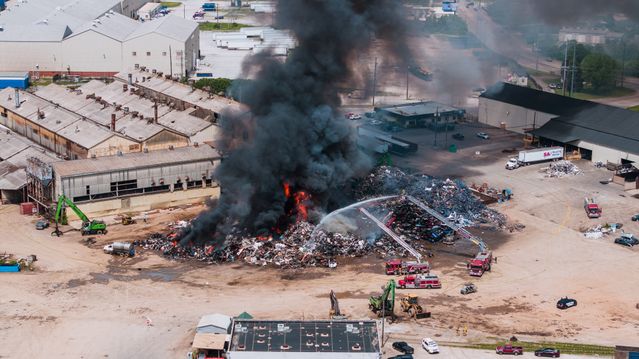

A chemical disaster does not necessarily end when the fire is extinguished, the leaking container is sealed or the affected industrial facility is declared safe for re-entry. Some of the most important consequences of an industrial accident may continue long after emergency response teams leave the site. Hazardous substances can remain in soil, groundwater, surface water, buildings and surrounding ecosystems, creating exposure risks that are not always immediately visible. In certain situations, chemical residues may persist for years, while their movement through the environment can create new contamination pathways long after the original incident.
This makes environmental monitoring an essential part of industrial accident aftercare. Monitoring helps determine whether hazardous substances remain present, whether contamination is spreading and whether the affected environment is recovering. It also provides evidence for decisions about land use, drinking water safety, agricultural activity, public access and long-term remediation.
However, an important question remains: how long should monitoring continue after a chemical disaster? There is no universal period that applies to every industrial accident. A relatively small chemical spill involving a substance that breaks down quickly may require a different monitoring strategy from a major release involving persistent chemicals, contaminated groundwater or substances capable of accumulating in living organisms.
The duration should depend on the chemical involved, the amount released, the environmental conditions, the contamination pathways and the potential for delayed health and ecological effects. Effective aftercare requires a monitoring programme that continues until there is sufficient scientific evidence that remaining risks are understood and appropriately controlled.
Why Environmental Monitoring Must Continue After Emergency Response
The immediate response to a chemical disaster focuses on preventing further releases, protecting people from acute exposure and controlling the source of contamination. Emergency teams may isolate the affected area, evacuate nearby communities, contain the spill and remove visibly contaminated materials. These actions are necessary, but they do not automatically establish that the wider environment is safe.
Chemical substances behave differently after entering the environment. Some evaporate quickly, while others dissolve in water, attach to soil particles or move through underground geological layers. Certain substances break down through sunlight, chemical reactions or microbial activity. Others remain relatively stable and can persist for extended periods.
A chemical released into a river, for example, may move downstream and affect areas far from the original facility. A substance that enters the soil may gradually migrate into groundwater. Contaminants deposited on buildings or industrial surfaces may become airborne again during cleaning, demolition or changes in weather conditions.
Monitoring is therefore required to understand what happens after the initial release. It can identify contamination that was not detected during emergency operations and reveal whether previously contained pollutants are moving into new environmental compartments.
Without continued observation, authorities may declare an area safe based on incomplete information. Environmental monitoring provides the evidence needed to distinguish between the end of an emergency and the achievement of long-term environmental safety.
Why There Is No Universal Monitoring Timeline
The duration of environmental monitoring depends primarily on the characteristics of the released chemical and the environmental conditions at the affected location. A substance that rapidly evaporates or degrades may require intensive monitoring over a relatively short period, provided that testing confirms the absence of persistent residues. In contrast, chemicals that remain stable in soil or groundwater may require repeated testing for many years.
The quantity released is another important factor. A small, contained spill may have limited environmental consequences, while a large release can contaminate several environmental systems. The physical state of the chemical also matters. Gases, liquids, powders and solid materials have different movement and deposition patterns.
Local geography can further influence monitoring duration. Areas with permeable soil, shallow groundwater or frequent rainfall may experience faster contaminant movement than locations with different geological and climatic conditions. Flooding can redistribute previously deposited chemicals, while changes in groundwater levels may alter the direction or speed of contaminant movement.
The possibility of delayed exposure also needs consideration. A chemical may initially remain concentrated in an isolated location but later enter agricultural land, private wells or nearby water bodies. In such circumstances, a monitoring programme that ends too early may fail to detect an important exposure pathway.
Consequently, monitoring should be based on the behaviour of the specific contaminant rather than an arbitrary deadline such as six months or one year. The programme should be adjusted as new evidence becomes available.
Understanding the Chemical’s Persistence and Environmental Behaviour
One of the first scientific tasks after a chemical disaster is to determine how the released substance behaves in different environmental conditions. Chemical persistence describes how long a substance remains in the environment before it is transformed, degraded or removed through natural processes.
Some chemicals are relatively short-lived because they react with sunlight, oxygen, water or microorganisms. Their concentrations may decrease substantially over time, although the breakdown products may also require investigation. The disappearance of the original chemical does not always mean that all associated environmental risks have disappeared.
Other substances can persist for much longer. Certain heavy metals do not degrade into harmless elements through ordinary biological processes. They may change chemical form or move between environmental compartments, but their presence can continue to require management. Persistent organic pollutants can also remain in ecosystems for extended periods, depending on their chemical properties and local conditions.
The behaviour of a chemical is influenced by its solubility, volatility, adsorption characteristics and ability to undergo biological or chemical transformation. For example, a chemical that strongly attaches to soil particles may remain concentrated in contaminated sediment. Another substance may dissolve readily in water and migrate into groundwater or surface water.
Understanding these characteristics helps environmental scientists determine which locations require repeated sampling and which environmental compartments need the closest attention. It also provides the scientific foundation for deciding when monitoring can be reduced or safely concluded.
Soil Monitoring: Detecting Contamination That May Remain Hidden
Soil contamination is one of the most challenging consequences of industrial chemical accidents because pollutants may remain below the visible surface. A site can appear clean after the removal of contaminated materials while hazardous substances remain in deeper soil layers.
Monitoring should examine the areas where chemicals were initially released, as well as locations where contaminated liquids, runoff or deposited particles may have travelled. The depth of sampling is important because some chemicals remain near the surface, whereas others migrate downward through the soil profile.
Rainfall, drainage patterns and soil composition can influence contaminant movement. A chemical that attaches strongly to clay or organic matter may behave differently from one that moves easily through sandy soil. Soil testing can help establish whether contamination is declining, remaining stable or spreading into previously unaffected areas.
The monitoring programme should also consider land use. Soil contamination in an industrial zone may create different exposure pathways from contamination in agricultural land, residential areas or public spaces. Where food crops are grown, additional assessment may be necessary to determine whether chemicals can enter plants or affect agricultural productivity.
Monitoring should continue until the affected soil meets the applicable risk-based cleanup criteria or until remaining contamination is demonstrated to be stable, adequately controlled and compatible with the intended land use. In some cases, contaminated soil may need to be removed, treated or isolated rather than monitored indefinitely without intervention.
Groundwater Monitoring and the Risk of Delayed Contamination
Groundwater contamination can create particularly long-lasting challenges because pollutants may travel slowly through underground geological formations. Unlike surface spills, which may be visible and accessible to emergency teams, groundwater contamination is often difficult to detect without dedicated sampling wells.
A chemical may enter the ground during the initial accident and gradually migrate towards an underground water source. It may also move through fractures, permeable soil layers or other pathways that are not immediately apparent. Depending on local conditions, contamination may take months or years to reach a monitoring point.
This delay creates a major challenge for determining when environmental monitoring should end. A series of early samples showing low contamination levels does not necessarily prove that the groundwater system is unaffected. The sampling network must be designed around the likely direction of groundwater movement and the chemical’s behaviour underground.
Long-term monitoring may be necessary when contaminants are persistent, when groundwater moves slowly or when drinking water sources could be affected. Testing should examine both the concentration of the original chemical and any relevant transformation products.
Authorities should also consider seasonal changes. Groundwater levels and movement patterns can change with rainfall, drought and water extraction. Monitoring during different seasons may reveal contamination patterns that a limited sampling period would miss.
If groundwater contamination is confirmed, monitoring may need to continue throughout remediation and for an appropriate period after treatment ends. The objective is not simply to record declining concentrations but to establish that contamination is no longer moving towards sensitive receptors such as drinking water wells, rivers or agricultural systems.
Surface Water, Sediment and Ecosystem Monitoring
Chemical accidents involving rivers, lakes, reservoirs or coastal environments require monitoring beyond the original release location. Water movement can transport contaminants over considerable distances, while sediments may act as long-term storage areas for certain substances.
Some chemicals dissolve in water and move with currents. Others attach to suspended particles and eventually settle on riverbeds or lake bottoms. Changes in water flow, flooding or human activities can disturb contaminated sediments and release pollutants back into the water.
For this reason, water sampling alone may not provide a complete picture of environmental recovery. Sediment analysis can be essential where contaminants are known to accumulate in bottom deposits. Monitoring may also need to examine aquatic organisms to determine whether pollutants are entering food webs.
Ecological monitoring provides another important dimension. A chemical disaster may affect plant growth, aquatic organisms, soil microorganisms and wildlife. Some effects may become visible only after the immediate contamination event, particularly when organisms are exposed repeatedly or when pollutants accumulate over time.
Recovery should therefore be assessed through both chemical measurements and ecological indicators. A decline in water contamination does not automatically demonstrate that an ecosystem has returned to normal. Changes in biodiversity, reproduction, habitat quality and species distribution may require longer observation.
Air Quality Monitoring After a Chemical Release
Air monitoring is particularly important during and immediately after accidents involving volatile chemicals, gases, combustion products or airborne particles. Even after the source has been controlled, residual emissions may continue from contaminated soil, stored materials, damaged equipment or cleaning operations.
The monitoring strategy should distinguish between short-term exposure hazards and longer-term environmental concerns. Emergency measurements may focus on identifying dangerous concentrations near the release site and protecting people from immediate exposure. Continued monitoring may investigate whether low-level emissions remain present in surrounding areas or whether pollutants are being released during remediation.
Weather conditions can significantly affect airborne contamination. Wind direction, temperature, humidity and atmospheric stability influence how pollutants disperse. A monitoring programme based on a single set of weather conditions may not adequately represent exposure across different periods.
Some substances may also produce secondary pollutants through chemical reactions in the atmosphere. Therefore, monitoring should be based on the known properties of the released chemical and the relevant environmental chemistry rather than relying on a generic air-quality measurement.
The duration of air monitoring may be shorter than that required for persistent soil or groundwater contamination, but this cannot be assumed in advance. It should end only when repeated measurements and source assessments provide sufficient evidence that continued exposure is no longer a significant concern.
The Role of Human Health Surveillance in Environmental Aftercare
Environmental monitoring and public health surveillance are closely connected, but they serve different purposes. Environmental monitoring measures the presence and movement of contaminants, while health surveillance examines whether exposed populations experience potential health effects.
After a major chemical disaster, authorities may need to maintain health records for workers, emergency responders and residents who could have been exposed. Depending on the chemical and exposure pathway, this may involve medical assessments, exposure histories, symptom reporting or specialised clinical testing.
Some health effects occur quickly, while others may develop after prolonged exposure or a substantial delay. The relevant timeframe depends on the chemical, the amount absorbed, the route of exposure and individual susceptibility. It would be scientifically inappropriate to apply the same follow-up period to every chemical incident.
Health surveillance should be designed with toxicologists, occupational health specialists and public health professionals. It should also protect personal medical information and avoid creating unnecessary anxiety through poorly explained testing.
Importantly, environmental monitoring cannot establish an individual’s diagnosis, and the absence of reported illness does not prove that contamination is absent. Both environmental and health information are needed to build a more complete understanding of the consequences of an industrial accident.
How Artificial Intelligence Can Improve Long-Term Environmental Monitoring
Artificial intelligence could make post-disaster environmental monitoring more efficient by helping scientists process large volumes of measurements from different sources. Traditional monitoring programmes often generate data from laboratory samples, field sensors, satellite observations, weather stations and groundwater monitoring networks. Analysing these sources together can be difficult, particularly when contamination patterns change over time.
Machine learning models can help identify unusual readings, detect changes in contaminant concentrations and highlight locations that may require additional sampling. For example, a model could analyse historical groundwater measurements alongside rainfall, water-level changes and geological information to identify possible contamination movement.
Remote sensing can also contribute to environmental assessment. Satellite imagery and aerial observations may help identify changes in vegetation, water conditions or land surfaces around affected sites. These observations cannot replace chemical sampling, but they may help researchers prioritise locations for field investigation.
Predictive modelling offers another possibility. By combining chemical properties with environmental data, AI systems may help estimate how contaminants could move through soil, water or air under different conditions. Such predictions could support decisions about sampling frequency and remediation planning.
However, AI-generated estimates must not be treated as direct evidence of safety. Models depend on the quality and coverage of their training data, and unexpected environmental conditions can reduce their accuracy. Laboratory testing, field verification and expert interpretation remain essential.
When Should Environmental Monitoring Be Reduced or Stopped?
The decision to end environmental monitoring should be based on evidence rather than a predetermined number of months or years. A monitoring programme can be considered for closure when the contamination source has been controlled, relevant environmental standards or risk-based criteria have been achieved, and repeated measurements demonstrate that conditions are stable.
The required evidence will vary according to the chemical and the affected environment. For a short-lived contaminant, a relatively brief series of measurements may be sufficient if testing confirms that the substance has degraded and no harmful by-products remain at concerning levels. For persistent chemicals or groundwater contamination, substantially longer observation may be necessary.
Monitoring should also account for the possibility of rebound effects. After remediation, contaminant concentrations may initially decline and later increase as chemicals move from deeper soil layers or sediments into surrounding water. A programme that ends immediately after an apparently successful treatment could miss this change.
The intended future use of the affected land is another important consideration. A site planned for industrial use may have different acceptable exposure conditions from one intended for housing, agriculture or a school. Monitoring and remediation decisions should therefore reflect the potential exposure of future occupants and users.
Where contamination cannot be completely removed, authorities may need to establish long-term management arrangements. These could include land-use restrictions, groundwater-use controls, physical barriers and periodic inspections. In such cases, monitoring may continue for as long as the remaining contamination presents a credible pathway for exposure.
Building a Transparent and Long-Term Aftercare Framework
A successful aftercare programme requires coordination between environmental regulators, industrial operators, local authorities, public health agencies, scientific institutions and affected communities. Responsibilities should be clearly defined so that monitoring does not weaken once the emergency response phase ends.
Public communication is particularly important. Residents need access to understandable information about what was released, where contamination has been detected, which areas remain restricted and what monitoring results mean. Technical reports should explain sampling methods, detection limits and uncertainty rather than presenting isolated measurements without context.
Independent oversight can improve confidence in the process. When the organisation responsible for the accident also funds or conducts monitoring, independent review and verification can help ensure that results are reliable and decisions are transparent.
Financial responsibility must also be addressed. Long-term monitoring can become expensive, especially when groundwater treatment, ecological assessment and repeated laboratory testing are required. Governments should establish clear arrangements for funding remediation and aftercare so that monitoring does not stop simply because an industrial operator becomes financially unable or unwilling to continue.
The framework should also allow monitoring plans to change as scientific understanding improves. New sampling locations may become necessary, emerging analytical techniques may detect previously unmeasured contaminants, and changing land use may create new exposure pathways. An effective programme should be responsive to such developments.
Conclusion
Environmental monitoring after a chemical disaster should continue for as long as credible contamination pathways or unresolved environmental risks remain. There is no scientifically reliable universal deadline because different chemicals behave differently, and the consequences of a release depend on the amount, location, environmental conditions and exposure routes involved.
Soil, groundwater, surface water, sediments and air may require different monitoring periods. Persistent substances and slow-moving groundwater contamination can require years of observation, while certain incidents involving rapidly degrading chemicals may be resolved in a shorter period when supported by reliable evidence. Ecological recovery and human health surveillance may also need to continue beyond the point at which immediate environmental contamination has declined.
The most responsible approach is to establish a monitoring programme based on chemical behaviour, local environmental conditions, risk assessment and measurable recovery criteria. Artificial intelligence, advanced sensors and predictive modelling can improve the ability to detect changes, but scientific sampling and independent verification must remain central to decision-making.
Ultimately, industrial accident aftercare should not be measured by how quickly a site reopens or how soon emergency operations end. It should be measured by whether contamination has been controlled, environmental recovery has been demonstrated and affected communities are protected from preventable long-term risks.
Online Internship with Certificate
You may be interested

Diwali Pollution Debate: Who Is Responsible for the Post-Festival Air Quality Crisis
Anshika Jain - Nov 04, 2026Diwali is celebrated across India with lights, family gatherings, sweets and festive traditions. However, the festival also brings an annual environmental debate into focus: why does air…

Gold and Silver Prices Fall Before Diwali: Should Buyers Wait or Purchase Now
Anshika Jain - Nov 04, 2026Gold and silver prices have experienced a sharp correction in the weeks leading up to Diwali 2026, creating an important buying decision for Indian households. The decline…

US Midterm Election Results: What Could Change for Indian Investors
Anshika Jain - Nov 04, 2026The 2026 United States midterm election results have introduced a new political equation in Washington, with potentially important consequences for global financial markets. Democrats have secured control…
Most from this category

Can Falling Crude Oil Prices Become a Trigger for an Indian Stock Market Rally
Anshika Jain - Nov 04, 2026



Can Falling Crude Oil Prices Become a Trigger for an Indian Stock Market Rally
Anshika Jain - Nov 04, 2026Sensex and Nifty at Two-Month Highs: Is the Rally Sustainable
Anshika Jain - Nov 04, 2026Why Are FIIs Returning to Indian Stocks in November 2026?
Anshika Jain - Nov 04, 2026