Journalists Detained During Political Protests: The Press-Freedom Debate

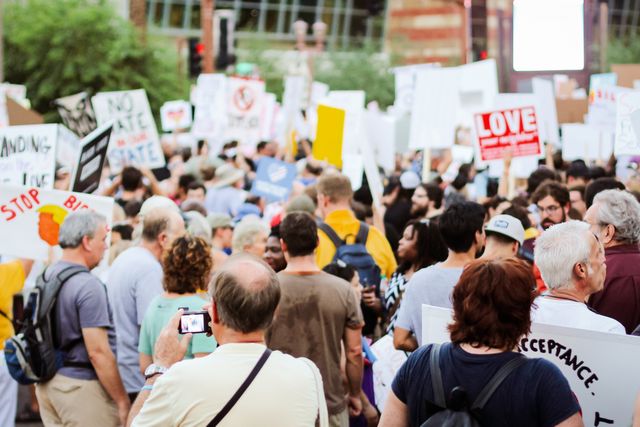

Political protests are among the most important moments for journalism. They bring public grievances into the open, expose disagreements between citizens and governments, and reveal how democratic institutions respond to dissent. Journalists covering these events provide essential information about police conduct, protesters’ demands, government decisions, and the wider consequences of political unrest. However, when reporters are detained, assaulted, threatened, or prevented from documenting demonstrations, the issue extends beyond the treatment of individual media professionals. It raises fundamental questions about press freedom, government accountability, public order, and the health of democracy.
The detention of journalists during political protests has become a recurring subject of debate in India and several other countries. Authorities frequently justify restrictions by citing public safety, security concerns, unlawful gatherings, or the possibility of violence. Journalists and press-freedom organisations, meanwhile, argue that excessive restrictions can prevent the public from receiving independent information about events of national importance. The central challenge is to distinguish legitimate crowd-control measures from actions that obstruct lawful newsgathering or intimidate reporters into silence.
India’s October 2026 protests over the revision of electoral rolls have brought this debate into sharp focus. Reports published by Reuters, the Committee to Protect Journalists, and other media organisations described dozens of journalists being detained while covering demonstrations in Delhi and other cities on October 10 and 11. Some reporters alleged that they were manhandled despite identifying themselves as members of the press, while reports also described the seizure of phones and other equipment. Delhi Police’s reported concerns included claims that some protesters had presented themselves as journalists. These competing accounts have intensified scrutiny of how law-enforcement authorities identify, protect, and manage journalists during politically sensitive demonstrations.
Why Journalists Covering Protests Are Essential to Democracy
Journalists perform a distinctive public function during demonstrations because they provide information from locations where official statements, eyewitness accounts, and political claims may differ considerably. Their reporting can establish whether a protest remained peaceful, whether clashes occurred, how police used force, and whether protesters had access to legal assistance. Such coverage also allows audiences who are not physically present to understand the reasons behind a demonstration and assess the responses of political leaders and public institutions.
The importance of this role increases when protests concern elections, constitutional rights, corruption allegations, economic hardship, or government accountability. In these circumstances, independent reporting helps citizens evaluate competing narratives rather than relying exclusively on statements from authorities or political organisations. Images, interviews, verified video footage, and on-the-ground reporting can become important evidence in public debates and subsequent legal proceedings.
Journalists are not necessarily participants in the protests they cover. A reporter may document a demonstration without supporting its organisers, endorsing its political demands, or agreeing with the views expressed by demonstrators. The distinction between reporting and participation is fundamental to press freedom. Treating every person present at a protest as a political activist risks preventing journalists from carrying out their professional responsibilities.
At the same time, journalists must follow professional standards. They should verify information, distinguish facts from allegations, avoid presenting unconfirmed claims as established truth, and take reasonable precautions in dangerous environments. Their professional role does not make every action immune from lawful restrictions. Nevertheless, the presence of a crowd, political controversy, or criticism of the government does not automatically justify preventing independent media coverage.
The October 2026 Protests and the Renewed Debate in India
The protests surrounding the Election Commission of India’s Special Intensive Revision of electoral rolls have created a significant test for the relationship between law enforcement and the press. The revision process became politically contentious after reports of large-scale deletions from draft voter lists. Opposition groups and protesters questioned whether eligible voters could be excluded, while the Election Commission’s position has been that the exercise is intended to improve electoral-roll accuracy. Allegations that the process was politically manipulated remain disputed and should not be treated as established findings without supporting evidence.
As demonstrations developed in October, journalists from national newspapers, digital news organisations, independent outlets, and international agencies reported being detained while covering events in Delhi. The Committee to Protect Journalists reported on October 12, with an update on October 15, that at least 43 journalists had been detained across Delhi, Ahmedabad, and Pune during the October 10–11 protests, based on its review of news reports, interviews, and verified social-media posts. Other organisations reported different totals, reflecting differences in their methods and the incidents they counted. The precise number therefore depends on the source and reporting period.
Accounts from journalists described being taken into police vehicles or temporary detention facilities, having phones or recording equipment seized, and being physically handled while attempting to report. Some also alleged intimidation and inappropriate treatment by police personnel. These are serious allegations that require credible investigation, careful examination of available footage, and an opportunity for the authorities to respond to specific claims. They should neither be dismissed without inquiry nor treated as conclusively established in every individual case.
Police have also raised concerns about people allegedly posing as journalists or interfering with police work. In a crowded demonstration, distinguishing accredited reporters, independent journalists, protesters, and bystanders can be difficult. However, a genuine operational challenge does not eliminate the need for proportionate action. If authorities believe an individual is obstructing an operation or participating in unlawful conduct, they should identify the specific conduct and legal basis for intervention rather than relying solely on the person’s presence near a protest.
The controversy has also reached the courts. On October 15, 2026, the Supreme Court sought responses from the Centre and Delhi Police on a plea requesting national safeguards for journalists covering protests and crowd-control operations. The proceedings placed the question of consistent protections for media workers before the judiciary. The outcome and any final directions will be important in determining whether India develops clearer standards for police interactions with journalists during demonstrations.
Press Freedom and the Indian Constitutional Framework
The Indian Constitution does not expressly list a separate fundamental right called “freedom of the press.” Instead, press freedom is recognised through Article 19(1)(a), which guarantees freedom of speech and expression. The Supreme Court has repeatedly treated this protection as encompassing the freedom to publish, circulate, and communicate information, subject to constitutionally permissible restrictions.
This protection is particularly relevant when journalists report on political protests because the public’s ability to receive information is closely connected to the press’s ability to gather and disseminate it. If reporters are arbitrarily prevented from documenting a public event, the resulting harm is not confined to their personal liberty or professional interests. Citizens may lose access to information about how public authorities exercise their powers.
Constitutional protection is not absolute. Article 19(2) permits reasonable restrictions on freedom of speech and expression on specified grounds, including public order, security of the state, and other constitutionally recognised interests. Article 19(1)(d), which protects citizens’ freedom to move freely throughout India, may also become relevant when authorities restrict movement. Article 21 protects life and personal liberty, making lawful procedure and protection against arbitrary deprivation of liberty important considerations in detention cases.
The constitutional question is therefore not whether the police can ever intervene during a protest. Authorities may take lawful measures to prevent violence, protect people, maintain access to essential services, and respond to genuine threats. The question is whether a particular intervention has a valid legal basis, serves a legitimate purpose, and is proportionate to the circumstances. A blanket approach that treats journalistic activity as suspicious merely because it occurs during a politically sensitive event would be difficult to reconcile with the principles underlying constitutional freedom.
Public Order Versus the Right to Report
Maintaining public order is a legitimate responsibility of the state. Large demonstrations can create genuine risks, including overcrowding, traffic disruption, clashes between opposing groups, and threats to public infrastructure. Police personnel must sometimes make rapid decisions in unpredictable environments, particularly when a crowd becomes violent or when an immediate threat emerges.
However, public order cannot become a general justification for suppressing inconvenient reporting. The existence of a protest does not establish that every person attending or observing it is breaking the law. Nor does criticism of public officials, the Election Commission, or government policy automatically constitute a threat to public safety. Restrictions should be based on identifiable risks and relevant legal authority rather than political sensitivity alone.
Proportionality is central to resolving this tension. If a reporter is standing in an unsafe area, police may reasonably direct the person to a safer location. If an individual obstructs an emergency response or commits an offence, authorities may take appropriate action in accordance with law. Yet detaining a journalist who is peacefully recording police activity, confiscating equipment without lawful justification, or compelling the deletion of footage can have a much more serious effect on independent reporting.
The distinction between a restriction and an obstruction is important. A temporary movement restriction may be justified by a specific safety concern, while a broad prohibition that prevents journalists from documenting the entire demonstration could deprive the public of essential information. Effective policing should protect both the safety of people at a protest and the ability of the press to report on how that protest is managed.
The Chilling Effect of Detention and Intimidation
The consequences of detaining journalists extend beyond the duration of custody. Even when a reporter is released without charge, the experience may create financial costs, professional disruption, physical injury, and anxiety about covering future demonstrations. Equipment damage, lost footage, inaccessible devices, and missed reporting deadlines can also undermine a newsroom’s work.
These effects are particularly significant for freelancers, local reporters, independent digital journalists, and small news organisations. Such journalists may not have immediate access to legal teams, institutional support, insurance, or replacement equipment. A single detention can interrupt their income and discourage them from accepting assignments that involve political controversy or police scrutiny.
The broader consequence is a chilling effect. If reporters believe that documenting a protest could lead to detention or physical mistreatment, they may avoid certain locations, refrain from recording police conduct, or choose not to investigate sensitive subjects. Editors may also decide that the risks of sending reporters into particular situations outweigh the value of the coverage. These decisions can gradually narrow the range of information available to the public even when no formal censorship order has been issued.
The effect can be especially severe when several journalists are detained at the same event. The simultaneous absence of multiple reporters can reduce the number of independent eyewitness accounts and make it more difficult to verify official or political claims. In this way, interference with journalism can affect the information environment of an entire society rather than only the individuals directly targeted.
Digital Journalism and the Vulnerability of Reporting Equipment
Modern protest coverage depends heavily on smartphones, cameras, audio recorders, live-streaming platforms, and cloud-based publishing systems. Journalists increasingly use digital tools to transmit footage quickly, preserve eyewitness testimony, and communicate with editors from locations where conventional broadcasting facilities are unavailable.
The seizure or damage of these devices can therefore interfere with reporting in several ways. It may prevent a journalist from transmitting verified information, destroy evidence of an incident, or interrupt communication with colleagues and family members. If authorities access devices without an appropriate legal basis or pressure reporters to delete recordings, the impact may extend to confidential sources and unpublished investigations.
Lawful seizure of equipment may be justified in specific circumstances, such as when an item is relevant to an investigation and the required legal procedures are followed. However, such action should not become a routine method of controlling media coverage. Authorities should document the reasons for taking equipment, preserve its contents, follow applicable legal safeguards, and return property promptly when continued retention is unnecessary.
News organisations also have responsibilities in protecting their journalists and sources. Secure backups, encrypted communication, clear assignment protocols, emergency contacts, and procedures for documenting detention can reduce some risks. These measures cannot replace official accountability, but they can help ensure that a reporter’s work and sources are not unnecessarily exposed when a device is lost, seized, or damaged.
The Particular Risks Faced by Women Journalists
Women journalists covering political protests may face risks that go beyond the dangers experienced by other reporters. These can include gender-based harassment, inappropriate physical contact, threats, verbal abuse, and attempts to discredit their professional credibility. Such conduct can occur during crowd-control operations, in detention facilities, or through online attacks that follow their reporting.
During the October 2026 protests, women journalists reportedly raised allegations of harassment and mistreatment by police personnel. The Supreme Court took note of allegations concerning women reporters and sought an explanation from a senior Delhi Police officer. The allegations require a proper investigation, and responsibility should be determined through evidence and fair procedures rather than assumption.
Effective safeguards should account for these specific risks without restricting women’s access to reporting assignments. News organisations should provide risk assessments, emergency communication systems, appropriate protective equipment, and access to legal and psychological support when required. Police departments should train personnel to interact professionally with journalists and establish clear mechanisms for reporting misconduct.
Complaints involving alleged harassment should be recorded promptly and investigated independently where appropriate. A journalist should not have to choose between pursuing a complaint and continuing to work safely. Protecting women journalists is not a matter of special privilege; it is part of ensuring that media freedom is meaningful and accessible to everyone working in the profession.
International Standards and the Global Press-Freedom Debate
The debate over journalists detained during protests is not limited to India. Across the world, governments have restricted reporting during demonstrations by imposing movement controls, arresting journalists, blocking communications, revoking credentials, or using emergency powers. The legal systems and political circumstances differ, but the underlying issue remains similar: how can authorities maintain public safety without unnecessarily preventing the press from documenting events?
International human-rights standards recognise freedom of expression as a central democratic right. Article 19 of the Universal Declaration of Human Rights protects the right to seek, receive, and impart information and ideas. Article 19 of the International Covenant on Civil and Political Rights similarly protects freedom of expression while permitting restrictions that meet the treaty’s legal requirements. India is a party to the covenant, and these principles form part of the wider international framework for evaluating restrictions on reporting.
These standards do not mean journalists are exempt from all laws or that every restriction during a demonstration is unlawful. Rather, they emphasise that restrictions should have a lawful basis and meet standards of necessity and proportionality. Authorities should be able to explain why a measure was required and why a less restrictive alternative would not have adequately addressed the risk.
International press-freedom organisations, including the Committee to Protect Journalists, the International Federation of Journalists, and Reporters Without Borders, monitor attacks on media workers and call for accountability when journalists are harmed or detained. Their documentation can help identify patterns, but individual allegations still require careful verification. Governments, in turn, should respond to credible concerns with transparent explanations and independent review rather than dismissing all criticism as politically motivated.
What Governments and Police Departments Should Do
A practical response begins with clear operational rules. Police departments should establish protocols that recognise journalists’ role during public demonstrations and explain how officers should identify media workers, communicate safety instructions, and respond to alleged misconduct. These protocols should also clarify the circumstances in which detention, equipment seizure, or restrictions on movement may be legally justified.
Training is equally important. Officers deployed to protests should understand the difference between reporting and participation, recognise that independent journalists may not always carry formal accreditation, and avoid using force against people who pose no immediate threat. Identification checks should be conducted in a manner that minimises unnecessary disruption and does not automatically treat unfamiliar or freelance reporters as impostors.
Accountability mechanisms must also be credible. When journalists allege assault, arbitrary detention, destruction of equipment, or coercion, authorities should preserve relevant CCTV footage, body-camera recordings, detention records, and other evidence. Complaints should be investigated promptly, and findings should be communicated transparently where the law permits. If misconduct is established, appropriate disciplinary or legal action should follow.
Independent review is especially important where allegations concern the conduct of the same agency responsible for investigating them. An impartial process can help establish facts, protect the rights of complainants, and distinguish individual misconduct from claims that are not supported by evidence. Transparent investigations can also strengthen public confidence in police institutions.
The Responsibility of News Organisations and Journalists
Press freedom depends not only on government conduct but also on professional standards within the media industry. News organisations should prepare reporters for potentially dangerous assignments, provide clear emergency procedures, and maintain reliable communication with staff in the field. Editors should know where journalists are working, how to contact them, and what steps to take if they are detained or injured.
Journalists should also maintain accurate records of their reporting activities, including assignment details, identification credentials where available, and the circumstances of any interaction with authorities. When safe and lawful, preserving original footage and securely backing up material can help protect evidence. However, responsibility for preventing unlawful detention or assault must not be shifted onto journalists themselves. Proper preparation can reduce risks, but it cannot justify misconduct by public officials.
Accuracy remains essential during politically charged events. Newsrooms should distinguish verified facts from allegations, seek responses from relevant authorities, and correct errors promptly. Reporting that is rigorous and impartial strengthens the credibility of the press and makes it harder for legitimate concerns about misinformation to be used as a pretext for restricting independent journalism.
Conclusion: Protecting the Press Protects the Public
The detention of journalists during political protests is not merely a dispute between reporters and police. It is a test of whether democratic institutions can tolerate scrutiny while maintaining public order. Authorities have a duty to protect people, prevent violence, and enforce the law. Journalists have a responsibility to report accurately and professionally. Neither responsibility cancels the other.
India’s October 2026 protests have renewed calls for clearer safeguards governing police interactions with journalists. The allegations of detention, physical mistreatment, and interference with recording equipment require careful, independent examination. The legal proceedings seeking national guidelines provide an opportunity to clarify expectations and reduce the risk of similar controversies during future demonstrations. Any resulting framework should protect genuine newsgathering while allowing proportionate, legally justified responses to specific threats.
Ultimately, a democratic society needs more than the formal existence of newspapers, television channels, and digital platforms. It needs journalists who can observe public events, question official accounts, and report uncomfortable facts without fear of arbitrary punishment. When journalists are prevented from documenting protests, the public loses an important source of accountability. Protecting press freedom is therefore not simply about defending the media industry; it is about safeguarding the public’s ability to understand how power is exercised in its name.
Online Internship with Certificate
You may be interested
Why India’s Voter-List Revision Has Triggered Nationwide Political Protests
Anshika Jain - Oct 20, 2026India's electoral system is one of the largest democratic exercises in the world, involving hundreds of millions of voters, extensive administrative coordination, and a constitutional institution responsible…
From Public Anger to Policy Reform: Do Protests Produce Lasting Institutional Change?
Anshika Jain - Oct 20, 2026Public protests are among the most visible expressions of collective dissatisfaction in a democratic society. When citizens gather to oppose government decisions, demand justice, challenge corruption, or…
The Role of Independent Oversight in Cases Involving Police or Public Officials
Anshika Jain - Oct 20, 2026Public trust in the justice system depends not only on the laws that govern society but also on whether those laws are applied fairly by the people…
Most from this category
Why Legal Deadlines Matter in Criminal Investigations and Victim Compensation
Anshika Jain - Oct 20, 2026
From Public Complaints to Court Action: How Citizens Can Challenge Administrative Decisions
Anshika Jain - Oct 20, 2026
Why Authorities Are Rethinking the Management of Large Public Demonstrations
Anshika Jain - Oct 15, 2026
TVK’s Bypoll Wins: What the Party’s First Electoral Test Reveals About Its Political Position
Anshika Jain - Oct 15, 2026
Why Legal Deadlines Matter in Criminal Investigations and Victim Compensation
Anshika Jain - Oct 20, 2026From Public Complaints to Court Action: How Citizens Can Challenge Administrative Decisions
Anshika Jain - Oct 20, 2026Why Authorities Are Rethinking the Management of Large Public Demonstrations
Anshika Jain - Oct 15, 2026