

Nirma University Women’s Safety Protest: Why Students Held a “Black Day” on Campus

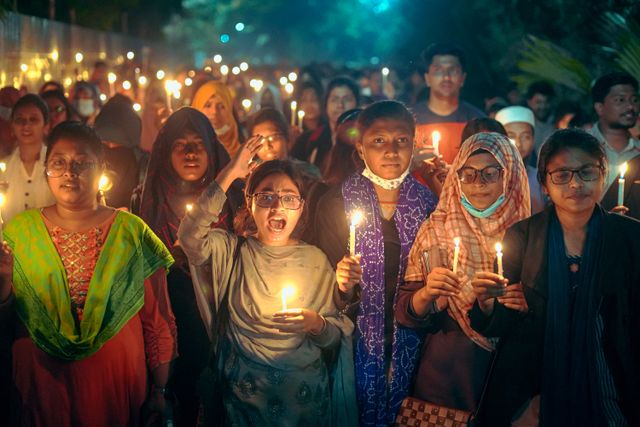

A protest at Nirma University in Ahmedabad has brought renewed attention to questions of women’s safety, hostel security, institutional accountability, and the way universities respond when students raise concerns about their safety. On October 1, 2026, students at the university observed what they called a “Black Day,” wearing black clothes and gathering on campus to protest over concerns surrounding the safety of female students living in the university’s hostel facilities. The demonstration followed the circulation of videos that allegedly showed an unidentified person engaging in inappropriate and obscene behaviour from an under-construction building near a girls’ hostel.
The incident has become a larger campus issue because students say their concerns were not addressed adequately after the alleged behaviour was reported. Their protest was therefore not limited to the alleged conduct itself. Students also raised questions about security arrangements between the existing H4 girls’ hostel and the under-construction H5 building, the response of security personnel, the communication from university authorities, and whether sufficient safeguards were in place to protect students’ privacy and sense of security.
At the same time, it is important to distinguish between allegations, student accounts, and facts established through investigation. The police have registered a case concerning an unidentified person and are examining the circumstances surrounding the incident. The identity of the person seen in the video and the full circumstances of the alleged incident remain matters for investigation.
What Happened Near the Girls’ Hostel?
The immediate trigger for the protest was a video that circulated on social media and among students. According to reports, the video was recorded by students staying in the H4 girls’ hostel and allegedly showed a person in the under-construction H5 building opposite the hostel engaging in inappropriate behaviour while facing the hostel. The incident reportedly took place on September 29, with a complaint later being submitted to university authorities.
The proximity of the construction site to the residential hostel became a central part of the students’ concerns. A university hostel is expected to provide students with a reasonable level of privacy and security, particularly in residential spaces where students should be able to live without feeling watched or exposed to inappropriate behaviour.
Reports indicate that the university’s chief security officer subsequently approached the Sola police regarding the incident. Police said they were working to verify the location shown in the video and establish the identities of people who were present at the construction site at the relevant time. The case was registered against an unidentified person under provisions of the Gujarat Police Act relating to indecent exposure.
Because the investigation is ongoing, the incident should be understood as an allegation under examination rather than as a completed finding of guilt. The police investigation is expected to establish who was involved and what precisely occurred.
Why Did Students Observe a “Black Day”?
The decision to wear black was a visible expression of dissatisfaction with what students described as an inadequate institutional response. On October 1, students gathered near the university’s Law Building, dressed in black and carrying placards. Reports described the demonstration as a dharna and a collective demand for accountability and stronger security arrangements.
For the students, the protest was not simply about one video. It was also about how complaints relating to safety are received and acted upon. According to student accounts reported by the Indian Express, students who raised the issue with female security personnel were allegedly advised not to wear shorts within the hostel premises. Students viewed such advice as shifting attention away from the alleged conduct and towards the clothing of the women who reported it.
That allegation became an important part of the protest because discussions about women’s safety often extend beyond the immediate incident. Students may expect institutions to focus first on preventing inappropriate behaviour, investigating complaints, securing vulnerable areas, and establishing accountability rather than placing responsibility on the people who report the behaviour.
The university administration’s response, therefore, became an issue in its own right. Students wanted greater clarity about what had been done after the complaint and what measures would prevent similar concerns from arising again.
The H4 and H5 Security Question
One of the central issues raised by students concerns the relationship between the H4 girls’ hostel and the H5 building under construction. According to reports, H5 was located opposite the existing hostel, creating concerns about visibility between the construction area and student accommodation.
Students reportedly objected to what they described as an insufficient response after the incident. One measure mentioned in reports was the installation of a green net around the hostel area. Students argued that a physical visual barrier alone did not answer their questions about accountability, supervision, security personnel, access control, and construction-site safety.
This distinction is important. Physical barriers can contribute to privacy, but campus safety involves a broader system. Construction sites near residential hostels require appropriate access restrictions, supervision, lighting, security monitoring, worker identification, and clear separation between construction activity and student living areas.
The incident has consequently prompted broader questions about whether security arrangements should be reviewed whenever construction takes place close to student accommodation. A university campus is not simply an academic environment; residential facilities create additional responsibilities because students live on the premises for extended periods.
What Students Are Asking From the Administration
Reports indicate that students have demanded greater accountability and a clearer institutional response. Their concerns include the investigation of the alleged incident, stronger security arrangements around the girls’ hostels, examination of available CCTV footage, and greater transparency regarding the steps being taken by the administration.
The National Students’ Union of India also took up the issue and called for an impartial inquiry and a review of security arrangements at the H4 and H5 hostels. The organisation has also sought examination of CCTV footage and a broader assessment of hostel security.
Such demands reflect a wider principle in campus administration: when a serious safety complaint emerges, students often want to know not only whether an investigation has started but also what immediate protective measures are being introduced while the investigation continues.
For students living in hostels, uncertainty can itself become a source of anxiety. Clear communication can therefore be important alongside physical security measures. Students need to know where complaints can be submitted, whom they can contact, what happens after a complaint is made, and how the institution protects them from retaliation or further exposure while a matter is being investigated.
The Role of Police Investigation
The involvement of the police has added a formal investigative process to the university-level response. The university’s chief security officer filed a complaint with Sola police after the videos emerged. Police have said they were verifying the location and identifying individuals who may have been present at the construction site when the alleged incident occurred.
This distinction between an allegation and a legally established fact is particularly important in cases involving viral videos. Social media circulation can make an incident widely known before investigators have established the identities of individuals, the exact circumstances, or the authenticity and context of the material.
A responsible public discussion should therefore avoid declaring someone guilty before the investigation is completed. At the same time, uncertainty about individual responsibility should not prevent an institution from reviewing its safety systems. Universities can investigate security weaknesses and protect students while law-enforcement authorities independently determine what happened.
Why Campus Safety Is Larger Than One Incident
The Nirma University protest has raised a broader question about what students should reasonably expect from educational institutions. Safety on a university campus is not limited to preventing physical assault. It also includes privacy, secure residential spaces, appropriate security personnel, safe construction zones, effective complaint mechanisms, and an institutional culture in which students can report concerns without feeling dismissed.
This becomes particularly important in residential universities. Students who live on campus depend on the institution for much more than classrooms and laboratories. Their accommodation, security infrastructure, emergency response, transportation within campus, access controls, and grievance mechanisms are all connected to their everyday experience.
A safety policy can exist on paper while students still feel uncertain about how effectively it works in practice. The difference between policy and implementation becomes particularly visible when an unexpected incident occurs.
Nirma University’s Existing Women-Safety Mechanisms
Nirma University already has institutional mechanisms addressing women’s safety and gender-related concerns. Its Women Development Cell states that it exists to help maintain a dignified and congenial environment for women employees and students. The university says the cell provides a platform for dialogue on women’s rights and gender-related issues and reviews safety and security measures for female employees and students.
The university also has an Internal Complaints Committee mechanism under the framework of the University Grants Commission’s regulations concerning prevention, prohibition and redressal of sexual harassment of women employees and students in higher educational institutions. Its student information material describes an Internal Complaints Committee that includes faculty, non-teaching staff, an external member and student representation when a matter involves students.
These structures are significant because they demonstrate that campus safety is intended to involve formal institutional channels rather than relying only on informal complaints or individual security personnel.
However, the existence of a mechanism and students’ experience of that mechanism are not necessarily the same thing. The current controversy has therefore brought attention to the practical question of how quickly and effectively such systems respond when students report an immediate safety concern.
The Importance of Responding to Complaints Correctly
A university’s first response to a safety complaint can influence how students perceive the institution for a long time. When students report inappropriate conduct, they need to know that their complaint has been heard and that the institution is taking reasonable steps to protect them while the facts are established.
This does not mean that every complaint should automatically result in a predetermined conclusion. A fair process requires investigation, evidence gathering, identification of the individuals involved, and appropriate action based on established facts.
At the same time, an investigation should not become an excuse for inaction on immediate safety measures. An institution can simultaneously preserve due process and improve security around the location where an incident has allegedly occurred.
That balance is particularly important in educational institutions, where students may be living away from their families and relying heavily on the university’s administrative and security systems.
The Clothing Debate and the Question of Responsibility
One of the most discussed aspects of the Nirma University controversy has been the allegation that female students were advised about what clothing they should wear after reporting the alleged behaviour. The Indian Express reported the students’ allegation that female security staff advised them not to wear shorts inside the hostel premises.
Whether the statement was made exactly as alleged is a matter that can be clarified through the university’s investigation and accounts from those involved. However, the controversy highlights a broader issue in conversations about women’s safety: how institutions frame responsibility when inappropriate behaviour is reported.
From a campus-safety perspective, the central questions are whether residential spaces are properly secured, whether individuals with access to nearby areas are appropriately monitored, whether complaints are taken seriously, and whether students have accessible mechanisms for reporting concerns.
These questions remain relevant regardless of what students choose to wear. Safety policies are generally expected to focus on conduct, security systems, and institutional responsibilities rather than making students responsible for the inappropriate behaviour of others.
Social Media and Student Mobilisation
The Nirma University protest also illustrates how social media can transform a campus complaint into a wider public issue within a short period. The video circulated online, after which students used social media to discuss their concerns and organise participation in the October 1 protest. Reports indicate that students circulated calls to attend the demonstration wearing black.
Digital platforms can give students a powerful channel for collective expression, particularly when they believe conventional complaint mechanisms have not produced a satisfactory response. A campus issue that might previously have remained within administrative channels can now reach thousands of people almost immediately.
However, social media also creates challenges. Viral material may circulate without context, allegations may be repeated as established facts, and individuals can be identified or accused before an investigation has been completed.
Responsible reporting and responsible student activism therefore require a balance between visibility and verification. Students can raise legitimate concerns while allowing investigators to establish facts through appropriate procedures.
What Universities Can Learn From the Protest
The protest provides an opportunity to consider how higher-education institutions can strengthen their approach to campus safety. Universities with residential facilities need to treat safety as an ongoing responsibility rather than something addressed only after an incident occurs.
Construction activity near hostels is one example. Whenever buildings are being constructed or renovated close to residential areas, universities need to consider how workers access the site, how construction areas are separated, whether students can be observed from nearby structures, and whether security personnel are adequately supervising the boundary between construction and residential spaces.
Complaint handling is another important area. Students should have clear and accessible channels for reporting inappropriate conduct. They should also understand what happens after a complaint is submitted and which office or authority is responsible for responding.
Communication is equally important. Even when an investigation is still underway, institutions can communicate that a complaint has been received, that appropriate authorities have been contacted, and that temporary safety measures are being implemented.
The Broader Conversation About Women’s Safety on Campuses
The Nirma University incident is part of a much larger conversation about safety and dignity in higher education. Universities are places where young adults study, live, work, socialise, conduct research and develop professional identities. A safe environment is therefore fundamental to meaningful participation in academic life.
Women students in residential campuses may face particular concerns related to privacy and security. Hostels are intended to function as homes within the university environment, making privacy around rooms, windows, balconies, common areas and surrounding buildings especially important.
A safe campus should allow students to concentrate on education without constantly having to assess whether their surroundings are secure. Security infrastructure, trained personnel, effective complaint mechanisms and institutional accountability all contribute to that environment.
The Nirma University protest demonstrates that students themselves can become an important source of information about weaknesses in campus systems. Their experiences can help administrators identify areas that may not be obvious from formal policies or routine inspections.
What Happens Next?
The immediate next step is the investigation into the alleged incident and the identification of the person shown in the circulated material. Police have already registered a complaint and said they are verifying the circumstances and identities of people associated with the construction site.
At the university level, students are seeking clearer action on security arrangements and greater accountability. Reports also indicate that university authorities subsequently told students that the issue would be addressed and resolved.
The longer-term significance of the controversy will depend partly on how the institution responds after the immediate attention fades. Students may look for changes in security procedures, clearer complaint processes, stronger separation between construction areas and hostels, and transparent communication about investigations.
Conclusion
The Nirma University “Black Day” protest emerged from a specific incident near the girls’ hostel, but the concerns expressed by students extend beyond that single allegation. The controversy has raised questions about hostel security, construction-site access, privacy, complaint handling, institutional accountability and the way women’s safety concerns are addressed.
The police investigation will be responsible for establishing the facts surrounding the alleged incident and identifying any person responsible. Separately, the university has a responsibility to examine whether its own safety systems worked as intended and whether students had adequate protection and support when they raised concerns.
The incident also highlights an important principle for higher education: campus safety is not simply a security department’s responsibility. It involves administrators, security personnel, faculty members, contractors, students, grievance mechanisms and law-enforcement authorities working within clearly defined responsibilities.
For students, the Black Day protest became a way of making their concerns visible. For universities, such protests can serve as a reminder that safety policies must be supported by practical implementation, accessible reporting channels and clear institutional communication. A genuinely secure educational environment is one in which students can study and live with dignity while knowing that serious concerns will be heard, investigated fairly and addressed through appropriate action.
Online Internship with Certificate
You may be interested

When a Case Is Solved Years Later: How Forensic Advances Can Reopen Cold Investigations
Anshika Jain - Oct 22, 2026Some criminal investigations remain unresolved for years or even decades. Witnesses may be unable to identify a suspect, investigators may exhaust the available leads, and physical evidence…

Gold Smuggling Through Airports: How Investigators Trace Possible Links
Anshika Jain - Oct 22, 2026International airports are essential gateways for tourism, trade and global connectivity. Every day, thousands of passengers, airline employees, ground handlers, cargo workers and service providers move through…

Why Restrictions on Journalists Covering Protests Raise Questions About Press Freedom
Anshika Jain - Oct 22, 2026Public protests are among the most visible expressions of democratic participation. They provide citizens with an opportunity to challenge government decisions, demand accountability, raise concerns about injustice…
Most from this category

Political Allegations Versus Verified Evidence: How Readers Can Separate Claims from Facts
Anshika Jain - Oct 22, 2026
Voter List Revision in India: How Can Citizens Verify That Their Names Have Not Been Omitted?
Anshika Jain - Oct 22, 2026
Jantar Mantar Controversy: Can a Protest Site Be Restricted Without Limiting Democratic Expression?
Anshika Jain - Oct 22, 2026
Six Years of Arrest Delays: What the Delhi Court’s MCOCA Criticism Reveals
Anshika Jain - Oct 21, 2026
Political Allegations Versus Verified Evidence: How Readers Can Separate Claims from Facts
Anshika Jain - Oct 22, 2026Voter List Revision in India: How Can Citizens Verify That Their Names Have Not Been Omitted?
Anshika Jain - Oct 22, 2026Jantar Mantar Controversy: Can a Protest Site Be Restricted Without Limiting Democratic Expression?
Anshika Jain - Oct 22, 2026