Political Allegations Versus Verified Evidence: How Readers Can Separate Claims from Facts

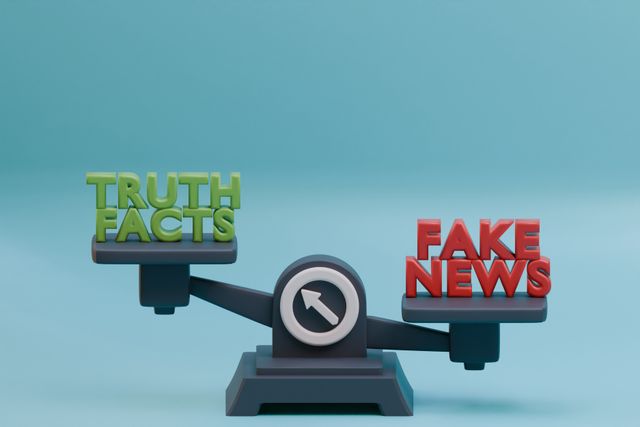

Political allegations are a regular feature of democratic life. Politicians accuse opponents of corruption, parties question government decisions, public figures challenge official statistics, and social media users circulate claims about policies, elections, investigations, and public spending. Some allegations expose genuine wrongdoing and lead to important reforms. Others are exaggerated, incomplete, misleading, or unsupported by reliable evidence. The challenge for readers is to distinguish between these possibilities without automatically accepting or rejecting a claim based on political loyalty.
The speed of modern communication makes this task increasingly important. A statement made during a political rally can become a viral video within minutes. A document may be shared without its original context, an old photograph may be presented as a recent event, and an allegation made by one political organisation may be repeated across dozens of websites until it appears independently confirmed. Repetition can create familiarity, but familiarity is not proof.
Political literacy therefore requires more than knowing which party or leader made a statement. It requires understanding what is being claimed, what evidence supports it, whether that evidence can be independently verified, and what remains uncertain. The distinction between an allegation and an established fact is not merely a matter of language; it influences public opinion, institutional trust, electoral decisions, and the reputations of individuals.
A useful approach is neither blind trust nor automatic cynicism. Readers should remain open to evidence while demanding that serious claims be supported by reliable documentation, verifiable sources, and appropriate context. This article examines how to assess political allegations, evaluate evidence, recognise misleading presentations, and make informed judgements in a highly contested information environment.
Understanding the Difference Between an Allegation, an Opinion, and a Verified Fact
An allegation is a claim that someone has done something wrong or that an event occurred in a particular way. It may be made by a political opponent, a whistleblower, a government agency, a journalist, or a private individual. The fact that an allegation has been made is itself verifiable if there is reliable evidence of the statement. However, the truth of the underlying accusation is a separate question.
For example, if a politician publicly accuses a minister of misusing public funds, a recording or transcript may establish that the accusation was made. It does not, by itself, establish that the minister misused the funds. The underlying allegation would need to be examined through relevant financial records, procurement documents, audit findings, testimony, and other evidence. Treating the existence of an accusation as proof of the accusation is a common reasoning error.
An opinion, by contrast, expresses a judgement, interpretation, or preference. A person may argue that a government’s economic policy is ineffective or that an opposition party has failed to provide credible leadership. Such statements may be informed by evidence, but they are not always objectively verifiable in the same way as a claim about a date, payment, vote count, or recorded event. Readers can examine the reasoning behind an opinion without treating disagreement as proof that it is false.
A verified fact is a claim supported by evidence that has been checked against reliable sources. Verification does not mean that a statement becomes permanently immune to revision. New documents, corrected data, or stronger evidence may change what is known. A responsible assessment therefore reflects both the available evidence and its limitations.
Political reporting often combines all three categories. A news story may accurately report an allegation while leaving the underlying claim unresolved. An editorial may interpret documented events through a particular political viewpoint. A reader who fails to distinguish these forms of information may mistake a report about an accusation for confirmation that the accusation is true.
Why Political Allegations Spread So Quickly
Political information competes for attention in an environment where emotionally powerful messages often travel faster than detailed explanations. A short post accusing a public figure of wrongdoing may attract more engagement than a lengthy report examining records, responses, and procedural details. Anger, fear, outrage, and a sense of betrayal can encourage people to share a claim before checking its accuracy.
Partisan identity can also influence how evidence is interpreted. Readers may accept a weak allegation against a political opponent while demanding extensive proof for a similar accusation involving a leader they support. This is a form of confirmation bias: the tendency to favour information that supports existing beliefs and scrutinise information that challenges them. It can affect people across the political spectrum, regardless of their education or professional background.
Repeated exposure can further distort judgement. When the same allegation appears on television, in social media posts, in group chats, and in commentary videos, it may seem as though multiple independent sources have confirmed it. In reality, those accounts may all be repeating one original statement. The number of repetitions is not equivalent to the number of independent confirmations.
Political communication may also use selective facts to create a misleading impression. A statistic may be accurate but lack the comparison needed to interpret it. A video may show a genuine event but omit the preceding exchange. A quotation may be authentic but presented in a way that changes its meaning. The challenge is therefore not limited to identifying fabricated content; readers must also recognise information that is technically accurate yet misleading in context.
Identify the Exact Claim Before Evaluating It
The first step in evaluating political information is to identify precisely what is being asserted. Broad statements such as “the election was manipulated,” “public money was stolen,” or “the government concealed the truth” contain several possible claims. Without identifying the specific allegation, readers cannot determine what evidence would support or contradict it.
A claim becomes easier to evaluate when it is expressed in concrete terms. Instead of asking whether a political party is corrupt, a reader might ask whether a named contract was awarded without the legally required procedure, whether an official disclosed a particular financial interest, or whether a published spending figure matches the underlying government records. These narrower questions can be investigated using documents, official data, court records, and independent reporting.
It is also important to distinguish between what a source directly establishes and what someone infers from it. A document showing that a meeting took place may establish the meeting’s date and participants, but it may not establish what was discussed or whether an unlawful agreement was reached. A payment record may establish that money changed hands, but additional evidence may be necessary to determine its purpose or legality.
The UK House of Commons Library’s guidance on fact-checking explains the importance of tracing claims to their original sources, checking their context, and examining the assumptions behind them. This principle is useful in political reporting because a claim may contain both verifiable details and an interpretation that goes beyond what those details demonstrate.
Evaluate the Source, Not Just the Message
Who Is Making the Allegation?
The identity of the source matters because it helps readers understand access to information, possible incentives, and accountability. A named witness who describes an event they personally observed may provide a useful starting point. An official document may offer direct evidence of an administrative decision. A political spokesperson may have access to relevant information but also have an incentive to present events in a favourable light.
Source identity alone does not determine truth. A politician can make a correct statement, and an independent commentator can make an incorrect one. The relevant question is whether the source provides verifiable support and whether the claim is consistent with other reliable evidence.
Anonymous sources require particular care. Anonymity may be justified when a source faces credible threats or retaliation, but readers should look for reporting that explains why anonymity was granted and what basis the source has for knowing the information. A vague reference to “people familiar with the matter” provides less transparency than a report that explains the source’s access and corroborates the claim through documents or additional witnesses.
Look Beyond the Source’s Own Website or Channel
A source should not be considered reliable merely because its website appears professional, uses official-looking logos, or presents information confidently. Readers should investigate how other credible sources describe the organisation, whether its reporting has been corrected in the past, and whether its claims can be checked independently.
This approach is known as lateral reading. Instead of judging a website solely by examining its own presentation, readers open other sources to investigate its identity, reputation, and evidence. Research associated with Stanford’s work on online information evaluation found that professional fact-checkers were more effective at assessing unfamiliar digital sources when they used this method.
Readers should also distinguish between a source’s political perspective and the accuracy of an individual claim. A publication may have a recognisable editorial position while still producing well-documented reporting. Conversely, a source that describes itself as neutral may publish unsupported material. The strongest assessment combines source evaluation with direct examination of the evidence.
Find the Original Evidence
A central principle of fact-checking is to trace a claim back to its earliest available and most authoritative source. If a post claims that a government report found widespread irregularities, readers should try to locate the report itself rather than relying exclusively on a screenshot or another person’s summary. If a politician cites a court ruling, the relevant judgement should be consulted to determine what the court actually decided.
Primary sources can include legislation, court judgements, official statistics, parliamentary records, audit reports, procurement documents, election results, public notices, original speeches, and complete recordings. These sources are often especially useful because they allow readers to examine the material directly instead of depending entirely on another person’s interpretation.
However, a primary source does not automatically prove every conclusion drawn from it. A government press release may accurately describe a policy while omitting criticism or unresolved questions. A court filing contains claims made by the parties and should not be confused with a judicial finding. An investigation report may identify concerns without establishing criminal liability. Readers must understand the purpose and legal status of the document they are examining.
The same caution applies to screenshots and excerpts. A cropped document may omit a qualifying sentence, while a quotation may exclude the question that prompted it. Whenever possible, readers should compare the circulated excerpt with the full source, check the date and author, and confirm that the material has not been altered or taken from an unrelated event.
Cross-Check Claims Through Independent Sources
A serious political allegation should not be accepted merely because multiple websites repeat it. Readers need to determine whether those sources independently verified the claim or copied the same original report. Five articles based on one anonymous post do not provide the same level of corroboration as several independent investigations supported by separate records and witnesses.
Independent verification is stronger when sources rely on different kinds of evidence. A financial allegation, for example, might be examined through an audit report, official contract records, testimony from people involved, and reporting by journalists who reviewed the documents. Agreement across different evidence types can increase confidence, particularly when the sources have different institutional interests.
The Princeton University media literacy guide describes source triangulation as checking information across multiple sources and comparing inconsistencies. This approach encourages readers to look for genuine corroboration rather than counting repeated versions of the same claim.
Readers should also examine credible responses from the person or institution being accused. A denial does not automatically disprove an allegation, just as an accusation does not automatically establish wrongdoing. A fair assessment considers the evidence supporting the allegation, the explanation offered in response, and any independent material that confirms or contradicts either account.
When the available evidence remains incomplete, the responsible conclusion may be that the claim is unverified. This is not an endorsement of the accused party, nor is it a dismissal of the accuser. It simply recognises that a conclusion should not be stronger than the evidence permits.
Check Statistics, Documents, Photographs, and Videos Carefully
Political claims frequently rely on statistics because numerical information can appear objective and authoritative. Yet a statistic may be misleading if its time period, denominator, definition, or comparison is unclear. A claim that spending has doubled, for example, requires information about the starting and ending figures, the years being compared, inflation where relevant, and whether the figures measure the same category.
Readers should seek the original dataset or official report and check whether the quoted number matches the source. They should also examine whether the comparison is fair. Comparing an unusually low year with an unusually high year can exaggerate a trend, while presenting a percentage without the underlying totals may obscure the scale of the change. Even an accurate number can support an unjustified conclusion if the interpretation ignores important context.
Images and videos require similar scrutiny. A genuine video may be old, filmed in another location, or edited to remove relevant context. Reverse image search, frame searches, date checks, visible landmarks, original upload records, and credible reporting can help establish where and when the material was created. The existence of a video is evidence that certain images were recorded, but its interpretation still depends on context and authentication.
AI-generated or digitally altered media add further complications. Visual realism is no longer sufficient proof of authenticity, and obvious signs of manipulation may not always be present. Readers should seek original footage, corroborating recordings, and reliable reporting rather than relying on a single visual clue. The absence of obvious manipulation does not prove that content is genuine, just as an unusual visual feature does not automatically prove that it is fake.
Understand the Difference Between an Investigation and a Legal Finding
Political allegations often involve police complaints, preliminary inquiries, regulatory investigations, parliamentary committees, or court proceedings. These stages have different purposes and evidentiary significance. A complaint may initiate an investigation, but it does not establish that the complaint is true. An investigation may identify evidence requiring further action without determining final legal responsibility.
Similarly, an arrest or charge should not be described as proof of guilt. A court’s interim order may address a procedural issue rather than decide the merits of the case. A final judgement may establish particular findings under a specific legal standard, while an appeal may later alter the outcome. Accurate reporting should identify the stage of the proceedings and distinguish allegations made by parties from findings made by the relevant authority.
This distinction is especially important when political actors present ongoing legal proceedings as definitive proof of their opponents’ wrongdoing. Readers should examine the actual order or judgement, identify what questions the court decided, and determine whether the decision was final or subject to further proceedings.
The same principle applies when an investigation closes without charges. Such an outcome may mean that the available evidence was insufficient for prosecution, that legal requirements were not met, or that the inquiry reached another conclusion under the applicable procedure. It does not necessarily establish that every aspect of the original allegation was false. The precise findings matter more than the political characterisation of the outcome.
Recognise Misleading Headlines and Emotional Language
Headlines are designed to attract attention, but they can sometimes express a stronger conclusion than the evidence in the article supports. A headline stating that a leader was “exposed” or a policy was “proven fraudulent” may imply certainty even when the report describes an allegation, a disputed interpretation, or a preliminary finding.
Readers should compare the headline with the article’s body and cited sources. They should ask whether the central claim is attributed to a named person, whether the evidence is described clearly, and whether relevant qualifications are included. If the article relies on anonymous claims or incomplete information, the headline should not be treated as an established conclusion.
Emotional language can also influence interpretation. Words such as “traitor,” “criminal,” “anti-national,” or “corrupt” may communicate a political judgement rather than a verified legal or factual finding. Such terms can be appropriate when accurately describing a quotation or a legally established status, but their use should not substitute for evidence.
A reader can remain critical of a politician or institution without accepting every accusation directed at it. Political accountability is strengthened when criticism is specific, documented, and open to correction. Personal attacks and emotionally charged labels often make it harder to identify what actually happened and what evidence supports the conclusion.
The Role of Fact-Checking Organisations and Responsible Journalism
Independent fact-checking organisations can help readers investigate claims that require substantial research. Their work may involve tracing quotations to original recordings, comparing viral images with earlier publications, examining official datasets, consulting subject specialists, and requesting explanations from the people involved.
Readers should still evaluate fact-checks carefully. A credible fact-check should identify the precise claim, explain the method used to assess it, link to relevant evidence, and acknowledge important limitations. Its conclusion should follow from the sources rather than rely on the organisation’s reputation alone.
Responsible journalism follows similar principles. Reuters’ published standards emphasise accurate sourcing, cross-checking information, speaking with relevant sides in a dispute, and being transparent about what remains unknown. These practices are valuable because they reduce the risk that an accusation will be reported as a proven fact simply because it is newsworthy.
No publication is incapable of making mistakes. Readers should therefore consider corrections, transparency, source quality, and the consistency of a publication’s methods over time. A credible outlet should be willing to correct errors openly. The existence of a correction does not necessarily invalidate all its reporting; refusing to acknowledge or repair clear errors is a more serious warning sign.
A More Responsible Approach to Political Information
Separating allegations from verified evidence is not about refusing to form opinions. It is about making sure those opinions rest on the strongest available information. Readers can begin by pausing before sharing a sensational claim, identifying the exact assertion, tracing it to the original source, and checking whether independent evidence supports it. They should then examine context, consider credible counterevidence, and distinguish established facts from unresolved questions.
It is equally important to apply the same standards to every political side. A claim should not receive a lower evidentiary threshold simply because it confirms a reader’s beliefs. Nor should a well-supported allegation be dismissed merely because the person making it belongs to a disliked party or organisation. Consistent standards are essential for fair judgement.
When evidence is incomplete, readers should be comfortable with uncertainty. Saying that a claim remains unverified is more accurate than declaring it true or false without sufficient grounds. If credible new information emerges, the assessment can change. This willingness to revise a conclusion is a strength of evidence-based reasoning, not a sign of indecision.
Political discussion also benefits from careful language. Instead of repeating a disputed accusation as fact, readers can describe it as an allegation, explain what evidence is available, and identify what remains to be established. This preserves the possibility of accountability while reducing the spread of unjustified claims.
Conclusion: Evidence Must Matter More Than Political Loyalty
Political allegations can expose wrongdoing, challenge abuses of power, and encourage public accountability. They can also be used to mislead, damage reputations, or deepen divisions when claims circulate without adequate verification. The difference lies not in how confidently a statement is delivered or how widely it is shared, but in the quality of evidence supporting it.
Readers can make better judgements by distinguishing allegations from opinions and established facts, tracing claims to primary sources, evaluating the credibility of sources, checking independent reporting, examining statistics and visual material, and understanding the difference between an investigation and a final finding. They should also recognise that a claim may be partly accurate, misleadingly framed, or unresolved rather than simply true or false.
Democracy depends on the ability to question those in power, investigate misconduct, and debate competing interpretations of public events. It also depends on citizens being able to distinguish evidence from rumour. When readers apply consistent standards regardless of political affiliation, they strengthen public debate and make it more difficult for misinformation to dominate the conversation.
The most responsible approach is neither to believe every accusation nor to dismiss every uncomfortable claim. It is to follow the evidence, acknowledge uncertainty, and remain willing to change one’s mind when reliable information demands it. In a political environment crowded with competing narratives, that discipline is essential to informed citizenship.
Online Internship with Certificate
You may be interested

When a Case Is Solved Years Later: How Forensic Advances Can Reopen Cold Investigations
Anshika Jain - Oct 22, 2026Some criminal investigations remain unresolved for years or even decades. Witnesses may be unable to identify a suspect, investigators may exhaust the available leads, and physical evidence…

Gold Smuggling Through Airports: How Investigators Trace Possible Links
Anshika Jain - Oct 22, 2026International airports are essential gateways for tourism, trade and global connectivity. Every day, thousands of passengers, airline employees, ground handlers, cargo workers and service providers move through…

Why Restrictions on Journalists Covering Protests Raise Questions About Press Freedom
Anshika Jain - Oct 22, 2026Public protests are among the most visible expressions of democratic participation. They provide citizens with an opportunity to challenge government decisions, demand accountability, raise concerns about injustice…
Most from this category

Voter List Revision in India: How Can Citizens Verify That Their Names Have Not Been Omitted?
Anshika Jain - Oct 22, 2026
Jantar Mantar Controversy: Can a Protest Site Be Restricted Without Limiting Democratic Expression?
Anshika Jain - Oct 22, 2026
Six Years of Arrest Delays: What the Delhi Court’s MCOCA Criticism Reveals
Anshika Jain - Oct 21, 2026

Voter List Revision in India: How Can Citizens Verify That Their Names Have Not Been Omitted?
Anshika Jain - Oct 22, 2026Jantar Mantar Controversy: Can a Protest Site Be Restricted Without Limiting Democratic Expression?
Anshika Jain - Oct 22, 2026Six Years of Arrest Delays: What the Delhi Court’s MCOCA Criticism Reveals
Anshika Jain - Oct 21, 2026