

Climate Migration: Why Environmental Disasters Can Displace Families

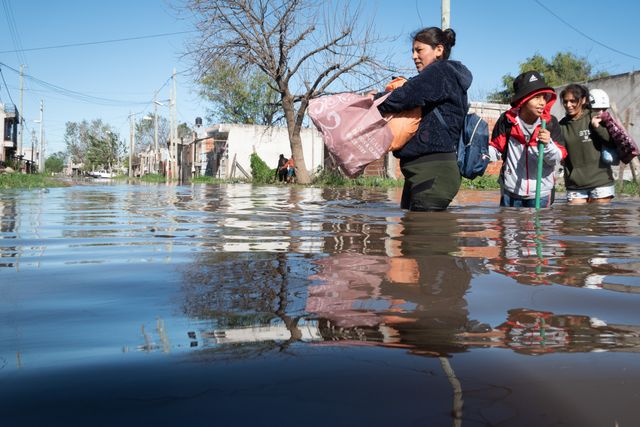

Climate change is no longer only an environmental concern. It is increasingly influencing where people live, how communities plan their futures, and whether families can remain safely in their homes. Rising temperatures, floods, cyclones, droughts, wildfires, landslides and other environmental hazards can damage homes, destroy livelihoods and make some areas increasingly difficult to inhabit. When these pressures force people to leave their homes temporarily or permanently, the movement is often described as climate migration or environmentally induced displacement.
For many families, migration caused by environmental disasters is not a simple decision to move from one city or village to another. It can involve losing a home, changing occupations, leaving behind farmland, separating from social networks and rebuilding life in an unfamiliar location. In some situations, families move before a disaster because authorities issue warnings. In others, they leave only after their homes or livelihoods have already been severely damaged. Some return after conditions improve, while others may never be able to return.
The relationship between climate change and migration is complex because environmental factors often interact with economic, social and political conditions. A flood may not force every family to migrate, but a flood combined with poverty, damaged infrastructure, limited employment opportunities and repeated disasters can significantly reduce a family’s ability to recover. Understanding climate migration therefore requires looking beyond environmental change and examining how communities experience risk, resilience and opportunity.
What Is Climate Migration?
Climate migration broadly refers to the movement of people associated with climate-related environmental changes. It can occur within a country or across international borders and may be temporary, seasonal or permanent. People may move because of sudden disasters such as cyclones and floods, or because of slower environmental changes such as drought, sea-level rise, land degradation and changing agricultural conditions.
Climate-related migration does not always happen because climate change is the only reason a person moves. Migration decisions are often influenced by several factors at the same time. Employment, education, housing costs, family responsibilities, access to healthcare and existing economic conditions can all influence whether someone chooses to stay or move.
This is why climate migration is better understood as a combination of environmental pressure and human decision-making. A disaster may act as the immediate trigger, while existing vulnerabilities determine how severely a family is affected and whether it has the resources necessary to relocate.
How Environmental Disasters Displace Families
Sudden environmental disasters can create immediate displacement. When a cyclone approaches a coastal area, for example, families may be evacuated to shelters or safer communities. Flooding can force residents to leave homes within hours or days, while landslides can make roads and settlements unsafe.
In these situations, displacement may initially be temporary. Families may expect to return once floodwaters disappear, damaged roads are repaired and basic services are restored. However, returning is not always possible. Homes may have been destroyed, farmland may have become unusable, and local businesses may no longer be operating.
Repeated disasters can make recovery even more difficult. A family that rebuilds after one flood may face another major flood a few years later. If savings, agricultural productivity and employment opportunities are repeatedly lost, eventually moving to another location may become a practical necessity rather than a voluntary choice.
Floods and the Growing Risk of Displacement
Floods are among the most significant environmental hazards associated with population displacement. They can affect rural villages, coastal settlements and rapidly growing cities. Heavy rainfall, river flooding, storm surges and inadequate drainage can all contribute to the problem.
For rural families, flooding can destroy crops, livestock, agricultural equipment and stored food. When agriculture is the main source of income, losing a harvest can affect a household for months or even an entire season. Repeated agricultural losses can create financial pressure that encourages members of the household to seek employment elsewhere.
Urban flooding creates a different but related challenge. Families living in vulnerable neighbourhoods may lose household belongings, face disruptions to transportation and experience interruptions in water, electricity and sanitation services. When affordable housing is already limited, displaced families may struggle to find safe and affordable accommodation after a disaster.
Drought and the Loss of Rural Livelihoods
Not all climate-related displacement occurs suddenly. Drought can gradually change the economic conditions of a community. When rainfall becomes unreliable or water availability decreases, agricultural production can become more difficult.
For farming households, prolonged drought can reduce crop yields and increase dependence on groundwater or other water sources. Rising costs combined with declining agricultural income can make farming financially unsustainable. In such circumstances, younger members of a family may move to towns or cities in search of employment.
This type of migration can initially be seasonal. A worker may leave a village for several months and return during the agricultural season. Over time, however, temporary migration can become more permanent if urban employment provides a more stable income.
Drought can therefore influence migration without directly destroying homes. Instead, it can gradually weaken the economic foundations that allow families to remain in a particular location.
Cyclones, Storms and Coastal Communities
Coastal communities face particular challenges because they may experience cyclones, storm surges, coastal flooding and erosion. A severe storm can destroy houses, roads, electricity infrastructure, fishing equipment and other assets within a short period.
For fishing communities, environmental changes can also affect livelihoods. Changes in marine conditions, extreme weather and damage to coastal infrastructure can make traditional occupations more difficult. When income becomes uncertain, families may consider moving to areas with greater employment opportunities.
Coastal erosion presents another long-term challenge. When land gradually disappears or becomes unsafe for settlement, families may have limited options for remaining in the same location. In some cases, communities may need planned relocation supported by governments and local institutions.
Wildfires and Extreme Heat
Wildfires are another environmental hazard capable of causing displacement, particularly in areas experiencing prolonged heat and dry conditions. Fires can destroy homes, forests, agricultural land and infrastructure. Even when a home survives, repeated wildfire threats may influence families to relocate.
Extreme heat can also contribute to migration indirectly. Very high temperatures can reduce outdoor productivity, increase health risks and place additional pressure on water and electricity systems. Workers whose livelihoods depend on agriculture, construction or other outdoor activities may experience greater economic pressure during periods of extreme heat.
As climate patterns change, some communities may increasingly need to consider not only whether their homes are physically safe but also whether local economic and environmental conditions can support long-term settlement.
Why Some Families Are More Vulnerable Than Others
Environmental disasters do not affect every family in the same way. A household with savings, insurance, reliable transportation and access to alternative employment may be able to recover more quickly than a household with limited financial resources.
Poverty can significantly increase vulnerability. Families with fewer resources may live in locations more exposed to flooding, landslides or extreme weather because safer housing is more expensive. They may also lack the ability to repair damaged homes or relocate to another area.
Children, older adults and people dependent on regular healthcare can face additional difficulties during displacement. Moving can interrupt education, healthcare routines and social support systems. Families therefore experience climate migration not simply as a change of location but as a disruption to everyday life.
Climate Migration and India
India is particularly relevant to discussions about climate-related migration because of its diverse geography and large population. Different parts of the country face different environmental risks, including floods, cyclones, droughts, heatwaves, landslides and coastal hazards.
Agricultural communities can be affected by changing rainfall patterns and water availability, while coastal populations may face cyclones and erosion. Himalayan communities can experience risks associated with landslides, floods and other mountain hazards. Urban areas also face increasing pressure from heat, flooding and infrastructure challenges.
Migration within India is already influenced by economic and social factors, making it difficult to separate climate-related movement from other forms of migration. However, environmental stress can become an additional factor influencing household decisions.
For example, a family experiencing repeated crop losses may send one member to a city for employment. If that income becomes essential to household survival, the family may gradually establish a longer-term connection with the destination. In this way, environmental stress can interact with existing patterns of labour migration.
The Difference Between Displacement and Voluntary Migration
It is important to distinguish disaster displacement from migration undertaken primarily for economic or personal reasons. When a flood destroys a home and forces a family to evacuate, the movement may be described as displacement. When a person moves to another city because of better employment opportunities after experiencing declining agricultural income, the situation may involve multiple motivations.
The distinction matters because different forms of movement require different policy responses. Emergency displacement requires immediate shelter, food, water, healthcare and safety. Longer-term migration requires access to housing, employment, education and social services.
Some people may also become trapped in vulnerable locations because they do not have enough money to move. This creates another dimension of climate migration: environmental stress can increase the desire to migrate while financial limitations reduce the ability to do so.
The Social Impact of Climate Migration
Migration can have significant effects on families and communities. Moving to a new location can provide opportunities for employment and improved living conditions, but it can also create social and cultural challenges.
Children may have to change schools, adults may need to find new jobs and families may lose connections with neighbours and relatives. For communities with strong cultural relationships to land, forests, rivers or coastal areas, displacement can also involve the loss of cultural identity and traditional practices.
At the same time, migration can create new opportunities. Family members who move to urban areas may find employment and send money back home. These remittances can support households and contribute to recovery. Migration can therefore be both a response to environmental pressure and a strategy for adapting to changing economic conditions.
The Role of Early-Warning Systems
Technology and early-warning systems can play an important role in reducing disaster-related displacement and protecting lives. Weather forecasting, satellite monitoring, flood prediction systems and emergency communication networks can provide communities with valuable time to prepare.
An effective warning system, however, is not simply about predicting a disaster. People also need access to reliable information and safe evacuation routes. Communities need shelters, transportation and local emergency plans that allow warnings to translate into practical action.
Digital technologies can strengthen these systems through mobile alerts, location-based warnings and real-time environmental monitoring. When combined with local knowledge and community preparedness, technology can help reduce the human impact of extreme events.
Building Climate-Resilient Communities
Reducing climate-related displacement requires more than emergency evacuation. Long-term resilience involves strengthening homes, roads, drainage systems, water infrastructure and public services. It also involves helping communities diversify their livelihoods so that one environmental shock does not completely destroy household income.
Education can contribute to resilience as well. People who understand disaster risks and know how to respond to warnings are better positioned to make informed decisions during emergencies. Digital learning can also provide access to information about climate risks, disaster preparedness, agriculture, technology and new employment opportunities.
For younger generations, climate education can connect environmental awareness with practical skills. Understanding climate change is increasingly relevant not only for environmental studies but also for agriculture, engineering, urban planning, healthcare, technology and community development.
Planned Relocation and the Future of Vulnerable Areas
In some locations, adapting in place may become increasingly difficult. Where repeated disasters make settlements unsafe or essential infrastructure cannot be protected economically, governments and communities may consider planned relocation.
Relocation is a complex process because a new settlement must provide more than physical safety. Families need access to schools, healthcare, employment, transportation, markets and social networks. If relocation is poorly planned, people may face new economic difficulties even after leaving a disaster-prone area.
Successful relocation therefore requires participation from affected communities. Families should have meaningful opportunities to understand the reasons for relocation, discuss their concerns and contribute to decisions about their future.
The Importance of Climate Adaptation
Climate migration should not be viewed only as a problem to be prevented. In some circumstances, migration can become part of a family’s adaptation strategy. Moving temporarily for work, diversifying income or relocating from a high-risk area can help households manage environmental changes.
The broader goal should be to ensure that people have safe and dignified choices. Communities should not be forced to remain in dangerous environments because they lack alternatives, nor should families be forced to relocate without adequate support.
Climate adaptation therefore includes strengthening communities where possible while also preparing for situations where movement becomes necessary.
Technology, Education and the Next Generation
Technology is becoming increasingly important in understanding and responding to environmental risks. Satellite imagery can monitor changes in land and water, digital platforms can distribute emergency information, and data systems can help governments identify vulnerable areas.
Education can help people understand these technologies and use information responsibly. Students learning about climate science, disaster management, geography, agriculture, data science and environmental technology can eventually contribute to solutions in their communities.
Digital education platforms can also make climate-related knowledge more accessible. Online courses, quizzes, simulations and practical learning experiences can help learners understand environmental risks beyond traditional classroom lessons. This creates an opportunity to connect climate awareness with career development and practical skills.
Conclusion
Climate migration is becoming an important part of the conversation about climate change, disaster preparedness and human development. Environmental disasters can displace families by destroying homes, damaging livelihoods and making communities increasingly difficult to inhabit. Floods, droughts, cyclones, landslides, wildfires, coastal erosion and extreme heat can all contribute to decisions about whether families remain where they are or move elsewhere.
However, climate migration cannot be explained by environmental conditions alone. Economic resources, employment, infrastructure, education, social networks and access to government support all influence how families respond to environmental pressure. Some people may move temporarily, others permanently, while some may be unable to move despite facing serious risks.
The future response to climate-related displacement will therefore require a combination of disaster preparedness, resilient infrastructure, accessible education, livelihood support, early-warning systems and carefully planned relocation where necessary. Technology can strengthen many of these efforts, but effective solutions also depend on local communities and institutions.
As climate risks continue to evolve, the central question is not simply how many people may move. It is whether communities can be given the knowledge, resources and choices needed to remain safe and build secure futures. Preparing for climate migration today can help governments, communities and families respond more effectively to the environmental challenges of tomorrow.
Online Internship with Certificate
You may be interested

Asteroid Monitoring: How Scientists Track Objects That Pass Near Earth
Anshika Jain - Sep 22, 2026Earth is constantly moving through a busy region of space. Millions of objects orbit the Sun, including planets, comets, asteroids and smaller fragments left over from the…

India’s Private Space Sector: What Comes After the First Wave of Startups?
Anshika Jain - Sep 22, 2026India’s space sector has undergone a significant transformation over the past few years. For decades, space activities in the country were strongly associated with government institutions, particularly…

The New Passwordless Future: Are Passkeys Ready to Replace Passwords?
Anshika Jain - Sep 22, 2026For decades, passwords have been the default method of protecting online accounts. From email and social media to banking, shopping, education and workplace systems, users have become…
Most from this category



The Race for Smaller AI Models: Why Efficient AI Could Matter More Than Bigger AI
Anshika Jain - Sep 22, 2026
AI-Generated Music, Images and Videos: New Opportunities and Creative Concerns
Anshika Jain - Sep 21, 2026
QR Code Scams: Why a Simple Scan Can Become a Security Risk
Anshika Jain - Sep 22, 2026Why Old Internet Trends Are Suddenly Becoming Popular Again
Anshika Jain - Sep 22, 2026The Race for Smaller AI Models: Why Efficient AI Could Matter More Than Bigger AI
Anshika Jain - Sep 22, 2026