

The Growing Importance of Subsea Internet Cables in Global Security

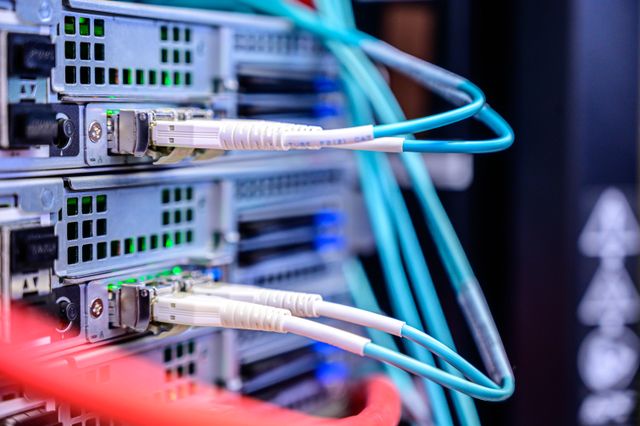

For most people, the internet appears to exist in the air. A video call, bank transaction, cloud application or message can travel across continents in seconds, creating the impression that the world’s digital infrastructure is largely wireless and intangible. In reality, much of the global internet depends on a vast physical network lying quietly beneath the world’s oceans.
Subsea internet cables have become one of the most important pieces of critical infrastructure in the modern global economy. Fibre-optic cables crossing the seabed carry more than 99 percent of international telecommunications traffic, supporting financial transactions, cloud computing, government communications, commercial activity, scientific research and everyday digital services. Their importance has become even more pronounced as economies have become increasingly dependent on digital connectivity.
At the same time, these cables are becoming a growing security concern. Accidental damage from ship anchors and fishing activity has long been a problem. But recent incidents involving telecommunications and energy infrastructure in the Baltic Sea, the Red Sea and other strategically important waters have increased concerns about deliberate sabotage, espionage and hybrid warfare.
The issue has moved rapidly up the national-security agenda during 2026. Governments are investing in surveillance, repair capabilities and alternative cable routes, while military organisations are developing new approaches to protecting infrastructure beneath the sea. The European Union has established a broader framework for cable security, Finland has conducted maritime exercises focused on potential sabotage, and international organisations are calling for stronger global cooperation.
The transformation is significant because subsea cables are no longer simply telecommunications infrastructure. They are increasingly being treated as strategic assets whose security can affect national defence, economic stability and geopolitical power and connecting continents. Unlike satellites, which transmit data through space,.
The Invisible Backbone of the Global Internet
Subsea cables form a network stretching across oceans and connecting continents. Unlike satellites, which transmit data through space, fibre-optic cables carry information through extremely thin strands of glass using pulses of light.
The technology allows enormous quantities of information to travel rapidly over long distances. This makes subsea cables particularly important for international internet traffic,2026 assessment described submarine telecommunications cables as critical infrastructure carrying more than 99 percent of global data traffic. It also warned that disruption can affect governments, businesses and essential services, including banking financial markets, cloud services and large-scale data transfers.
The International Telecommunication Union’s 2026 assessment described submarine telecommunications cables as critical infrastructure carrying more than 99 percent of global data traffic. It also warned that disruption can affect governments, businesses and essential services, including banking, healthcare and education.
This dependence has grown alongside the expansion of cloud computing, artificial intelligence and digital services. Modern economies require continuous connectivity between data centres, financial institutions, businesses and consumers.
Artificial intelligence adds another layer to the problem. AI development requires enormous quantities of data and computing resources distributed across multiple locations. Data centres increasingly depend on high-capacity international connectivity. If major cable routes are disrupted, the consequences can extend beyond ordinary internet access to cloud computing and digital infrastructure.
The physical network beneath the ocean has therefore become an essential foundation of the digital economy.
Why Subsea Cables Are Vulnerable
Despite their importance, subsea cables are surprisingly exposed.
Thousands of kilometres of cable lie across ocean floors, often in areas that are difficult to monitor continuously. Some routes pass through narrow maritime chokepoints where shipping traffic is concentrated. Others approach coastal landing stations that serve as gateways between international networks and national infrastructure.
Most damage is not caused by deliberate attacks.
Fishing equipment and ship anchors are among the most common causes of cable faults. Natural events such as underwater landslides and earthquakes can also damage cables. However, the growing number of incidents involving strategically important infrastructure has raised questions about whether hostile states or other actors could deliberately exploit these vulnerabilities.
The challenge is that the same physical characteristics that make cables vulnerable also make them difficult to protect. It is impossible to patrol every kilometre of seabed continuously.
Security therefore requires a combination of monitoring, route diversification, rapid repair, international cooperation and intelligence.
The Baltic Sea Has Changed the Security Debate
The Baltic Sea has become one of the most important examples of the changing security environment.
Since Russia’s full-scale invasion of Ukraine in 2022, several incidents involving underwater telecommunications cables, electricity connections and pipelines have increased concern among European governments.
A particularly important case occurred at the end of 2025, when two telecommunications cables in the Gulf of Finland were damaged. Finnish authorities investigated the incident as potential aggravated criminal damage and interference with telecommunications. The investigation, completed in June 2026, involved cooperation between Finnish and Estonian authorities and several security and maritime agencies.
Finland has subsequently increased its preparedness for similar incidents.
In September 2026, Finnish authorities conducted a live maritime exercise involving coast guard, police and armed forces personnel practising the boarding and inspection of a vessel suspected of damaging underwater infrastructure. The exercise also considered potential threats involving divers, mini-submarines and unmanned underwater vehicles.
The significance of these developments extends beyond Finland. European governments increasingly regard underwater infrastructure as part of the broader security environment surrounding NATO territory.
From Accidents to Hybrid Threats
The greatest challenge is distinguishing between an accident and deliberate interference.
A ship dragging an anchor across a cable can produce the same immediate physical result as a deliberate act of sabotage. Determining intent may require evidence about the vessel’s movements, ownership, communications, crew behaviour and previous activities. This creates a difficult attribution problem.
A hostile actor could potentially attempt to damage infrastructure while maintaining plausible deniability. The incident could initially appear to be an accident, become relevant to discussions about hybrid warfare. Hybrid operations combine conventional military capabilities with cyber activity, information operations, economic pressure and covert delaying an appropriate response.
This is one reason subsea infrastructure has become relevant to discussions about hybrid warfare. Hybrid operations combine conventional military capabilities with cyber activity, information operations, economic pressure and covert actions designed to remain below the threshold of open conflict.
Underwater infrastructure can be attractive in such an environment because damage may initially be difficult to detect and attribution can be complicated.
A recent international analysis of cable security identified sabotage, espionage, ship anchors, fishing activity and environmental damage among the principal threats facing submarine cables. It also noted that governments are increasingly integrating physical cable protection into wider maritime and cybersecurity strategies.
The Role of Russia in European Security Concerns
Russia has become a major focus of European discussions about underwater infrastructure security. European officials and security analysts have raised concerns about Russian vessels operating around critical infrastructure, including telecommunications cables, electricity connections and pipelines.
In September 2026, reports emerged of a NATO-related operation involving concerns over Russian activity around undersea infrastructure. NATO countries have increasingly monitored vessels suspected of surveying critical underwater assets. Russia has denied allegations of sabotage in NATO countries.
The issue is particularly sensitive because the Baltic and North Atlantic contain infrastructure that is essential to European economies. The security response is therefore increasingly moving towards surveillance and deterrence rather than simply repairing cables after they are damaged.
Europe Is Building a Cable Security Framework
The European Union has responded with a comprehensive approach focused on prevention, detection, response and deterrence. The EU’s cable-security framework calls for stronger risk assessments, improved monitoring, greater redundancy and faster repair. It also proposes stronger coordination between governments and industry.
One particularly significant proposal is the development of an EU Cable Vessels Reserve designed to reduce the time required to repair damaged cables. Rapid repair is important because even a successful attack becomes less disruptive if alternative connectivity can be restored quickly.
The EU is also investing in so-called smart cables that could potentially provide additional monitoring and sensing capabilities.
The European Commission has allocated substantial funding towards strategic connectivity projects, including subsea cable infrastructure, while additional funding is planned for 2026 and 2027 for digital backbone infrastructure, repair capabilities and smart cable systems.
This represents an important change in thinking. The objective is no longer simply to protect individual cables. Instead, governments increasingly want an interconnected system in which damage to one route does not result in a major disruption.
Redundancy Has Become a Security Requirement
One of the most important lessons from recent cable disruptions is the importance of redundancy. If a country depends heavily on one or two international cable routes, damage to those routes can create significant disruption. Multiple independent cable systems provide greater resilience. Traffic can be redirected if one route fails.
This does not mean that every country needs dozens of completely independent cables. Rather, strategic planning should ensure that critical digital traffic is not concentrated along a small number of vulnerable routes.
The International Telecommunication Union’s 2026 recommendations specifically emphasise geographical diversity, infrastructure redundancy and stronger monitoring as important elements of cable resilience. The principle is similar to cybersecurity. A system with a single point of failure is inherently more vulnerable than one designed with multiple layers of protection.
Repair Capacity Is a Strategic Asset
Protecting cables is only one part of the problem. Countries also need the ability to repair them quickly. Cable repairs require specialised vessels, equipment, trained crews and access to spare cable. These resources are not evenly distributed around the world.
When several cables are damaged simultaneously, repair vessels can become scarce. A country may therefore face a situation in which it has connectivity alternatives but lacks the physical capacity to restore damaged some of the world’s busiest maritime routes and a dense concentration of international cables connecting Asia with infrastructure quickly.
The International Telecommunication Union has identified increasing repair times as one of the major challenges facing global cable resilience. This means cable-repair ships themselves are becoming strategic assets.
Governments increasingly have an incentive to maintain domestic or regional repair capabilities rather than relying entirely on companies based elsewhere.
The Indo-Pacific Dimension
The security importance of subsea cables is particularly pronounced in the Indo-Pacific. The region contains some of the world’s busiest maritime routes and a dense concentration of international cables connecting Asia with Europe, Africa and North America. India is especially important because of its geographical position and rapidly expanding digital economy.
Research published in 2026 highlighted the Indian Ocean Region’s dense subsea cable network and India’s growing dependence on this infrastructure. India had eighteen international subsea cables across twenty-three landings by 2025, with Mumbai historically serving as the country’s dominant international bandwidth gateway.
The same research noted that the Indian Ocean contains strategic cable chokepoints around areas including the Strait of Hormuz, Red Sea and Strait of Malacca. These locations are important not only because of their geography but also because they connect multiple economic regions. Disruption at one strategic point can potentially affect connectivity between several continents.
India’s Growing Strategic Interest
For India, subsea cable security is increasingly connected to its ambitions in digital services, artificial intelligence and data infrastructure.
India has become one of the world’s major digital economies. Financial services, telecommunications, e-commerce, cloud computing and government platforms all depend on reliable international connectivity. As data consumption increases, India needs more cable capacity and greater route diversity.
This has encouraged new cable landings along India’s eastern and southern coasts, reducing the country’s historical concentration around Mumbai. The strategic challenge, however, goes beyond laying new cables. India must also strengthen cable monitoring, maritime domain awareness, repair capabilities and international cooperation.
The Quad countries—India, the United States, Japan and Australia—have already developed cooperation on cable connectivity and resilience in the Indo-Pacific. This reflects the growing recognition that no single country can protect a global underwater network by itself.
Subsea Cables and National Defence
The military significance of subsea cables extends beyond civilian communications. Armed forces increasingly rely on digital connectivity for intelligence, logistics, communications and command systems. Military operations depend on secure data transmission between headquarters, aircraft, ships, satellites, intelligence systems and deployed forces.
A major disruption to international communications could therefore affect national security even without directly targeting a military installation. Subsea cables also connect data centres and communications networks that support government systems. This makes cable protection part of defence planning.
It also creates an important relationship between civilian infrastructure and military security. Many cables are privately owned or operated, while their disruption could have consequences for national defence. Governments therefore need mechanisms for cooperation with telecommunications companies and infrastructure operators.
The Emerging Role of Underwater Surveillance
Protecting underwater infrastructure requires better knowledge of what is happening beneath the sea. Traditional maritime surveillance focuses primarily on ships and aircraft. Undersea cable security requires additional capabilities, including seabed mapping, underwater sensors, remotely operated vehicles and autonomous underwater systems.
Countries are increasingly considering the use of drones and other technologies to monitor critical infrastructure. The EU’s cable-security framework includes proposals for greater use of aerial, surface and underwater surveillance and the development of sea-basin monitoring systems.
This represents a technological shift. The objective is to identify suspicious activity before damage occurs rather than discovering the problem only after communications have been interrupted. However, monitoring the seabed on a continuous basis is extremely difficult and expensive.
Cybersecurity and Physical Security Are Converging
Subsea cables demonstrate why the traditional distinction between cybersecurity and physical security is becoming less meaningful. A cable is a physical object, but it carries digital information.
A cyberattack against a network can disrupt services without touching the cable. Conversely, physically damaging the cable can produce effects that look like a digital outage. Security systems therefore need to protect both the physical infrastructure and the networks that depend on it.
This creates a requirement for cooperation between telecommunications companies, navies, coast guards, cybersecurity agencies and intelligence organisations. The growing international emphasis on this integrated approach is one of the most important developments in cable security.
The Legal Challenge
Another major difficulty involves international law. Subsea cables often cross international waters or the exclusive economic zones of several countries. When a cable is damaged, determining which country has jurisdiction over the incident can be complicated.
Attribution is equally difficult. If a foreign vessel is suspected of damaging infrastructure, governments must determine what legal authority they have to inspect or detain it. These challenges have encouraged governments to examine existing maritime laws and consider new measures.
Singapore, for example, released guiding principles in 2026 emphasising the importance of international cooperation in responding to incidents involving critical underwater infrastructure. Its defence ministry highlighted difficulties involving attribution, jurisdiction and enforcement when incidents occur outside territorial waters. The legal framework surrounding underwater infrastructure is therefore becoming an increasingly important component of international security.
The Threat From Unmanned Underwater Systems
The development of unmanned underwater vehicles introduces another potential challenge. Underwater drones can operate with limited human involvement and potentially travel close to sensitive infrastructure.
Their legitimate uses include scientific research, seabed mapping, environmental monitoring and infrastructure inspection. But the same technology could theoretically be adapted for surveillance or sabotage. This is why security planners are increasingly considering unmanned underwater systems alongside ships and divers when assessing infrastructure threats.
Finland’s recent security exercises explicitly included preparation for possible incidents involving unmanned underwater vehicles. As the technology becomes cheaper and more sophisticated, the ability to monitor underwater activity will become increasingly important.
Climate Change Adds Another Layer of Risk
Not every threat is geopolitical. Climate change and environmental changes can also affect subsea infrastructure. Underwater landslides, stronger storms, changing seabed conditions and coastal erosion can create risks for cable systems and landing stations.
The ITU’s 2026 global recommendations specifically call for environmental and climate considerations to be incorporated into cable-resilience planning.
This is important because infrastructure designed only for traditional risks may not be sufficiently resilient to changing environmental conditions. Security planning therefore needs to consider both deliberate and natural threats.
The Economic Stakes Are Enormous
The economic consequences of cable disruption can be substantial. International banking relies on rapid communications between financial centres. Stock exchanges, payment systems, cloud platforms and multinational corporations depend on reliable international connectivity.
An outage does not necessarily mean that an entire country loses internet access. Most countries have multiple routes and networks. But disruptions can create congestion, slower connections and increased costs.
The Red Sea has provided a useful example. Damage to multiple cables in the region disrupted connectivity across parts of Africa, Asia and the Middle East, although alternative routes prevented a complete internet blackout. The incident demonstrated both the vulnerability of cable chokepoints and the importance of network redundancy.
For businesses, even temporary reductions in connectivity can affect cloud applications, international communications and financial transactions. As economies become more digital, the cost of disruption is likely to increase.
The Rise of Cable Diplomacy
Because subse be described as “cable diplomacy”: countries working together to establish standards, share information, coordinatea cables cross national boundaries, protecting them requires international cooperation. No country can independently secure the entire global network.
This has led to growing interest in what can be described as “cable diplomacy”: countries working together to establish standards, share information, coordinate surveillance and develop emergency repair arrangements.
The ITU’s international advisory body on submarine cable resilience completed a two-year programme in 2026 involving governments, international organisations, industry and academia. Its recommendations emphasise cooperation, route diversity, monitoring, rapid repair and resilience.
This approach is likely to become increasingly important. The future security of the internet may depend partly on agreements governing infrastructure beneath international waters.
The Future of Subsea Security
The next phase of cable security will probably involve a combination of technology, regulation and international cooperation.
Smart cables could companies may increasingly be required to conduct security assessments and build redundancy into new provide greater monitoring capabilities. Artificial intelligence could help identify unusual vessel movements or patterns of activity. Autonomous underwater systems could inspect vulnerable infrastructure.
Governments could establish larger repair fleets and strategic reserves of spare cable. Telecommunications companies may increasingly be required to conduct security assessments and build redundancy into new systems.
At the international level, governments will need to establish clearer mechanisms network resilient enough that the failure of individual components does not produce for attributing deliberate damage and responding proportionately.
The objective should not be to make every cable impossible to attack. That would be unrealistic. Instead, the goal is to make the overall network resilient enough that the failure of individual components does not produce major disruption.
Conclusion
Subsea internet cables have moved from being largely invisible pieces of telecommunications infrastructure to becoming important components of global security.
They carry more than 99 percent of international data traffic and support financial systems, governments, businesses, healthcare, education and everyday communications. Their strategic significance has increased as economies have become more dependent on cloud computing, artificial intelligence and digital services.
Recent incidents in the Baltic Sea and elsewhere have demonstrated the vulnerability of this infrastructure. At the same time, governments are preparing for a wider range of threats, including accidental damage, European Union is investing in cable security and repair capacity. Finland is strengthening maritime responses to potential sabotage. International organisations are promoting greater resilience and cooperation. In the Indo-Pacific, countries including India, sabotage, espionage, underwater drones and hybrid warfare.
The response is already changing. The European Union is investing in cable security and repair capacity. Finland is strengthening maritime responses to potential sabotage. International organisations are promoting greater resilience and cooperation. In the Indo-Pacific, countries including India, Japan, Australia and the United States are expanding cooperation on cable connectivity.
For India and other rapidly digitising economies, the issue is particularly important. Digital growth depends not only on data centres and telecommunications networks on land but also on reliable connections beneath the oceans.
The central lesson is that the global internet is only as secure as the physical infrastructure supporting it. Protecting that infrastructure will require more than better cybersecurity. It will require maritime surveillance, resilient network design, rapid repair capabilities, international law, intelligence cooperation and diplomatic coordination.
In the coming years, subsea cables are likely to become an increasingly important part of national-security planning. The battles over digital infrastructure may not always take place in cyberspace or on land. Some of the most strategically important infrastructure in the world lies quietly on the ocean floor—and keeping it secure is becoming essential to keeping the modern global economy connected.
Online Internship with Certificate
You may be interested

Water Security: The Next Major Challenge for Growing Cities
Anshika Jain - Sep 29, 2026For much of modern history, cities have been built around the assumption that water will remain available. Rivers, reservoirs, groundwater, pipelines and treatment plants have allowed urban…

AI and Misinformation: Is Truth Becoming Harder to Verify?
Anshika Jain - Sep 29, 2026The internet has always had a misinformation problem, but artificial intelligence is changing the scale, speed and sophistication of the challenge. False information once required time, money…

US–Iran Tensions: What Are the Economic Consequences for the World?
Anshika Jain - Sep 29, 2026The prolonged confrontation between the United States and Iran has moved far beyond a regional geopolitical crisis. What began with military strikes in February 2026 has developed…
Most from this category

Ten Years After the Surgical Strikes: How Has India’s Security Strategy Changed?
Anshika Jain - Sep 29, 2026


Ten Years After the Surgical Strikes: How Has India’s Security Strategy Changed?
Anshika Jain - Sep 29, 2026The Falling Rupee: What Does It Mean for Ordinary Indians?
Anshika Jain - Sep 29, 2026From Cash to QR Codes: How Everyday Payments Are Changing
Anshika Jain - Sep 28, 2026