

Can AI Help Cities Identify Pollution Sources Before They Become Public-Health Emergencies?

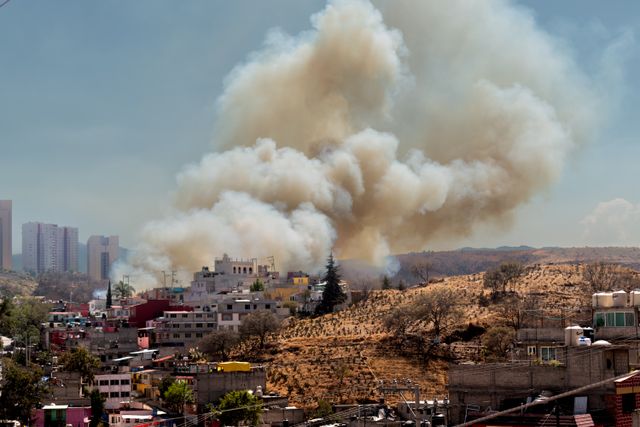

Air pollution has traditionally been managed by measuring what is already happening. Monitoring stations record concentrations of pollutants, environmental agencies publish air-quality readings, and public authorities respond when pollution reaches concerning levels. This approach is essential, but it is largely reactive. By the time a monitoring network detects a severe pollution episode, people may already have been exposed to harmful air.
Artificial intelligence is creating the possibility of a more predictive approach. Instead of simply asking how polluted the air is at a particular moment, cities can increasingly ask where pollution may be coming from, how emissions could move through an urban environment, which conditions could cause concentrations to rise, and whether an emerging pattern deserves intervention before it becomes a major public-health concern.
This does not mean AI can independently prevent pollution or accurately predict every environmental emergency. Its value lies in combining large amounts of information that would be difficult to analyze manually. Air-quality measurements, satellite observations, traffic patterns, weather conditions, industrial activity, construction data, land-use information and historical pollution records can potentially be analyzed together to identify patterns and anomalies.
For cities facing increasingly complex pollution challenges, this could represent a shift from simply monitoring pollution toward understanding its sources and anticipating how those sources may affect communities.
Why Identifying the Source of Pollution Is Difficult
Knowing that pollution levels are elevated is not the same as knowing why they are elevated. Urban air contains pollutants produced by multiple sources, including transportation, industrial activity, construction, power generation, waste burning, residential fuel use, and other activities. These sources can operate simultaneously and their contributions can change depending on location and weather.
Meteorological conditions add another layer of complexity. Wind direction, atmospheric stability, temperature, humidity, rainfall and boundary-layer conditions influence how pollutants are transported and dispersed. Pollution recorded in one part of a city may therefore have originated somewhere else.
Seasonal conditions can make source identification even more difficult. A city may experience different combinations of pollution sources during winter, summer, monsoon periods or agricultural burning seasons. Traffic emissions may dominate certain corridors while industrial or construction emissions may be more significant in other areas.
Traditional monitoring systems provide essential measurements, but a limited number of fixed stations cannot capture every variation across a large metropolitan area. This is where computational modelling and AI-based analysis can potentially provide additional insight.
How Artificial Intelligence Can Analyze Urban Pollution
AI systems are particularly useful when a problem involves large and diverse datasets. Pollution analysis is an example of such a problem because environmental information can arrive from many sources and at different time scales.
A machine-learning system can be trained using historical relationships between pollutant concentrations, weather conditions, traffic activity and other variables. Once trained and properly validated, such a system can identify patterns associated with pollution increases.
For example, an AI model may learn that particular combinations of wind direction, traffic density and atmospheric conditions are frequently associated with elevated concentrations in a specific urban zone. If similar conditions emerge again, the system can flag the area for closer monitoring.
This is different from simply predicting an air-quality index. A source-oriented system attempts to connect observed or predicted pollution patterns with potential contributing activities or locations. The output is therefore more useful for environmental investigation because it can help officials decide where additional measurements or inspections may be warranted.
Combining Sensors, Satellites and AI
The effectiveness of AI depends heavily on the quality and diversity of the data available to it. Modern cities can potentially combine information from ground-based air-quality sensors with satellite observations and other environmental datasets.
Ground stations provide detailed local measurements of pollutants. Their strength is accuracy and continuous monitoring at specific locations, although their geographic coverage can be limited.
Satellite-based observations can provide broader spatial information. Depending on the instrument and pollutant, satellite data can help researchers observe atmospheric patterns across large regions. Satellite information can be particularly valuable when combined with ground measurements because it provides a wider environmental context.
AI can help integrate these different forms of information. Instead of examining each dataset separately, algorithms can search for relationships between them. This can help researchers develop higher-resolution pollution maps and identify areas where observed concentrations do not match expected patterns.
The result could be a more dynamic understanding of urban air quality, where pollution is treated as a moving and changing system rather than a collection of isolated readings.
Traffic as a Predictive Pollution Signal
Transportation is one of the most important variables in urban pollution analysis. Vehicle emissions can vary according to traffic volume, vehicle type, fuel, road conditions, driving behaviour and congestion.
AI can analyze traffic data alongside air-quality information to identify correlations between road activity and pollution. Traffic cameras, connected infrastructure, navigation data and transportation sensors can potentially provide information about vehicle movement without relying exclusively on traditional traffic counts.
A predictive system could identify situations in which unusual congestion coincides with rapidly increasing pollution concentrations. This information could help city authorities investigate whether traffic-related emissions are contributing significantly to the observed pattern.
However, correlation does not automatically prove causation. An increase in traffic and pollution at the same time may be influenced by weather or other sources. AI-generated results should therefore be treated as analytical evidence that requires environmental expertise and, where necessary, additional measurements.
Industrial Pollution and Anomaly Detection
Industrial areas present another important application for AI. Large facilities may have regulated emissions and monitoring requirements, but environmental authorities may still need to determine whether unusual pollution patterns are associated with specific locations or operating conditions.
Machine-learning systems can be used for anomaly detection. Instead of looking only for predetermined pollution levels, an algorithm can learn what normal patterns look like and identify deviations.
For example, if a monitoring network usually observes a particular pollution profile under specific weather conditions but suddenly records an unusual concentration pattern, an AI system could flag the anomaly. Investigators could then determine whether the change is related to industrial activity, meteorology, transportation, waste burning or another factor.
This can make environmental monitoring more targeted. Rather than inspecting every possible source with the same intensity, authorities could use analytical systems to identify areas where additional investigation may be useful.
Waste Burning, Construction and Other Hidden Sources
Some urban pollution sources can be difficult to monitor consistently because they are dispersed or temporary. Waste burning, construction activity, road dust and small-scale combustion are examples.
AI systems can potentially combine visual data, sensor readings, weather information and geographic patterns to identify unusual activity. Computer vision may help detect smoke or construction-related conditions in appropriate monitoring environments, while environmental models can examine whether pollution patterns are consistent with those observations.
This could be particularly useful for cities where pollution sources change rapidly. A temporary emission event may disappear before a conventional inspection team reaches the location. Automated alerts could provide an opportunity for faster verification.
Again, AI should function as an early-warning and investigation-support mechanism rather than an unquestioned enforcement system. Human verification remains essential before attributing responsibility.
Predicting Pollution Before It Peaks
Source identification is only one part of the potential value of AI. The same analytical infrastructure can be used to forecast pollution levels before they reach dangerous concentrations.
Weather forecasting already provides information about atmospheric conditions. When combined with historical pollution data and real-time sensor measurements, machine-learning models can estimate how pollution may evolve over the next several hours or days.
This creates the possibility of earlier public-health communication. Schools, hospitals, outdoor workers and vulnerable populations could potentially receive warnings before a pollution episode reaches its maximum intensity.
For city authorities, early forecasts could also support operational decisions. Traffic management, construction scheduling, industrial coordination and other temporary measures could be considered when forecasts indicate a high-risk pollution period.
The objective is not to eliminate every pollution episode through prediction. Rather, prediction can increase the amount of time available for decision-making.
AI and Public-Health Protection
The public-health importance of pollution prediction comes from the relationship between air quality and exposure. Pollution is not merely an environmental measurement; it can affect human health when people breathe contaminated air.
AI could potentially help connect environmental conditions with population exposure. A city could combine pollution forecasts with information about population density, schools, hospitals, workplaces and transportation patterns to identify areas where exposure may be particularly significant.
This could support more targeted communication. Instead of treating an entire metropolitan area as equally exposed, authorities could identify locations where pollution concentrations and human activity overlap.
Such systems must be designed carefully because population-level data can raise privacy and governance concerns. Environmental intelligence should not become a justification for unnecessary surveillance of individuals.
The Importance of High-Quality Data
AI cannot solve a data problem simply by being sophisticated. Poor-quality, incomplete or biased data can produce unreliable results.
Monitoring stations may be unevenly distributed across a city. Some neighbourhoods may have extensive environmental measurements while others have very little information. If an AI model is trained primarily on data from well-monitored areas, its predictions may be less reliable in areas with limited observations.
Sensor calibration is also important. Low-cost sensors can expand monitoring coverage, but their readings may differ from those of reference-grade instruments. Combining multiple data sources therefore requires careful calibration, validation and uncertainty assessment.
A trustworthy AI pollution system should communicate not only its prediction but also the level of confidence associated with that prediction. Environmental decision-makers need to understand whether a model is identifying a strong signal or merely detecting a weak statistical association.
The Risk of Treating AI Predictions as Facts
One of the greatest dangers in AI-assisted environmental management is overconfidence. A model may identify a likely pollution source, but that does not automatically establish legal responsibility.
Pollution is influenced by interconnected physical processes. Weather can transport emissions across administrative boundaries, multiple sources can produce similar chemical signatures, and datasets may contain measurement errors.
For this reason, AI should support environmental scientists, regulators and public authorities rather than replace them. A model can identify where to look; field investigations, laboratory testing and regulatory procedures can help determine what actually happened.
This distinction is particularly important when AI-generated findings could result in penalties, public accusations, or restrictions on businesses and communities.
Creating an Early-Warning Environmental Infrastructure
The most promising vision for AI-assisted pollution management is not a single algorithm but an integrated environmental intelligence system.
Such a system could continuously receive information from sensors, satellites, weather services, traffic networks and other relevant sources. AI models could analyze those streams, identify unusual patterns, estimate pollution levels and generate alerts for areas requiring further investigation.
The system could then connect environmental intelligence with institutional response. Monitoring teams could receive location-specific alerts, public-health authorities could prepare communications, and city planners could use accumulated information to understand recurring pollution patterns.
Over time, this could create a feedback loop in which every pollution episode contributes additional information to future models.
What Cities Need Beyond AI
Technology alone cannot solve urban pollution. Even the most advanced AI system cannot compensate for weak environmental regulation, inadequate monitoring infrastructure, poor enforcement, or insufficient coordination between government departments.
Cities need reliable sensors, trained environmental professionals, transparent data systems, effective regulatory institutions and clearly defined response procedures. AI becomes useful when it is integrated into this larger structure.
There is also a need for public transparency. When governments use AI to analyze environmental conditions, residents should have access to understandable information about what the system measures, what its limitations are, and how its findings influence decisions.
Trust is especially important in public-health applications. People are more likely to accept warnings and recommendations when they understand how those warnings were generated.
The Future of Predictive Pollution Management
The long-term potential of AI lies in moving urban environmental management from delayed response toward anticipation. Instead of waiting for pollution to reach extreme levels and then asking what happened, cities could increasingly monitor conditions continuously and investigate emerging patterns earlier.
This could transform environmental management into a more dynamic process. Pollution sources could be studied across time, neighbourhoods could be compared using richer datasets, and recurring patterns could inform long-term urban planning.
AI could also contribute to broader sustainability efforts by helping cities understand how transportation, industrial activity, construction, energy consumption and land-use patterns interact with air quality.
The technology will not make pollution disappear. Its potential value is more practical: helping people understand a complex environmental system sooner and with greater precision.
Conclusion: From Reactive Monitoring to Environmental Intelligence
The question is no longer simply whether cities can measure pollution. Modern environmental monitoring already provides enormous amounts of information. The more difficult challenge is turning that information into timely, reliable and actionable knowledge.
Artificial intelligence could help cities connect pollution measurements with weather conditions, traffic, industrial activity, satellite observations and historical patterns. These connections may help identify potential pollution sources earlier, forecast emerging episodes, and provide public authorities with more time to investigate and respond.
However, AI-generated predictions should not be treated as unquestionable evidence. Their reliability depends on data quality, model validation, transparent methodology, appropriate uncertainty measures and human oversight. Environmental enforcement and public-health decisions still require evidence and institutional accountability.
If these safeguards are built into the system, AI could become an important component of modern urban environmental management. The ultimate objective would not simply be smarter pollution monitoring, but earlier recognition of environmental risks and better-informed decisions designed to protect the people who live, study and work in cities.
Online Internship with Certificate
You may be interested

Why Tracking Satellites Has Become a Strategic Technology for Modern Nations
Anshika Jain - Oct 02, 2026Space has become an increasingly important part of modern infrastructure. Satellites support communications, navigation, weather forecasting, agriculture, disaster management, scientific research, financial services, television, internet connectivity and…

Why Food Hygiene Is Becoming a Major Student-Activism Issue
Anshika Jain - Oct 02, 2026Food is one of the most basic parts of campus life, yet it is also one of the areas where students can feel that they have the…

From Hostel Rules to Security: Women Students Demanding Participation in Decisions
Anshika Jain - Oct 02, 2026For many women students, university life is not limited to classrooms, examinations, assignments, internships, and career preparation. It also involves navigating a set of institutional rules that…
Most from this category

Nirma University Women’s Safety Protest: Why Students Held a “Black Day” on Campus
Anshika Jain - Oct 02, 2026
The 527-Day Hunt: How Investigators Tracked a Suspect Linked to the Pahalgam Attack
Anshika Jain - Oct 02, 2026
When a Celebrity Becomes Part of a Regulatory Investigation: What Happens Next?
Anshika Jain - Oct 01, 2026
The Evidence Problem in High-Profile Crime Cases: Why Early Investigation Matters
Anshika Jain - Oct 01, 2026
Nirma University Women’s Safety Protest: Why Students Held a “Black Day” on Campus
Anshika Jain - Oct 02, 2026The 527-Day Hunt: How Investigators Tracked a Suspect Linked to the Pahalgam Attack
Anshika Jain - Oct 02, 2026When a Celebrity Becomes Part of a Regulatory Investigation: What Happens Next?
Anshika Jain - Oct 01, 2026