

Why Tracking Satellites Has Become a Strategic Technology for Modern Nations

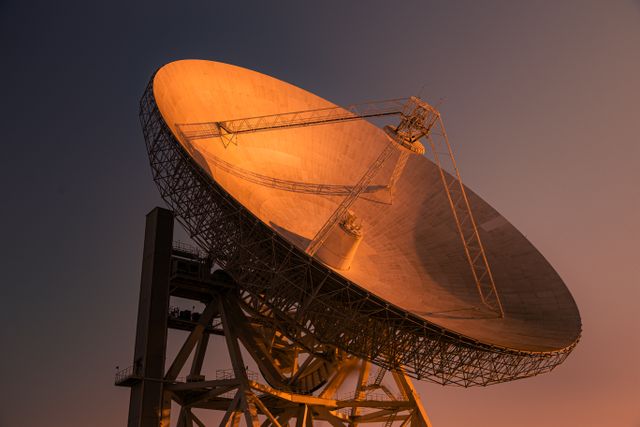

Space has become an increasingly important part of modern infrastructure. Satellites support communications, navigation, weather forecasting, agriculture, disaster management, scientific research, financial services, television, internet connectivity and many other activities that influence everyday life. As the number of objects operating in orbit continues to grow, however, another technological capability has become increasingly important: the ability to track and understand what is happening in space.
Satellite tracking refers broadly to the ability to determine and monitor the position, movement and orbital behaviour of satellites and other space objects. It involves a combination of ground-based sensors, radar systems, optical telescopes, computational models, databases and increasingly sophisticated data-processing technologies. For modern nations, this capability is becoming strategically important because space is no longer an isolated scientific domain. It has become closely connected to communications, economic activity, national infrastructure, disaster response and security.
The importance of satellite tracking is therefore not simply about knowing where a spacecraft is located. It is about maintaining awareness of an increasingly crowded and complex orbital environment. When governments and space operators understand how objects are moving, they can better manage potential collisions, protect important spacecraft, coordinate launches and respond to unexpected changes in orbit.
The Rapid Expansion of the Orbital Environment
The space environment has changed dramatically from the early decades of satellite exploration. The number of satellites has increased substantially, with commercial companies deploying large constellations designed to provide communications, internet connectivity, Earth observation and other services.
Alongside operational satellites, orbit contains rocket bodies, inactive spacecraft, fragments generated by previous missions and other forms of space debris. Every additional object increases the complexity of maintaining an accurate picture of the environment.
This creates a basic challenge. Space may appear enormous, but useful orbital regions are limited by altitude, inclination, mission requirements and technical constraints. Satellites operating in similar orbital regions can encounter one another, while fragments travelling at extremely high velocities can pose serious risks even when they are relatively small.
Satellite tracking provides the information required to distinguish active spacecraft from other objects and understand their trajectories. Without reliable tracking, operators would have significantly less information available when making decisions about orbital manoeuvres or collision avoidance.
Space Situational Awareness and National Infrastructure
One of the main strategic concepts associated with satellite tracking is space situational awareness. It involves developing an understanding of objects and activities in space, including their positions, trajectories and behaviour.
This matters because modern economies depend on space-based systems. Navigation services can support transportation, logistics, agriculture, telecommunications and timing systems. Earth-observation satellites contribute to weather forecasting, environmental monitoring and disaster response. Communication satellites support connectivity across large geographic areas.
A disruption to important satellite infrastructure could therefore have consequences extending beyond the space sector. Governments need to understand the orbital environment to protect systems that support critical services.
Tracking does not eliminate these risks, but it provides information that can help operators identify potential problems and respond to them.
Why Orbital Congestion Creates New Challenges
The growth of satellite constellations has introduced a new dimension to orbital management. Large numbers of satellites can operate together as coordinated networks, providing continuous or near-continuous coverage across large areas.
These systems can deliver significant benefits, but their scale also increases the importance of coordination. Operators need accurate information about the positions and trajectories of their own spacecraft and potentially relevant objects around them.
A collision between two functioning satellites could create additional debris, potentially affecting other spacecraft. This possibility is often described through the concept of a cascading debris environment, in which collisions generate fragments that increase the risk of further collisions.
The likelihood and consequences of such scenarios depend on numerous factors, but the underlying principle is clear: as the number of objects increases, maintaining accurate orbital information becomes increasingly valuable.
The Role of Radar in Satellite Tracking
Radar is one of the important technologies used to observe objects in space. Ground-based radar systems can transmit electromagnetic signals and analyze their reflections to detect and characterize objects.
Radar has particular advantages because it can operate regardless of daylight and can be useful under conditions in which optical observation is difficult. Different radar systems have different capabilities, including the types and sizes of objects they can detect and the orbital regions they can monitor.
Data from radar observations can be combined with information from other sensors to improve estimates of an object’s trajectory. Repeated observations allow analysts to determine how an object is moving and identify changes in its orbital path.
The resulting information can support collision-risk assessments and broader space-domain awareness.
Optical Telescopes and the Importance of Multiple Sensors
Optical tracking provides another method of observing objects in space. Telescopes can detect sunlight reflected from satellites and debris, allowing observers to estimate their positions and movements.
Optical systems can be particularly useful for observing objects that are difficult to detect with certain radar systems. Their effectiveness depends on factors such as lighting conditions, weather and the object’s physical characteristics.
Because no single sensor can observe every object under every condition, modern tracking architectures can combine radar, optical observations and other data sources. Multiple observations can be used to improve orbital estimates and reduce uncertainty.
This multi-sensor approach is important because tracking is fundamentally a data-integration problem. The objective is not merely to detect an object once but to maintain an accurate understanding of its movement over time.
Artificial Intelligence and Orbital Data
The growing number of satellites and observations has created enormous volumes of data. Artificial intelligence and machine-learning techniques can potentially help analysts process this information more efficiently.
Algorithms can identify patterns in large datasets, compare new observations with historical orbital information and help detect unusual changes. Automated systems may also assist with classification and prediction tasks that would be difficult to perform manually at the same scale.
AI does not replace physical observation. It operates on data produced by sensors and models. The quality of its output therefore depends on the quality of the underlying information and the assumptions built into the system.
For this reason, human expertise remains important. Orbital analysts need to understand the physical principles behind satellite movement and assess whether an algorithmic result is consistent with available observations.
Tracking Satellites and Collision Avoidance
One of the most practical applications of satellite tracking is collision avoidance. Operators can use orbital information to estimate whether two objects may approach one another closely.
If a potential conjunction is identified, operators can evaluate the uncertainty surrounding the prediction and determine whether an orbital manoeuvre may be appropriate. Such decisions can be complex because changing the orbit of one satellite can create new interactions with other objects.
Accurate tracking is therefore essential. If the estimated location of an object contains significant uncertainty, operators may have difficulty determining the actual level of risk.
Improving tracking accuracy can provide operators with better information when evaluating these situations. It can also help reduce unnecessary manoeuvres, which consume fuel and may shorten the operational life of spacecraft.
The Strategic Dimension of Space Tracking
Satellite tracking has strategic importance because space-based infrastructure can influence national capabilities across communications, navigation, Earth observation and other sectors.
Governments therefore have an interest in understanding the environment in which their satellites operate. Tracking can provide information about the location of national spacecraft as well as other objects that could potentially affect them.
The strategic dimension extends beyond protecting satellites from accidental collisions. Space systems can be affected by environmental conditions, technical failures and intentional interference. Understanding what is happening in orbit can therefore contribute to broader national space-domain awareness.
At the same time, satellite tracking should not automatically be interpreted as evidence of hostile activity. Observing an object and determining its trajectory are fundamentally different from determining its purpose or intentions. Reliable analysis requires evidence and appropriate context.
Commercial Space Companies Are Changing the Tracking Landscape
Satellite tracking was once strongly associated with government space agencies and military organizations. The growth of commercial space companies has changed that landscape.
Private companies now operate significant satellite fleets and participate in launch services, communications, Earth observation and other space activities. These companies have strong operational incentives to monitor their spacecraft and manage orbital risks.
Commercial tracking services are also becoming part of the broader space ecosystem. Private organizations can collect observations, process orbital data and provide services to satellite operators.
This creates both opportunities and challenges. A larger tracking ecosystem can increase the amount of available information, but different organizations may use different datasets, models and standards. Effective coordination and data-sharing frameworks therefore become increasingly important.
Space Debris and the Long-Term Sustainability of Orbit
One of the biggest reasons satellite tracking matters is the growing concern over space debris. Defunct satellites, spent rocket stages, fragments from collisions and other objects can remain in orbit for long periods depending on their altitude.
Some debris objects are difficult to detect because of their size, yet they can still pose risks to operational spacecraft. Tracking systems attempt to identify and monitor as many relevant objects as possible so that operators can make informed decisions.
Long-term orbital sustainability requires more than tracking. It also involves responsible mission design, satellite disposal practices, collision avoidance, debris mitigation and international coordination.
Tracking is nevertheless a foundational capability because authorities and operators cannot manage objects they cannot adequately observe.
International Cooperation in Space Tracking
Satellites do not remain within national borders in the way terrestrial infrastructure does. Objects in orbit can pass over multiple countries and interact with a shared orbital environment.
This makes international cooperation important. Governments and organizations can exchange information about orbital objects, coordinate observations and develop standards for responsible space operations.
International cooperation can also reduce uncertainty. If different tracking networks observe the same object, combining information can potentially improve the accuracy of its estimated trajectory.
However, space is also an area of strategic competition. Governments may not share every piece of information they possess, particularly when data could have security implications. This creates a complicated balance between cooperation for orbital safety and protection of sensitive capabilities.
Why Accurate Tracking Matters During Emergencies
Satellite tracking can become especially important when spacecraft behave unexpectedly. A satellite may experience a technical failure, lose communication, change its trajectory, or fragment.
When such events occur, external observations can help determine what happened and where resulting objects may be located.
This information can be important for protecting nearby spacecraft. It can also help operators distinguish between a functioning satellite, a malfunctioning spacecraft and newly created debris.
Rapid identification can reduce uncertainty during an already complex situation. The ability to respond depends partly on the quality and availability of tracking infrastructure.
The Future of Space Traffic Management
As satellite populations continue to grow, space traffic management is becoming an increasingly important policy and technological field. The objective is to develop systems and practices that allow spacecraft to operate safely within a shared orbital environment.
Satellite tracking forms the foundation of this effort. Operators need reliable information about surrounding objects before they can make effective traffic-management decisions.
Future systems are likely to involve increasingly sophisticated combinations of ground-based sensors, space-based observations, automated data processing and predictive modelling. The objective will be to provide faster and more accurate information while managing the uncertainty inherent in orbital prediction.
Standardized data formats and improved coordination could also make it easier for different organizations to exchange relevant information.
The Economic Importance of Orbital Awareness
The strategic importance of satellite tracking is also connected to economics. Space infrastructure supports industries ranging from telecommunications and navigation to agriculture, logistics, insurance and weather services.
As dependence on satellite systems increases, the economic consequences of orbital disruptions could also become more significant.
Investing in tracking capabilities can therefore be viewed as part of protecting critical infrastructure. Governments and companies need information that allows them to manage risks to expensive spacecraft and the services those spacecraft provide.
The economic dimension also reinforces the importance of sustainable space operations. The long-term usability of valuable orbital regions depends partly on preventing avoidable collisions and managing debris responsibly.
Conclusion: Knowing the Space Environment Is Becoming a Strategic Capability
Satellite tracking has evolved from a specialized technical activity into an increasingly important component of modern space infrastructure. As more governments and companies place satellites into orbit, the need to understand the surrounding environment becomes more urgent.
Tracking systems help identify objects, estimate trajectories, support collision avoidance, monitor debris and provide information for broader space situational awareness. Radar, optical telescopes, satellite observations, computational models and artificial intelligence can work together to process increasingly complex orbital data.
The strategic importance of these capabilities comes from the growing dependence of modern societies on space-based infrastructure. Communications, navigation, weather forecasting, Earth observation and numerous commercial services rely on satellites operating safely in orbit.
Yet tracking alone cannot guarantee the sustainability or security of space. It must be combined with responsible mission planning, debris mitigation, effective regulation, international cooperation, reliable data standards and human expertise.
The central challenge for modern nations is therefore not simply reaching space, but developing the ability to understand and manage an increasingly crowded orbital environment. As space becomes more economically and strategically significant, knowing what is happening around a nation’s satellites is becoming an important part of protecting both space assets and the terrestrial systems that depend upon them.
Online Internship with Certificate
You may be interested

Why Do Heavy Rains Disrupt Transport Beyond the Monsoon Season?
Anshika Jain - Oct 23, 2026Heavy rainfall is often associated with India's monsoon season, when roads become waterlogged, railway services face delays and flights are diverted or cancelled. However, transport disruption is…

Women’s Safety After Dark: Why Street Design, Police Response Must Work Together
Anshika Jain - Oct 23, 2026A city’s safety cannot be measured only by its crime statistics, the number of police stations it operates or the cameras installed across its streets. For women,…
Paper Leaks and Accountability: Competitive Examinations More Trustworthy?
Anshika Jain - Oct 23, 2026Competitive examinations are among the most consequential gateways to education and employment in India. Examinations such as NEET, JEE, CUET, UGC-NET, UPSC and various government recruitment tests…
Most from this category
AI in Examinations: Institutions Detect Cheating Without Accusing Students?
Anshika Jain - Oct 23, 2026

Missing Children and Delayed Investigations: Inter-State Police Coordination Improve?
Anshika Jain - Oct 23, 2026
When a Case Is Solved Years Later: How Forensic Advances Can Reopen Cold Investigations
Anshika Jain - Oct 22, 2026
AI in Examinations: Institutions Detect Cheating Without Accusing Students?
Anshika Jain - Oct 23, 2026Medical Intern Stipend Protests: India’s Healthcare Training System
Anshika Jain - Oct 23, 2026Missing Children and Delayed Investigations: Inter-State Police Coordination Improve?
Anshika Jain - Oct 23, 2026