AI Voice Cloning Scams: How Can Families Verify an Emergency Call Before Sending Money?

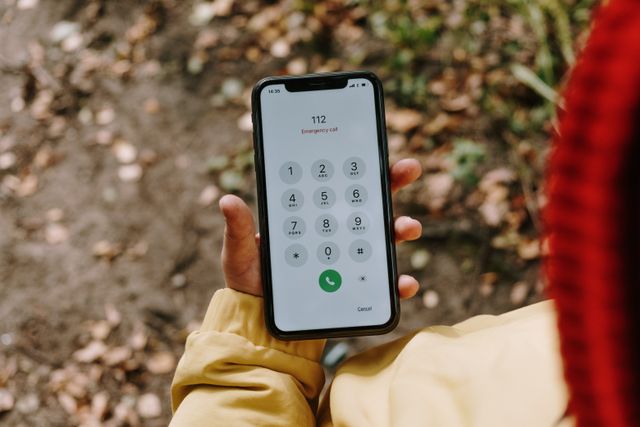

Imagine receiving a phone call from your child, sibling or parent. The voice sounds familiar, but the message is frightening: there has been an accident, someone is in police custody, or a loved one urgently needs money. The caller sounds distressed and insists that there is no time to explain. They ask you to transfer funds immediately and warn you not to contact anyone else.
In an ordinary situation, recognising a familiar voice might provide reassurance. However, artificial intelligence has changed the reliability of that instinct. AI voice cloning technology can generate speech that imitates a person’s voice using recordings obtained from online videos, social media posts, voice messages or other audio sources. Criminals can exploit this capability to make fraudulent emergency calls appear genuine.
The Federal Trade Commission has warned that scammers can use AI-generated voices to strengthen family emergency scams, while the FBI’s Internet Crime Complaint Center has identified AI-generated audio as a tool for impersonation and financial fraud. These schemes exploit not only technology but also the emotional bonds that make people respond quickly when someone they love appears to be in danger.
The most effective defence is not to become an expert at detecting synthetic voices. Modern voice cloning can be convincing enough that listeners may not reliably distinguish it from genuine speech. Instead, families need a consistent verification process that separates the emotional urgency of a call from the decision to send money. By establishing family code words, independently contacting the person, checking claims through trusted channels and preparing for emergencies in advance, households can reduce the risk of being manipulated into a costly mistake.
Understanding AI Voice Cloning Scams
How Voice Cloning Technology Works
AI voice cloning uses machine-learning systems to reproduce characteristics of a person’s speech, including aspects of vocal tone, rhythm, pronunciation and accent. Depending on the technology and the quality of the available recordings, a system may generate new speech that resembles the original speaker without requiring that person to record every sentence.
Publicly available recordings can provide material for imitation. A person who regularly uploads videos, posts voice messages or appears in recorded interviews may have unknowingly made samples of their voice accessible to strangers. Criminals may also obtain recordings through direct interactions, compromised accounts or other sources. The availability of audio does not mean that every recording will produce a perfect replica, but it can provide enough material to support a convincing impersonation attempt.
The technology itself has legitimate uses, including accessibility support, voice restoration and authorised synthetic narration. The risk arises when a voice is copied or generated without permission and used to deceive someone. In a family emergency scam, the imitation becomes a tool for social engineering: the criminal uses a familiar voice to make a false story appear credible and encourage an immediate financial response.
Why Family Emergency Scams Are Especially Effective
Family emergency scams succeed because they exploit powerful emotional reactions. When a caller claims that a child has been injured or a relative has been arrested, the recipient may experience fear, confusion and an overwhelming desire to help. Under these conditions, people may pay less attention to inconsistencies or unusual requests than they normally would.
AI-generated speech can make this manipulation more effective by removing one of the traditional clues of impersonation. A caller who sounds like a family member may appear more trustworthy than someone who simply claims to be that person. The scammer may also combine the voice with personal information, a familiar name or details about a real location to make the story more believable.
The caller may introduce a second person, such as someone claiming to be a police officer, lawyer, doctor or hospital employee. This supposed authority figure may confirm the emergency and demand payment for bail, treatment, transport or another urgent expense. The involvement of multiple voices does not establish that the story is genuine; the people may be cooperating in the same fraud.
Warning Signs of an AI Voice Cloning Scam
Urgency, Secrecy and Emotional Pressure
One of the strongest warning signs is pressure to act before verification is possible. A caller may claim that money must be transferred within minutes, that a payment is required to prevent an arrest, or that a relative will be harmed if assistance is delayed. The person may insist that you must not call other family members because doing so could make the situation worse.
These demands are designed to prevent independent checking. A legitimate emergency can certainly involve urgency, but urgency does not make an unverified payment safe. A genuine relative should not be the only source of evidence for a financial decision when the request arrives through an unexpected call.
Families should treat secrecy requirements, threats and attempts to prevent callbacks as reasons to pause. The appropriate response is to explain that you need to verify the situation and then use a separate, trusted communication channel. If the caller becomes more aggressive when you try to verify the story, that behaviour increases the need for caution.
Unusual Payment Instructions
Payment methods can provide important clues. Scammers may request cryptocurrency, gift cards, money transfers or payments to unfamiliar accounts because these methods can be difficult to reverse or recover. They may also direct the recipient to use an instant payment application or transfer funds through an intermediary.
A familiar voice does not make an unusual payment request legitimate. Before sending money, the family should establish who will receive it, why the payment is necessary and whether the stated organisation or individual can independently confirm the request.
In India, this is particularly relevant when callers ask for an urgent UPI transfer, request a QR-code payment or instruct the recipient to send money to an unfamiliar bank account. UPI is a legitimate payment system, but a transfer made to a scammer may be difficult to recover. Never approve a payment solely because the caller sounds like a trusted relative.
Why Listening for Strange Audio Is Not Enough
Some synthetic voices may contain unusual pauses, inconsistent pronunciation, unnatural emotional expression or audio artefacts. Poor network quality can also make a genuine voice sound distorted, while a sophisticated synthetic voice may sound natural. Consequently, these features cannot provide a dependable test of identity.
The FBI has cautioned that AI-generated voices can closely resemble genuine voices and recommends independently verifying callers rather than relying on how authentic they sound.
Families should therefore avoid relying on online AI voice detectors as their main safeguard. Detection tools may produce incorrect results, and a recording may be too short or too compressed for a reliable assessment. The safer question is not whether the voice sounds artificial, but whether the person and the emergency can be verified through a channel the caller does not control.
How Families Can Verify an Emergency Call Before Sending Money
Step One: Pause the Payment and Create Time to Think
The first action should be to stop the financial decision from becoming an automatic response to fear. Do not transfer money while the caller is pressuring you, and do not disclose banking credentials, passwords, PINs or one-time passwords. Even if the voice appears genuine, the request should remain unverified until an independent check has been completed.
A useful family rule is that no emergency payment will be made solely on the basis of an unexpected call. This rule should apply to everyone, including parents, adult children, grandparents and relatives who normally manage family finances. Having an agreed procedure makes it easier to resist pressure because the recipient can explain that verification is a standard family practice rather than a personal accusation.
If the caller claims that someone is in immediate physical danger, the family should contact appropriate emergency services or a trusted local person who can check the situation. Financial verification and physical safety are separate issues: the family can take a claimed emergency seriously without immediately sending money to an unverified recipient.
Step Two: Hang Up and Call the Person Back
The most important verification method is to end the incoming call and contact the supposed family member through a number already saved in your phone or independently confirmed through a trusted source. Do not simply press a callback button, use a number supplied during the suspicious conversation or continue communicating through a channel that the caller has introduced.
If the person answers their usual number and confirms that they are safe, the family can investigate why the suspicious call occurred. If they do not answer, that absence alone does not prove either a scam or a genuine emergency. The phone may be switched off, the person may be travelling or the network may be unavailable.
In that situation, contact another trusted family member, a close friend or someone who can independently establish the person’s whereabouts. If the claim involves a hospital, police station or other institution, locate its official contact details independently and ask whether the situation can be confirmed through appropriate procedures.
This method works because it separates the verification channel from the original contact. The scammer may control the incoming call, but they should not automatically control the trusted number or independent source used to check the claim.
Step Three: Establish a Family Safe Word
Families can establish a private code word or short phrase that is known only to trusted members and used when an unusual emergency request requires identity verification. The phrase should not be a publicly visible family name, birthday, pet name or another detail that someone could easily discover through social media.
A safe word is most useful when family members agree in advance on how it will be used. For example, a person requesting emergency financial assistance might be expected to provide the agreed phrase before the family considers the request. If the caller cannot provide it, the family should not treat the voice alone as proof of identity.
However, a code word is not a complete security system. It could be exposed through a compromised account, overheard conversation or careless sharing. Families should avoid sending the phrase through the same suspicious communication channel and should change it if they believe it has been disclosed.
The FBI’s guidance on generative AI fraud specifically recommends establishing a secret word or phrase with family members.
A well-managed code word adds a useful verification layer, particularly when combined with a callback to a trusted number.
Step Four: Ask Questions Without Relying on Them as the Only Proof
A family member may ask a question about a recent shared experience, an ongoing family matter or a detail that would be difficult for an outsider to know. This can sometimes expose a weak impersonation attempt, especially if the caller responds vaguely or changes the subject.
However, personal questions should be treated as supplementary checks rather than definitive proof. Information about family relationships, recent events, travel plans and personal interests may be available through social media or compromised accounts. A scammer may also use a convincing voice to distract the recipient while relying on information collected beforehand.
The better approach is to combine a private verification phrase with independent contact and confirmation of the emergency itself. If the caller claims that a relative has been detained, for instance, the family should verify the claim through appropriate official channels rather than accepting a plausible answer to a personal question.
Step Five: Verify the Recipient Before Authorising a Transfer
Even when a genuine emergency has been confirmed, the requested payment deserves separate verification. A real family member may be in difficulty while a criminal attempts to exploit the situation by impersonating a lawyer, hospital representative or intermediary. Identity verification and payment verification should therefore be treated as two distinct decisions.
If money is supposedly required by a hospital, legal representative or other organisation, contact that organisation through independently sourced details and ask about its legitimate payment process. If the family member needs assistance directly, speak to them through the trusted channel and establish the appropriate way to provide it.
Never assume that a bank account or UPI ID is legitimate because the caller provides a convincing explanation. Confirm the recipient details independently and be particularly cautious when payment instructions change unexpectedly, a third party insists on receiving the funds or the caller demands secrecy.
The safest family policy is simple: no payment should be made until the identity of the person requesting assistance, the circumstances of the emergency and the intended recipient have been independently checked.
Preparing Families Before a Scam Occurs
Create a Shared Emergency Verification Plan
Families should agree on a common procedure before an unexpected call creates confusion. The plan can specify which trusted numbers to call, which relatives should be contacted if the first person is unavailable and how emergency payment requests will be verified. It should also identify trusted people who can physically check on an elderly relative, student or family member living away from home.
The plan should be easy to follow under stress. A complicated process is unlikely to be used consistently during a frightening call. Families can practise a simple sequence: pause the payment, end the suspicious call, contact the person through a trusted number, verify the emergency independently and only then consider financial assistance.
It is particularly important to include older adults and people who may be less familiar with AI-generated media. The purpose should be education rather than blame. Anyone can be manipulated by an emotionally convincing message, and people should feel comfortable reporting a suspicious call even if they initially believed it was genuine.
Reduce Unnecessary Exposure of Voice Recordings
Public audio can make voice imitation easier, so families may choose to review what they share online. Privacy settings can limit who can access personal videos, and public posts containing sensitive travel details or real-time location information can be restricted where practical. Families should also be cautious about sharing personal information with unfamiliar callers or online contacts.
Nevertheless, deleting every recording is neither realistic nor necessary. Voice recordings are a normal part of modern communication, and legitimate uses of voice technology are extensive. Privacy measures should reduce unnecessary exposure without creating the impression that every public recording inevitably leads to fraud.
More importantly, privacy controls should complement verification practices rather than replace them. A scammer may obtain audio through sources that the family cannot fully control. The strongest protection remains a process that does not treat a familiar voice as sufficient evidence for a financial transaction.
Protect Accounts and Devices
Families should use strong, unique passwords and enable multi-factor authentication on important email, messaging and financial accounts. They should never disclose one-time passwords or authentication codes to a caller, even if that person claims to be a relative, bank employee or police officer. Unverified links and attachments should also be avoided, especially when a caller insists that they are needed to confirm an emergency.
These safeguards address related risks. Criminals may use a convincing voice to persuade someone to disclose credentials, install a malicious application or reveal information that can be used in later attacks. A family emergency scam can therefore be part of a wider attempt to compromise accounts or collect personal data.
The FBI advises users to independently verify new contact details, protect accounts with multi-factor authentication and avoid sharing authentication codes with other people.
What Should You Do If You Have Already Sent Money?
Contact Your Bank and Payment Provider Immediately
If you discover that you have transferred money in response to a suspected voice cloning scam, act quickly. Contact your bank or payment provider through its official app, website or verified customer service number. Explain that the transaction may be fraudulent and ask whether the transfer can be stopped, disputed, traced or otherwise addressed.
For UPI transactions, contact the relevant bank and payment application as soon as possible. Preserve the transaction reference number, payment details and any messages associated with the request. Recovery is not guaranteed, but prompt reporting may improve the chances of intervention before funds move further through the financial system.
In India, victims can report suspected cybercrime through the National Cyber Crime Reporting Portal at cybercrime.gov.in or call the national cybercrime helpline at 1930 for assistance with financial cyber fraud. The helpline and reporting portal are important channels for initiating a report, but contacting them does not guarantee that the money will be recovered.
Preserve Evidence and Report the Incident
Keep the incoming phone number, call time, messages, voice recordings where lawfully available, payment receipts, UPI IDs, bank account details supplied by the caller and any other relevant information. Do not delete conversations simply because they are upsetting or embarrassing. This evidence may help banks, payment providers and law enforcement investigate the incident.
Families should also inform other relatives if the scammer appeared to possess personal information or a convincing voice recording. This can help prevent the same impersonation attempt from targeting another household member. If the scam involved a compromised social media or messaging account, secure that account and review its recovery settings.
Most importantly, avoid paying anyone who promises guaranteed recovery in exchange for an upfront fee. Fraud victims may be targeted again by criminals pretending to be investigators, recovery specialists or officials who claim they can retrieve stolen money. Any additional offer should be independently verified before money or sensitive information is shared.
The Future of Voice Authentication and AI Fraud Prevention
Why Technology Alone Cannot Solve the Problem
Researchers and technology companies are developing ways to identify synthetic audio, authenticate communication sources and establish the provenance of digital content. Potential approaches include audio watermarking, detection systems and stronger verification methods built into communication platforms.
However, these methods have limitations. Audio can be compressed, edited or altered, while detection systems can produce false positives and false negatives. The Federal Trade Commission has discussed the limitations of watermarking and the need to consider authentication mechanisms that verify the origin of communications rather than relying exclusively on analysis of the voice itself.
For families, this means that an AI detector should not be the final authority on whether a caller is genuine. A tool that labels a recording as authentic may still be mistaken, and a suspicious-sounding recording may come from a genuine person using a poor connection. Independent identity checks and secure payment procedures remain necessary even as detection technology improves.
Building a Culture of Verification
The most sustainable defence against voice cloning scams is a culture in which verification is treated as a normal part of responding to unusual requests. Families should be able to question an urgent call without feeling that they are abandoning a loved one. Financial institutions and communication platforms can reinforce this behaviour by making suspicious-payment warnings clearer and providing accessible ways to report impersonation.
Schools, community organisations and digital literacy programmes can also explain how AI-generated voices work and why familiarity is no longer sufficient proof of identity. Such education should avoid creating unnecessary fear about artificial intelligence. The objective is to help people distinguish between the legitimate uses of the technology and the deceptive practices that exploit trust.
A good verification process is valuable beyond family scams. The same principles can protect against criminals impersonating employers, senior executives, government officials or financial service providers. Whenever a request involves money, confidential information or a consequential decision, identity should be confirmed through a separate and trusted channel.
Conclusion
AI voice cloning scams exploit one of the most powerful forms of human trust: the ability to recognise the voice of someone we love. By combining realistic speech imitation with frightening emergencies, secrecy and demands for immediate payment, criminals can pressure families into making financial decisions before checking the facts.
The solution is not to expect everyone to identify synthetic speech by listening carefully. Instead, families should build reliable habits that work even when the voice sounds completely authentic. Pausing before paying, calling back through a saved number, using a private family code word, contacting trusted third parties and independently confirming payment details can create multiple layers of protection.
Preparation is especially important because a person under emotional pressure may find it difficult to think through a complicated security procedure. A simple, shared family plan can make verification faster and easier when an unexpected call arrives.
Ultimately, a familiar voice should prompt concern and compassion, not automatic financial trust. Families can take every claimed emergency seriously while still confirming the identity of the caller and the destination of the money. In an era of increasingly convincing AI-generated audio, independent verification is one of the most practical ways to protect both family relationships and financial security.
Online Internship with Certificate
You may be interested

AI in Police Investigations: Automated Risk Scores Introduce Bias Into Law Enforcement
Anshika Jain - Oct 26, 2026Artificial intelligence is becoming an increasingly important part of modern law enforcement. Police departments and investigative agencies can use AI-powered tools to analyse large volumes of records,…

Can Synthetic Media Influence Elections? Challenges of Detecting Manipulated Political Content
Anshika Jain - Oct 26, 2026Elections depend on more than voting machines, polling stations, and ballot counting. They also depend on the information voters receive before making their decisions. Political speeches, interviews,…

Who Is Liable When an AI System Makes a False Accusation?
Anshika Jain - Oct 26, 2026Artificial intelligence is increasingly being used to identify suspicious transactions, detect potential fraud, monitor workplace activity, evaluate job applicants, support law enforcement, and analyse online behaviour. These…
Most from this category

Climate Adaptation Beyond Disaster Relief: Prevention Budgets Matter for Public Infrastructure
Anshika Jain - Oct 26, 2026
Railway Safety in Landslide-Prone Regions: Role of Sensors and Early-Warning Systems
Anshika Jain - Oct 26, 2026

Women’s Safety After Dark: Why Street Design, Police Response Must Work Together
Anshika Jain - Oct 23, 2026
Climate Adaptation Beyond Disaster Relief: Prevention Budgets Matter for Public Infrastructure
Anshika Jain - Oct 26, 2026Railway Safety in Landslide-Prone Regions: Role of Sensors and Early-Warning Systems
Anshika Jain - Oct 26, 2026Why Do Heavy Rains Disrupt Transport Beyond the Monsoon Season?
Anshika Jain - Oct 23, 2026