
Delhi’s New AI-Powered Pollution Control Centre: How AI Track Pollution Sources

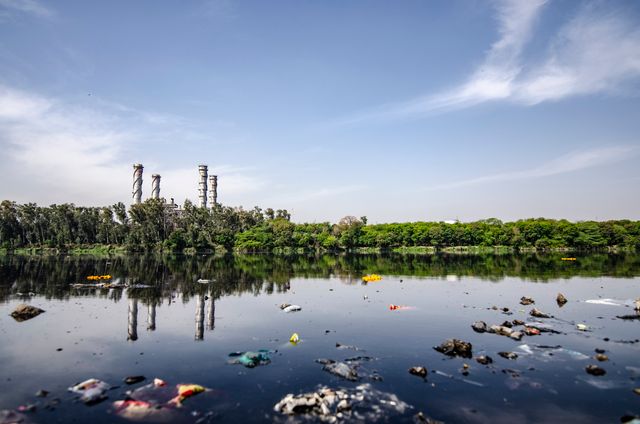

Delhi’s air pollution problem has long been one of the most difficult environmental challenges in India. Every year, especially as winter approaches, a combination of vehicle emissions, road dust, construction activity, industrial pollution, biomass burning and unfavourable weather conditions can push air quality to unhealthy levels. Monitoring the Air Quality Index is important, but knowing that pollution is high is only the first step. Authorities also need to understand where pollution is coming from, how its sources are changing throughout the day and which interventions can reduce it quickly.
This is where artificial intelligence and real-time environmental monitoring are beginning to change the way Delhi approaches air pollution management. In October 2026, the Delhi government launched an Integrated Command and Control Centre of the Delhi Pollution Control Committee at the Delhi Metro Rail Corporation’s IT Park in Shastri Park. The centre is designed to combine real-time pollution information, AI-based analysis, CCTV feeds, field inspection data, complaints and operational information to support faster action against pollution sources.
The initiative represents a shift from simply measuring pollution to attempting to identify, analyse and respond to its sources. More than 700 construction sites are reportedly being monitored through AI-enabled CCTV systems, while GPS-based tracking is being used for road-sweeping operations and field teams.
The larger question is whether artificial intelligence can actually help a city such as Delhi identify pollution sources in real time and turn that information into effective environmental action.
Why Tracking Pollution Sources Is So Difficult
Air pollution in Delhi is not caused by one single source. It is the result of multiple emissions interacting with atmospheric conditions across the wider National Capital Region and beyond. The relative contribution of different sources can change according to season, location, weather, traffic conditions and human activity.
Delhi’s air can contain particulate matter and gases originating from transport, construction, road dust, industrial activity, waste burning, biomass burning and other sources. Some pollutants can also undergo chemical transformations in the atmosphere, creating secondary particulate matter that may not be directly emitted from the original source.
The Commission for Air Quality Management has noted that PM2.5 is a dominant pollutant affecting Delhi’s air quality and that both local emissions and regional movement of pollution across the wider airshed influence pollution levels. During winter, secondary particulates formed from gaseous emissions from transport, industry, power generation and biomass burning are among the important contributors.
This complexity makes pollution control fundamentally different from simply finding a single factory or vehicle category and asking it to reduce emissions. Authorities need systems capable of combining information from many locations and identifying patterns that may not be obvious from individual measurements.
What Is Delhi’s New AI-Powered Pollution Control Centre?
The new Integrated Command and Control Centre is designed to bring different forms of environmental information together in one operational system. Rather than treating pollution monitoring, field enforcement, construction surveillance and road cleaning as completely separate activities, the centre aims to connect them.
According to government and media reports, the centre uses AI-based analysis alongside live CCTV feeds, air-quality information, GPS tracking and field-level data. It is intended to identify pollution-related problems, analyse them, trigger action and subsequently verify whether the intervention produced results.
This is an important change in philosophy. Traditional monitoring often answers questions such as whether PM2.5 or PM10 levels are rising at a particular monitoring station. An integrated AI system can potentially ask a more operational question: what activities are occurring near the affected area, which pollution sources are likely contributing, and which field team or department should respond?
The value of the system therefore depends not only on its ability to analyse data but also on how effectively its findings are connected to enforcement.
How Artificial Intelligence Could Identify Pollution Sources
Artificial intelligence is particularly useful when large quantities of data must be analysed simultaneously. A city-wide pollution control system can potentially receive information from air-quality sensors, weather systems, traffic information, CCTV cameras, satellite observations, GPS devices and field inspections.
AI algorithms can search these datasets for relationships. For example, a sudden increase in particulate matter near a construction zone could be compared with CCTV observations, weather conditions, traffic patterns and recent field reports. If several signals change at approximately the same time, the system could flag the area for investigation.
Machine learning models can also be trained to recognise recurring patterns associated with particular pollution sources. Road dust, construction activity, traffic emissions and open burning can produce different combinations of pollutant measurements and environmental signals. Over time, models can potentially learn these patterns and generate estimates about the likely source of pollution.
However, such predictions should be understood as analytical assistance rather than automatic proof. Atmospheric pollution is complex, and an AI model may identify a probable source without being able to establish a definitive causal relationship on its own. Human verification and scientific measurement remain important.
AI Surveillance at Construction Sites
Construction and demolition activities are an important focus of Delhi’s new monitoring system. According to reports, more than 700 construction sites are being monitored using AI-enabled CCTV systems. The system can potentially identify visible activities associated with dust generation and flag unusual or potentially non-compliant conditions.
This approach could make environmental enforcement more proactive. Instead of waiting for inspectors or citizens to report every violation, automated monitoring can continuously examine selected locations and generate alerts when predefined conditions appear.
Delhi had already introduced an AI-enabled Dust Portal 2.0 in July 2026 for real-time monitoring and alerts related to construction dust. The new command centre builds on this broader movement toward integrating digital monitoring with enforcement.
The potential benefit is speed. If an AI system identifies an apparent dust-control violation and immediately sends information to an enforcement team, authorities may be able to respond before the problem continues for hours.
Tracking Road Dust With GPS and AI
Road dust represents another major challenge. Vehicles can resuspend dust from roads, while construction materials, soil and poorly maintained surfaces can contribute additional particulate matter.
The new command centre reportedly tracks road-sweeping machines using GPS, allowing authorities to determine where cleaning operations are occurring and whether scheduled routes are being covered.
This creates an important connection between pollution data and municipal operations. If particulate concentrations rise in an area where road sweeping is expected to occur, the system could compare pollution readings with the location and movement of cleaning equipment.
Delhi has also approved a broader programme involving 30 electric mechanical road-sweeping machines for smaller roads. The government’s 2026–27 pollution-control plan includes real-time source tracking and collaboration with IIT Delhi to analyse PM2.5 and PM10 sources. The objective is not simply to collect more data. The larger aim is to determine whether environmental information can be translated into more targeted interventions.
From AQI Monitoring to Source Intelligence
The Air Quality Index is useful because it provides a simplified representation of overall air quality. However, AQI alone does not tell authorities exactly what action should be taken. Imagine that two areas record similar PM2.5 levels. In one location, the major contributor may be traffic.
In another, it could be construction dust. Treating both locations in exactly the same way would be inefficient. Source intelligence adds another layer to air-quality monitoring. Instead of asking only how polluted an area is, authorities can ask why pollution is elevated and which sources are most likely responsible.
This is particularly valuable for a city where pollution sources can change rapidly. Traffic patterns vary throughout the day, construction activity changes according to working schedules, weather affects pollutant dispersion, and regional pollution can move across administrative boundaries.
An AI-based system capable of analysing these changing conditions could potentially help authorities respond more precisely.
Real-Time Pollution Forecasting
Another important application of AI is forecasting. If a system can recognise patterns that typically precede pollution spikes, it may be possible to provide early warnings.
Forecasting systems can combine historical pollution data with meteorological variables, traffic patterns, emissions information and other environmental signals. Machine learning can then identify relationships between these variables and subsequent air-quality conditions.
Delhi has previously pursued real-time source-apportionment and pollution-forecasting projects involving research institutions. Earlier government documentation described efforts to understand daily, weekly and seasonal pollution patterns and identify sources such as vehicles, dust, biomass burning, stubble burning and industrial emissions.
The new generation of systems can potentially build upon these efforts by combining more data sources with continuous computational analysis. Forecasting does not prevent pollution by itself. Its value comes from providing authorities with additional time to act.
Connecting AI Detection With Field Enforcement
Perhaps the most important aspect of Delhi’s new centre is its emphasis on connecting digital information with physical action. A monitoring system that produces thousands of alerts but does not lead to inspections, penalties, corrective measures or verification would have limited environmental value. The new centre is intended to create a chain between detection and enforcement.
Reports describe the system as linking technology-driven information with field-level action. This could allow authorities to prioritise field teams according to real-time conditions. If multiple pollution alerts appear across the city, enforcement resources could potentially be directed toward locations where the combination of pollution measurements and observed activities indicates the greatest concern.
GPS-enabled field vehicles can also help authorities monitor where teams are deployed. Body cameras and digital inspection records can provide additional documentation of enforcement activities.
The overall model resembles a continuous feedback loop in which the system detects a potential problem, authorities investigate it, an intervention is performed and subsequent data is used to determine whether conditions improve.
Why Human Expertise Still Matters
Despite the growing role of AI, pollution control cannot become completely automated. Artificial intelligence can process data quickly, but environmental decisions require scientific interpretation and institutional judgment.
An AI model may detect a correlation between construction activity and elevated PM10 levels, but atmospheric conditions may reveal that regional pollution is also contributing significantly. Similarly, a sudden pollution increase could result from multiple overlapping sources.
Human experts therefore remain essential for interpreting model outputs, validating predictions and deciding appropriate enforcement measures. AI should function as a decision-support system rather than an unquestionable authority.
This is particularly important because environmental policy can have significant economic and social consequences. Decisions involving construction restrictions, traffic controls or industrial operations need evidence, transparency and proportionality.
The Challenge of Data Quality
AI systems are only as reliable as the information they receive. Pollution sensors can experience calibration problems, missing observations and technical failures. CCTV cameras can have blind spots. GPS devices can produce incomplete location information. Weather conditions can change rapidly.
Delhi has previously faced challenges concerning monitoring data and source-apportionment studies. A 2026 Delhi government document noted that continuous data transfer from monitoring stations had improved, while also recording earlier problems involving power supply and calibration. It also stated that an earlier IIT Kanpur real-time source-apportionment report had not been accepted by the DPCC because of concerns about discrepancies, data quality, analysis and validation.
These issues demonstrate why AI cannot compensate indefinitely for weak underlying data. A sophisticated algorithm trained on inaccurate or incomplete information can produce highly confident but incorrect conclusions. Strong environmental AI therefore requires regular calibration, transparent validation, independent evaluation and scientifically robust datasets.
The Problem of Regional Pollution
Another limitation is that Delhi’s air does not stop at the city’s administrative boundary. Pollution can move across the wider NCR and Indo-Gangetic airshed depending on wind direction and atmospheric conditions.
This means a local AI system can identify activities occurring inside Delhi but may not always be able to control pollutants originating outside the city. Regional biomass burning, industrial emissions and atmospheric transport can influence Delhi’s air quality even when local emissions are relatively stable.
The CAQM’s 2026 review of expert research specifically highlighted both local emissions and transboundary movement of pollution across the airshed.
Consequently, Delhi’s AI-powered monitoring system could be most effective when integrated with regional environmental data and coordinated with neighbouring states and national agencies.
Could AI Make Pollution Enforcement More Accountable?
Artificial intelligence could also change the transparency of environmental enforcement. Digital records can create an auditable trail showing when an alert was generated, what information triggered it, where an inspection team was sent and what action followed.
Such records could make it easier to evaluate whether enforcement agencies are responding consistently. Over time, authorities could analyse which interventions produce measurable improvements and which approaches have limited impact.
However, transparency depends on how much information is made publicly accessible. If AI systems operate entirely as closed administrative platforms, citizens may know that surveillance is occurring without understanding how decisions are being made. Public trust will therefore depend on appropriate transparency about the system’s objectives, data sources, limitations and performance.
Privacy and Surveillance Concerns
AI-powered environmental monitoring also raises questions about surveillance. Cameras installed to monitor construction activity may capture workers, vehicles and surrounding public spaces. Integrating CCTV information with other datasets increases the importance of responsible data governance.
The objective should remain environmental enforcement rather than unnecessary monitoring of individuals. Clear rules concerning data retention, access, cybersecurity and legitimate use can help prevent environmental technology from becoming a broader surveillance mechanism.
The use of automatic number plate recognition and intelligent traffic systems in pollution management also demonstrates why governance matters. These technologies can have legitimate environmental applications, but their deployment should follow appropriate legal and privacy safeguards.
Can AI Actually Solve Delhi’s Pollution Problem?
AI alone cannot solve Delhi’s air pollution crisis. Artificial intelligence cannot eliminate vehicle emissions, stop construction dust, change weather patterns or prevent every instance of biomass burning.
Its value lies in making existing environmental management more informed, targeted and responsive. Better information can help authorities decide where to inspect, which activities require attention and whether interventions are working.
The difference could be significant. Instead of applying broad measures across an entire city whenever air quality deteriorates, authorities could increasingly use detailed data to identify specific pollution sources and target interventions.
That could make pollution control more efficient, although the success of the approach will ultimately depend on enforcement capacity, scientific accuracy, inter-agency coordination and sustained implementation.
The Future of AI-Based Air Quality Management
Delhi’s new command centre may represent the beginning of a broader transformation in urban environmental management. As sensors become more affordable and AI systems become better at processing multimodal data, cities could build increasingly detailed digital representations of their pollution environments.
Future systems could combine air-quality sensors, satellite imagery, traffic information, meteorological forecasts, construction monitoring, industrial data and citizen reports into a continuously updated environmental intelligence platform.
Such systems could potentially move from reactive pollution management toward predictive environmental management. Authorities might receive warnings before pollution reaches dangerous levels and identify the activities most likely to cause deterioration.
The concept could also be extended beyond air pollution. Similar AI-based command systems could monitor water quality, waste management, urban heat, noise pollution and other environmental indicators.
Conclusion
Delhi’s new AI-powered pollution control centre represents an important change in how the city is attempting to manage air pollution. Instead of relying solely on periodic measurements and conventional inspections, the system seeks to combine real-time environmental information with artificial intelligence, CCTV monitoring, GPS tracking and field enforcement.
Its most important potential contribution is not simply producing more pollution data. It is the possibility of connecting data with action. If AI can identify patterns, locate probable pollution sources, generate timely alerts and help field teams respond effectively, authorities may be able to target pollution-control measures with greater precision.
At the same time, expectations must remain realistic. Pollution is influenced by complex atmospheric processes, multiple local sources and regional emissions. AI models require reliable data, scientific validation and human oversight. Technology can improve environmental governance, but it cannot replace strong policies, infrastructure, enforcement and regional cooperation.
The success of Delhi’s new system will ultimately be measured not by how sophisticated its screens or algorithms appear, but by whether pollution sources are identified more accurately, violations are addressed more quickly and measurable improvements in air quality follow. If those connections can be established, artificial intelligence could become a powerful new tool in Delhi’s long-running effort to breathe cleaner air.
Online Internship with Certificate
You may be interested
Why Do Heavy Rains Disrupt Transport Beyond the Monsoon Season?
Anshika Jain - Oct 23, 2026Heavy rainfall is often associated with India's monsoon season, when roads become waterlogged, railway services face delays and flights are diverted or cancelled. However, transport disruption is…

Women’s Safety After Dark: Why Street Design, Police Response Must Work Together
Anshika Jain - Oct 23, 2026A city’s safety cannot be measured only by its crime statistics, the number of police stations it operates or the cameras installed across its streets. For women,…

Paper Leaks and Accountability: Competitive Examinations More Trustworthy?
Anshika Jain - Oct 23, 2026Competitive examinations are among the most consequential gateways to education and employment in India. Examinations such as NEET, JEE, CUET, UGC-NET, UPSC and various government recruitment tests…
Most from this category

AI in Examinations: Institutions Detect Cheating Without Accusing Students?
Anshika Jain - Oct 23, 2026

Missing Children and Delayed Investigations: Inter-State Police Coordination Improve?
Anshika Jain - Oct 23, 2026
When a Case Is Solved Years Later: How Forensic Advances Can Reopen Cold Investigations
Anshika Jain - Oct 22, 2026
AI in Examinations: Institutions Detect Cheating Without Accusing Students?
Anshika Jain - Oct 23, 2026Medical Intern Stipend Protests: India’s Healthcare Training System
Anshika Jain - Oct 23, 2026Missing Children and Delayed Investigations: Inter-State Police Coordination Improve?
Anshika Jain - Oct 23, 2026