

BHU Women’s Safety Protests: Why Students Are Challenging Campus Curfew Rules

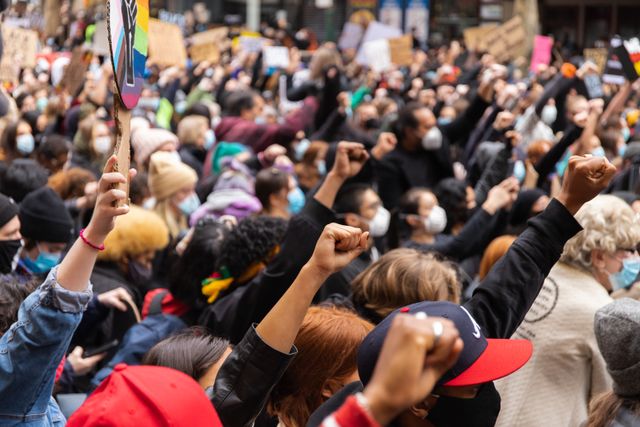

The debate over women’s safety on university campuses has once again come into focus at Banaras Hindu University (BHU) in Varanasi, where students have recently protested over campus security, hostel curfew rules and restrictions affecting women students. In early October 2026, different student groups organised demonstrations, including torchlight and other marches, while women students also participated in protests demanding changes to existing safety arrangements and curfew timings. Reports indicate that the current girls’ hostel curfew is set at 10 p.m., and students have questioned whether restricting the movement of women is the most effective way to create a safe campus.
The controversy is larger than a disagreement over a particular hostel deadline. At its centre is a longstanding question about how educational institutions should balance safety with autonomy. Universities have a responsibility to protect students, particularly in residential campuses where large numbers of young people live, study and travel between hostels, departments, libraries and other facilities. At the same time, students argue that safety policies should not place disproportionate restrictions on women or make their freedom of movement dependent on fixed curfew hours.
The renewed protests at BHU therefore reflect a broader conversation taking place on Indian university campuses. Students are increasingly questioning whether safety can be achieved primarily through surveillance, restricted mobility and hostel deadlines, or whether universities should instead address lighting, security personnel, emergency response, accountability and the prevention of harassment.
What Is Happening at BHU?
Recent reports describe demonstrations at BHU focused on women’s safety, campus security and the rules governing women’s hostel curfews. Student organisations including the Akhil Bharatiya Vidyarthi Parishad, All India Students’ Association, Disha and Bhagat Singh Chhatra Morcha have participated in separate or joint forms of protest. An ABVP-linked torchlight procession and demonstrations involving other student groups have highlighted concerns about safety, restrictions and administrative accountability.
Women students have also taken part in marches raising concerns about the relationship between safety regulations and their freedom on campus. The protests have included demands for changes to curfew arrangements and stronger measures to make the university environment safer. Some reports have also described demands concerning the university administration and the role of the Chief Proctor.
The significance of the demonstrations lies partly in the fact that the debate is not simply about whether students should return to hostels at a particular time. Students are questioning the underlying logic of safety policies. If a woman is expected to be inside her hostel after a particular hour because the campus may become unsafe, the question naturally follows: why is the response to insecurity a restriction on the potential victim rather than stronger action against unsafe conditions and those responsible for harassment?
Why Are Students Challenging Curfew Rules?
Curfew rules are often introduced by residential institutions with the stated intention of protecting students. Hostel administrators may argue that knowing when students are expected to return makes it easier to monitor residents and respond to emergencies. From an administrative perspective, a fixed schedule can also make hostel management more predictable.
Students, however, can view the same policy very differently. A fixed curfew can interfere with academic activities, library use, research work, internships, cultural programmes, campus events and other legitimate aspects of university life. University students are adults, and many argue that they should have greater responsibility for managing their own schedules.
The issue becomes particularly controversial when different rules apply to male and female students. Historically, BHU has faced criticism over unequal curfew arrangements. During the major women’s safety protests of 2017, reports highlighted substantially earlier restrictions on women students compared with men. The controversy became part of a wider debate about gender discrimination, harassment and institutional responsibility.
This history gives the present debate additional significance. Students are not discussing curfew rules in isolation. They are discussing them in relation to a much longer institutional conversation about gender, freedom, safety and accountability.
The Difference Between Safety and Restriction
One of the most important questions raised by the BHU protests is whether restricting movement should be considered equivalent to creating safety.
A curfew can reduce the amount of time students spend outside their hostels during certain hours, but it does not necessarily eliminate the risks they may encounter. Harassment can occur during the day as well as at night. Unsafe roads, inadequate lighting, isolated areas, insufficient security personnel and delayed emergency responses can create problems regardless of a hostel deadline.
For students, therefore, genuine safety means being able to move around the campus without constantly calculating whether an administrative rule will prevent them from returning to their hostel on time. A safe campus is one where students can access academic and social spaces while having confidence that effective systems exist to respond when something goes wrong.
This distinction is central to the current debate. A restrictive policy may control student movement, but a comprehensive safety strategy must address the environment in which students move.
Why Campus Infrastructure Matters
Campus safety depends heavily on physical infrastructure. A university may have security personnel and formal rules, but poorly lit roads, isolated pathways, inadequate emergency communication systems or insufficient surveillance can still make students feel vulnerable.
The BHU protests have brought attention to this broader dimension of campus security. Recent reporting has linked the demonstrations with demands for better safety measures and greater administrative accountability.
Infrastructure can play a major role in preventing unsafe situations. Adequate lighting can reduce dark areas around hostels and academic buildings. Clearly marked routes can make it easier for students to navigate the campus. Emergency contact systems can provide quicker access to assistance. Responsive security personnel can become an important deterrent to harassment.
Technology can also contribute when used responsibly. CCTV cameras, emergency communication systems and safety applications may help institutions identify problems and respond more quickly. However, surveillance should complement, rather than replace, broader institutional measures.
The Importance of Administrative Accountability
Another significant dimension of the protests is the question of institutional accountability. Students expect university authorities not only to establish rules but also to respond effectively when those rules fail to protect them.
A campus safety policy becomes meaningful only when students trust the system behind it. Students need confidence that complaints will be taken seriously, that investigations will be handled fairly, and that victims will not be blamed for the circumstances surrounding an incident.
This issue has particular resonance at BHU because women’s safety has been the subject of major student protests in the past. The 2017 movement followed a reported sexual harassment incident and broader complaints about campus restrictions and the treatment of women students. Contemporary accounts from that period described students challenging unequal curfews and institutional responses to harassment.
The historical experience demonstrates why administrative credibility matters. When students believe that authorities are more interested in controlling their behaviour than addressing the source of insecurity, trust can deteriorate quickly.
The Legacy of BHU’s Earlier Women’s Safety Protests
The present controversy cannot be fully understood without looking back at BHU’s 2017 women’s safety protests. That movement became one of the most prominent campus protests in India concerning gender discrimination and student safety.
At the time, women students challenged restrictions that were significantly different from those imposed on male students. Reports described earlier hostel entry requirements for women, restrictions on their activities and concerns about harassment. The protests grew after a female student reported an alleged sexual harassment incident and students questioned the university’s response.
The protests eventually became part of a larger national discussion about women’s freedom in educational institutions. Subsequent reporting suggested that some restrictions were relaxed in practice, although formal institutional procedures and rules remained part of the debate.
This history is important because it shows that questions about women’s curfew rules at BHU are not new. The current protests represent another stage in a continuing conversation about whether safety policies should focus primarily on regulating women students or on creating an environment in which all students can participate freely and safely.
Why Curfew Rules Can Become a Gender Equality Issue
A curfew is not automatically discriminatory simply because it exists. Residential institutions may legitimately establish rules for security, administration and emergency management. The question is whether those rules are proportionate, reasonable and applied fairly.
If women are subjected to restrictions that male students do not face, the policy can become a gender equality issue. Such differences communicate an implicit message that women require greater control or supervision. Students may interpret this as treating women as people who must be protected through limitation rather than as adults entitled to participate equally in campus life.
The distinction becomes especially important in universities. Higher education is supposed to prepare young adults for professional and civic life. Students are expected to develop independence, make decisions and accept responsibility for their choices.
A safety system that prevents unnecessary risks while respecting student autonomy can therefore be more sustainable than one based primarily on restrictions.
The Argument in Favour of Curfews
A balanced discussion should also acknowledge why universities establish curfews. Residential campuses have responsibilities toward students living in university hostels. Administrators may be concerned about emergencies, unauthorized entry, security incidents and the ability of hostel staff to account for residents.
Late-night movement can also create practical challenges for security teams, particularly on large campuses. BHU’s extensive campus environment makes effective security management a significant institutional responsibility.
From this perspective, a curfew may be presented as one part of a broader safety framework. Administrators may argue that rules provide structure and help reduce exposure to potential risks.
However, the existence of a legitimate safety objective does not mean every restriction is automatically effective. Universities need to evaluate whether a particular curfew actually reduces harm and whether the same objective can be achieved through less restrictive methods.
What Students Are Asking for Instead
The demands emerging from the protests indicate that many students want a broader understanding of campus safety rather than simply the removal of a curfew. Recent coverage has reported concerns about security arrangements, restrictions on women and administrative accountability, alongside demands for changes to existing curfew timings.
This approach shifts the conversation from “How early should women return to their hostels?” to “What does a genuinely safe university campus look like?”
The second question is much broader. It includes the availability of safe transportation within large campuses, adequate lighting, effective security, rapid emergency response, accessible complaint mechanisms and transparent investigations. It also includes prevention through gender sensitisation and a campus culture that discourages harassment.
Such an approach recognises that safety is an institutional responsibility rather than an individual burden placed primarily on women.
The Role of Student Voice in University Governance
Student protests are also an important expression of participation in university governance. Universities are not merely places where students attend classes and take examinations. They are communities in which rules directly shape students’ daily lives.
When students challenge a policy, their participation can reveal practical problems that may not be visible from an administrative office. Students experience campus pathways, hostel gates, libraries, transportation systems and security procedures every day. Their experiences can therefore provide valuable information when safety policies are reviewed.
Constructive dialogue between students and administrators can help transform protests into institutional improvements. This requires authorities to listen to concerns without automatically treating disagreement as indiscipline.
At the same time, student organisations have a responsibility to communicate demands clearly and pursue peaceful forms of protest. A productive campus culture requires both institutional responsiveness and responsible student participation.
A Broader National Debate About Women’s Safety
The BHU controversy is occurring at a time when women’s safety has again become a prominent subject of student activism across India. Recent protests by students in Delhi have similarly challenged approaches that place restrictions on women rather than addressing unsafe environments and violence.
This broader movement reflects a generational shift in how many young people understand safety. Instead of accepting the idea that women must change their behaviour to avoid violence, students are increasingly asking institutions and society to address perpetrators, infrastructure, accountability and social attitudes.
The argument is not that safety precautions are unnecessary. Rather, students are questioning why precautions should disproportionately reduce women’s freedom.
This distinction is becoming increasingly important in higher education, where students expect policies to reflect principles of equality and adult autonomy.
What Could a More Effective Campus Safety Model Look Like?
A more balanced model would treat curfew as only one possible administrative measure rather than the primary solution to women’s safety. Universities could combine well-maintained infrastructure, responsive security, emergency communication systems, transparent complaint procedures and regular safety audits with reasonable hostel policies.
Such a system would also recognise differences between students’ academic schedules and personal circumstances. Researchers, postgraduate students, students working on projects and participants in evening activities may have legitimate reasons to remain outside their hostels later than conventional schedules permit.
The objective should be to create conditions in which students can move safely rather than simply reducing their opportunities to move.
Equally important is the creation of a culture in which harassment is taken seriously. Rules alone cannot create safety if students do not trust the complaint process or fear that reporting an incident will result in blame or social consequences.
Conclusion
The BHU women’s safety protests demonstrate that campus safety is no longer being discussed simply as a question of security guards, hostel gates and curfew times. Students are challenging the underlying assumption that restricting women’s movement is an adequate response to unsafe environments.
The current demonstrations at Banaras Hindu University, including torchlight and student marches over women’s safety, curfew rules and administrative accountability, have revived a debate that has deep roots in the university’s history.
The central issue is ultimately about balance. Universities have a genuine responsibility to protect students living and studying on campus. But protection should not automatically mean reduced freedom for women. A modern university must work toward safety through infrastructure, accountability, effective security, responsive institutions and an environment in which students can exercise reasonable autonomy.
The most meaningful measure of campus safety is not how successfully an institution keeps women inside their hostels. It is whether students can study, work, participate and move across campus without fear. As the debate at BHU continues, the challenge for university administrators will be to develop safety policies that protect students while respecting their independence, equality and right to participate fully in university life.
Online Internship with Certificate
You may be interested
Why Do Heavy Rains Disrupt Transport Beyond the Monsoon Season?
Anshika Jain - Oct 23, 2026Heavy rainfall is often associated with India's monsoon season, when roads become waterlogged, railway services face delays and flights are diverted or cancelled. However, transport disruption is…
Women’s Safety After Dark: Why Street Design, Police Response Must Work Together
Anshika Jain - Oct 23, 2026A city’s safety cannot be measured only by its crime statistics, the number of police stations it operates or the cameras installed across its streets. For women,…

Paper Leaks and Accountability: Competitive Examinations More Trustworthy?
Anshika Jain - Oct 23, 2026Competitive examinations are among the most consequential gateways to education and employment in India. Examinations such as NEET, JEE, CUET, UGC-NET, UPSC and various government recruitment tests…
Most from this category

AI in Examinations: Institutions Detect Cheating Without Accusing Students?
Anshika Jain - Oct 23, 2026

Missing Children and Delayed Investigations: Inter-State Police Coordination Improve?
Anshika Jain - Oct 23, 2026
When a Case Is Solved Years Later: How Forensic Advances Can Reopen Cold Investigations
Anshika Jain - Oct 22, 2026
AI in Examinations: Institutions Detect Cheating Without Accusing Students?
Anshika Jain - Oct 23, 2026Medical Intern Stipend Protests: India’s Healthcare Training System
Anshika Jain - Oct 23, 2026Missing Children and Delayed Investigations: Inter-State Police Coordination Improve?
Anshika Jain - Oct 23, 2026