

India’s Railway Transformation: How Passenger Travel Is Changing

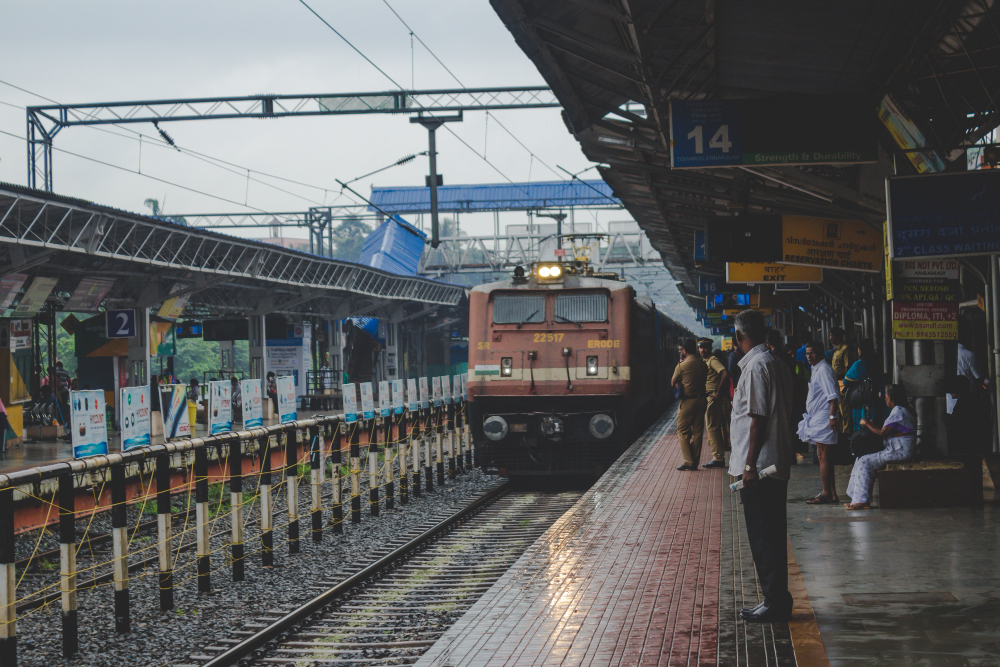

For generations, railway travel in India has been more than a way of moving from one city to another. Trains have connected families, students, workers, tourists, businesses, and communities across an enormous geographic landscape. A railway journey has traditionally been defined by the train itself, the station, the timetable, the ticket, and the experience of travelling for several hours or even days.
That definition is gradually changing.
Indian Railways is now undergoing a transformation in which passenger travel is being influenced by modern trains, redesigned stations, digital ticketing, automated safety technologies, improved information systems, upgraded coaches, and stronger connections between railway stations and cities. The transformation is not happening through one single project. It is taking place across multiple layers of the railway system.
The change is particularly visible in the growth of Vande Bharat services, the introduction of Amrit Bharat trains, the redevelopment of railway stations under the Amrit Bharat Station Scheme, the expansion of the indigenous Kavach automatic train-protection system, and the growing role of digital services such as RailOne. In April 2026, the Ministry of Railways reported that nearly 3.98 crore passengers travelled on Vande Bharat services during financial year 2025–26, around 34 percent more than the previous financial year.
Together, these developments suggest that railway modernization is increasingly being measured not only by how trains move, but also by how passengers interact with the entire journey.
The New Meaning of Railway Modernisation
Railway modernization was once largely associated with tracks, locomotives, signalling, bridges, electrification, and network expansion. These remain fundamental because passenger experience ultimately depends on the underlying railway infrastructure.
However, passengers experience the railway through a much wider system. They encounter the ticketing interface before the journey, the station while boarding, the coach during travel, information systems while waiting, food and sanitation facilities during the journey, and digital services when checking a train’s status or raising a complaint.
This has created a more passenger-centred definition of modernization.
The government’s 2025 review of Indian Railways described station redevelopment, new-generation trains, upgraded coaches, safety technologies, and digital systems as part of the broader effort to redefine rail travel. The same review reported that 1,337 stations had been selected for redevelopment under the Amrit Bharat Station Scheme, with 155 fully modernised by December 2025.
The transformation therefore involves both visible and invisible changes. A redesigned station is immediately noticeable, while upgraded signalling or train-protection technology operates largely in the background. Both influence the passenger journey.
Vande Bharat and the Changing Idea of Train Travel
Among the most visible symbols of India’s railway transformation is Vande Bharat Express.
The train has introduced a more contemporary passenger experience on selected routes, with modern interiors, improved passenger amenities, and faster services compared with many conventional train services. Its expansion also reflects a shift toward developing trainsets designed and manufactured within India.
The growing use of Vande Bharat demonstrates that passengers are increasingly being offered different travel experiences within the same railway network. Traditional long-distance services remain essential for serving India’s enormous passenger base, while newer trainsets are being introduced on routes where their operating characteristics and demand make them suitable.
The scale of passenger use is significant. According to the Ministry of Railways, approximately 3.98 crore passengers travelled on Vande Bharat trains during FY 2025–26, compared with 2.97 crore during FY 2024–25. The ministry also reported that more than 9.1 crore passengers had travelled on Vande Bharat services since their introduction.
This growing passenger use indicates that modern train services are becoming an increasingly visible component of India’s rail journey.
From Premium Experience to Broader Passenger Mobility
The transformation is not limited to premium or higher-end services.
The introduction and expansion of Amrit Bharat trains represents another part of the modernization process. These services are designed to provide modern features while addressing the needs of a much broader passenger segment.
The Ministry of Railways reported at the end of 2025 that 13 new Amrit Bharat trains had been introduced during the year, taking the total to 30.
This distinction is important because India’s railway system serves an extremely diverse population. A modernization strategy cannot rely only on premium trains. Large numbers of passengers depend on affordable services for education, employment, family travel, migration, tourism, and everyday mobility.
The future of passenger travel will therefore involve multiple types of services operating together. Faster premium trains, conventional express services, regional trains, suburban systems, and affordable long-distance services each have different roles within the wider network.
Railway Stations Are Becoming More Than Boarding Points
One of the most significant changes passengers may notice is happening at railway stations.
Historically, many stations were designed primarily around boarding and alighting. Modern redevelopment is increasingly treating the station as a larger urban interface connecting rail passengers with the surrounding city.
Under the Amrit Bharat Station Scheme, railway authorities are working on improvements that include access areas, waiting halls, toilets, seating, foot overbridges, lifts and escalators, platform facilities, passenger information systems, parking, and multimodal integration. The programme also envisions better connections between stations and both sides of the surrounding city.
This can change the passenger experience before the train even arrives.
A passenger entering a modernized station may encounter clearer information, improved circulation areas, better accessibility, more organised waiting spaces, and easier connections with road transport. The station becomes part of the journey rather than simply a place where the journey begins or ends.
As redevelopment progresses, railway stations can also become important urban spaces supporting local commerce and connectivity.
The Station as a City Gateway
The idea of treating railway stations as city centres represents a broader shift in transport planning.
A major railway station can influence how people enter a city, move between transport modes, access local services, and experience the surrounding urban environment. If railway stations are poorly connected to roads, buses, taxis, metro systems, or pedestrian routes, the benefits of a modern train can be reduced by difficulties at the beginning or end of the journey.
The Amrit Bharat Station Scheme explicitly includes multimodal integration as part of station redevelopment. It also aims to improve access, circulating areas, passenger information, and facilities for people with disabilities.
This suggests that future railway travel is increasingly being considered as a complete mobility chain rather than an isolated train journey.
For passengers, the quality of the journey may therefore depend as much on reaching the station and navigating it as it does on the train itself.
RailOne and the Digital Passenger
Another major change is taking place before passengers reach the station.
Indian Railways launched the RailOne app in July 2025 as a unified platform for several passenger services. It combines reserved and unreserved ticketing, platform tickets, train enquiries, PNR information, and RailMadad services.
The growth of digital booking demonstrates how passenger interaction with the railway system is changing. In a March 2026 update, the Ministry of Railways reported that approximately 88 percent of reserved tickets were being booked online.
By August 2026, the ministry reported that RailOne had reached 4.76 crore downloads and was recording an average of around 10 lakh daily ticket bookings.
These figures represent more than the popularity of a particular application. They illustrate a broader shift in how passengers interact with railway services.
The traditional railway experience involved visiting a reservation counter, checking information through physical displays, and relying heavily on printed tickets and station announcements. Increasingly, passengers can complete several stages of the journey through a mobile device.
What Digitalisation Changes for Passengers
Digitalisation can make railway travel more convenient, but its significance goes beyond convenience.
When ticketing, train information, PNR enquiries, and grievance services are available through connected digital systems, passengers have greater access to information throughout the journey. This can reduce dependence on physical counters for routine services.
The modern passenger increasingly expects information to be available immediately. People are accustomed to checking flight statuses, food deliveries, ride-hailing services, and online purchases in real time. Railway travel is consequently being shaped by similar expectations.
Indian Railways has also been modernising its Passenger Reservation System. In 2025, the Ministry said the system was being upgraded with new hardware, software, network infrastructure, security systems, and increased transaction-handling capacity.
This infrastructure is largely invisible to passengers, but it becomes important during periods of high demand when large numbers of people attempt to search, reserve, modify, or check tickets simultaneously.
Safety Is Becoming More Technology-Driven
Not every railway transformation is visible to passengers.
Safety systems are increasingly incorporating automated technologies designed to support train operations. One of the most important examples is Kavach, India’s indigenous automatic train-protection system.
Kavach is designed to assist in maintaining specified train speeds and can automatically apply brakes when required in situations such as a failure by the locomotive pilot to respond appropriately to certain conditions. Version 4.0 includes improvements in location accuracy, signal information, communication interfaces, and integration with electronic interlocking systems.
Deployment has expanded rapidly. In January 2026, Indian Railways commissioned 472.3 route kilometres of Kavach 4.0 across three sections in a single day, taking Kavach 4.0’s commissioned coverage to more than 1,300 route kilometres across five railway zones at that point.
By February 2026, the government reported that trackside Kavach implementation had been taken up across 23,360 route kilometres covering major high-density and identified sections.
For passengers, the technology may not be visible during a journey. Its importance lies precisely in operating in the background.
Cameras, Information and Passenger Security
Technology is also becoming more prominent in passenger security.
Indian Railways has expanded CCTV surveillance at stations and inside coaches. The Ministry’s 2025 year-end review reported CCTV systems at 1,731 stations and in 11,953 coaches.
This reflects a broader movement toward digitally supported railway security. Cameras, communication systems, automated signalling, and passenger information networks increasingly form part of the railway environment.
The objective is not simply to make trains look modern. The larger transformation is about creating an environment in which information can move more efficiently between railway systems, staff, and passengers.
Accessibility Is Becoming Part of Modern Rail Travel
A railway transformation cannot be considered complete if modern facilities remain difficult to access for people with disabilities, older passengers, families with children, or travellers carrying heavy luggage.
Station redevelopment programmes increasingly include lifts, escalators, ramps, accessible facilities, improved platform areas, and passenger information systems. The Amrit Bharat Station Scheme specifically includes facilities for Divyangjan as part of its station-development approach.
Accessibility is therefore becoming part of the definition of passenger experience.
This is particularly important because railway stations can involve considerable walking, changes in platform levels, footbridges, crowds, and complex navigation. Better physical design can reduce the difficulty of moving through these environments.
Modernisation is consequently not only about speed. It is also about making the railway environment easier to navigate.
Faster Travel and the Question of Capacity
New trains can reduce travel times, but faster services alone cannot transform the entire railway network.
India’s railway system handles a huge volume of passenger and freight traffic on shared infrastructure. Increasing passenger speeds therefore requires improvements in tracks, signalling, capacity, maintenance, train scheduling, and operational management.
The Ministry of Railways has highlighted track renewal and capacity augmentation as important components of its modernization programme. Its 2025 review linked track renewal with safer, more comfortable and potentially faster journeys.
This reveals an important aspect of railway transformation: what passengers experience as a faster train may depend on years of infrastructure work that remains largely invisible.
A new train can attract attention, but the underlying railway network determines where and how effectively that train can operate.
The Experience of Waiting Is Also Changing
Rail travel is not only about time spent inside a moving train. Waiting at stations can constitute a significant part of the overall journey.
Modern stations are therefore incorporating improved waiting halls, seating, toilets, food facilities, digital information displays, lifts, escalators, and other amenities. The Amrit Bharat Station Scheme is explicitly designed around improving these aspects of passenger experience.
This changes an important part of railway travel psychology. A long wait in an uncomfortable or confusing station can make a journey feel considerably longer. Better facilities cannot eliminate waiting, but they can change how passengers experience that time.
Digital information can also make waiting more predictable. Knowing the status of a train, platform information, or journey details can reduce some of the uncertainty traditionally associated with railway travel.
Railways and the Growth of Sustainable Mobility
Railways also occupy an important position in discussions about sustainable transport because they can move large numbers of people over long distances.
Indian Railways has continued electrification and energy-efficiency initiatives alongside passenger modernization. The Ministry’s 2026 update reported 100 percent LED lighting across railway offices, stations, and residential colonies, while also highlighting renewable-energy and other sustainability initiatives.
Sustainability, however, is broader than energy efficiency alone. A well-connected railway system can also influence how people choose to travel between cities.
If rail services provide suitable combinations of affordability, reliability, comfort, and connectivity, they can become an important component of a multimodal transportation system in which trains connect with metros, buses, taxis, walking networks, and other forms of mobility.
The New Railway Passenger Is More Digital
The modern railway passenger is increasingly becoming a digital passenger.
Before leaving home, a traveller may purchase a ticket through a smartphone, check a train’s status, examine a PNR, navigate to the station, receive information digitally, and use online grievance services if necessary.
During the journey, the passenger may continue to use digital services for communication, entertainment, payments, navigation, and travel information.
This means the railway journey increasingly exists across both physical and digital spaces.
The train remains physical, but the passenger’s relationship with it is becoming digital. This is one of the most important differences between the railway experience of previous generations and the experience emerging today.
What the Transformation Means for Everyday Travel
For passengers, railway modernization is ultimately meaningful when it improves the journey in practical ways.
A modern train matters when it provides a more comfortable or suitable journey. A modern station matters when passengers can enter, navigate, wait, and transfer more easily. Digital ticketing matters when it makes booking and information access simpler. Safety technology matters when it strengthens protection during operations. Accessibility matters when people with different mobility needs can use railway facilities more independently.
These changes do not occur uniformly across every route or station. Indian Railways is an enormous network, and modernization is being implemented progressively. Some passengers will encounter highly modernized stations and newer trains, while others may continue using older infrastructure during the transition.
The transformation should therefore be understood as an ongoing process rather than a completed change.
The Future of Passenger Travel
The future of Indian railway travel is likely to be increasingly integrated.
The passenger may experience a journey that begins digitally, continues through a modernized station, moves through a technology-enabled train, and ends at a multimodal transport hub. Behind this visible experience will be layers of signalling, communication networks, automated safety systems, data infrastructure, track modernization, and operational technology.
The expansion of Vande Bharat, Amrit Bharat services, station redevelopment, RailOne, and Kavach demonstrates that different parts of this future are already being implemented. At the same time, the scale of India’s railway network means that modernization will remain a long-term process.
The challenge will be balancing speed with affordability, modernization with accessibility, technology with simplicity, and premium experiences with the needs of the much larger passenger population that depends on conventional services.
Conclusion: From Moving Trains to Connected Journeys
India’s railway transformation is changing more than the appearance of trains and stations. It is gradually changing the complete passenger journey.
Modern trainsets are creating new expectations around comfort and travel time. Station redevelopment is turning railway stations into larger urban gateways. Digital platforms are moving ticketing and passenger services onto smartphones. Kavach and other technologies are strengthening the technological foundation of railway safety. Accessibility, passenger information, multimodal connectivity, and station amenities are becoming increasingly important parts of modernization.
The result is a railway system in transition from a traditional model centred primarily on the train to a more connected model centred on the passenger journey.
The transformation will not happen overnight, and it will not look identical everywhere. India’s railway network is too large and diverse for a single experience to define every passenger’s journey. Yet the direction of change is clear: the railway of the future is being designed not only to carry passengers from one place to another, but to make the entire process of travelling more connected, digital, accessible, safe, and integrated.
For millions of Indians, the railway journey will remain one of the country’s most important forms of mobility. What is changing is what that journey means. The train is still at the centre, but increasingly, the passenger experience begins before boarding and continues long after the train arrives.
Online Internship with Certificate
You may be interested

Why Authorities Are Rethinking the Management of Large Public Demonstrations
Anshika Jain - Oct 15, 2026Large public demonstrations have become an important feature of modern democratic societies. From student movements and workers’ strikes to political rallies, environmental campaigns and protests demanding government…

TVK’s Bypoll Wins: What the Party’s First Electoral Test Reveals About Its Political Position
Anshika Jain - Oct 15, 2026The Tamilaga Vettri Kazhagam (TVK), led by Tamil Nadu Chief Minister C. Joseph Vijay, has cleared its first major electoral test since forming the state government. The…

Why Tribal Students Are Marching for Education and Equal Opportunities
Anshika Jain - Oct 15, 2026Education is widely recognised as a pathway to social mobility, economic independence and equal participation in society. For many tribal students in India, however, the journey towards…
Most from this category

Student Protests Over Hostel Facilities: Basic Infrastructure Is Political Issue
Anshika Jain - Oct 15, 2026
Campus Curfews and Women’s Freedom: Safety Rules Become a Discrimination?
Anshika Jain - Oct 15, 2026
When Opposition Leaders Face Detention: The Legal Boundaries of Political Protest
Anshika Jain - Oct 15, 2026
Why Internal Disagreements Within Constitutional Institutions Matter to Public Trust
Anshika Jain - Oct 14, 2026
Student Protests Over Hostel Facilities: Basic Infrastructure Is Political Issue
Anshika Jain - Oct 15, 2026Campus Curfews and Women’s Freedom: Safety Rules Become a Discrimination?
Anshika Jain - Oct 15, 2026When Opposition Leaders Face Detention: The Legal Boundaries of Political Protest
Anshika Jain - Oct 15, 2026