

Airport Expansion and the Changing Indian Travel Experience

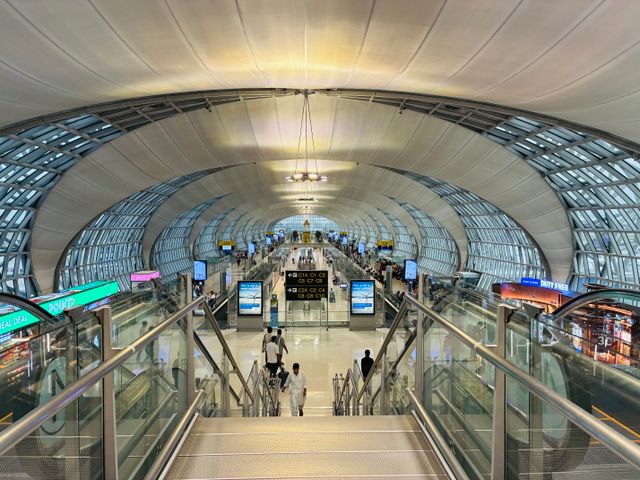

For many years, air travel in India was associated primarily with major metropolitan cities, expensive tickets, crowded terminals and a limited number of destinations. Flying was often treated as a premium form of transportation rather than an everyday mobility option. That picture is changing. The rapid expansion of airport infrastructure, the growth of regional connectivity, the development of new terminals and the adoption of digital passenger services are gradually transforming the way Indians experience air travel.
India has emerged as the world’s third-largest domestic aviation market, and the scale of its airport network has expanded considerably. According to the Economic Survey 2025–26, the number of airports in the country increased from 74 in 2014 to 164 in 2025. Indian airports handled around 412 million passengers in FY2024–25, while passenger traffic is projected to reach 665 million by FY2030–31. This growth is creating a need for larger terminals, better connectivity, improved passenger facilities and more efficient airport operations.
Airport expansion, however, is not simply about constructing larger buildings. It is increasingly about redesigning the entire travel journey. From reaching an airport to checking in, completing security procedures, finding information, waiting for a flight and reaching a destination, technology and infrastructure are changing multiple stages of the passenger experience.
India’s Airport Network Is Expanding Beyond Major Cities
The most important change in Indian aviation is the movement of airport development beyond the country’s traditional metropolitan centres. Delhi, Mumbai, Bengaluru, Hyderabad, Chennai and Kolkata remain major aviation hubs, but increasing attention is being given to Tier-2 and Tier-3 cities and underserved regions.
The Modified UDAN scheme approved in March 2026 provides a major example of this approach. The scheme has a total outlay of ₹28,840 crore for FY2026–27 to FY2035–36 and includes plans to develop 100 airports from existing unserved airstrips. It also proposes support for approximately 441 aerodromes and the development of 200 modern helipads in remote, hilly, island and aspirational regions.
This expansion can change what air travel means for people living outside major cities. Instead of travelling several hours by road or rail simply to reach a major airport, passengers in some regions may increasingly have access to an airport closer to home. The impact extends beyond convenience because improved connectivity can influence tourism, education, business travel, employment and access to wider markets.
The expansion of regional aviation also changes the relationship between smaller cities and larger economic centres. A city does not necessarily need to become a major metropolitan area to participate more directly in national mobility. Improved air connections can make smaller cities more accessible to students, professionals, entrepreneurs, tourists and families.
Bigger Airports Are Being Designed Around Passenger Growth
Increasing passenger numbers create pressure on existing airport infrastructure. A terminal designed for one level of traffic can become difficult to navigate when passenger volumes grow substantially. Airport expansion therefore involves more than adding flights. It requires additional terminal space, aerobridges, baggage-handling capacity, security infrastructure, parking, road connectivity and passenger amenities.
India’s airport modernisation programme has already increased the combined passenger-handling capacity of operational airports to about 575 million passengers per year, according to information cited from the Economic Survey.
Several airports are also undergoing major terminal expansion. The approved expansion of Srinagar International Airport, for example, involves an estimated investment of ₹1,677 crore. The proposed terminal is planned with an annual capacity of 10 million passengers and a peak-hour capacity of 2,900 passengers.
Such projects demonstrate how airport planning is increasingly being driven by future demand rather than only current passenger volumes. The objective is to prevent airports from becoming bottlenecks as passenger numbers continue to rise.
For travellers, the effect can be visible in simple ways. More check-in counters can reduce queues. Additional security lanes can improve passenger flow. More aerobridges can reduce dependence on buses for boarding. Expanded baggage systems can improve handling capacity. Larger waiting areas can make airports less congested during busy periods.
The quality of these improvements matters just as much as the size of the terminal. A larger airport does not automatically create a better travel experience. Efficient design, clear signage, accessibility and predictable passenger movement are equally important.
The Airport Experience Is Becoming More Digital
Airport expansion is also occurring on smartphones and digital platforms. The modern passenger increasingly expects information to be available before reaching the terminal.
Digital systems can support several parts of the journey, including flight information, identity verification, check-in, baggage processes and navigation within airports. Digi Yatra is one example of India’s wider movement towards technology-enabled passenger processing.
The broader transformation is moving the airport experience away from a process based entirely on physical documents and counters towards a combination of digital identity, automated systems and self-service facilities.
The Ministry of Civil Aviation has also highlighted passenger-focused initiatives such as free Wi-Fi, Flybrary and UDAN Yatri Cafés as part of efforts to improve airport convenience.
These services may appear relatively small compared with terminal construction, but they influence how passengers perceive an airport. A traveller’s experience is shaped not only by whether a flight departs on time but also by how easily they can find information, access essential services and spend time at the airport.
Security and Convenience Must Develop Together
One of the most complicated aspects of airport expansion is balancing security with passenger convenience. Airports cannot simply remove security procedures to make journeys faster. Instead, the challenge is to make security processes more efficient without compromising aviation safety.
In July 2026, authorities reviewed passenger facilities, security arrangements and immigration systems at major airports. The review included plans to expand baggage-drop facilities beyond the 16 major airports where they were already available and to introduce automatic tray retrieval systems in phases.
Automation can make repetitive processes faster and more organised. Automatic tray systems, baggage-drop infrastructure and improved passenger-processing technology can potentially reduce unnecessary waiting and improve the movement of people through terminals.
The future airport is therefore likely to depend increasingly on intelligent infrastructure rather than simply more infrastructure. A larger terminal with inefficient processes can still feel crowded, while a well-designed terminal can handle substantial passenger numbers more smoothly.
Regional Connectivity Is Changing Who Can Fly
Airport expansion also has a social dimension. India’s aviation growth is gradually broadening the geographical reach of air travel.
The original UDAN scheme, launched in 2016, has operationalised hundreds of regional routes and connected airports, heliports and water aerodromes across different parts of the country. The next phase of the programme aims to continue expanding connectivity to underserved locations.
The Modified UDAN scheme specifically identifies improved connectivity to underserved and unserved areas as an objective, alongside support for tourism, trade and economic activity in Tier-2 and Tier-3 cities.
For passengers, regional connectivity can reduce the geographic distance between opportunity and residence. A student from a smaller city may find it easier to travel for an entrance examination or educational programme. A professional may be able to attend a meeting in another city without spending an entire day travelling by road or rail. Tourists may be able to reach destinations that previously required long connecting journeys.
This does not mean air travel will replace railways or road transport. Instead, India’s transportation system is becoming more interconnected, with different modes serving different distances, costs and passenger needs.
Airports Are Becoming Gateways to Regional Economies
An airport can influence far more than aviation. When connectivity improves, businesses may find it easier to reach customers, employees and suppliers. Tourism destinations can become more accessible, while local hospitality, transportation, retail and service industries can benefit from additional visitors.
This relationship is particularly relevant for emerging cities. An airport can become part of a wider economic ecosystem involving hotels, restaurants, logistics companies, tourism operators, educational institutions and technology businesses.
The expansion of airports can therefore change how cities position themselves. A city that was previously considered distant from major commercial centres can become more closely integrated into national travel networks.
The potential effect is particularly significant for tourism. India’s geographical diversity includes mountains, beaches, heritage cities, pilgrimage centres, forests and cultural destinations. Better regional connectivity can make these locations easier to access, although the resulting increase in tourism also creates responsibilities around infrastructure, environmental management and sustainable development.
International Travel Is Becoming More Distributed
Indian aviation is also moving towards a more distributed international connectivity model. In 2026, the Ministry of Civil Aviation began implementing a hub-and-spoke framework for international passenger movement, with Varanasi, Amritsar and Ahmedabad being incorporated into the initiative in stages.
This development reflects a broader attempt to connect passengers from different parts of the country with international networks through multiple aviation hubs.
For passengers, such systems could eventually provide more alternatives for international travel. Instead of every international journey being centred around a small number of metropolitan gateways, additional cities can participate in international connectivity.
This could also influence tourism and business relationships between India and other countries. As international aviation becomes more distributed, airports outside the traditional metropolitan network can become more significant parts of the country’s global mobility system.
The Airport Is Becoming Part of the Travel Experience
Traditionally, travellers viewed an airport mainly as a place to pass through before boarding an aircraft. Modern airport development is changing that relationship.
New terminals increasingly include restaurants, retail spaces, cultural installations, lounges, children’s areas, information facilities and other passenger services. In May 2026, passenger facilities inaugurated at Ranchi Airport included a UDAN Yatri Café, an AVSAR Counter, a kids’ zone and a Flybrary, alongside cultural installations.
These additions show that airports are increasingly being designed as environments rather than purely functional transportation buildings.
This does not mean every airport needs to become a shopping destination. Instead, the emphasis is increasingly on creating an environment where passengers can wait comfortably, access essential services and experience a sense of place.
For Indian airports, this also creates an opportunity to showcase local culture. Architecture, artwork, food and information displays can introduce travellers to the identity of a region before they even leave the terminal.
The New Passenger Expects More Than a Flight
As aviation becomes more accessible, passenger expectations are also changing. Travellers are increasingly familiar with digital services in banking, shopping, food delivery and transportation. They therefore expect similar levels of convenience when travelling by air.
The modern passenger may want to complete multiple processes digitally, receive timely notifications, navigate an unfamiliar airport easily and understand their rights when disruptions occur.
Passenger rights and transparent communication are consequently becoming increasingly important. The Ministry of Civil Aviation has issued directions concerning passenger rights, including requirements related to delays, cancellations, denied boarding, seat allocation and communication of passenger entitlements.
This reflects a wider shift in the definition of travel quality. A successful journey is not simply one in which an aircraft reaches its destination. The experience includes everything from booking and airport arrival to security, boarding, baggage collection and onward transportation.
Sustainability Will Become More Important
Rapid airport expansion also raises questions about sustainability. More passengers and more aircraft create additional demands for energy, land, water, road infrastructure and waste management.
Future airport development will therefore need to consider environmental performance alongside passenger capacity. Energy-efficient terminals, renewable energy, water conservation, sustainable construction and improved public transportation connections can become increasingly important.
The sustainability challenge is not limited to the airport building itself. How passengers reach airports also matters. An airport that is technically modern but poorly connected to public transportation can increase dependence on private vehicles.
The future airport is likely to be judged not only by the number of passengers it can handle but also by how efficiently it uses resources and connects with the surrounding city.
What Airport Expansion Means for the Future of Indian Travel
India’s airport expansion represents a larger transformation in the country’s mobility system. The growth of airports, regional routes, digital services and terminal capacity is gradually creating an aviation network that extends beyond the traditional metropolitan model.
The numbers demonstrate the scale of this transformation. Indian airports handled approximately 420 million passengers in 2025, compared with about 401 million in 2024, according to the Ministry of Civil Aviation’s annual reporting. International passenger traffic increased by about 7.5 percent during the same period, while domestic passenger traffic increased by about 4.2 percent.
Such growth creates both opportunities and challenges. More passengers require greater capacity, but capacity must be accompanied by efficient operations. New airports can improve connectivity, but they need sustainable routes and supporting infrastructure. Digital systems can reduce friction, but they must remain accessible to passengers with different levels of technological familiarity.
The future of Indian aviation will therefore depend on how effectively physical infrastructure, digital technology, regional connectivity, passenger rights and sustainability develop together.
Conclusion
Airport expansion is changing the Indian travel experience from the ground up. The transformation is visible in new terminals, expanding regional airports, improved passenger facilities and digital services, but its deeper impact is the changing role of air travel in everyday life.
Flying is increasingly becoming part of a wider transportation ecosystem rather than an isolated experience reserved for major cities and long-distance journeys. As regional connectivity expands, more cities can become connected to national and international networks. As terminals become more sophisticated, passenger movement can become more technology-driven. As airports become gateways to local economies, their importance can extend beyond aviation.
The next phase of Indian aviation will not simply be about building more airports. It will be about creating a connected, efficient and passenger-oriented travel ecosystem capable of serving a rapidly growing population of travellers. For passengers, this means that the airport of the future may feel very different from the airport many Indians experienced a decade ago.
India’s aviation story is therefore no longer only about getting from one city to another. It is increasingly about how infrastructure, technology and connectivity can reshape the entire journey between where people live, where they study, where they work and where they want to go.
Online Internship with Certificate
You may be interested

Why Authorities Are Rethinking the Management of Large Public Demonstrations
Anshika Jain - Oct 15, 2026Large public demonstrations have become an important feature of modern democratic societies. From student movements and workers’ strikes to political rallies, environmental campaigns and protests demanding government…

TVK’s Bypoll Wins: What the Party’s First Electoral Test Reveals About Its Political Position
Anshika Jain - Oct 15, 2026The Tamilaga Vettri Kazhagam (TVK), led by Tamil Nadu Chief Minister C. Joseph Vijay, has cleared its first major electoral test since forming the state government. The…

Why Tribal Students Are Marching for Education and Equal Opportunities
Anshika Jain - Oct 15, 2026Education is widely recognised as a pathway to social mobility, economic independence and equal participation in society. For many tribal students in India, however, the journey towards…
Most from this category

Student Protests Over Hostel Facilities: Basic Infrastructure Is Political Issue
Anshika Jain - Oct 15, 2026
Campus Curfews and Women’s Freedom: Safety Rules Become a Discrimination?
Anshika Jain - Oct 15, 2026
When Opposition Leaders Face Detention: The Legal Boundaries of Political Protest
Anshika Jain - Oct 15, 2026
Why Internal Disagreements Within Constitutional Institutions Matter to Public Trust
Anshika Jain - Oct 14, 2026
Student Protests Over Hostel Facilities: Basic Infrastructure Is Political Issue
Anshika Jain - Oct 15, 2026Campus Curfews and Women’s Freedom: Safety Rules Become a Discrimination?
Anshika Jain - Oct 15, 2026When Opposition Leaders Face Detention: The Legal Boundaries of Political Protest
Anshika Jain - Oct 15, 2026