

Nepal Floods 2026: What Happened and Why the Disaster Has Become a Regional Concern

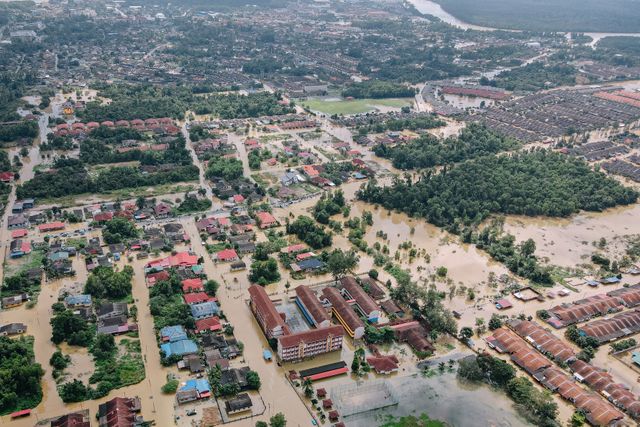

Nepal has faced one of the most devastating natural disasters in its recent history after a catastrophic flash flood struck the Himalayan region on August 26, 2026. What initially appeared to be a sudden river disaster quickly developed into a large-scale humanitarian and infrastructure crisis, affecting communities, hydropower projects, roads, bridges, homes and essential services across several districts. The disaster began near the Nepal-China border and sent a powerful surge of water, mud, rocks and debris through the Bhotekoshi and Trishuli river systems.
The scale of the disaster has extended well beyond the immediate flood zone. Thousands of people have died or remain unaccounted for, hundreds of thousands have been affected, and the destruction of critical infrastructure has created challenges for transportation, electricity, communications, healthcare and local livelihoods. Nepal has also estimated that rebuilding will require several billion dollars, placing additional pressure on an economy already vulnerable to climate-related disasters.
The disaster has become a regional concern because Nepal’s rivers, energy infrastructure and transport networks are closely connected with neighbouring countries. The flood’s downstream river systems flow toward India, while the affected region lies along a strategically important Himalayan border with China. Damage to Nepal’s hydropower sector has also created immediate implications for cross-border electricity cooperation with India. The event therefore demonstrates how a disaster occurring in one Himalayan country can generate humanitarian, environmental, economic and infrastructure consequences across national boundaries.
What Happened in Nepal on August 26?
The disaster unfolded suddenly on the morning of August 26 near the Nepal-China border. A massive upstream event caused an enormous volume of water, ice, rock and sediment to enter the river system and move rapidly downstream. Nepalese authorities have described the event as a severe flood in the Bhote Koshi river system, while scientific and media assessments have examined the possibility of an ice-and-rock collapse, avalanche or other high-altitude geological event as the initial trigger.
Early investigations considered several possible explanations, including an avalanche or landslide blocking the river before suddenly releasing water, an earthquake-related ice and rock collapse, and a possible glacial lake outburst. The precise sequence of events was initially uncertain, and authorities continued investigating the physical mechanism behind the flood. Satellite assessments identified major changes and debris deposits in the high-altitude area, supporting the conclusion that the disaster originated from a sudden upstream event rather than a conventional rainfall-driven flood.
This distinction is important. Ordinary monsoon floods can develop over several hours or days as rainfall increases river levels. The August disaster was different because a massive amount of water and debris entered the river system abruptly. Such events can travel through narrow Himalayan valleys with extraordinary speed, leaving communities very little time to respond.
The flood then moved through areas including Rasuwa, Nuwakot and Dhading, damaging settlements and critical infrastructure along the river corridor. Nepal’s Ministry of Foreign Affairs reported extensive destruction of homes, buildings, roads, bridges and hydropower facilities and said search-and-rescue operations continued well after the initial disaster.
The Human Cost of the Disaster
The most serious consequence has been the enormous loss of life and the continuing uncertainty surrounding thousands of missing people. As search, recovery and identification operations progressed, the numbers changed repeatedly. Nepal’s Ministry of Foreign Affairs reported on September 11 that 1,385 bodies had been recovered, approximately 5,130 people remained missing and 13,676 people had been rescued. The government also noted that these figures remained subject to continuous updating because search, recovery and verification operations were still underway.
The humanitarian impact extends beyond deaths and missing persons. The United Nations Population Fund estimated that approximately 352,000 people were affected by the floods. Thousands were displaced and staying in temporary shelters or holding centres, where overcrowding, disrupted water and sanitation systems and damaged healthcare facilities created additional risks.
For families, the disaster has created a particularly difficult situation because identification of missing people can take considerable time. Roads and communication systems were damaged, while debris and difficult terrain complicated rescue and recovery operations. International assistance has included specialised rescue teams and equipment, with teams from India, China, South Korea, Malaysia, Australia and the United Arab Emirates participating in different aspects of the response.
The humanitarian crisis also has a gender and child-protection dimension. UNFPA reported concerns involving reproductive healthcare, waterborne diseases, displacement, loss of documentation, gender-based violence and increased vulnerability among women and adolescent girls. These challenges illustrate why disaster recovery cannot be limited to rebuilding roads and houses; it must also address healthcare, protection, education, livelihoods and community stability.
Why the Flood Was So Destructive
Nepal’s geography is one of the central reasons why Himalayan disasters can become so destructive. Steep mountain slopes, narrow valleys and rapidly flowing rivers create natural channels through which enormous quantities of water and debris can travel. Settlements, roads, bridges and hydropower infrastructure are often concentrated along river valleys because these corridors provide access through mountainous terrain.
When a sudden surge occurs, the river does not carry water alone. It can transport boulders, mud, trees, broken infrastructure and other debris. This dramatically increases the destructive force of the flood and can block bridges, damage roads and bury buildings.
Another factor is the difficulty of providing warnings for extremely sudden high-altitude events. Traditional flood forecasting systems are often designed around rainfall, river levels and weather patterns. A sudden collapse of ice, rock or a natural dam can occur with much less warning, particularly when the triggering process takes place in a remote mountain environment.
The event has therefore raised questions about how Himalayan countries can strengthen early-warning systems for multiple types of hazards rather than relying exclusively on rainfall and river monitoring. Monitoring glaciers, unstable slopes, glacial lakes and high-altitude river systems could become increasingly important as climate and geological risks interact.
Damage to Roads, Bridges and Connectivity
Infrastructure has suffered extensive damage across the affected areas. Roads and bridges are particularly important in Nepal because mountainous communities depend on relatively limited transport corridors. When one bridge or road section is destroyed, entire communities can become difficult to reach.
The government has been working to restore connectivity while rescue and relief operations continue. Nepal’s Ministry of Foreign Affairs reported that an Acrow Bridge over the Tadi River at Devighat had been installed and opened to the public, while road clearance and debris removal continued in other locations.
The damage also affects more than local travel. Roads and bridges connect communities with hospitals, markets, schools, airports, border crossings and emergency services. Their destruction can therefore multiply the effects of the original disaster by making it harder to deliver food, medicine, rescue equipment and construction materials.
Rebuilding transport infrastructure will consequently be an important part of Nepal’s longer-term recovery. The challenge will be not simply to replace what was destroyed but to consider whether future infrastructure should be designed to withstand increasingly complex mountain hazards.
Nepal’s Hydropower Sector Faces a Major Setback
One of the most significant economic consequences of the floods has been the damage to Nepal’s hydropower infrastructure. Hydropower plays a central role in Nepal’s electricity system and has increasingly become an important component of its economic relationship with India.
The August flood damaged numerous power projects and associated transmission infrastructure. The Kathmandu Post reported that at least 12 operational power projects were affected, with some completely destroyed and others suffering partial damage. The government estimated major losses in the energy sector and said restoring the wider energy and power-grid systems would require substantial investment.
The damage has created an unusual situation for Nepal. The country has been developing hydropower not only to meet domestic electricity demand but also to export surplus electricity to India. However, damage to generating facilities and transmission systems has reduced available domestic capacity at a time when Nepal normally prepares for lower winter river flows.
This has made regional electricity cooperation particularly important.
Why India Is Closely Connected to Nepal’s Recovery
The flood has direct implications for India because Nepal’s rivers eventually flow into the Indian river system, while the two countries have extensive economic, energy and infrastructure connections.
However, it is important not to assume that every flood in Nepal automatically produces flooding in India. The relationship between upstream and downstream flooding depends on the river basin, rainfall, geography, storage capacity, sediment loads and local weather conditions. Experts have noted that powerful mountain flood waves can behave differently as they move from narrow Himalayan valleys into wider plains.
The energy connection is more immediate. After the floods damaged Nepal’s hydropower capacity, India approved electricity exports of up to 654 megawatts for 18 hours a day through December 31, 2026. The arrangement is intended to help Nepal manage power shortages while damaged hydropower facilities are being restored.
This development demonstrates the practical importance of regional infrastructure. Electricity generated in one country, transmitted through cross-border networks and consumed in another can become part of a disaster-response system when an emergency disrupts domestic generation.
Why China Is Also Part of the Regional Picture
The disaster began near the Nepal-China border, making China an important part of the geographical and humanitarian context. The high-altitude area where the initial event occurred is connected to the wider Himalayan environment, where glaciers, snow, rock formations and river systems cross or approach international boundaries.
The disaster also affected infrastructure and movement around border areas. This means that disaster preparedness in the Himalayas cannot be treated exclusively as a domestic issue. Monitoring hazards, sharing information and coordinating emergency responses can become important when a river or mountain system crosses political boundaries.
International rescue teams have already demonstrated the value of cooperation. Nepal reported that teams from India, China and other countries were working alongside Nepali authorities in search-and-rescue operations.
Climate Change and the Growing Himalayan Risk
The floods have also intensified discussion about climate change and the vulnerability of Himalayan communities. Researchers and international organisations have increasingly warned that rising temperatures can affect glaciers, snow cover, permafrost and high-altitude landscapes.
However, it is important to distinguish between a disaster’s immediate physical trigger and broader climate trends. The precise trigger of the August 26 event has been investigated as an ice-rock collapse, avalanche, landslide or related high-altitude process. Climate change may influence the stability of mountain environments, but attributing one individual event entirely to climate change requires detailed scientific analysis.
What is clearer is that Nepal faces disproportionate climate risks despite contributing relatively little to global greenhouse gas emissions. Nepal has therefore argued that international financial support should address the growing costs of climate-related disasters. Reuters reported that the government was seeking international assistance for a rebuilding requirement of about $5 billion and was placing climate-related loss and damage at the centre of its international appeal.
The issue is therefore larger than a single flood. It raises questions about how vulnerable countries can finance adaptation, early-warning systems and resilient infrastructure when the costs of extreme events exceed their domestic financial capacity.
The Economic Challenge of Rebuilding
The financial consequences of the floods are enormous. Early estimates have placed the reconstruction requirement in the range of roughly $4 billion to $5 billion, although the final figure can change as detailed assessments continue. The cost includes rebuilding infrastructure, restoring electricity systems, repairing roads and bridges, supporting affected communities and replacing damaged public and private assets.
For Nepal, reconstruction will compete with other development priorities. Money that might otherwise be invested in education, healthcare, tourism, employment or new infrastructure may have to be redirected toward disaster recovery.
At the same time, rebuilding provides an opportunity to reconsider the resilience of infrastructure. Reconstructing a bridge in exactly the same location and design may restore connectivity quickly, but a more resilient approach could involve improved flood modelling, stronger foundations, alternative routes, better warning systems and greater consideration of river dynamics.
The Public Health Risks After the Flood
The end of the immediate flood does not mean the end of the emergency. Disasters of this scale can create prolonged public-health risks because clean water systems, sanitation networks, hospitals and roads may be damaged.
The World Health Organization has warned that crowded shelters, damaged water and sanitation systems, disrupted healthcare services and difficult road access can increase the risk of communicable diseases following the floods. Health teams have therefore been working on surveillance and response in affected districts.
This stage of the crisis is sometimes less visible than the initial disaster, but it can determine how quickly communities recover. Safe drinking water, sanitation, healthcare, nutrition, maternal care and psychological support become essential as displaced families spend longer periods away from their homes.
What the Disaster Means for South Asia
The Nepal floods illustrate the interconnected nature of South Asia’s environmental and economic systems. Rivers cross borders, electricity networks connect neighbouring countries, people travel between countries for work and tourism, and supply chains depend on roads and border crossings.
A major disaster in the Himalayan region can therefore influence downstream flood preparedness, electricity availability, tourism, trade, transportation and humanitarian coordination. It also reinforces the importance of information sharing among countries that occupy different parts of the same river and mountain systems.
For India in particular, the disaster highlights the importance of maintaining effective cross-border river monitoring and communication while also recognising that downstream flooding cannot be explained by Nepal’s conditions alone. Recent flooding in Bihar, for example, has demonstrated that local weather and hydrological conditions can also play a major role in determining flood risk.
The wider lesson is that regional disaster preparedness requires cooperation rather than isolated national planning.
The Road Ahead for Nepal
Nepal’s recovery will likely take years rather than months. The immediate priorities remain search and rescue, identification of missing people, emergency shelter, healthcare, restoration of roads and communications, and support for displaced families. The next phase will involve rebuilding homes, schools, bridges, electricity infrastructure, hydropower facilities and local economies.
Nepal’s government has already been seeking specialised equipment and international assistance, including high-capacity drones, LiDAR systems, temporary bridges, epidemic-prevention supplies, DNA testing kits, underwater drones and high-capacity pumps.
The scale of the disaster also means that recovery cannot depend on one country or one institution. Nepal will need coordination between federal and local authorities, humanitarian organisations, neighbouring countries, international financial institutions, scientists, engineers and affected communities.
Conclusion
The Nepal floods of 2026 are more than a devastating natural disaster. They represent a complex combination of humanitarian loss, infrastructure destruction, energy disruption, economic pressure and regional vulnerability. The August 26 event demonstrated how quickly a high-altitude disturbance can transform into a catastrophic flood when enormous quantities of water, ice, rock and debris enter a Himalayan river system.
The continuing search for missing people, the displacement of communities and the destruction of hydropower infrastructure show that the crisis is far from over. At the same time, Nepal’s need for billions of dollars in reconstruction support demonstrates the long-term financial consequences of extreme disasters.
The regional dimension is equally important. Rivers connect Nepal with India, the disaster occurred near China’s border, and Nepal’s damaged electricity infrastructure has already required expanded power cooperation with India. These connections show why Himalayan disaster management cannot stop at national borders.
The 2026 floods therefore offer a wider lesson for South Asia: disaster preparedness must increasingly account for sudden mountain hazards, climate-related environmental changes, resilient infrastructure, reliable early-warning systems and stronger cross-border coordination. For Nepal, recovery will be measured not only by how quickly damaged infrastructure is rebuilt, but also by whether the country can emerge with stronger systems capable of protecting communities from the next major Himalayan disaster.
Online Internship with Certificate
You may be interested

Why Authorities Are Rethinking the Management of Large Public Demonstrations
Anshika Jain - Oct 15, 2026Large public demonstrations have become an important feature of modern democratic societies. From student movements and workers’ strikes to political rallies, environmental campaigns and protests demanding government…

TVK’s Bypoll Wins: What the Party’s First Electoral Test Reveals About Its Political Position
Anshika Jain - Oct 15, 2026The Tamilaga Vettri Kazhagam (TVK), led by Tamil Nadu Chief Minister C. Joseph Vijay, has cleared its first major electoral test since forming the state government. The…
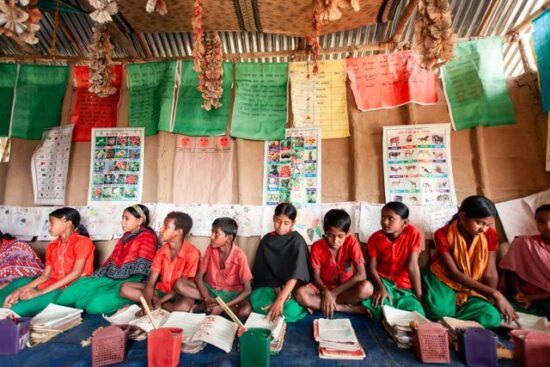
Why Tribal Students Are Marching for Education and Equal Opportunities
Anshika Jain - Oct 15, 2026Education is widely recognised as a pathway to social mobility, economic independence and equal participation in society. For many tribal students in India, however, the journey towards…
Most from this category
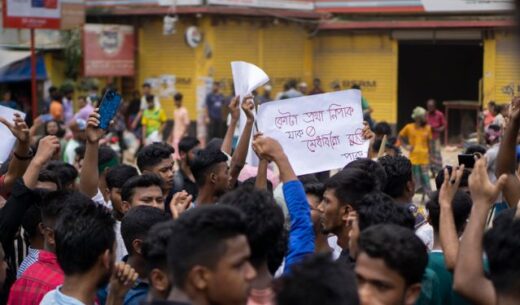
Student Protests Over Hostel Facilities: Basic Infrastructure Is Political Issue
Anshika Jain - Oct 15, 2026
Campus Curfews and Women’s Freedom: Safety Rules Become a Discrimination?
Anshika Jain - Oct 15, 2026
When Opposition Leaders Face Detention: The Legal Boundaries of Political Protest
Anshika Jain - Oct 15, 2026
Why Internal Disagreements Within Constitutional Institutions Matter to Public Trust
Anshika Jain - Oct 14, 2026
Student Protests Over Hostel Facilities: Basic Infrastructure Is Political Issue
Anshika Jain - Oct 15, 2026Campus Curfews and Women’s Freedom: Safety Rules Become a Discrimination?
Anshika Jain - Oct 15, 2026When Opposition Leaders Face Detention: The Legal Boundaries of Political Protest
Anshika Jain - Oct 15, 2026