

Dhruv Rathee Video Controversy: What the Delhi High Court Case Is About

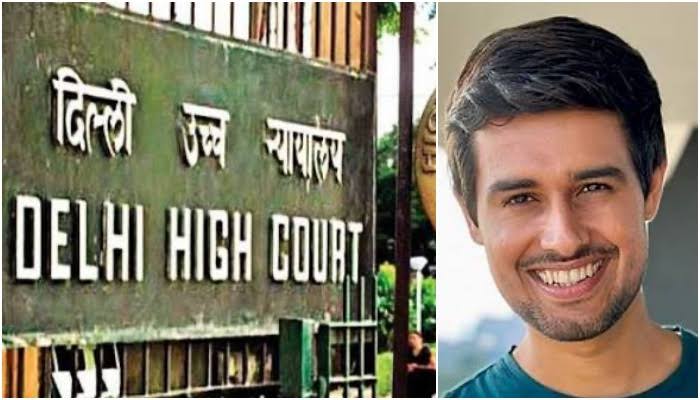

A YouTube video by content creator Dhruv Rathee has become the subject of legal proceedings in Delhi after objections were raised over its discussion of Hindu scriptures, dietary practices and references to revered Hindu figures. The controversy has moved beyond social media debate and into formal legal and regulatory proceedings involving the Delhi High Court, the Centre’s Grievance Appellate Committee (GAC), YouTube and the Delhi Police.
The video at the centre of the controversy was uploaded on March 21, 2026, with the title “Can Hindus Eat BEEF? | Kerala Story 2 EXPOSED.” The video discussed whether eating meat, including beef, is compatible with Hindu traditions and examined references to food and dietary practices in Hindu religious texts. A complainant, advocate Amita Sachdeva, objected to portions of the video and alleged that it made derogatory and inflammatory statements concerning Hindu religious figures and could hurt religious sentiments.
The legal dispute is significant because it raises questions extending beyond one YouTube video. It involves the responsibilities of social-media platforms when users complain about potentially offensive content, the role of government-appointed grievance mechanisms, the limits of online expression, and the difference between a court directing an administrative authority to decide a complaint and a court itself making a final determination on the underlying allegations.
As of September 2026, the matter has not resulted in a final judicial determination on all the issues surrounding the video. The video has been restricted in India following a GAC order, while a separate police inquiry into the complaint remains ongoing.
What Was the Dhruv Rathee Video About?
The controversy began with Rathee’s March 2026 video examining the question of whether Hindus can eat beef and discussing the relationship between food practices and Hindu religious traditions. According to court reporting, the video referred to passages in Hindu scriptures and made claims concerning the consumption of meat and alcohol by figures including Lord Ram, Sita and Lord Krishna.
Those references became the central point of the complaint. The complainant alleged that Rathee had distorted or inaccurately represented Hindu scriptures and that the presentation was offensive to religious beliefs. These are allegations made by the complainant and have not, merely by being made, become findings of a court.
The subject was particularly sensitive because food practices and religious identity are closely connected in public discussions in India. The video therefore generated a wider online debate about how historical or scriptural material should be interpreted, how religious texts should be presented in popular digital content, and where the boundary lies between discussion of religion and content that viewers may regard as offensive.
The dispute eventually moved from online criticism to formal complaints against the video and its availability on YouTube.
Who Approached the Authorities?
Advocate Amita Sachdeva became the principal complainant in the proceedings concerning the video. She initially approached YouTube’s grievance mechanism and objected to the content. According to legal reports, YouTube’s grievance officer did not find a violation of its community guidelines at that stage.
The disagreement did not end there. Sachdeva subsequently approached the government’s Grievance Appellate Committee, or GAC, challenging the platform-level decision. The GAC is an appellate mechanism created under India’s framework governing intermediary grievance redressal. It provides a route through which users can challenge certain decisions taken by online platforms concerning complaints about digital content or accounts.
The dispute therefore moved through several stages rather than beginning directly as a conventional criminal or civil trial before the Delhi High Court.
Why Did the Delhi High Court Become Involved?
The Delhi High Court became involved after Sachdeva approached it concerning the pending grievance process. The important point is that the High Court’s initial intervention was not a final ruling declaring the video unlawful or establishing that every allegation made against Rathee was proved.
On July 3, 2026, Justice Swarana Kanta Sharma directed the GAC to decide the pending appeal within 15 days and pass a reasoned order. The court also indicated that non-compliance with its direction would be taken seriously.
This distinction is important when understanding the case. A court can direct an administrative authority to perform its statutory or regulatory function without itself deciding the entire dispute on the merits. In this instance, the High Court’s July intervention focused on ensuring that the grievance mechanism reached a decision within a specified period.
The GAC subsequently considered the complaint and passed an order on July 15 directing that the video be removed. Reports on the order state that the committee considered that the content had a tendency to hurt religious sentiments.
What Did the Grievance Appellate Committee Decide?
The GAC’s July 15 decision became a major turning point in the controversy. It directed removal of the disputed video within the specified period.
The decision did not end the legal dispute because questions remained about implementation and the geographic scope of the removal. A further application was subsequently brought before the Delhi High Court alleging that the video had not been removed in accordance with the committee’s order.
The proceedings therefore shifted from the original question of whether the complaint should be considered to the practical question of whether YouTube had complied with the regulatory direction.
This distinction is important because online content can exist in multiple forms. A video can be available through the original uploader’s account, mirrored by other accounts, shared through links, or accessed from outside India. Removing one copy from one jurisdiction does not necessarily mean that the material has disappeared from the internet altogether.
Why Did Google and YouTube Return to the Delhi High Court?
In August, Google informed the Delhi High Court that YouTube had withheld the disputed video from viewers in India pursuant to the GAC’s order.
The company also explained that the video remained accessible outside India. The complainant therefore sought broader relief, including removal of the video globally.
Google opposed treating global removal as an automatic consequence of the Indian order. According to reporting on the August hearing, the company pointed out that questions concerning the global removal of online content were already the subject of separate legal consideration.
The issue illustrates one of the most complicated aspects of internet regulation: the difference between restricting content within one country’s legal jurisdiction and ordering worldwide removal.
A government authority may have legal power to restrict content for users within its jurisdiction, while a global takedown can raise additional questions about territorial law, conflicting legal standards and the rights of users in other countries.
The Delhi High Court did not immediately grant the broader relief sought at that stage. The matter was adjourned, with a subsequent hearing scheduled.
What Is the Difference Between the High Court Case and the Police Inquiry?
Another important part of the controversy is the separate police inquiry. The Delhi High Court proceedings concerning the video should not be confused with the criminal complaint being examined by the Delhi Police.
A complaint was filed with the police in March 2026 alleging that the video contained offensive and derogatory references to Hindu religious figures and could promote communal disharmony. The Delhi Police later began examining the complaint and the disputed content.
In June, a Delhi court directed the police to submit an action-status report. By September, the police informed the court that their inquiry was still continuing.
According to the police status report, investigators had approached Google and YouTube for electronic information and account-related details connected with the video. The platforms sought clarification about the investigation and the specific information requested. Police officials said that the necessary clarification was being provided and that a fresh request would be submitted.
This means that the police inquiry had not reached a final conclusion as of September 2026. The investigation remained dependent, in part, on obtaining and examining digital information before a final status report could be submitted.
What Legal Allegations Have Been Raised?
The allegations surrounding the video cover several different legal and factual questions. The complainant has alleged that the video distorted Hindu scriptures, made derogatory statements about revered figures and hurt religious sentiments.
Separate proceedings for registration of an FIR have also been initiated, with legal reports referring to provisions of the Bharatiya Nyaya Sanhita, including Sections 196, 299 and 302.
It is important to distinguish allegations from findings. The filing of a complaint or invocation of criminal provisions does not establish guilt. Criminal liability, if pursued, would have to be determined through the applicable legal process and on the basis of evidence.
Similarly, the GAC’s decision to direct removal of the video concerns the regulatory handling of online content. It does not by itself amount to a criminal conviction against the creator.
The different proceedings therefore operate within different legal frameworks and can produce different questions and outcomes.
The Debate Over Freedom of Expression
The controversy has also triggered a broader discussion about freedom of expression in digital media.
India’s constitutional framework protects freedom of speech and expression, while that freedom is subject to constitutionally permitted restrictions. The legal challenge in cases involving religious content is often to determine where protected discussion, criticism, interpretation or debate ends and legally actionable content begins.
Religion presents an especially complex area because discussions of scriptures can involve historical interpretation, academic research, cultural traditions and personal belief. The same statement may be viewed differently by scholars, believers, critics and general audiences.
At the same time, the legal framework does not treat every piece of online content as automatically protected simply because it is presented as commentary or analysis. Content can become subject to regulatory or legal scrutiny where specific statutory requirements are alleged to have been breached.
The Rathee controversy therefore sits within a larger question about how these competing interests should be balanced in an era when individual creators can reach millions of people without traditional editorial institutions.
Why YouTube’s Role Matters
The case is also important because it highlights the growing role of digital platforms in disputes over speech.
Traditional publishers and broadcasters generally have established editorial structures through which controversial material can be reviewed before publication. Platforms such as YouTube operate at a vastly larger scale, hosting enormous volumes of user-generated content every day.
This creates a difficult regulatory question. Platforms must establish rules for content moderation while also responding to complaints, government orders and legal proceedings. At the same time, users may challenge removals when they believe their content was restricted unfairly.
In the Rathee matter, the sequence involved an initial complaint to YouTube, an appeal to the GAC, judicial intervention concerning the pending appeal, the GAC’s subsequent removal direction and later proceedings regarding compliance.
The case therefore demonstrates how a dispute over one online video can move through several layers of digital governance.
Why the India-Only Restriction Is Significant
The restriction of the video in India is another important aspect of the case.
Google informed the High Court in August that YouTube had withheld the video within India pursuant to the GAC’s order. This means that availability of the video can differ depending on the user’s location.
Such geographic restrictions are common in global digital platforms because online services must comply with the laws and legally binding orders applicable in different jurisdictions.
However, geographic blocking does not necessarily eliminate access everywhere. The complainant pointed out before the High Court that the video remained available outside India and could potentially be accessed by people in India through technological means such as VPN services.
The resulting dispute over global removal raises a much broader question: should a content restriction ordered within one legal jurisdiction automatically apply everywhere else?
There is no simple answer because countries have different laws governing speech, religion, defamation, public order and intermediary responsibility.
The Role of Religious Sensitivity
Another central element of the controversy is the question of religious sensitivity in digital content.
India has a highly diverse religious and cultural environment. Public discussion of religious texts can generate intense reactions, especially when content involves revered figures or practices that are central to community identity.
The Rathee video became controversial because it dealt with precisely such subjects. The complainant’s position is that the video’s treatment of religious figures was derogatory and capable of hurting religious sentiments. The regulatory authorities subsequently ordered its removal.
At the same time, the underlying subject involves interpretation of religious texts, and questions about historical food practices are capable of being examined from textual, historical and academic perspectives.
The legal process is therefore concerned not simply with whether viewers agree with the interpretation presented in a video, but with whether the content crosses the legal or regulatory thresholds applicable to online material.
What Has Happened to the Video So Far?
The timeline provides a clearer picture of the controversy.
Rathee uploaded the video on March 21, 2026. A complaint concerning the content followed shortly afterward. The complainant first pursued the platform’s grievance mechanism and subsequently approached the GAC after the initial platform-level process did not produce the requested outcome.
The matter reached the Delhi High Court in connection with the pending regulatory appeal. On July 3, the court directed the GAC to decide the matter within 15 days. On July 15, the GAC ordered removal of the video.
A further dispute then arose concerning compliance with that order. In August, Google informed the High Court that YouTube had withheld the video in India. The complainant sought broader relief, including global removal.
Meanwhile, the criminal complaint remained under police investigation. In September, Delhi Police informed a magistrate’s court that it was still collecting digital information and had not yet completed the inquiry.
Thus, the current position involves more than one parallel process.
What Happens Next?
The future of the dispute depends on the outcome of the separate proceedings.
The Delhi High Court may continue to consider issues connected with implementation of the GAC’s order and the request for broader removal. Questions about global takedown can involve additional legal considerations and are not automatically resolved by an India-specific restriction.
The Delhi Police inquiry may also result in a final status report once investigators receive and examine the requested information from Google and YouTube. Any further criminal proceedings would depend on the findings of that investigation and decisions by the relevant authorities or courts.
The regulatory and criminal processes should therefore be followed separately rather than treated as a single case with one immediate outcome.
What This Case Means for Digital Content in India
The Dhruv Rathee video controversy illustrates how India’s digital environment is evolving. YouTube creators can reach audiences comparable to major media organizations, while government regulators and courts are increasingly being asked to address disputes involving online content.
The case also highlights the importance of distinguishing between criticism, interpretation, allegations and established judicial findings. A complaint does not prove an offence, a regulatory takedown does not automatically establish criminal guilt, and a court’s direction to an administrative body does not necessarily represent a final ruling on every factual dispute.
For audiences, this distinction is especially important because social-media discussions often compress complicated legal proceedings into simple claims that a person has either been “banned,” “convicted,” “cleared” or “censored.” The actual legal process can be much more complicated.
In this case, the available record shows a sequence involving a contested YouTube video, a complaint concerning religious sentiments, a regulatory appeal, Delhi High Court intervention, a GAC removal order, an India-specific restriction by YouTube and a continuing police inquiry.
Conclusion
The Dhruv Rathee video controversy is ultimately about more than one disputed YouTube upload. It brings together questions about religious expression, online speech, platform responsibility, government grievance mechanisms and the limits of digital content regulation.
The Delhi High Court’s role has so far included directing the government grievance mechanism to decide the complaint and subsequently hearing issues connected with implementation of that decision. The GAC ordered removal of the video, and YouTube later restricted access to it in India. At the same time, a separate police inquiry into the allegations remains underway.
As of September 2026, the wider dispute has not reached a single final conclusion covering every issue. The regulatory question, the platform-compliance question and the criminal inquiry involve different procedures and legal standards.
The case is therefore likely to remain relevant beyond the immediate controversy because it reflects a larger challenge facing digital India: how to protect freedom of discussion and expression while addressing content that authorities or individuals allege is offensive, unlawful or harmful to religious sentiments. How courts, regulators and technology platforms handle such disputes could influence the way future controversies involving online creators are addressed.
Online Internship with Certificate
You may be interested

Why Authorities Are Rethinking the Management of Large Public Demonstrations
Anshika Jain - Oct 15, 2026Large public demonstrations have become an important feature of modern democratic societies. From student movements and workers’ strikes to political rallies, environmental campaigns and protests demanding government…

TVK’s Bypoll Wins: What the Party’s First Electoral Test Reveals About Its Political Position
Anshika Jain - Oct 15, 2026The Tamilaga Vettri Kazhagam (TVK), led by Tamil Nadu Chief Minister C. Joseph Vijay, has cleared its first major electoral test since forming the state government. The…
Why Tribal Students Are Marching for Education and Equal Opportunities
Anshika Jain - Oct 15, 2026Education is widely recognised as a pathway to social mobility, economic independence and equal participation in society. For many tribal students in India, however, the journey towards…
Most from this category
Student Protests Over Hostel Facilities: Basic Infrastructure Is Political Issue
Anshika Jain - Oct 15, 2026
Campus Curfews and Women’s Freedom: Safety Rules Become a Discrimination?
Anshika Jain - Oct 15, 2026
When Opposition Leaders Face Detention: The Legal Boundaries of Political Protest
Anshika Jain - Oct 15, 2026
Why Internal Disagreements Within Constitutional Institutions Matter to Public Trust
Anshika Jain - Oct 14, 2026
Student Protests Over Hostel Facilities: Basic Infrastructure Is Political Issue
Anshika Jain - Oct 15, 2026Campus Curfews and Women’s Freedom: Safety Rules Become a Discrimination?
Anshika Jain - Oct 15, 2026When Opposition Leaders Face Detention: The Legal Boundaries of Political Protest
Anshika Jain - Oct 15, 2026