Six Years of Arrest Delays: What the Delhi Court’s MCOCA Criticism Reveals


A stringent law is only as effective as the investigation and enforcement that support it. This principle came into sharp focus in October 2026, when a Delhi court criticised the police over a six-year delay in arresting accused persons in a case registered under the Maharashtra Control of Organised Crime Act (MCOCA).
Special MCOCA Judge Gaurav Rao questioned why two accused, Mukesh alias Punit and Pardeep alias Guri, remained unarrested for years after the law was invoked against them in September 2020. According to the court’s observations, both were subsequently named in additional criminal cases before their arrests in 2026. Three other accused also remained unarrested, while the investigation against them was incomplete.
The court strongly rejected a police report that described the officers’ work as their “best efforts”. It called the report superficial and directed that the Delhi Police Commissioner examine the matter and consider appropriate action against officials responsible for the delay.
The criticism raises questions beyond one criminal investigation. Why did the case remain unresolved for so long? What happens when arrests and investigative steps are delayed despite allegations of organised criminal activity? How should senior officers be held accountable for investigative failures?
The case also highlights a crucial distinction. MCOCA is designed to address organised crime, but invoking a stringent statute does not replace the need for effective investigation. Nor does it establish the guilt of every person named in a case. The allegations must still be tested through lawful proceedings.
What Is MCOCA and Why Is It Considered Stringent?
The Maharashtra Control of Organised Crime Act was enacted in 1999 to address organised criminal activity and the structures that allow crime syndicates to operate. Although originally introduced in Maharashtra, the legislation was extended to Delhi through a separate legal process.
The law provides investigative and procedural provisions intended to address organised crime. Its application depends on statutory requirements, including the existence of continuing unlawful activity and the relevant connection to an organised crime syndicate. Authorities cannot lawfully invoke it merely because a person has been accused in several unrelated cases.
MCOCA is particularly significant because it contains provisions that can make bail more restrictive than under ordinary criminal law. It also establishes specific requirements concerning investigations, authorisations, and the admissibility of certain evidence. These provisions reflect the legislature’s intention to address organised criminal networks that may be difficult to investigate through conventional methods alone.
However, the law’s strict provisions make careful implementation essential. A powerful legal framework cannot compensate for weak evidence collection, poor coordination, or prolonged investigative inaction. In fact, delays can undermine the very purpose for which the legislation was created.
The Delhi court’s criticism focused on this contradiction. If the police invoke a law intended to curb organised crime but then fail to act promptly, the statutory intervention risks becoming ineffective in practice.
This does not mean every accused person must automatically be arrested simply because MCOCA has been invoked. Arrest decisions must comply with the law and take account of the facts, evidence, custody status, and applicable procedural safeguards. The central concern is whether investigators took reasonable, documented, and timely steps in this particular case.
The Timeline Behind the Six-Year Delay
The case originated with an FIR registered in September 2020, when MCOCA was invoked against Mukesh alias Punit and Pardeep alias Guri. According to the court’s account, Mukesh was already named in around 20 FIRs, including two relating to murder and one concerning attempted murder. These were allegations recorded in criminal cases, not proof of guilt in every matter.
The court observed that Mukesh was subsequently named in eight additional FIRs between 2021 and 2024. The reported allegations included murder, attempted murder, robbery, and kidnapping. Despite the earlier invocation of MCOCA, he was arrested only on February 9, 2026.
The investigation was assigned to Assistant Commissioner of Police Rakesh Kumar on September 25, 2025. The court noted that the arrest followed this reassignment and questioned why earlier investigating officers had not taken comparable action.
Pardeep alias Guri was arrested on April 16, 2026. The court also noted that he had been named in other criminal cases after MCOCA was invoked. Three additional accused remained unarrested, and the investigation concerning them had not been completed even after more than six years.
These details formed the basis of the court’s concern. The delay was not merely a question of administrative inconvenience. It raised questions about whether investigators had adequately pursued the case and whether their explanations matched the chronology recorded in the official material.
The timeline also illustrates why reassignment can sometimes expose problems that have persisted within an investigation. A new officer may review outstanding tasks and identify actions that should have occurred earlier. However, the need for such a reassignment also raises questions about supervision, continuity, and the systems used to monitor long-running cases.
Why the Court Rejected the Police Explanation
Before issuing its strong criticism, the court had sought specific information from the police. It wanted clarification about whether Mukesh was on bail or in judicial custody when MCOCA was invoked and during the period before his arrest. It also sought details of the other cases and explanations from the investigating officers.
The report submitted by the Deputy Commissioner of Police, Outer North district, did not adequately answer these questions, according to the court. Instead, an Additional DCP stated that police officials had made their best efforts and were continuing to do so.
Judge Gaurav Rao described the report as “absolutely perfunctory and mere eyewash”. The court considered the explanation inadequate because it failed to address the specific concerns raised during the earlier hearing.
The criticism highlights an important principle of administrative accountability. When a court asks for an explanation about a serious investigative delay, an effective response must address the facts. It should identify the officers responsible at each stage, explain the steps taken, document obstacles, and clarify why essential actions remained outstanding.
A general statement that officers made their best efforts does not establish what those efforts involved. It does not explain whether arrest attempts occurred, whether warrants or other lawful measures were considered, or whether supervisory officers reviewed the case regularly.
The court’s objection was therefore not simply about the wording of a police report. It concerned whether the explanation demonstrated meaningful accountability for the delay.
Such scrutiny is important because investigative reports can influence how courts assess the progress of a case. Reports must provide a reliable account of the work performed rather than merely defend the institution submitting them.
The Court’s Demand for an Inquiry Into Police Conduct
On October 5, 2026, the court directed that a copy of its order be sent to the Delhi Police Commissioner. It said the matter called for a detailed inquiry and appropriate action against officials or investigating officers found responsible for the delay. It also sought a report from the Commissioner’s office and directed the concerned Joint Commissioner of Police to appear with the report and comments.
This direction is significant because it moves the question beyond the progress of the individual investigation. It asks whether the police hierarchy adequately supervised the case and whether particular officials failed to perform their duties.
An inquiry should establish the sequence of responsibility. Investigators may have changed over the years, and different officers may have handled distinct stages of the file. A fair review must determine who was responsible for each decision and whether delays resulted from negligence, administrative failures, operational difficulties, or other documented reasons.
Accountability should not mean automatically punishing every officer associated with the case. It requires evidence of individual responsibility and an opportunity for the concerned officials to explain their actions. Disciplinary or other consequences should follow the applicable rules and the findings of a proper inquiry.
At the same time, an internal review must not become a formality. If serious lapses are established, the response should identify corrective measures and prevent similar failures. Otherwise, judicial criticism may generate headlines without changing investigative practice.
The inquiry’s credibility will depend on whether it examines the record objectively, identifies responsibility clearly, and produces meaningful follow-up.
The Public Safety Consequences of Delayed Enforcement
The court expressed concern that the accused allegedly continued to be involved in criminal activity during the period when they remained unarrested. It reasoned that failure to act against individuals suspected of repeated serious offences could give them additional opportunities to commit further crimes.
This concern must be understood carefully. The registration of an FIR does not establish guilt, and the mere existence of multiple cases cannot justify treating allegations as proven. Nevertheless, where investigators possess credible evidence of serious organised criminal activity, delays in lawful enforcement can create substantial risks.
Organised crime can involve networks of individuals, repeated offences, financial resources, and the ability to intimidate witnesses. Delayed investigation may allow evidence to disappear, relationships between suspects to become harder to trace, or witnesses to become reluctant to cooperate.
Timely action can help investigators preserve records, examine communications, document financial transactions, and identify connections between related incidents. When these steps are postponed, reconstructing events becomes more difficult.
However, arrest is not the only measure of effective policing. A successful investigation also depends on evidence preservation, witness protection, lawful questioning, coordination across cases, and the preparation of a strong prosecution. An arrest without sufficient evidence may not advance justice, while an investigation that remains incomplete can leave serious questions unanswered.
The challenge is to ensure that officers act promptly without compromising legal safeguards. The law must protect the public while also protecting every accused person’s right to fair treatment.
How Investigative Delays Can Weaken a Trial
The court also highlighted the risks that prolonged investigations pose to the eventual trial. Evidence can be lost or degraded, records may become difficult to obtain, and witnesses’ memories can fade over time.
Witness testimony is particularly vulnerable to delay. People may forget exact dates, sequences, conversations, or details about an incident. Some witnesses may move away, become difficult to locate, or lose confidence in the process. These problems can affect the ability of both the prosecution and defence to test the facts fairly.
Physical and digital evidence also require careful preservation. CCTV recordings may be overwritten, electronic devices may become unavailable, and financial or communication records may require timely requests to service providers. Investigators must document the collection and handling of evidence so that its reliability can be assessed in court.
Delay can also affect the defence. An accused person must have a meaningful opportunity to challenge the prosecution’s case, examine witnesses, and present relevant evidence. An investigation that remains unresolved for years can create uncertainty for everyone involved.
For these reasons, timely investigation is not merely a performance target. It is a safeguard for the integrity of the criminal justice process. Prompt action helps preserve evidence and supports a fairer determination of the allegations.
Police Accountability and the Role of Senior Officers
The MCOCA case raises questions about how police leadership monitors investigations. Senior officers are not expected to personally perform every investigative task, but they are responsible for supervision, resource allocation, and ensuring that serious cases receive appropriate attention.
The court noted that a Delhi Police headquarters circular dated July 11, 2024, called for expeditious investigations and timely arrests. It questioned why the accused remained unarrested despite this guidance.
A circular can establish an administrative expectation, but its impact depends on implementation. Police departments need systems that flag overdue investigations, record reasons for missed deadlines, and require supervisory review when important steps remain incomplete.
Such monitoring should distinguish between justified delays and avoidable inaction. Some investigations face genuine obstacles, including suspects who cannot be located, insufficient evidence for particular actions, or legal restrictions on arrest. Those obstacles should be documented and reviewed rather than concealed behind generic assurances.
In serious organised-crime cases, a clear chain of responsibility is particularly important. Each investigating officer should know which tasks remain outstanding, while supervisors should verify whether those tasks are being completed. Reassignments should include a documented handover so that essential leads are not lost.
The court’s intervention creates an opportunity to examine whether existing oversight mechanisms worked as intended. The longer-term value of the case will depend on whether the inquiry results in stronger supervision and measurable improvements.
The Need to Balance Strong Enforcement With Due Process
MCOCA is a stringent statute, and its use can have serious consequences for accused persons. Its provisions must therefore be applied according to the law, supported by the required authorisations and evidence, and subject to judicial scrutiny.
The court’s criticism of delayed arrests should not be interpreted as an endorsement of indiscriminate arrest. A person’s presence in an FIR or association with an alleged criminal network does not automatically prove involvement in every offence attributed to that network.
Investigators must assess the evidence concerning each individual. They must also respect procedural requirements and avoid actions that could undermine the prosecution’s case. An arrest made without proper legal grounds can create its own legal problems.
Equally, due process should not become an excuse for unexplained inaction. Where lawful grounds exist for taking investigative steps, officers should act within a reasonable time and document their decisions. If they decide not to arrest an accused person at a particular stage, they should be able to explain the legal and factual basis.
A fair system demands both restraint and diligence. It protects people from arbitrary state action while requiring public authorities to respond seriously to credible evidence of crime.
The balance is especially important in organised-crime investigations, where public safety concerns can be significant but the consequences of misuse of a stringent law can also be severe.
What Should Happen Next?
The immediate priority is the inquiry directed by the court. The Delhi Police Commissioner’s office must respond to the court’s concerns and clarify the reasons for the delay. The review should establish the actions taken by each investigating officer, the supervision provided, and the reasons that outstanding steps remained incomplete.
The investigation itself must also proceed toward completion. Three accused were still reported as unarrested when the court issued its criticism, and the inquiry concerning them remained unfinished. Investigators must pursue lawful and evidence-based steps to address those outstanding matters.
The court has expected the investigation to be concluded at the earliest. However, completion should not mean merely submitting paperwork to satisfy a deadline. The final report must address relevant evidence, explain investigative decisions, and comply with the applicable procedural requirements.
The police department should also use the case to assess its monitoring systems. Serious investigations need periodic reviews, documented progress reports, and escalation procedures when arrests or essential investigative actions remain pending for extended periods.
Finally, the inquiry should lead to institutional learning. If individual negligence is established, appropriate action should follow. If the delay exposed broader administrative weaknesses, the department should introduce safeguards to prevent similar cases from stagnating.
The outcome should be judged not only by whether officers face consequences but also by whether the investigation advances and the underlying problems are addressed.
Conclusion: A Stringent Law Needs Effective Implementation
The Delhi court’s October 2026 criticism has brought attention to a troubling contradiction. MCOCA was invoked in September 2020, yet two accused were arrested only in 2026, while three others remained unarrested and the investigation concerning them was incomplete. The court questioned the adequacy of the police explanation and called for an inquiry into the delay.
The case demonstrates that legislation alone cannot ensure public safety. Effective enforcement requires timely action, careful evidence collection, competent supervision, and clear accountability. When those elements are missing, even a stringent law can fail to achieve its intended purpose.
At the same time, accountability must remain grounded in evidence and due process. The inquiry should establish responsibility fairly, and the criminal allegations must be determined through the proper legal process. Neither public concern nor judicial criticism replaces proof of individual guilt.
The larger lesson is institutional. Investigations must not remain unresolved for years without adequate explanation. Senior officers need reliable oversight systems, courts need meaningful responses to their directions, and police reports must address substantive questions rather than rely on general assurances.
The six-year delay is therefore more than a story about late arrests. It is a test of whether law enforcement can turn statutory power into responsible action. The lasting measure of the court’s intervention will be whether it produces accountability, completes the investigation, and strengthens the systems meant to prevent such failures in the future.
Online Internship with Certificate
You may be interested
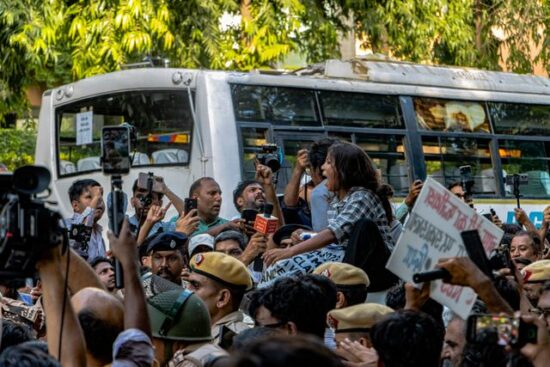
Is Delhi Changing Where Citizens Can Protest? Jantar Mantar Debate
Anshika Jain - Oct 21, 2026Jantar Mantar has long served as one of New Delhi’s most recognisable spaces for public protest. Students, workers, farmers, political groups, and civil society organisations have gathered…
Eleven Years Later: Unfinished Legal Proceedings in Punjab’s Behbal Kalan Cases
Anshika Jain - Oct 21, 2026Eleven years after the police firing at Behbal Kalan in Punjab, the pursuit of justice remains unfinished. On October 14, 2015, two protesters, Krishan Bhagwan Singh and…

The Sowjanya Case: Why the Fresh Investigation Matters
Anshika Jain - Oct 21, 2026The Sowjanya case remains one of Karnataka’s most closely watched criminal investigations. In October 2012, a 17-year-old college student was raped and murdered near Dharmasthala in Dakshina…
Most from this category

October 2026 Bypoll Results: BJP, TVK and AINRC’s Constituency-Level Performance
Anshika Jain - Oct 21, 2026
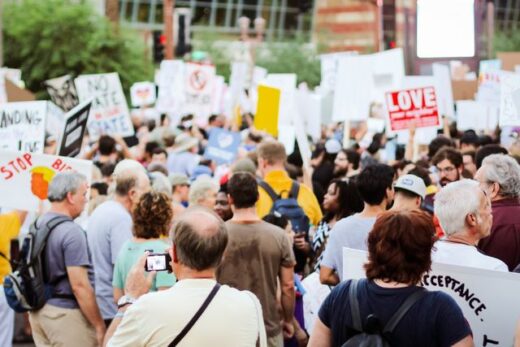
Why India’s Voter-List Revision Has Triggered Nationwide Political Protests
Anshika Jain - Oct 20, 2026
October 2026 Bypoll Results: BJP, TVK and AINRC’s Constituency-Level Performance
Anshika Jain - Oct 21, 2026When the Supreme Court Intervenes in Protest Restrictions
Anshika Jain - Oct 21, 2026Journalists Detained During Political Protests: The Press-Freedom Debate
Anshika Jain - Oct 20, 2026