

Space Debris: Why Earth’s Orbit Is Becoming More Crowded

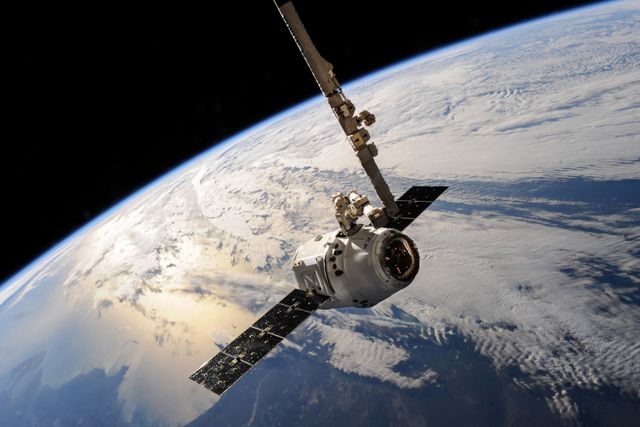

Earth’s orbit has become an increasingly important part of modern life. Satellites support communication, navigation, weather forecasting, disaster management, scientific research, and national security. From mobile communication and internet connectivity to GPS navigation and climate monitoring, many of the services people rely on every day depend on technology operating in space. However, as the number of satellites and space missions continues to increase, another problem is becoming more difficult to ignore: the growing accumulation of space debris.
Space debris, also known as orbital debris or space junk, refers to human-made objects in space that no longer serve a useful purpose. These objects include inactive satellites, discarded rocket stages, fragments created by collisions, and small pieces of material released during space operations. Although some debris is large enough to be tracked from Earth, countless smaller fragments remain difficult to monitor despite travelling at extremely high speeds.
The increasing concentration of objects in Earth’s orbit creates challenges for satellite operators, spacecraft designers, astronauts, and future space missions. Even a small fragment can damage a functioning satellite because objects in orbit move at tremendous velocities. As more satellites are launched and older spacecraft remain in orbit, the risk of collisions and the creation of additional debris becomes a growing concern.
Understanding why Earth’s orbit is becoming more crowded requires examining the history of space activity, the expansion of satellite networks, the causes of debris formation, and the environmental and technological challenges associated with keeping space usable. Space debris is not simply a problem of discarded equipment. It is a long-term challenge involving scientific responsibility, international cooperation, and the sustainable use of an increasingly valuable environment.
What Is Space Debris?
Space debris consists of artificial objects in orbit around Earth that no longer perform a useful function. These objects may remain in space for years, decades, or even centuries, depending on their altitude, shape, mass, and the influence of atmospheric drag.
Some debris comes from complete spacecraft that have reached the end of their operational lives. Other objects include rocket bodies left behind after launches, components separated during deployment, and fragments produced when satellites or rocket stages break apart.
Space debris varies considerably in size. Large objects, such as inactive satellites and rocket stages, can often be tracked by ground-based radar and optical systems. Smaller fragments may be too difficult to monitor individually, but they can still pose a threat to spacecraft because of their high orbital speeds.
Even tiny particles can cause damage when they strike sensitive spacecraft surfaces, solar panels, antennas, or protective materials. Larger fragments can potentially disable satellites or trigger additional fragmentation events.
Space debris is therefore not limited to objects that are visibly large or easy to identify. The combination of high speed, orbital persistence, and the possibility of collisions makes even relatively small fragments important to space safety.
How Earth’s Orbit Became More Crowded
The accumulation of space debris began with the development of space exploration in the twentieth century. The launch of the first artificial satellite, Sputnik 1, in 1957 marked the beginning of the space age. Since then, governments, research institutions, and commercial organisations have launched spacecraft for communication, navigation, scientific research, weather observation, and other purposes.
During the early decades of space exploration, the number of satellites was relatively limited. However, space missions gradually became more frequent, and the development of satellite technology expanded the range of activities taking place in orbit.
Every launch can introduce additional objects into the space environment. Rocket stages may remain in orbit after deployment, and spacecraft that are not properly removed at the end of their operational lives can become long-term debris. Accidental collisions and fragmentation events can further increase the number of objects.
The growth of commercial space activity has accelerated this trend. Satellite manufacturing has become more accessible, launch costs have declined in certain areas, and large satellite constellations are being developed to provide global communication and internet services.
As a result, Earth’s orbit is no longer used only by a relatively small number of government-operated spacecraft. It has become a shared environment supporting a growing range of commercial, scientific, and public services.
The Expansion of Satellite Constellations
One of the major factors contributing to the growing number of objects in orbit is the deployment of large satellite constellations. These systems consist of multiple satellites working together to provide services such as broadband internet, Earth observation, communication, and navigation support.
Unlike traditional satellite systems that may rely on a small number of spacecraft, large constellations can involve hundreds or thousands of satellites operating in coordinated orbital arrangements.
Satellite internet networks are a prominent example. These systems use satellites in low Earth orbit to provide connectivity in areas where conventional broadband infrastructure is limited or difficult to establish. Their deployment has created new opportunities for remote communities, maritime operations, aviation, and emergency communication.
However, large constellations also increase the number of active spacecraft that must be monitored and managed. Satellites have limited operational lifetimes and eventually require replacement. This creates a continuing cycle of launches, satellite retirement, and orbital management.
Although many modern satellites are designed with collision avoidance and end-of-life disposal measures, the growing number of spacecraft increases the complexity of maintaining safe operations.
The challenge is not simply the number of satellites launched but also how effectively their operators coordinate movements, prevent collisions, and ensure that retired spacecraft do not remain in orbit unnecessarily.
Major Sources of Space Debris
Space debris originates from several different activities, and each contributes to the overall complexity of the orbital environment.
One major source is inactive satellites. When a spacecraft reaches the end of its operational life, it may remain in orbit if it cannot be moved to a safer location or directed toward atmospheric re-entry. Such spacecraft can become obstacles for other satellites and may eventually fragment because of collisions or internal failures.
Discarded rocket stages are another important source. Launch vehicles often leave components in orbit after delivering payloads to their intended destinations. If these stages are not removed or placed in suitable disposal orbits, they can remain in space for extended periods.
Fragmentation events can create large quantities of additional debris. These events may result from accidental collisions, explosions caused by residual fuel or stored energy, or the destruction of spacecraft during deliberate anti-satellite tests.
Operational debris can also be released during space missions. Small components, protective covers, and other materials may separate from spacecraft during deployment or routine operations. Although some of these objects are small, they can still contribute to the overall debris population.
Together, these sources demonstrate that space debris is not caused by a single activity. It is the cumulative result of decades of space operations, inadequate disposal practices, and occasional accidents or deliberate destructive events.
Why Space Debris Is So Dangerous
The danger posed by space debris comes primarily from the high speeds at which objects travel in orbit. Satellites in low Earth orbit typically move at speeds of approximately 7 to 8 kilometres per second relative to Earth. Collisions between objects can therefore release enormous amounts of energy.
A small fragment striking a spacecraft at orbital velocity can damage critical components, puncture protective structures, or disrupt sensitive equipment. A larger collision may destroy a satellite and generate thousands of additional fragments.
The consequences can extend beyond the spacecraft directly involved. A collision may create new debris that increases the risk to other satellites operating in nearby orbital regions.
Space debris can also threaten crewed missions. Spacecraft carrying astronauts require protection against impacts from small particles, and mission operators must monitor potential collision risks. Although spacecraft are designed with protective measures, no practical system can eliminate every possible threat.
The growing debris population therefore creates a complex safety problem. Each additional object can contribute to a network of potential collision risks, particularly in heavily used orbital regions.
The Kessler Syndrome: Could Collisions Create More Collisions?
The Kessler syndrome is a theoretical scenario in which collisions between objects in orbit generate enough debris to trigger additional collisions, potentially leading to a self-reinforcing cycle of fragmentation.
The concept was introduced by NASA scientist Donald J. Kessler and Burton G. Cour-Palais in a 1978 scientific paper examining the collision frequency of artificial satellites.
In this scenario, a collision between two objects produces fragments that remain in orbit. These fragments increase the probability of further impacts, which can create even more debris. Over time, certain orbital regions could become increasingly hazardous for satellites and spacecraft.
The Kessler syndrome does not mean that all of Earth’s orbit will suddenly become unusable. The likelihood and severity of cascading collisions depend on factors such as orbital altitude, object density, collision avoidance, debris removal, and the physical characteristics of the objects involved.
Nevertheless, the concept highlights why debris prevention is important. Once a large number of fragments have accumulated in a particular orbital region, removing the risk becomes more difficult and expensive.
Preventing new debris and safely disposing of inactive spacecraft can help reduce the conditions that make cascading collisions more likely.
The Impact on Satellite Services and Everyday Life
Space debris may appear distant from everyday concerns, but its consequences can affect services used by people around the world.
Communication satellites support television broadcasting, telecommunications, and certain internet services. Navigation satellites provide positioning and timing information used in transportation, logistics, agriculture, and financial systems. Weather satellites contribute to forecasting, storm monitoring, and disaster preparedness.
Earth observation satellites help monitor agriculture, forests, oceans, urban development, and environmental changes. Scientific spacecraft support research into the atmosphere, climate, and the wider universe.
If a collision damages a satellite, the resulting disruption may affect the services that depend on it. Replacement missions can be expensive and may require months or years of planning. Even when backup systems are available, disruptions can create operational and financial challenges.
Space debris can also increase the cost of satellite operations because operators must invest in tracking systems, collision avoidance, spacecraft protection, and end-of-life disposal.
As society becomes more dependent on satellite-based infrastructure, maintaining a safe orbital environment becomes increasingly important for economic activity and public services.
The Environmental Consequences of Space Debris
Space debris is often discussed as a technical and operational problem, but it also raises broader environmental concerns.
Unlike ordinary waste on Earth, orbital debris exists in a region where natural removal processes can be slow. Objects in lower orbits may gradually lose altitude because of atmospheric drag and eventually re-enter Earth’s atmosphere. However, debris at higher altitudes can remain in orbit for much longer periods.
The environmental implications extend beyond the objects themselves. Repeated rocket launches, satellite manufacturing, and the operation of large constellations involve resource consumption and emissions. The atmospheric effects of launch activity and satellite re-entry are also areas of ongoing scientific investigation.
When spacecraft re-enter the atmosphere, some materials burn up, while others may survive partially and reach the Earth’s surface. The environmental consequences depend on the materials involved, the number of re-entries, and the characteristics of the objects.
The long-term sustainability of space activity therefore requires considering not only collision risks but also the environmental effects of launching, operating, and disposing of spacecraft.
How Space Agencies Track Orbital Debris
Tracking space debris is essential for preventing collisions and protecting operational satellites. Space agencies and specialised organisations use ground-based radar systems, optical telescopes, and computational models to monitor objects in orbit.
Radar systems can detect and track many objects, while optical observations help determine the positions and movements of suitable targets. These observations are combined with orbital calculations to estimate where objects will travel and whether they may approach active spacecraft.
Satellite operators use conjunction assessment processes to evaluate potential close approaches between their spacecraft and other objects. When a possible collision risk is identified, operators may calculate whether a manoeuvre is necessary to reduce the risk.
However, tracking has limitations. Not every fragment can be monitored individually, particularly at smaller sizes. Orbital predictions also contain uncertainty, and the accuracy of collision assessments depends on the quality of available observations.
As the number of satellites increases, tracking systems must manage more objects and more frequent potential encounters. Improved data sharing, observation technologies, and coordination among operators are therefore important for maintaining orbital safety.
Space Debris Removal: Can Old Satellites Be Cleaned Up?
Preventing new debris is essential, but reducing the existing debris population may also require active removal measures.
Active debris removal refers to technologies and missions designed to capture, redirect, or otherwise remove selected objects from orbit. Potential approaches include robotic capture systems, specialised docking mechanisms, nets, harpoons, and spacecraft capable of attaching to inactive satellites.
Once captured, a debris object may be guided toward a lower orbit where atmospheric drag can eventually cause it to re-enter the atmosphere. In some cases, objects may be moved to designated disposal orbits, depending on the mission and orbital environment.
However, active debris removal presents significant technical, financial, and legal challenges. Large inactive satellites may be difficult to capture because they were not designed for servicing. Removing objects safely requires precise navigation, specialised equipment, and careful control of the target’s movement.
There are also questions about responsibility and ownership. A spacecraft remains subject to legal considerations even after it stops functioning, and removing another organisation’s object may require appropriate authorisation.
Despite these challenges, active debris removal is receiving growing attention as part of broader efforts to maintain a sustainable space environment.
The Importance of Responsible Satellite Design
One of the most effective ways to limit future debris is to design spacecraft with safe disposal in mind from the beginning.
Satellite manufacturers and operators can incorporate systems that support controlled de-orbiting, reduce the risk of accidental explosions, and improve the ability to monitor spacecraft throughout their operational lives.
End-of-life planning is particularly important. A satellite that can be safely removed from a heavily used orbital region after its mission ends is less likely to become a long-term collision hazard.
Designing spacecraft for reliability and durability can also reduce the likelihood of premature failures that leave inactive objects in orbit. Measures that limit the release of operational debris can further reduce the accumulation of fragments.
Responsible design must be supported by effective operational procedures. Satellite operators need to maintain accurate orbital information, coordinate manoeuvres, and follow appropriate disposal practices.
A sustainable approach to space activity begins before a spacecraft is launched and continues throughout its entire operational life.
International Cooperation and Space Sustainability
Earth’s orbit is a shared environment used by countries, commercial operators, scientific institutions, and international organisations. Debris created by one mission can affect spacecraft operated by many different parties.
This makes international cooperation essential for managing orbital risks. Space agencies and satellite operators need to share relevant tracking information, coordinate collision avoidance where possible, and establish common expectations for responsible behaviour.
International guidelines and national regulations can encourage measures such as limiting debris release, reducing the risk of accidental fragmentation, and safely disposing of spacecraft after their missions.
However, implementing these measures consistently can be challenging because countries and operators have different technical capabilities, commercial interests, and regulatory frameworks.
The expansion of commercial satellite constellations makes cooperation even more important. A growing number of operators must coordinate activities in orbital regions that are increasingly shared and complex.
Long-term space sustainability depends on balancing access to space with the responsibility to preserve it for future generations.
The Future of Earth’s Orbit
The future of Earth’s orbital environment will depend on how effectively the global space community manages the growing number of satellites and debris objects.
Satellite technology is expected to remain important for communication, navigation, scientific research, environmental monitoring, and other essential services. Continued innovation may improve satellite performance, reduce launch costs, and expand access to space-based applications.
At the same time, the growth of satellite constellations will increase the need for stronger collision avoidance, reliable tracking, responsible spacecraft disposal, and improved coordination among operators.
Technologies for satellite servicing and debris removal may become more practical as engineering capabilities advance. Improved monitoring systems and data-sharing arrangements may also help operators respond more effectively to potential collision risks.
The central challenge is to ensure that the benefits of space technology do not come at the cost of making important orbital regions increasingly hazardous or difficult to use.
Conclusion
Space debris has become one of the major challenges associated with the rapid expansion of human activity in Earth’s orbit. Inactive satellites, discarded rocket stages, operational fragments, accidental collisions, and deliberate destructive events have contributed to the growing population of artificial objects surrounding the planet.
The expansion of satellite constellations and commercial space operations has increased the importance of managing this shared environment responsibly. Although satellite technology supports essential services such as communication, navigation, weather forecasting, and scientific research, the debris generated by space activity can threaten the infrastructure on which these services depend.
Addressing the problem requires a combination of responsible satellite design, accurate tracking, collision avoidance, safe end-of-life disposal, active debris removal, and international cooperation. No single technology or organisation can resolve the issue independently.
Earth’s orbit is a valuable resource that must remain accessible for future scientific, commercial, and public purposes. By prioritising sustainability and responsible space operations today, the global community can reduce the risks associated with orbital debris and help preserve the long-term usability of space.
Online Internship with Certificate
You may be interested

When a Case Is Solved Years Later: How Forensic Advances Can Reopen Cold Investigations
Anshika Jain - Oct 22, 2026Some criminal investigations remain unresolved for years or even decades. Witnesses may be unable to identify a suspect, investigators may exhaust the available leads, and physical evidence…
Gold Smuggling Through Airports: How Investigators Trace Possible Links
Anshika Jain - Oct 22, 2026International airports are essential gateways for tourism, trade and global connectivity. Every day, thousands of passengers, airline employees, ground handlers, cargo workers and service providers move through…

Why Restrictions on Journalists Covering Protests Raise Questions About Press Freedom
Anshika Jain - Oct 22, 2026Public protests are among the most visible expressions of democratic participation. They provide citizens with an opportunity to challenge government decisions, demand accountability, raise concerns about injustice…
Most from this category

Political Allegations Versus Verified Evidence: How Readers Can Separate Claims from Facts
Anshika Jain - Oct 22, 2026
Voter List Revision in India: How Can Citizens Verify That Their Names Have Not Been Omitted?
Anshika Jain - Oct 22, 2026
Jantar Mantar Controversy: Can a Protest Site Be Restricted Without Limiting Democratic Expression?
Anshika Jain - Oct 22, 2026
Six Years of Arrest Delays: What the Delhi Court’s MCOCA Criticism Reveals
Anshika Jain - Oct 21, 2026
Political Allegations Versus Verified Evidence: How Readers Can Separate Claims from Facts
Anshika Jain - Oct 22, 2026Voter List Revision in India: How Can Citizens Verify That Their Names Have Not Been Omitted?
Anshika Jain - Oct 22, 2026Jantar Mantar Controversy: Can a Protest Site Be Restricted Without Limiting Democratic Expression?
Anshika Jain - Oct 22, 2026