

The Future of EV Charging Infrastructure in Indian Cities

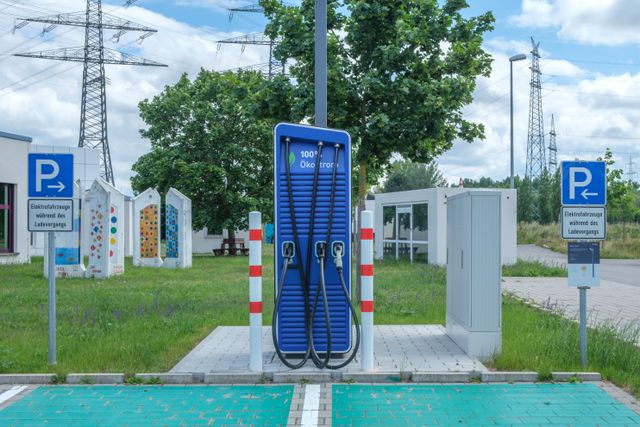

India’s transition toward electric mobility is changing more than the vehicles on its roads. It is also transforming the infrastructure that supports transportation, particularly the way cities generate, distribute and deliver electricity to vehicles. As electric cars, two-wheelers, three-wheelers, buses and commercial vehicles become increasingly visible in Indian cities, the question of where and how these vehicles will be charged is becoming just as important as the question of how many electric vehicles are sold.
Charging infrastructure is the foundation of a functional electric mobility ecosystem. An electric vehicle can offer lower operating costs, reduced tailpipe emissions and a different approach to urban transportation, but its practical usefulness depends heavily on access to reliable charging. A city with thousands of electric vehicles but inadequate charging infrastructure can create long waiting times, inconvenient journeys and uncertainty for drivers. A well-planned charging network, by contrast, can make electric mobility easier to integrate into everyday urban life.
India has already made significant progress. According to government data published in July 2026, the country had 52,718 public EV charging stations, including 16,561 public charging stations equipped with fast chargers for cars. The government has also allocated ₹2,000 crore under the PM E-DRIVE scheme for public charging infrastructure across India.
The next stage, however, is more complicated than simply increasing the number of charging points. Indian cities will need charging infrastructure that is geographically distributed, interoperable, digitally connected, grid-aware, economically viable and capable of supporting different categories of vehicles. The future of EV charging will therefore involve not just more chargers, but a more intelligent urban energy and transportation system.
Why Charging Infrastructure Matters to India’s EV Transition
Electric mobility changes the relationship between vehicles and the electricity system. Conventional vehicles are refuelled at centralized petrol and diesel stations, while electric vehicles can potentially be charged in homes, workplaces, parking facilities, commercial buildings, public stations, fleet depots and highway locations.
This creates both an opportunity and a challenge. Charging can become much more distributed than conventional fuel infrastructure, but this also means cities need to coordinate electricity connections, parking, land use, traffic movement and charging demand.
The availability of charging infrastructure can influence consumer confidence. Drivers need to know that they can charge when required, particularly when travelling beyond familiar areas. For commercial operators, the issue is even more significant because vehicle downtime can directly affect business operations.
Recognizing this, India’s Ministry of Power issued the Guidelines for Installation and Operation of Electric Vehicle Charging Infrastructure in 2024. The guidelines cover private, semi-restricted and public charging locations, including residential areas, offices, educational institutions, hospitals, housing societies, bus depots, railway stations, airports, petrol pumps, metro stations, commercial complexes and highways.
The broad objective is to create a charging ecosystem that is accessible, reliable and connected rather than leaving charging development entirely to isolated private installations.
The Rapid Expansion of India’s Charging Network
India’s public charging network has expanded considerably in recent years. Government data showed 5,151 public charging stations at the end of 2022, increasing to 11,903 by the end of 2023 and 25,202 by the end of 2024. By August 2025, the reported total had reached 29,277.
More recent government information indicates that the national network has continued to expand, reaching 52,718 public charging stations by July 2026.
These figures demonstrate the rapid development of charging infrastructure, but national totals do not necessarily describe the quality of the network experienced by individual drivers. A city may have a large number of chargers while still having areas where charging access is inconvenient. Similarly, the number of charging stations does not necessarily indicate how many individual charging points are available, how powerful they are, whether they are operational at a particular time or how long users must wait.
The next phase of infrastructure development will therefore need to focus increasingly on charger availability, reliability, location and utilization rather than simply counting installations.
The 2024 Charging Infrastructure Guidelines
India’s charging infrastructure framework is becoming more structured. The Ministry of Power’s 2024 guidelines established provisions intended to make charging networks more connected and interoperable. The guidelines also address electricity connections, tariffs, land access and the development of charging infrastructure in urban and highway environments.
One important provision concerns electricity connections. Charging-station owners can opt for low-tension connections for loads up to 150 kW under the specified framework. The guidelines also encourage government and public entities to make land available for public charging stations through mechanisms such as revenue-sharing arrangements.
The framework also sets planning expectations for charging availability. The Ministry of Power’s annual report describes a provision for at least one charging station within a 1 km by 1 km grid in urban areas, alongside charging infrastructure at specified intervals on highways and expressways.
Such provisions are significant because charging infrastructure is ultimately a spatial planning problem. Chargers need to exist where vehicles actually travel and stop, not simply where land or electricity happens to be easiest to obtain.
The Future Will Be About Different Types of Charging
Indian cities will not rely on a single charging model. Different vehicles and users have different charging requirements.
Private electric cars may primarily charge overnight at homes or housing societies, reducing the need for daily public charging. Apartment residents without dedicated parking may depend much more heavily on public infrastructure. Electric two-wheelers may require different charging arrangements, while taxis, delivery vehicles and buses can require high-frequency charging throughout the day.
This means the future charging network will probably include slow and moderate charging for long-duration parking, faster chargers for short stops and high-power infrastructure for commercial fleets.
The government’s December 2025 data showed that out of 29,151 reported EV charging stations at that time, 8,805 were fast-charging stations and 20,346 were slow-charging stations.
The distinction is important because faster charging is not automatically better for every situation. A vehicle parked for eight hours does not necessarily require a high-power charger, while a taxi that needs to return to service quickly may depend on one.
The future network will therefore need to match charging speed with the duration and purpose of vehicle parking.
Home and Workplace Charging Will Remain Important
Public charging stations often receive the most attention, but private and semi-public charging will remain fundamental to urban EV adoption.
A large proportion of private electric vehicles can potentially charge while parked at home. For apartment residents, however, installing chargers can be more complicated because parking spaces, electrical connections and building infrastructure may be shared.
Workplaces can provide another important charging environment. Employees who leave their vehicles parked for several hours can potentially charge during working hours without requiring rapid charging.
The 2024 guidelines recognize private and semi-restricted locations, including offices, educational institutions, hospitals and group housing societies. They also allow residential users to use existing electricity connections for EV charging or obtain separate metered connections under the applicable framework.
This distributed approach could reduce pressure on public charging stations while making electric mobility more convenient for users who have predictable parking patterns.
Fast Charging and the Changing Urban Experience
Fast charging is likely to become increasingly important as electric vehicles become more common and drivers expect shorter charging stops. However, fast-charging infrastructure requires greater electrical capacity and can create significant demand on local distribution networks.
A city cannot simply install large numbers of high-power chargers without considering whether local transformers, feeders and other grid infrastructure can support them.
This is where urban charging planning will increasingly overlap with electricity-system planning. Charging stations may need dedicated electrical infrastructure, smart load management and coordination with distribution companies.
The challenge becomes particularly important for charging hubs serving taxis, buses, delivery fleets and commercial vehicles. These locations can experience concentrated demand that differs significantly from residential charging.
Future charging hubs will therefore need to be designed as energy infrastructure rather than simply as parking facilities containing chargers.
Smart Charging and the Urban Electricity Grid
One of the most important developments in EV infrastructure will be the emergence of smart charging. Instead of charging every vehicle at maximum available power immediately after it is connected, intelligent systems can adjust charging based on electricity demand, vehicle requirements, electricity prices and grid conditions.
For example, a vehicle parked overnight may not need to charge immediately. A smart system could gradually charge it during periods when electricity demand is lower, provided the vehicle reaches the required battery level by the driver’s departure time.
This can reduce unnecessary pressure on electricity networks and potentially improve the economics of charging.
The Ministry of Power’s 2024 framework specifically identifies the need to prepare the electricity grid for increased EV-charging demand and encourages charging during solar hours.
This creates an important connection between electric mobility and renewable energy. Solar generation is strongest during daytime hours, while many vehicles remain parked at workplaces, commercial locations or fleet depots. Coordinating charging with renewable generation could become an important component of future urban energy management.
Solar-Powered Charging and Energy Integration
The future charging station may increasingly become an energy-management location rather than simply a place where electricity is delivered to a vehicle.
Solar panels can potentially provide part of the electricity used by charging facilities, particularly where sufficient roof or land area is available. Battery energy storage can further allow electricity to be stored and delivered to vehicles when charging demand increases.
Such systems could be especially useful at large charging hubs, bus depots and commercial facilities. Instead of relying entirely on instantaneous grid supply, charging infrastructure could combine grid electricity, renewable generation and stationary energy storage.
The economics and practicality of these systems will vary by location, electricity tariffs, land availability and utilization. Nevertheless, the combination of EV charging, renewable energy and storage represents an important direction for future urban infrastructure.
Battery Swapping Could Complement Conventional Charging
Not every electric vehicle needs to be charged in the same way. Battery swapping can provide an alternative model, particularly for certain two-wheelers, three-wheelers and commercial applications.
Instead of waiting for a battery to recharge, a vehicle user can exchange a depleted battery for a charged one, where the vehicle and battery system are designed to support such an arrangement.
India’s charging framework increasingly recognizes both charging and battery-swapping infrastructure. The Ministry of Power issued separate guidelines for installation and operation of battery swapping and charging stations in January 2025.
Battery swapping will not necessarily replace conventional charging. Its usefulness depends on vehicle design, battery standardization, business models and operational requirements. It may, however, become an additional component of India’s broader electric mobility infrastructure.
Charging Infrastructure for Electric Buses and Fleets
Public and commercial fleets could become some of the most important drivers of charging infrastructure development in Indian cities.
Electric buses require carefully planned depot charging because large numbers of vehicles may need to charge within particular time windows. Taxis and delivery fleets also require reliable charging because every hour spent waiting can affect utilization.
Government programmes are already connecting electric-bus deployment with charging infrastructure. Under PM E-DRIVE, support has been provided for thousands of electric buses in major cities, while the PM e-Bus Sewa programme is also intended to expand electric bus deployment into additional urban areas.
Fleet charging can also make infrastructure investment easier to plan because operators have predictable vehicle schedules and electricity requirements. Data from fleets can help cities determine where charging capacity is needed and how heavily infrastructure is being used.
The Role of Private Companies
India’s charging infrastructure is not expected to be built entirely by government agencies. Private companies can establish charging stations because setting up an EV charging station has been designated as an unlicensed activity under the applicable framework.
This allows multiple business models to develop. Energy companies, automobile manufacturers, charging-network operators, parking companies, retailers and property developers can all potentially participate.
Competition can encourage innovation, but interoperability will remain important. Drivers should ideally be able to locate, access and pay for charging across different networks without unnecessary fragmentation.
This makes digital integration a major part of the future charging ecosystem.
The Rise of Connected Charging Networks
The charging station of the future is likely to be connected to a broader digital platform. Drivers increasingly expect to see charger locations, availability, charging speed, prices and payment options through mobile applications.
The government has also discussed the development of a unified EV platform in connection with the PM E-DRIVE charging programme. A 2025 government announcement said ₹2,000 crore had been allocated under the programme to establish 72,000 public charging stations, with infrastructure planned across key cities, highways, airports and industrial corridors.
A connected network can improve the user experience by reducing uncertainty. Instead of reaching a station and discovering that every charger is occupied or unavailable, a driver could potentially check status before travelling.
Over time, this data could also help infrastructure operators understand demand patterns and determine where additional chargers are required.
Urban Planning Will Become More Important
Charging infrastructure cannot be separated from urban planning. Cities need to determine where chargers can be installed without creating traffic congestion or reducing essential parking capacity.
Metro stations, shopping centres, municipal parking areas, office districts, airports, residential developments and transit hubs can all serve different charging needs.
The best charging locations may therefore be places where vehicles already spend time. Installing chargers at destinations can allow charging to happen naturally while people work, shop, study or travel.
This approach can be more efficient than treating charging stations as isolated destinations that drivers must deliberately visit.
The Economics of Charging Infrastructure
One of the biggest questions for the future is whether charging stations can become financially sustainable without continuous public support.
A charging station has costs associated with land, equipment, electricity connections, maintenance, software, staffing and network management. Revenue depends on utilization, pricing and operating costs.
Low utilization can make a charging station economically difficult to operate, particularly during the early stages of EV adoption. This creates a potential cycle in which infrastructure is needed to encourage EV adoption, but charging infrastructure itself becomes profitable only after sufficient numbers of EVs are on the road.
Government policies can help address this early-stage challenge. PM E-DRIVE includes ₹2,000 crore for public charging infrastructure, while the 2024 charging guidelines provide mechanisms involving public land, electricity connections and tariff structures.
As EV adoption increases, however, infrastructure economics will increasingly depend on utilization, location and operational efficiency.
Challenges That Indian Cities Must Address
The future of EV charging will involve several challenges. Land availability is a major issue in dense cities where parking space is already limited. Electricity distribution networks may require upgrades in areas with concentrated charging demand. Different vehicle categories may require different charging technologies. Chargers also need to remain operational and accessible rather than simply being installed.
Reliability will become particularly important. A charging network with a large number of technically installed but unavailable chargers does not provide the same practical value as a smaller network with high uptime.
Standardization and interoperability will also matter. As different manufacturers and operators enter the market, users should not face unnecessary complexity because of incompatible systems or fragmented digital platforms.
These challenges mean that the next stage of India’s charging expansion should focus not only on infrastructure quantity but also on infrastructure quality.
The Future: Charging as an Intelligent Urban Service
The long-term future of EV charging in Indian cities is likely to involve a combination of public stations, home charging, workplace infrastructure, fleet depots, fast-charging hubs, battery-swapping facilities, renewable energy and intelligent grid management.
Artificial intelligence and data analytics could eventually help predict charging demand based on traffic, weather, vehicle patterns and electricity consumption. Charging networks could dynamically adjust prices or charging speeds depending on grid conditions and demand.
Vehicle-to-grid and vehicle-to-building technologies could create another layer of integration by allowing compatible vehicles to provide electricity back to buildings or the grid when appropriate. These technologies remain dependent on hardware, regulation, battery considerations and viable business models, but they demonstrate how electric vehicles could eventually become part of the electricity system rather than simply consumers of electricity.
In this future, an EV charging station would no longer be viewed as merely an electric equivalent of a petrol pump. It could become a digitally managed energy node connecting vehicles, buildings, renewable generation, batteries and the electricity grid.
Conclusion
The future of EV charging infrastructure in Indian cities will depend on much more than installing additional charging points. India has already built a rapidly expanding public charging network, with government data reporting more than 52,000 public charging stations by July 2026. The next challenge is to make this infrastructure increasingly reliable, accessible, interoperable and economically sustainable.
The 2024 national charging guidelines provide an important framework for developing connected infrastructure across residential, commercial, public and highway environments. Government programmes such as PM E-DRIVE are adding financial support for further expansion, while private companies are also permitted to establish charging stations.
Indian cities will ultimately need a layered charging ecosystem. Home and workplace charging can serve predictable daily demand, public stations can support drivers without private charging access, fast chargers can support longer journeys and commercial fleets, while battery swapping and other technologies can serve specific vehicle categories.
The most significant transformation, however, may come from the integration of charging with the electricity grid. Smart charging, renewable energy, battery storage, digital platforms and data-driven planning can turn EV infrastructure into part of a larger intelligent urban energy system.
As electric mobility expands, the success of India’s EV transition will increasingly depend on what happens beyond the vehicle itself. Cars, buses, three-wheelers and two-wheelers may become electric, but their usefulness will depend on whether cities can build the infrastructure that keeps them moving. The future of urban mobility will therefore be shaped not only by better batteries and more affordable EVs, but also by a charging network capable of supporting an increasingly electric India.
Online Internship with Certificate
You may be interested

Why Do Heavy Rains Disrupt Transport Beyond the Monsoon Season?
Anshika Jain - Oct 23, 2026Heavy rainfall is often associated with India's monsoon season, when roads become waterlogged, railway services face delays and flights are diverted or cancelled. However, transport disruption is…

Women’s Safety After Dark: Why Street Design, Police Response Must Work Together
Anshika Jain - Oct 23, 2026A city’s safety cannot be measured only by its crime statistics, the number of police stations it operates or the cameras installed across its streets. For women,…

Paper Leaks and Accountability: Competitive Examinations More Trustworthy?
Anshika Jain - Oct 23, 2026Competitive examinations are among the most consequential gateways to education and employment in India. Examinations such as NEET, JEE, CUET, UGC-NET, UPSC and various government recruitment tests…
Most from this category

AI in Examinations: Institutions Detect Cheating Without Accusing Students?
Anshika Jain - Oct 23, 2026

Missing Children and Delayed Investigations: Inter-State Police Coordination Improve?
Anshika Jain - Oct 23, 2026
When a Case Is Solved Years Later: How Forensic Advances Can Reopen Cold Investigations
Anshika Jain - Oct 22, 2026
AI in Examinations: Institutions Detect Cheating Without Accusing Students?
Anshika Jain - Oct 23, 2026Medical Intern Stipend Protests: India’s Healthcare Training System
Anshika Jain - Oct 23, 2026Missing Children and Delayed Investigations: Inter-State Police Coordination Improve?
Anshika Jain - Oct 23, 2026