

The Rise of Solo Travel Among Young Indians

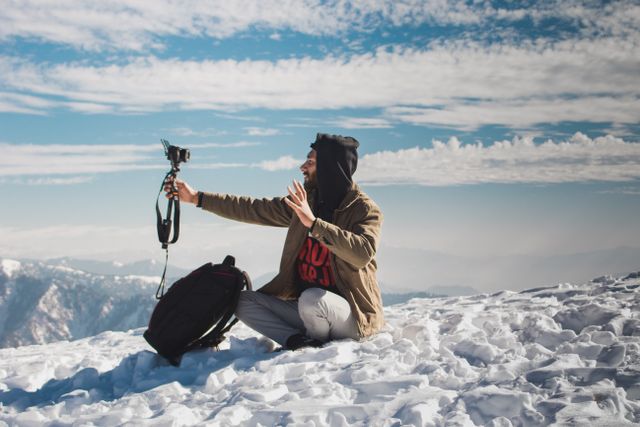

For generations, travel in India was strongly associated with family holidays, group outings, religious journeys, honeymoons and carefully planned vacations with friends. Travelling alone was often viewed as unusual, especially for younger people. Today, however, that perception is gradually changing. A growing number of young Indians are choosing to travel independently, plan their own itineraries, explore unfamiliar destinations and use travel as an opportunity for discovery, relaxation and personal growth.
The rise of solo travel is part of a broader transformation in how younger Indians think about leisure. Travel is increasingly becoming more frequent, experience-driven and digitally planned. Young travellers are using smartphones to compare flights, accommodation and activities, discover destinations through social media, make instant bookings and navigate unfamiliar places. At the same time, affordable transport, hostels, homestays, flexible work arrangements and easier access to travel information have lowered some of the barriers that previously made independent travel more difficult.
Recent travel data illustrates the scale of this shift. A 2026 report in The Economic Times noted that younger Indians are becoming an increasingly important segment of the solo-travel market, with nearly 60% of solo travellers reported by MakeMyTrip falling into the 20–39 age group. The same report said that visa applications from solo travellers through Atlys roughly tripled in 2025 compared with 2024.
The trend is not simply about travelling without companions. For many young Indians, solo travel represents greater control over time, destination, budget and activities. It can mean taking a short weekend trip without waiting for friends to be available, spending several days exploring a new city, working remotely from another location or taking a longer international journey independently. As this behaviour becomes more visible, the travel industry is adapting its products and services to meet the needs of a generation that increasingly sees independence as part of the travel experience.
From Group Holidays to Independent Journeys
Indian travel culture has traditionally placed considerable importance on travelling with family or friends. Holidays often required coordinating multiple schedules, budgets and preferences. While group travel remains extremely popular, younger travellers are increasingly comfortable separating their personal travel plans from those of their social circles.
The change does not necessarily mean young Indians are rejecting family or group travel. Instead, solo travel is becoming another option within a broader travel lifestyle. A person may take a family vacation during one part of the year, travel with friends during another period and take a short solo trip when they want greater flexibility.
Research reported by Skift found that one-third of Indian travellers planned to travel solo for leisure, while many Indian travellers also expressed interest in incorporating periods of individual travel into family holidays. This suggests that solo travel can coexist with India’s strong culture of family-oriented travel rather than replacing it.
The growing acceptance of independent travel is therefore less about abandoning traditional travel patterns and more about expanding the range of choices available to younger travellers.
Why Young Indians Are Choosing to Travel Alone
One of the strongest motivations behind solo travel is freedom. When travelling alone, individuals do not have to coordinate every decision with another person. They can wake up early or sleep late, spend hours in a museum, change their itinerary at the last minute or simply sit in a café without worrying about whether the rest of the group wants to do the same thing.
This flexibility is particularly attractive to younger professionals whose schedules may not align with their friends. A person may have limited leave from work while friends have different commitments. Instead of cancelling a trip because nobody else is available, the traveller can simply go alone.
Another important motivation is personal space. Younger Indians increasingly describe travel not only as sightseeing but also as a way to disconnect from routine. Recent Booking.com-related research reported by ETTravelWorld found that 68% of Gen Z respondents and 65% of millennials in India planned individual trips primarily to relax and recharge.
This connection between travel and personal wellbeing has helped change the image of solo travel. It is no longer necessarily associated with loneliness. For some travellers, solitude is precisely what makes the experience attractive.
Social Media Has Changed the Image of Solo Travel
Social media has played an important role in normalising independent travel. Instagram, YouTube, short-form video platforms and travel blogs allow people to see other individuals travelling alone, navigating airports, staying in hostels, taking public transport and exploring unfamiliar destinations.
This visual exposure can reduce the psychological barrier associated with travelling alone. A person who has never travelled independently can watch someone else demonstrate how to book accommodation, reach a destination, use local transport or manage a trip alone.
Social media has also transformed travel inspiration. Instead of discovering destinations exclusively through traditional travel agencies or magazines, young Indians can encounter places through creators, travel communities and recommendation algorithms. Lesser-known destinations can suddenly attract attention after appearing in a popular video or photograph.
This has contributed to a more exploratory travel culture in which young travellers are increasingly interested in experiences rather than simply visiting the most famous tourist attractions.
The Search for Experiences Over Conventional Sightseeing
Young travellers are increasingly interested in what they can experience at a destination rather than simply what they can photograph. Food, local culture, nature, adventure activities, wellness experiences, festivals and interactions with local communities can become central components of a trip.
A 2025 Economic Times report on younger Indian travellers found that Gen Z was increasingly choosing authentic, affordable and offbeat experiences, with solo travel described as a strong trend. The report highlighted interest in lesser-known destinations and nature-oriented stays rather than only traditional tourist hubs.
This shift has consequences for tourism businesses. A young solo traveller may be more interested in a local cooking experience, trekking route, cultural workshop or neighbourhood food tour than a conventional sightseeing package.
The travel experience is therefore becoming more personalized. Instead of following a standard itinerary, independent travellers can construct journeys around their individual interests.
Affordability Is Still a Major Factor
Solo travel can appear expensive because an individual does not have someone with whom to share accommodation or certain transportation costs. However, younger Indian travellers are developing strategies to make independent journeys more affordable.
Hostels, budget hotels, homestays, public transport, shared experiences and flexible travel dates can reduce costs. Digital platforms make it easier to compare prices and identify alternatives.
Affordability is especially important for students and early-career professionals. Research on Indian Gen Z travel has found that younger travellers tend to be budget-conscious and increasingly use alternative accommodation options.
The growth of short trips is also significant. A traveller does not necessarily need to take a two-week vacation to experience solo travel. A weekend in another city or a few days in a nearby hill station can provide an introduction to independent travel without requiring a large financial commitment.
This has helped transform solo travel from an occasional major adventure into something that can be incorporated into ordinary life.
Digital Technology Makes Independent Travel Easier
The smartphone has become one of the most important tools supporting solo travel. A traveller can book transportation, reserve accommodation, download maps, translate languages, check weather conditions, locate restaurants, communicate with family and make digital payments without carrying extensive physical documents.
Navigation technology is particularly important for solo travellers because it reduces dependence on strangers for directions. Digital maps can help users understand public transportation networks, estimate journey times and identify nearby services.
Travel apps also allow individuals to modify plans quickly. A delayed train, changed flight or unexpected weather condition no longer necessarily means that an entire trip must collapse. Travellers can search for alternatives and make new arrangements from their phones.
Cleartrip’s 2025 travel data also highlighted the importance of mobile-first planning, with 66% of overall bookings on its platform being made by phone.
Digital convenience has therefore become an important infrastructure supporting independent travel.
The Growth of Solo Female Travel
One of the most significant developments within India’s solo-travel movement is the increasing participation of women. Female travellers have historically faced additional concerns related to safety, social expectations and mobility. The growth of solo female travel therefore represents a particularly important change in travel behaviour.
Data reported by ETTravelWorld showed that Zostel recorded more than 92,000 solo female bookings in 2025, with women aged 22–29 representing the largest age group in its data. The company also reported that solo female bookings had risen substantially compared with earlier years.
Other travel-industry data has similarly pointed toward increased independent travel among Indian women. IntrCity SmartBus reported that Gen Z represented 40% of its solo women travellers, while Goa was among the major leisure destinations for female solo travellers on its platform.
These figures do not mean that safety concerns have disappeared. Rather, they demonstrate that more women are finding ways to navigate those concerns while travelling independently.
Safety Remains Central to Solo Travel
Independence does not eliminate the importance of safety. In fact, travelling alone can make safety planning more significant because there is no companion immediately available to provide assistance.
Younger Indian travellers are therefore increasingly considering destination safety, accommodation reputation, transportation reliability and connectivity when planning solo journeys. Booking.com-related research reported by ETTravelWorld found that safety was the leading consideration cited by both millennials and Gen Z when selecting destinations.
Technology can support this process through location sharing, emergency contacts, digital identification, online reviews and real-time communication. Accommodation platforms also provide travellers with access to reviews and information that was previously difficult to obtain before departure.
The growth of solo travel consequently creates demand for tourism infrastructure that is not merely attractive but also reliable and transparent. Clear information about transportation, accommodation, emergency services and local conditions becomes especially important for independent travellers.
Hostels and Homestays Are Becoming Social Spaces
Solo travel does not necessarily mean spending an entire journey alone. One of the interesting characteristics of modern solo travel is the ability to combine independent movement with temporary social connections.
Hostels, homestays, walking tours, group activities and community-based experiences can allow solo travellers to meet other people without requiring them to travel together from the beginning.
This has helped change the role of hostels. They are no longer viewed only as inexpensive places to sleep. Many have become social environments offering activities, shared spaces, cultural experiences and opportunities to interact with other travellers.
For younger Indians, this creates a useful balance between independence and connection. A traveller can plan the journey alone while still having opportunities to meet people along the way.
Domestic Destinations Are Benefiting From the Trend
The rise of solo travel is not limited to international tourism. Indian destinations are also benefiting from the growing interest in independent exploration.
Cities such as Delhi and Bengaluru have attracted solo travellers looking for short urban breaks, while destinations including Goa, Pondicherry, Darjeeling and various Himalayan and coastal locations appeal to travellers seeking leisure, nature and cultural experiences.
Cleartrip’s 2025 data identified Delhi and Bengaluru among the leading destinations for solo travellers, reflecting demand for quick independent trips to well-connected cities.
This is important because domestic solo travel can serve as an entry point for people who have never travelled independently. A short journey within India may require less planning than an international trip while still allowing travellers to experience the responsibilities and freedom of travelling alone.
International Solo Travel Is Expanding
As confidence increases, some young Indians are extending solo travel beyond domestic destinations. International trips are becoming more accessible through digital visa services, expanded flight connectivity, online accommodation platforms and greater availability of travel information.
A 2026 Economic Times report noted growing interest among Indian solo travellers in destinations including Vietnam, Sri Lanka, the United States and Europe. It also reported that the share of female solo travellers at Atlys had increased substantially in 2025.
Short-haul Asian destinations can be particularly attractive because they may offer comparatively manageable flight times and diverse experiences. Niyo’s 2025 travel data, reported by The Economic Times, found that Gen Z and millennials accounted for nine out of ten international trips in its dataset, while solo travel represented 63.8% of trips.
These figures come from specific travel platforms and datasets rather than representing every Indian traveller, but they illustrate the broader direction of change in outbound travel.
Solo Travel and Personal Growth
The appeal of solo travel is not limited to logistics. Many travellers associate independent journeys with personal development.
When people travel alone, they often have to make decisions without relying on companions. They need to navigate unfamiliar environments, manage budgets, respond to unexpected situations and communicate with people they have never met.
These experiences can encourage greater confidence and independence. A person who successfully manages a trip alone may return home with a different perception of their ability to handle unfamiliar situations.
Travel can also create space for reflection. Away from familiar routines, social expectations and professional responsibilities, individuals may have more opportunity to think about their goals, interests and priorities.
This does not mean every solo trip produces a profound transformation. For many people, the objective may simply be relaxation or exploration. Nevertheless, the possibility of personal growth has become part of the cultural appeal surrounding solo travel.
The Influence of Flexible Work and Digital Careers
Changes in working patterns have also affected travel behaviour. Remote and hybrid work have made it possible for some professionals to spend periods away from their permanent homes while continuing to work.
This has contributed to the growth of workations, longer stays and destination-based working. A person may travel to another city for several weeks rather than taking a conventional holiday.
Younger professionals working in technology, digital marketing, content creation, consulting and other location-flexible fields may find this particularly attractive. The boundary between work and leisure can become more fluid, although maintaining a healthy separation between the two remains important.
The result is a broader concept of travel in which destinations can become temporary living environments rather than simply places visited during annual vacations.
How the Travel Industry Is Responding
The growth of solo travel is encouraging tourism companies to develop products specifically suited to independent travellers. Accommodation providers are creating social spaces, travel platforms are promoting curated experiences, and transportation companies are improving digital booking and information systems.
Travel companies are also recognizing that solo travellers are not a single demographic. A student travelling on a limited budget has different needs from a professional seeking a premium experience. Similarly, a first-time solo traveller may require more structured support than someone who has travelled independently for years.
Recent industry reporting suggests that solo travellers can also display distinctive spending behaviour. MakeMyTrip data cited by The Economic Times indicated that solo travellers were increasingly interested in curated experiences and, in that dataset, spent more per experience than some other traveller groups.
The industry is consequently moving from simply offering accommodation and transportation toward designing experiences around individual traveller preferences.
The Future of Solo Travel Among Young Indians
The rise of solo travel appears to be part of a broader transformation in Indian tourism. Young travellers are increasingly comfortable using digital platforms, making independent decisions and seeking experiences that match their personal interests.
The next phase may involve even greater personalization. Artificial intelligence could help travellers construct itineraries around budgets, interests, weather, transportation preferences and available time. Digital travel assistants could make destination planning easier, while increasingly connected transportation systems could simplify movement between cities.
At the same time, responsible tourism is likely to become increasingly important. Younger travellers are showing interest in less crowded destinations, local experiences and sustainable forms of tourism. The growth of independent travel could therefore create opportunities for smaller destinations and local businesses that previously received less attention.
However, the industry will need to balance convenience with responsible tourism. If social-media popularity sends very large numbers of travellers to a previously quiet location, the environmental and social consequences can become significant.
Conclusion
The rise of solo travel among young Indians reflects a larger change in how a new generation approaches mobility, leisure and personal experiences. Travel is becoming more flexible, digitally enabled and individualized, allowing young people to plan journeys according to their own schedules, interests and budgets.
The trend is visible across domestic and international travel, among both men and women, and across different forms of accommodation and transportation. Recent industry data points to growing participation by younger travellers, increasing female solo travel and stronger demand for independent, experience-oriented journeys.
Yet solo travel does not represent the disappearance of India’s traditional family-oriented travel culture. Instead, it adds another possibility. A young Indian can travel with family, take a holiday with friends and independently explore another destination during the same year.
What makes solo travel particularly significant is the control it gives travellers over their own journeys. For some, it is a way to recharge. For others, it is an opportunity to discover unfamiliar places, experience different cultures or develop greater confidence. For the travel industry, it represents a growing segment with distinctive expectations around affordability, flexibility, technology, safety and authentic experiences.
As more young Indians become comfortable travelling independently, solo journeys are likely to become a more established part of the country’s travel culture. The journey from group vacations to individual exploration is not necessarily a rejection of companionship. It is an expansion of choice, reflecting a generation increasingly willing to decide where it wants to go, how it wants to travel and what it wants to experience along the way.
Online Internship with Certificate
You may be interested
Why Do Heavy Rains Disrupt Transport Beyond the Monsoon Season?
Anshika Jain - Oct 23, 2026Heavy rainfall is often associated with India's monsoon season, when roads become waterlogged, railway services face delays and flights are diverted or cancelled. However, transport disruption is…

Women’s Safety After Dark: Why Street Design, Police Response Must Work Together
Anshika Jain - Oct 23, 2026A city’s safety cannot be measured only by its crime statistics, the number of police stations it operates or the cameras installed across its streets. For women,…

Paper Leaks and Accountability: Competitive Examinations More Trustworthy?
Anshika Jain - Oct 23, 2026Competitive examinations are among the most consequential gateways to education and employment in India. Examinations such as NEET, JEE, CUET, UGC-NET, UPSC and various government recruitment tests…
Most from this category

AI in Examinations: Institutions Detect Cheating Without Accusing Students?
Anshika Jain - Oct 23, 2026

Missing Children and Delayed Investigations: Inter-State Police Coordination Improve?
Anshika Jain - Oct 23, 2026
When a Case Is Solved Years Later: How Forensic Advances Can Reopen Cold Investigations
Anshika Jain - Oct 22, 2026
AI in Examinations: Institutions Detect Cheating Without Accusing Students?
Anshika Jain - Oct 23, 2026Medical Intern Stipend Protests: India’s Healthcare Training System
Anshika Jain - Oct 23, 2026Missing Children and Delayed Investigations: Inter-State Police Coordination Improve?
Anshika Jain - Oct 23, 2026