

Delhi Women’s Safety Protests: Why Young Women Are Taking to the Streets Again

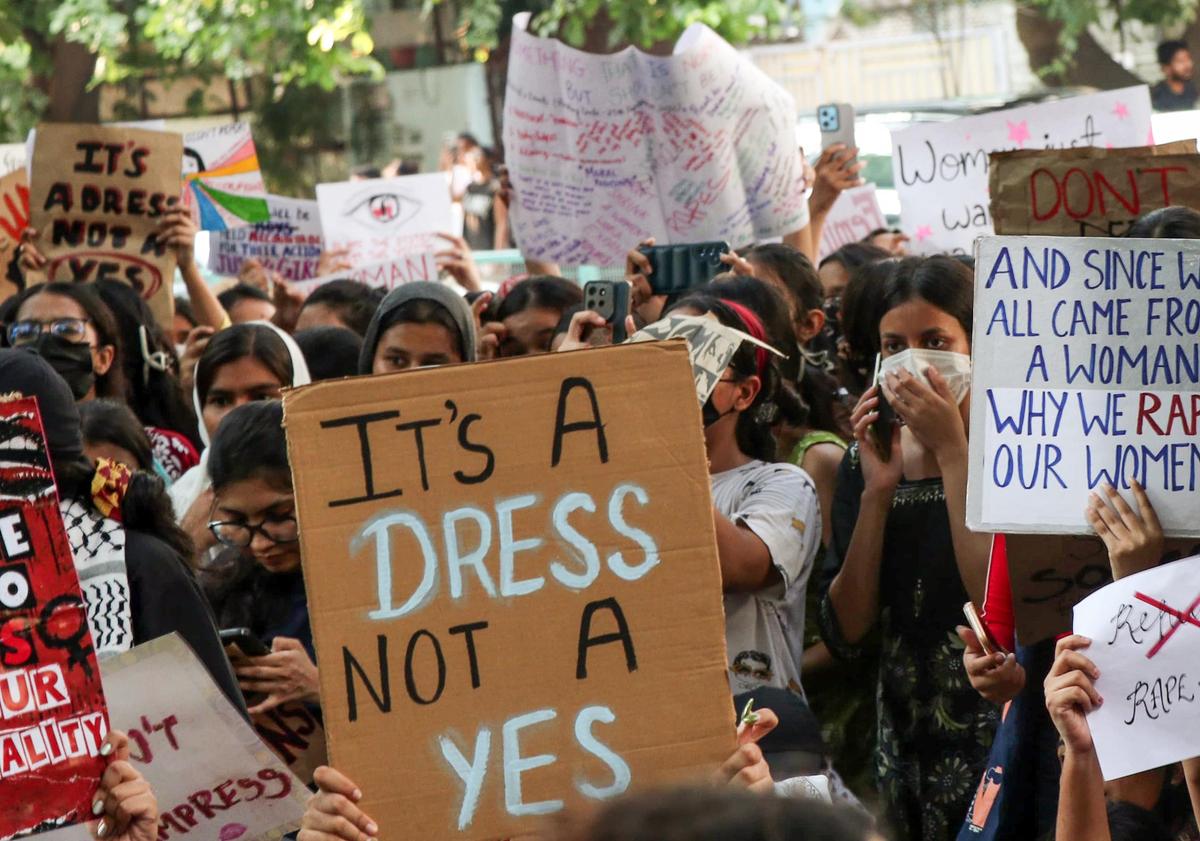

Delhi has once again seen young women and students taking to the streets to demand greater safety, accountability and freedom in public spaces. The latest protests began after the alleged gangrape of a 17-year-old girl at Aastha Kunj Park in South Delhi and quickly developed into a wider conversation about the everyday experiences of women in the capital. Students from Delhi University colleges, along with other young women, have marched through parts of the city carrying placards and raising demands that extend beyond a single criminal case. Their concerns include unsafe public spaces, inadequate lighting, stalking, harassment, poor last-mile connectivity, surveillance gaps and restrictions imposed on women in the name of safety.
The demonstrations are significant because they show that women’s safety is being discussed not only as a matter of policing after a crime occurs, but also as a question of how women experience the city every day. For many young women, safety determines when they can travel, which routes they can take, whether they can use a park or public transport, how late they can remain outside and how much freedom they have to participate in student, professional and social life.
The renewed protests also recall the large public demonstrations that followed the 2012 Delhi gangrape. More than a decade later, the continued presence of women’s safety concerns has created frustration among a younger generation that grew up hearing about those protests and the reforms that followed them. The current demonstrations therefore represent both an immediate response to a recent incident and a broader demand for changes that students believe should make everyday life safer.
What Triggered the Latest Delhi Protests?
The latest wave of demonstrations followed the alleged gangrape of a 17-year-old girl at Aastha Kunj Park in South Delhi. According to Reuters, the teenager reported being assaulted by three men who allegedly posed as police officers. The incident occurred close to Lady Shri Ram College, one of Delhi’s prominent women’s colleges, intensifying concerns among students living, studying and travelling in the surrounding area. Police subsequently arrested or questioned suspects in connection with the case.
The proximity of the incident to educational institutions became particularly important for students. A crime occurring close to a college campus can change the way students perceive familiar roads, parks, public transport routes and neighbourhoods. Areas that previously appeared ordinary may suddenly become associated with risk, particularly when students already have concerns about inadequate lighting, isolated stretches and limited police presence.
The initial protests were followed by further demonstrations around Delhi University. Students from colleges including Lady Shri Ram College, Miranda House, Gargi College and other institutions participated in demonstrations demanding greater accountability and safer public spaces. Indian Express reported that approximately 200 students participated in an early protest on September 23, while subsequent demonstrations became larger.
The protests subsequently spread across different parts of the university environment, showing that the issue had moved beyond a single campus or college.
Why Are Young Women Protesting Again?
One reason the demonstrations have resonated among young women is that the conversation is not limited to extreme forms of sexual violence. Students have described a broader spectrum of experiences that can influence how safe they feel while moving around Delhi.
Recent reporting from demonstrations has highlighted concerns about stalking, inappropriate recording in public spaces, harassment, dark streets and restrictions imposed by families. Some students have also described the pressure of regularly informing parents when they reach their accommodation safely or adjusting their movements because of concerns about what might happen after dark.
This distinction is important. Women’s safety is often discussed primarily through statistics about rape and other serious crimes. Those statistics are essential, but everyday experiences can also shape whether women feel able to use public spaces freely.
For a university student, safety may mean being able to walk from a metro station to a college without being followed, wait for transport without harassment, travel home after an evening class, use a public park, attend an event at night or return to a paying guest accommodation without repeated calls from family members asking whether she has arrived.
The protests therefore reflect a wider question: should women have to continuously modify their behaviour because of the possibility of harassment or violence?
From Safety Advice to Questions About Freedom
For years, safety advice directed at women has often focused on individual precautions. Women are frequently told to avoid isolated areas, return home early, travel in groups, share their location, carry emergency contacts or avoid certain forms of transport.
Such precautions can sometimes reduce individual risk, but young protesters are increasingly asking a different question: why should the responsibility for preventing violence fall primarily on women?
This question was also reflected in recent remarks by Delhi Chief Minister Rekha Gupta, who said that discussions about safety should not result in restrictions being imposed only on girls. She argued that boys should also be taught appropriate behaviour and that responsibility for preventing harmful behaviour belongs to society as a whole.
This represents an important shift in the public discussion. Safety is not only about teaching potential victims how to avoid danger. It is also about preventing harassment and violence, improving institutional responses, creating safer environments and educating people about consent, respect and accountability.
The Importance of Safer Public Spaces
One of the strongest themes emerging from the Delhi protests is the relationship between women’s safety and the design of public spaces.
Students have raised concerns about dark roads, poorly lit areas, unsafe parks and inadequate last-mile connectivity around educational institutions. A recent meeting between Delhi’s Lieutenant Governor Taranjit Singh Sandhu and principals of Delhi University women’s colleges identified several concerns, including dark spots, poor lighting, unsafe parks, public transport issues, e-rickshaws, encroached footpaths and the need for stronger patrolling around campuses.
These concerns demonstrate that urban safety cannot be addressed only through police stations and criminal law. The physical environment also matters.
A well-lit pedestrian route, reliable public transport connection, visible policing, functioning CCTV infrastructure and accessible emergency services can influence how people experience a public area. When infrastructure is poorly maintained, isolated or difficult to navigate, the perception of vulnerability can increase.
Following the recent incident, Delhi Police also identified surveillance and lighting gaps in several vulnerable parks and green spaces. Police sought additional CCTV cameras and lighting at locations including Hauz Rani forest area, Bonta Park and Qudsia Bagh.
Why the Campus Environment Matters
Educational institutions occupy a special place in the current protests because many participants are students who depend on public spaces every day.
Delhi University campuses are connected to metro stations, buses, e-rickshaws, markets, residential neighbourhoods and busy roads. Students frequently move between these locations at different times of the day. Women students may attend early classes, evening events, internships, coaching sessions, library programmes or extracurricular activities.
Safety therefore cannot end at the college gate.
A campus may have security personnel and controlled entrances, but students can still face difficulties while travelling to and from the institution. This is why last-mile connectivity has become an important part of recent discussions between authorities and women’s colleges.
The issue also affects educational participation. If students feel they cannot safely attend evening activities or travel independently, their access to education may be indirectly restricted. Safety consequently becomes an educational issue as well as a law-and-order issue.
The Emotional Impact of Living With Safety Concerns
The effects of women’s safety concerns extend beyond the immediate possibility of physical harm. Constantly evaluating surroundings, sharing locations, avoiding particular routes and responding to anxious family members can create an additional psychological burden.
Recent reporting from Delhi protests described students receiving more calls from parents and feeling pressure to return to their accommodation early after the recent incident. Some students also described having to reassure their families that they were safe.
This can create a complicated situation for young adults. University life is often associated with independence, exploration and personal growth, yet safety concerns can lead families to impose additional restrictions on daughters.
The result can be a cycle in which a dangerous incident produces fear, fear produces restrictions, and restrictions primarily affect women’s freedom rather than changing the conditions that created the danger.
The protesters’ message challenges that cycle by asking for safer environments rather than narrower lives for women.
The Return of Midnight and Street Protests
The renewed demonstrations have also included women deliberately occupying public spaces at night.
A solidarity walk in Kalkaji brought together nearly 60 women, including students, professionals and older participants. The walk was organised under the Women Walk at Midnight initiative, which was inspired by the 2012 Nirbhaya movement. Participants walked through parts of Kalkaji at night while police personnel and PCR vans accompanied them.
The symbolism of such a walk is powerful. Instead of responding to fear by withdrawing from public spaces, participants entered those spaces collectively and publicly.
The objective was not simply to demonstrate that women can walk at night. It was also to challenge the idea that certain hours or areas of the city naturally belong more to men than women.
For many participants, collective presence can create a temporary sense of security and solidarity. However, the larger objective remains the creation of conditions in which women can move independently without needing a protest group around them.
What Has Changed Since 2012?
The comparison with the 2012 Nirbhaya protests is unavoidable. The 2012 case generated massive public demonstrations across India and became a major turning point in national discussions about sexual violence, criminal law and women’s safety.
Yet protesters in 2026 have questioned whether the changes since then have been sufficient. During the latest demonstrations, students referred directly to December 16, 2012 and argued that serious concerns about harassment and women’s freedom remain.
At the same time, it would be inaccurate to suggest that nothing has changed. Institutions have introduced new laws, policing mechanisms, emergency systems, surveillance programmes and dedicated initiatives for women.
Delhi Police, for example, inaugurated its first dedicated Women Police Station in June 2026 in the Subzi Mandi area of North Delhi. The police described the station as a dedicated institution for crimes against women and children, with an emphasis on accessible and victim-centred policing.
The challenge is that institutional reforms and lived experience do not always progress at the same speed. A policy can exist on paper while a student may still encounter a dark road, unreliable transport or inadequate surveillance on her way home.
What Are Authorities Doing Now?
The recent protests have prompted renewed attention from Delhi’s administration and policing agencies.
The Lieutenant Governor’s meeting with principals of women’s colleges resulted in directions concerning street lighting, CCTV coverage, police patrolling, PCR deployment and last-mile connectivity. Dedicated nodal police officers for colleges were also discussed, along with a proposed student safety application and an Inter-College Women Safety Committee.
The Delhi government has also announced large-scale infrastructure measures. Chief Minister Rekha Gupta said that 50,000 CCTV cameras and 100,000 streetlights are being installed across the city as part of efforts to improve security.
Another proposal involves the use of plainclothes police officers around women’s colleges and a real-time safety application that could include emergency alerts and GPS-based location sharing.
These measures indicate that authorities are responding through a combination of physical infrastructure, surveillance, policing and technology.
However, their effectiveness will ultimately depend on implementation, maintenance, response times and whether students actually experience improvements in the areas where they live and study.
The Larger Problem Revealed by the Protests
The Delhi protests reveal that women’s safety cannot be reduced to a single question about the number of police officers on the streets.
Safety involves the interaction of policing, urban design, public transport, education, social attitudes, institutional accountability and access to justice.
A CCTV camera can record an incident, but it cannot prevent every form of harassment. A streetlight can improve visibility, but it cannot replace effective policing. A safety application can help someone seek assistance, but technology cannot substitute for prevention and accountability.
Similarly, asking women to travel in groups may provide temporary reassurance, but it does not address the underlying behaviour that creates fear.
The protesters’ broader message is therefore about creating an environment where safety becomes a normal feature of public life rather than an emergency response after a serious crime.
Young Women Are Demanding Agency, Not Just Protection
Perhaps the most important feature of the current protests is the language of freedom and agency.
Students are not simply asking to be protected while remaining indoors. They are asking to be able to study, work, travel, socialise and participate in public life without their gender determining how freely they can move.
This distinction matters because protection and freedom are not always the same thing. A policy that keeps women away from potentially unsafe environments may reduce exposure to risk, but it can also reduce independence. A safer city should instead allow women to participate fully in public life.
The latest demonstrations therefore connect women’s safety with broader questions of equality. If a student cannot attend an evening programme because her route home is considered unsafe, the problem affects her education. If a young professional cannot travel after a certain hour, the issue affects employment opportunities. If women avoid public spaces because of harassment, the entire city becomes less accessible to them.
Why These Protests Matter Beyond Delhi
Although the latest demonstrations are taking place in Delhi, the concerns raised by participants are relevant to cities across India.
Young women in different cities face questions about public transport, lighting, harassment, workplace safety, policing, accommodation and social restrictions. Delhi’s current protests have therefore become part of a broader national conversation about what urban safety should look like for women.
The protests also demonstrate the role of student communities in public discourse. Universities are not isolated from society. Students experience social problems directly and often become some of the most visible voices demanding institutional change.
The involvement of young women is particularly significant because they are articulating their expectations of public life differently from previous generations. They increasingly view mobility, education, employment and participation as basic parts of independence rather than privileges that must be negotiated through restrictive safety rules.
The Need for Long-Term Change
The immediate response to the current protests will involve investigations, arrests, security reviews and infrastructure measures. These steps are important, but long-term change requires a broader approach.
Schools and colleges can contribute through gender sensitisation, consent education and accessible complaint mechanisms. Urban authorities can improve lighting, pedestrian infrastructure, transport connectivity and maintenance of public spaces. Police departments can strengthen patrolling, emergency response and investigation systems. Technology can support reporting and communication, but it must be accompanied by reliable human intervention.
Families also have an important role. Teaching daughters how to remain safe can be useful, but teaching sons about consent, respect and responsibility is equally important. Recent comments by Delhi’s Chief Minister explicitly raised this point, arguing that safety education should not place the entire burden on girls.
The objective should be to create a society in which safety does not require women to continuously calculate risk.
Conclusion
The renewed women’s safety protests in Delhi are rooted in a specific and deeply serious incident, but they have developed into a much larger conversation about how young women experience the city.
Students have taken to the streets because they are questioning why familiar roads, parks, public transport routes and educational surroundings can still feel unsafe. They are also challenging the idea that the solution should primarily involve restricting women’s movements.
The recent demonstrations, midnight solidarity walks and campus protests show that young women want more than temporary reassurance. They are demanding safer infrastructure, effective policing, institutional accountability and the freedom to participate in public life without fear.
Authorities have responded with proposals and measures involving CCTV cameras, streetlights, police patrols, campus safety coordination, transport improvements and technology-based emergency systems.
The effectiveness of these efforts will depend on how consistently they are implemented and experienced on the ground. The latest protests have nevertheless made one point clear: for many young women in Delhi, safety is not simply about avoiding danger. It is about having the freedom to study, work, travel, socialise and occupy public spaces on equal terms.
The streets have once again become a place where that demand is being made publicly. The question now is how institutions and society respond to it.
Online Internship with Certificate
You may be interested

When a Celebrity Becomes Part of a Regulatory Investigation: What Happens Next?
Anshika Jain - Oct 01, 2026Celebrity endorsements are among the most powerful forms of modern advertising. A familiar actor, sportsperson, musician or social-media personality can transform an ordinary commercial into a campaign…

The Evidence Problem in High-Profile Crime Cases: Why Early Investigation Matters
Anshika Jain - Oct 01, 2026High-profile crime cases rarely remain confined to the police station or courtroom. Once a serious crime captures public attention, investigators face pressure from families, media organisations, political…

Pan Masala Ads and Bollywood Celebrities: Where Does Celebrity Responsibility Begin?
Anshika Jain - Oct 01, 2026Celebrity advertising has always depended on one basic idea: people pay attention to familiar faces. A popular actor can make a product appear fashionable, trustworthy, aspirational or…
Most from this category




How Crowdfunding Is Changing the Way People Respond to Emergencies
Anshika Jain - Sep 30, 2026




The Rise of Solo Travel Among Young Indians
Oct 01, 2026