
Pan Masala Ads and Bollywood Celebrities: Where Does Celebrity Responsibility Begin?


Celebrity advertising has always depended on one basic idea: people pay attention to familiar faces. A popular actor can make a product appear fashionable, trustworthy, aspirational or socially desirable within a few seconds. This influence is precisely why companies spend substantial amounts on celebrity endorsements. However, when the product or brand is connected with substances that carry significant public-health concerns, the question becomes more complicated. Where does a celebrity’s responsibility begin when an advertisement is technically presented as promoting one product but is widely associated with another?
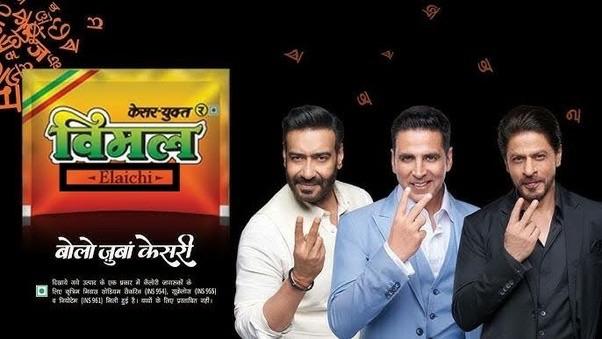
This question has returned to the centre of India’s advertising debate following regulatory action against Bollywood actors Shah Rukh Khan, Ajay Devgn and Tiger Shroff over a Vimal Elaichi advertisement. In August 2026, the Maharashtra Food and Drug Administration issued show-cause notices to the three actors, alleging that the advertisement could amount to surrogate promotion of Vimal pan masala, a product prohibited in Maharashtra. The regulator argued that the Vimal brand is strongly associated with pan masala and that advertising its elaichi product could reinforce recognition of the restricted product.
The controversy has developed further since then. In September 2026, the Delhi High Court declined to entertain a challenge to the Maharashtra FDA notices on territorial-jurisdiction grounds, observing that Maharashtra courts were the more appropriate forum. More recently, the three actors responded to the FDA notices, with two seeking hearings, according to reporting published on September 30.
The issue, however, goes beyond three actors or one advertisement. It raises a larger question about the relationship between commercial freedom, advertising law, celebrity influence and public health.
What Is Surrogate Advertising?
Surrogate advertising refers to a marketing strategy in which a restricted or prohibited product is promoted indirectly through another product, service or brand extension. The advertised product may itself be legally available, but the campaign can retain elements strongly associated with the restricted product.
In the pan masala context, a company may advertise products such as elaichi or mouth fresheners while using a brand name, visual identity, celebrity, slogan or advertising style that consumers already associate with pan masala. The legal and regulatory question is therefore not necessarily limited to what physical product appears in the advertisement. It can also involve what the advertisement communicates about the wider brand.
Indian advertising regulation has long attempted to address direct and indirect promotion of restricted products. Government information on tobacco advertising states that the prohibition on tobacco advertising extends to activities that promote the use or consumption of tobacco products. Pan masala advertising is separately regulated under food-safety rules, including health-warning requirements.
The difficulty arises when a company argues that it is advertising a legal product while regulators believe the campaign effectively maintains the visibility of a restricted product.
That distinction is at the heart of the current Vimal controversy.
Why the Vimal Elaichi Controversy Matters
The Vimal campaign became particularly significant because of the popularity of the actors involved. Shah Rukh Khan, Ajay Devgn and Tiger Shroff are among India’s widely recognised film personalities, giving the campaign considerable visibility.
According to the Maharashtra FDA, the issue was not simply whether elaichi itself was a lawful product. The regulator alleged that the use of the Vimal brand in the advertisement could maintain or strengthen consumer recognition of a prohibited pan masala product. The notices sought explanations from the actors and requested information relating to their endorsement arrangements.
The FDA also directed the actors to stop participating in the campaign and remove related promotional material from their social-media accounts. The notices reportedly invoked provisions of the Food Safety and Standards Act concerning misleading food advertising, including Section 24 and the penalty provisions under Section 53.
The controversy consequently moves beyond the traditional question of whether an actor appears to be advertising tobacco or pan masala directly. The more complicated question is whether a celebrity endorsement can indirectly strengthen the identity of a product that cannot legally be promoted in the same way.
The Legal Distinction Between a Product and a Brand
Modern advertising makes the distinction between products and brands increasingly complicated.
A consumer may recognise a brand long before understanding every product that carries its name. Brand colours, slogans, logos, music, celebrities and visual styles can create associations that extend across different products.
This is why regulators examining surrogate advertising may look beyond the literal wording of an advertisement. The question becomes whether consumers are likely to interpret the campaign as an independent advertisement for a legal product or as a method of maintaining awareness of a restricted product.
The Business Standard’s explanation of the current controversy noted that not every advertisement for a product carrying the same brand name as a restricted product is automatically surrogate advertising. The regulatory assessment can involve factors such as brand association, presentation and the potential for the campaign to indirectly promote the restricted product.
This distinction is important because it demonstrates why the issue cannot be reduced to a simple statement that a celebrity either advertised pan masala or did not advertise pan masala. The legal question can involve the overall effect and structure of the campaign.
What Does Indian Law Say About Celebrity Endorsers?
Celebrity endorsers are not entirely outside India’s advertising-regulation framework.
The Consumer Protection Act gives the Central Consumer Protection Authority powers to act against false or misleading advertisements. According to recent legal explanations of the Vimal case, Section 21 allows action against advertisers and endorsers in appropriate circumstances. Penalties can extend to ₹10 lakh for a first contravention and ₹50 lakh for subsequent contraventions, while endorsers can also face restrictions on making endorsements for specified periods.
Food advertising is also governed by the Food Safety and Standards Act. Section 24 deals with misleading or deceptive food advertisements, while Section 53 provides for penalties relating to misleading food advertisements.
These provisions illustrate an important principle: endorsement is not necessarily treated as a completely passive commercial activity. In certain circumstances, an endorser can have responsibilities concerning the claims or representations made in advertising.
However, the precise legal responsibility of an individual celebrity depends on the facts of the particular advertisement, the applicable law and the findings of the competent authorities or courts.
The Difference Between Legal Responsibility and Ethical Responsibility
The most interesting part of the debate begins where the law ends.
A celebrity may argue that they were hired to endorse a legally marketed product and that responsibility for regulatory compliance rests primarily with the manufacturer and advertising agency. From a legal perspective, such arguments may be relevant when determining whether an individual violated a particular provision.
But public discussion often asks a different question: should a celebrity endorse a product or brand when they know it is strongly associated with a potentially harmful product?
Legal responsibility and ethical responsibility are therefore not necessarily identical.
A person can comply with the formal requirements of a contract while still facing public criticism about the decision to participate in a campaign. Conversely, an advertisement that generates public criticism is not automatically unlawful. These distinctions matter when discussing celebrity endorsements because public debate can easily turn a complicated regulatory issue into a simple question of personal blame.
The current controversy has precisely this tension at its centre.
Why Celebrity Influence Changes the Conversation
Companies do not hire celebrities simply because they make advertisements visually attractive. They hire them because audiences recognise them and because their presence can influence attention, recall and consumer perceptions.
A major actor can reach millions of people through television, cinema, YouTube, Instagram and other digital platforms. An endorsement can therefore extend far beyond the original commercial.
This becomes particularly significant when younger audiences are exposed to the campaign. A young viewer may not necessarily purchase the product being advertised, but repeated exposure can create familiarity with the brand and its visual identity.
The public-health debate consequently focuses not only on direct consumption but also on the role of celebrity culture in normalising certain brands and lifestyles.
This is one reason the current controversy has generated discussion about whether celebrities should conduct deeper due diligence before accepting endorsement agreements.
The Public-Health Dimension
The concerns surrounding pan masala and tobacco are not merely advertising-policy questions. They are also public-health issues.
Tobacco consumption is associated with serious diseases, including cancers and cardiovascular and respiratory conditions. Smokeless tobacco products can also have severe health consequences. This background explains why Indian law places restrictions on tobacco advertising and why authorities have paid particular attention to indirect promotional strategies.
Pan masala presents a more complicated regulatory environment because products can differ in their ingredients. Products containing tobacco or nicotine are subject to specific restrictions, while other products may be legally marketed subject to applicable food-safety rules.
This distinction is important. It would be inaccurate to treat every product labelled pan masala as legally identical. At the same time, regulators may examine whether a supposedly legal product is being used to promote the identity of a prohibited or restricted product.
The current Vimal case illustrates this regulatory challenge.
The Role of the Celebrity’s Due Diligence
One of the most important questions emerging from the controversy is how much due diligence should reasonably be expected from a celebrity.
A major endorsement agreement can involve contracts, advertising agencies, legal advisers, brand managers, public-relations teams and production companies. Celebrities may not personally design the advertising campaign or determine the legal classification of every product.
Nevertheless, public figures with extensive commercial influence can reasonably be expected to understand the broad identity of the brand they are representing.
The Maharashtra FDA’s notices reportedly requested endorsement-related documents, including contracts, campaign briefs, remuneration information and evidence of due diligence.
That makes due diligence an important part of the current conversation. If an actor is considering an endorsement for a brand that has a prominent association with a restricted product, understanding that association becomes commercially and reputationally relevant.
The exact legal standard, however, must be determined through the applicable regulatory process rather than through public opinion alone.
Bollywood’s Long History With Pan Masala Advertising
The current controversy is not the first time Bollywood celebrities have become associated with pan masala advertising.
Over the years, some of India’s most recognisable actors have appeared in advertisements for products presented as elaichi, mouth fresheners or other brand extensions. These campaigns often use glamour, humour, celebration, music and celebrity status to create a highly memorable association.
This approach has been commercially successful because it allows brands to remain culturally visible even when direct advertising of certain products is restricted.
The debate became especially visible in 2022 when Akshay Kumar faced public criticism after appearing alongside Shah Rukh Khan and Ajay Devgn in a Vimal campaign. Kumar subsequently apologised and announced that he would step away from the association. That episode demonstrated how quickly celebrity endorsement decisions can become matters of public debate.
The current controversy shows that the underlying advertising question has not disappeared.
Why Surrogate Advertising Is Difficult to Regulate
Regulating surrogate advertising is challenging because advertising techniques evolve faster than traditional regulatory categories.
A conventional advertisement may clearly show a restricted product. A modern campaign can instead build brand recognition through social media posts, celebrity appearances, events, music, merchandise, lifestyle imagery or a related legal product.
This creates a difficult regulatory question: how should authorities determine whether a campaign is genuinely advertising the product shown or indirectly promoting another product?
Advertising agencies can also create campaigns in which the restricted product is never shown. Instead, consumers encounter familiar colours, names, music, slogans or celebrity associations.
The Indian Express recently reported on the broader advertising industry’s understanding of surrogate campaigns, highlighting how brands can remain culturally relevant without directly displaying the prohibited product.
This means effective regulation may require examining the complete communication strategy rather than a single frame or sentence.
Social Media Has Made Celebrity Responsibility More Complicated
Celebrity advertising has changed significantly because endorsements no longer disappear when a television commercial ends.
Actors can share promotional content directly with followers on Instagram, YouTube and other platforms. Fans can repost advertisements, create short videos and circulate campaign clips. An endorsement can therefore continue generating visibility long after the original advertisement has aired.
This creates another layer of responsibility.
A celebrity’s social-media presence is often perceived as more personal than a traditional television commercial. When an actor posts promotional content directly, followers may interpret the message as a personal recommendation rather than simply a paid advertisement.
At the same time, advertising disclosure rules and contractual arrangements distinguish promotional communication from personal expression. The public therefore needs to understand that celebrity advertising is commercial communication, even when it appears within an actor’s social-media feed.
The President’s Recent Message Has Added a New Dimension
The debate received additional national attention in September 2026 when President Droupadi Murmu addressed film personalities at the National Film Awards and urged celebrities to use their influence responsibly. Her remarks came amid renewed scrutiny of surrogate advertising associated with tobacco and pan masala brands.
The significance of the message lies in the broader question it raises about influence.
Celebrities occupy a unique position in Indian popular culture. Their decisions can influence fashion, language, entertainment, consumer behaviour and lifestyle preferences. This does not mean that celebrities are responsible for every action taken by members of the public. It does mean that their commercial influence is an important part of understanding why companies pay them to endorse products.
The discussion around responsibility therefore does not require assuming that every viewer will imitate a celebrity. Rather, it recognises that celebrity endorsement is specifically designed to create attention and brand association.
Where Should Celebrity Responsibility Begin?
There is no single answer that can resolve every endorsement dispute, but the current controversy highlights several areas that deserve careful consideration.
Celebrity responsibility can reasonably begin with understanding what is being endorsed, who owns the brand, what other products are associated with that brand and whether the advertising campaign could create a misleading impression.
It can also involve asking whether the campaign relies on a legal product primarily as a vehicle for maintaining the visibility of a restricted product.
For celebrities, agencies and brands, such questions can form part of ordinary commercial due diligence. For regulators, the challenge is to determine whether the evidence meets the legal standards required for enforcement.
This approach avoids two extremes. It does not assume that celebrities are automatically responsible for every consequence of an advertisement, but it also does not assume that celebrities have no responsibility simply because they are not the manufacturer.
Where Should Celebrity Responsibility End?
Responsibility also has limits.
A celebrity is not a regulator, manufacturer or public-health authority. The government remains responsible for creating and enforcing clear laws. Manufacturers remain responsible for complying with product regulations. Advertising agencies have responsibilities concerning the campaigns they create, and broadcasters and digital platforms operate within their own regulatory frameworks.
It would therefore be unreasonable to place the entire burden of public-health protection on actors.
The better approach is shared responsibility. Clear regulation can establish what companies and endorsers may or may not do. Brands can conduct lawful marketing. Agencies can design campaigns that comply with applicable rules. Celebrities can conduct appropriate due diligence before accepting endorsements. Regulators can investigate suspected violations through transparent processes.
Each part of the system has a different role.
What the Current Vimal Case Could Mean for Future Advertising
The Vimal controversy could become important because it tests how Indian authorities interpret brand extensions and surrogate advertising in the contemporary media environment.
The Delhi High Court’s September decision did not determine whether the advertisements constituted surrogate advertising. The court declined to hear the challenge on territorial-jurisdiction grounds, leaving the substantive regulatory dispute to the appropriate forum.
The subsequent responses from the three actors mean the regulatory process is continuing. According to the latest reported update, two of the actors have completed hearings while authorities are proceeding further.
The eventual outcome could provide further clarity about how regulators treat celebrity endorsements of legal brand extensions associated with restricted products.
For the advertising industry, such clarity could influence how future campaigns are designed and how endorsement agreements address regulatory risk.
A Larger Debate About Celebrity Culture
The pan masala advertising controversy ultimately raises a broader question about celebrity culture in India.
Celebrities have enormous commercial value because audiences attach meaning to their public identities. When a famous actor promotes a product, the campaign does more than communicate product information. It can connect the product with success, wealth, confidence, celebration, attractiveness or social status.
That is precisely what makes celebrity marketing effective.
It is also why questions about responsibility cannot be dismissed entirely as criticism of actors for accepting advertising contracts. The same influence that makes a celebrity valuable to a brand creates a legitimate public interest in understanding what that influence is being used to promote.
At the same time, the discussion should remain grounded in evidence. An advertisement should not be declared unlawful merely because it is controversial, and a celebrity should not automatically be treated as legally responsible for a manufacturer’s conduct. Regulatory findings, applicable laws and judicial decisions remain essential to determining legal liability.
Conclusion
The latest controversy surrounding pan masala advertising and Bollywood celebrities has reopened an important discussion about the boundaries of commercial influence.
The Maharashtra FDA’s action against Shah Rukh Khan, Ajay Devgn and Tiger Shroff over the Vimal Elaichi campaign has placed surrogate advertising under renewed scrutiny. The Delhi High Court’s September decision and the actors’ subsequent responses show that the matter is still moving through the regulatory process rather than being a settled question.
The central issue is not simply whether an advertisement displays pan masala. It is whether a legal brand extension can indirectly reinforce recognition of a restricted product and what role celebrities should play when participating in such campaigns.
Celebrity responsibility should not replace government regulation or corporate accountability. However, the commercial power of celebrity endorsement means that due diligence has become increasingly important. Actors, brands and advertising agencies operate in a media environment where a single campaign can reach millions of people and remain available online indefinitely.
The debate is therefore likely to continue beyond the current Vimal case. As advertising becomes more sophisticated and restrictions on harmful products remain in place, regulators will face the challenge of distinguishing legitimate brand extensions from indirect promotion.
For celebrities, the question is equally significant. Their influence is the reason brands seek them out. Whether that influence creates an ethical responsibility to examine an endorsement more carefully is ultimately a matter that the industry, regulators and the public will continue to debate.
What the latest controversy makes clear is that celebrity advertising is no longer simply about a famous face appearing in a 30-second commercial. It is about the relationship between influence, consumer memory, commercial speech and public health. Where exactly responsibility begins and ends may remain contested, but the question itself is becoming increasingly difficult for the advertising industry to ignore.
Online Internship with Certificate
You may be interested

When a Case Is Solved Years Later: How Forensic Advances Can Reopen Cold Investigations
Anshika Jain - Oct 22, 2026Some criminal investigations remain unresolved for years or even decades. Witnesses may be unable to identify a suspect, investigators may exhaust the available leads, and physical evidence…

Gold Smuggling Through Airports: How Investigators Trace Possible Links
Anshika Jain - Oct 22, 2026International airports are essential gateways for tourism, trade and global connectivity. Every day, thousands of passengers, airline employees, ground handlers, cargo workers and service providers move through…

Why Restrictions on Journalists Covering Protests Raise Questions About Press Freedom
Anshika Jain - Oct 22, 2026Public protests are among the most visible expressions of democratic participation. They provide citizens with an opportunity to challenge government decisions, demand accountability, raise concerns about injustice…
Most from this category
Political Allegations Versus Verified Evidence: How Readers Can Separate Claims from Facts
Anshika Jain - Oct 22, 2026
Voter List Revision in India: How Can Citizens Verify That Their Names Have Not Been Omitted?
Anshika Jain - Oct 22, 2026
Jantar Mantar Controversy: Can a Protest Site Be Restricted Without Limiting Democratic Expression?
Anshika Jain - Oct 22, 2026
Six Years of Arrest Delays: What the Delhi Court’s MCOCA Criticism Reveals
Anshika Jain - Oct 21, 2026
Political Allegations Versus Verified Evidence: How Readers Can Separate Claims from Facts
Anshika Jain - Oct 22, 2026Voter List Revision in India: How Can Citizens Verify That Their Names Have Not Been Omitted?
Anshika Jain - Oct 22, 2026Jantar Mantar Controversy: Can a Protest Site Be Restricted Without Limiting Democratic Expression?
Anshika Jain - Oct 22, 2026