

UPI and Merchant Charges: Why Traders Are Calling for “No UPI Day”

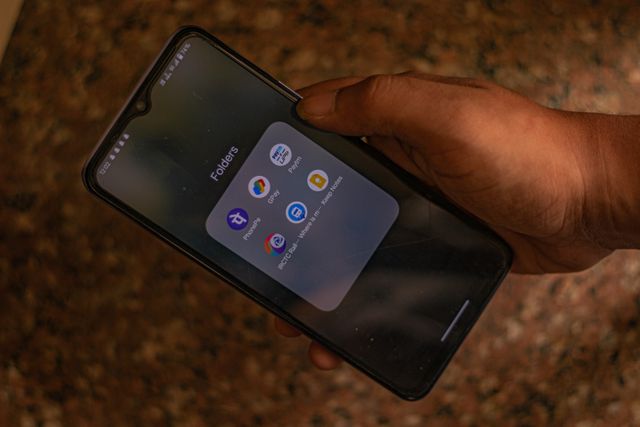

India’s Unified Payments Interface has transformed the way people pay for goods and services. From roadside vendors and neighbourhood grocery stores to large retailers, restaurants and online businesses, UPI has become one of the most visible symbols of India’s digital economy. For millions of consumers, paying through a QR code has become almost as natural as handing over cash. However, a proposed change in the cost structure of merchant UPI transactions has triggered resistance from sections of the trading community, leading to calls for a symbolic “No UPI Day.”
The controversy centres on the Merchant Discount Rate, or MDR, that is scheduled to apply to specified person-to-merchant UPI transactions above ₹2,000 from October 15, 2026. Under the reported framework, the merchant-side charge is generally 0.4 percent, with a maximum charge of ₹300 per transaction, while certain specified sectors have different treatment. Consumers themselves are not supposed to be directly charged for making these UPI payments.
For traders, however, the distinction between a customer being charged and a merchant bearing the cost is economically significant. Businesses operate on margins, and even a relatively small payment-processing cost can become meaningful when multiplied across thousands of transactions. This is why the debate has developed into a larger discussion about who should finance India’s enormous digital payments infrastructure and whether the introduction of merchant charges could undermine the very convenience that helped UPI become so widely accepted.
What Is the “No UPI Day” Protest?
The “No UPI Day” campaign emerged as a protest against the proposed merchant discount rate. Several trader and business organisations called for merchants to temporarily stop accepting UPI payments on October 2 as a way of demonstrating their opposition to the proposed charges. Some groups also discussed further protest activity around October 15, when the new framework is scheduled to take effect.
The proposed protest was never a simple rejection of digital payments. Many of the organisations involved have publicly supported UPI and the broader Digital India initiative. Their argument is primarily about the cost imposed on merchants rather than opposition to digital transactions themselves. They contend that businesses have invested in QR infrastructure, payment devices and digital accounting while helping make UPI a routine part of everyday commerce.
The campaign also became complicated because trader organisations were not completely united. Some associations withdrew their participation in the October 2 protest after meeting Finance Minister Nirmala Sitharaman and presenting their concerns to the government. Other trader organisations continued to support the protest, illustrating the disagreement within the business community over how strongly merchants should respond to the proposed MDR framework.
Why Are Merchants Concerned About UPI Charges?
The core concern is relatively straightforward: merchants do not want a payment method that customers increasingly expect to be free to become an additional operating expense for businesses. For a large retailer, a small percentage-based charge may be absorbed into overall payment costs. For a small trader operating with narrow margins, however, recurring transaction fees can be more noticeable.
Consider a business that receives thousands of rupees through UPI every day. A 0.4 percent charge may appear insignificant on an individual transaction, but the cumulative cost becomes larger as digital sales increase. A ₹10,000 eligible transaction, for example, would generate an MDR of ₹40 under the standard 0.4 percent rate. For a business processing substantial volumes, these individual amounts can accumulate into a meaningful annual expense.
The concern is particularly relevant for sectors where competition limits the ability of merchants to raise prices. A retailer cannot necessarily add a separate payment-processing fee every time a customer scans a QR code. Even if the merchant is legally responsible for the MDR, businesses may eventually attempt to compensate through pricing, discounts, margins or other commercial decisions.
This is why trader groups argue that the issue is not simply about the percentage charged on an individual transaction. It is about the long-term economics of digital commerce and whether the cost of maintaining UPI should be distributed among merchants, payment companies, banks, the government or another combination of participants.
Will Customers Have to Pay for UPI?
One of the most important points in the controversy is that the proposed MDR is a merchant-side charge rather than a direct transaction fee for ordinary customers. The government has repeatedly emphasized that consumers will not be charged simply for making UPI payments. Person-to-person transactions are also expected to remain free.
This distinction matters because reports about “UPI charges” can easily create confusion. A customer scanning a QR code to pay a shop does not automatically have to pay an additional 0.4 percent to the UPI system. Instead, the charge is applied to the merchant for specified transactions under the new framework.
The government has also indicated that banks and payment aggregators should not transfer the merchant-side charge to consumers. Authorities have planned monitoring to ensure that merchants bear the levy as intended rather than adding it directly to customers’ bills.
Nevertheless, merchants and consumer advocates remain concerned about indirect effects. If payment costs increase, businesses could respond by changing prices, reducing discounts or encouraging customers to use alternative payment methods. Therefore, although customers may not see a separate “UPI fee” on their payment screen, the economics of merchant payment acceptance could still influence the cost of goods and services over time.
What Is MDR and Why Does It Matter?
Merchant Discount Rate is a fee associated with processing a digital payment received by a merchant. In traditional card-based payments, merchants have long faced payment-processing costs. UPI, however, developed in India with a very different economic structure, and its widespread adoption has been supported by a policy environment that kept many transactions effectively free for users and merchants.
The proposed MDR represents a significant change because it introduces a direct merchant-side cost for specified higher-value UPI transactions. Under the reported framework, eligible person-to-merchant transactions above ₹2,000 attract a 0.4 percent MDR, subject to a ₹300 ceiling. Transactions at or below ₹2,000 remain outside this charge structure, while certain merchant categories and sectors are treated separately.
The government has argued that the vast majority of UPI transactions will continue without merchant charges. According to government statements and reported policy estimates, the framework is designed to target only a limited portion of transactions rather than imposing a universal fee on every UPI payment.
This makes the debate more nuanced than the phrase “UPI will no longer be free” suggests. UPI itself is not becoming a universally paid service. Instead, a particular category of merchant transactions is being brought under a new pricing mechanism.
Why the ₹2,000 Threshold Has Become Important
The ₹2,000 threshold is central to the debate because it determines which ordinary merchant transactions are potentially affected. A small purchase of ₹500 or ₹1,500 through UPI would remain outside the standard MDR framework, while an eligible payment above ₹2,000 would attract the merchant-side charge.
The threshold has therefore created different concerns for different types of businesses. Small neighbourhood transactions may remain largely unaffected, while businesses selling higher-value goods or services could experience a greater financial impact. Retailers of electronics, mobile phones, furniture, appliances and other relatively expensive products may have more transactions falling into the affected category.
Trader organisations have argued that a single threshold does not necessarily reflect the financial realities of different businesses. A large retailer and a small independent trader may both process a ₹20,000 payment, but their ability to absorb a payment-processing cost can be very different.
This is one reason some business groups have pushed for changes to the proposed framework, including requests to defer implementation and reconsider the threshold. Reports indicate that trade representatives sought a higher threshold and additional time before the proposed MDR takes effect.
Why October 15 Matters
October 15 has become an important date because the proposed merchant MDR framework is scheduled to begin from that day. The timing has added urgency to the traders’ campaign because businesses want clarity before the new system becomes operational.
Trade groups have also raised concerns about the timing in relation to the festive business season. India typically experiences increased consumer activity around major festivals, and merchants may process substantially larger transaction volumes during this period. Business organisations that opposed immediate implementation argued that introducing an additional payment cost during a commercially important period could place unnecessary pressure on retailers.
For the government, however, the challenge is different. UPI has reached a scale where maintaining its reliability, security and technological infrastructure requires substantial resources. The policy debate therefore involves finding a sustainable financial model without damaging the affordability and convenience that made UPI successful.
The Hidden Economics Behind “Free” UPI
For consumers, UPI can appear almost costless. A person opens a payment application, scans a QR code, enters an amount and completes a transaction within seconds. There is usually no visible fee. Behind that simple experience, however, lies a complex ecosystem involving banks, payment service providers, technology companies, network infrastructure and fraud-prevention systems.
The continued operation of such an enormous real-time payments network requires investment in technology, cybersecurity, transaction processing and infrastructure. The challenge is determining how those costs should be financed.
The debate surrounding MDR therefore reflects a larger question about digital public infrastructure. When a payment platform becomes essential to everyday economic activity, its financing model becomes increasingly important. Keeping transactions free can accelerate adoption, but maintaining a massive payment ecosystem without adequate revenue can create sustainability concerns.
This tension explains why the government has described the new framework as part of a broader effort to support the long-term sustainability and resilience of the digital payments ecosystem.
Why Traders Fear the Impact on Small Businesses
Large businesses generally have greater flexibility in managing payment costs. They may negotiate with payment providers, operate at higher volumes or spread expenses across multiple product categories. Small businesses often have fewer options.
A small retailer may operate with a narrow profit margin and depend heavily on UPI because customers increasingly expect QR-based payment acceptance. If the merchant begins paying a percentage of eligible transactions, the additional cost can reduce the margin available on those sales.
There is also a behavioural concern. Traders fear that if the cost of accepting UPI increases, some merchants may become less enthusiastic about accepting higher-value digital payments. This could encourage customers to return to cash for certain purchases or push merchants toward alternative payment methods.
Such a shift would be significant because UPI’s strength has partly come from its universality. Customers do not generally need to ask whether a shop accepts their particular payment application. A QR code at the counter has become a common interface between consumers and businesses.
Could the Charges Affect Digital Payment Adoption?
The possibility of an impact on digital payment adoption is one of the major arguments raised by critics of the MDR framework. India’s rapid transition from cash-heavy transactions to digital payments has depended partly on convenience and low friction. Any new cost that discourages merchants from accepting digital payments could theoretically slow that transition.
However, the government maintains that the overwhelming majority of UPI transactions will remain unaffected. Transactions of ₹2,000 or less represent a substantial portion of merchant payment volume, meaning most everyday low-value purchases should continue without the new MDR.
The actual impact will depend on merchant behaviour after implementation. If businesses continue accepting UPI normally and absorb the charge as a routine cost, the effect on consumers may be limited. If merchants begin refusing larger UPI payments or introducing indirect charges, the policy could generate more visible changes.
Monitoring will therefore be critical. The government’s reported decision to monitor implementation closely reflects the importance of preventing merchants from passing the prescribed cost directly to consumers.
Why Trader Organisations Are Divided
The “No UPI Day” controversy also demonstrates that the business community does not have a single position on the issue. Some trader organisations have taken an aggressive stance against MDR, while others have preferred negotiation with the government.
This difference became particularly visible ahead of October 2. While some associations continued to support the protest, organisations including the All India Mobile Retailers Association and All India Consumer Products Distributors Federation withdrew from the planned action after discussions with the Finance Minister.
The divisions reveal two different approaches to influencing economic policy. One approach relies on visible collective action and temporary withdrawal from UPI acceptance to demonstrate the importance of merchants. The other relies on direct negotiations, representations and requests for policy modifications.
Both approaches reflect the same underlying concern: traders want digital payments to remain commercially viable without placing disproportionate financial pressure on businesses.
What the Government Is Trying to Balance
From the government’s perspective, the issue is not simply whether merchants should pay a fee. Policymakers must balance several competing objectives. UPI must remain attractive to consumers, affordable for small businesses, sustainable for payment-system participants and resilient against increasingly sophisticated technological and cybersecurity risks.
The government also has an interest in preventing a return to excessive cash dependence. Digital transactions generate records, simplify payments and support formalisation of economic activity. A sharp reversal in digital adoption could undermine some of the broader benefits associated with India’s digital economy.
At the same time, policymakers cannot ignore the concerns of merchants who have become dependent on UPI. A payment system that is convenient for customers but increasingly expensive for businesses could create resistance at the point where digital transactions actually occur.
The challenge is therefore to establish a model in which infrastructure remains financially sustainable without weakening merchant participation.
What “No UPI Day” Reveals About India’s Digital Economy
The debate is ultimately larger than one day of protest. The “No UPI Day” campaign illustrates how deeply UPI has become embedded in India’s commercial ecosystem. The fact that traders can use the temporary withdrawal of UPI acceptance as a form of protest demonstrates how important the payment system has become to everyday commerce.
At the same time, the controversy reveals a fundamental reality of digital transformation: once a technology becomes part of everyday economic life, questions about its cost, ownership and sustainability become unavoidable.
UPI was initially celebrated because it made digital payments remarkably simple. The next phase of its development is likely to focus increasingly on how that simplicity can be maintained while the underlying ecosystem becomes financially and technologically sustainable.
The Future of UPI and Merchant Payments
The introduction of merchant-side charges does not necessarily mean the end of India’s low-cost digital payment revolution. Instead, it could represent a transition toward a more complex economic model for UPI. The success of that transition will depend on whether the charges remain limited, transparent and predictable, and whether small merchants can continue accepting digital payments without significant disruption.
The government will also need to monitor whether merchants pass costs to customers, whether businesses begin refusing certain digital transactions and whether the new framework creates unintended incentives around transaction splitting or payment-method selection.
For merchants, the most important issue will be predictability. Businesses can often adapt to a known cost more easily than an uncertain one. If payment charges are clearly defined and remain manageable, they can potentially become another ordinary operating expense. If the structure changes repeatedly or produces unexpected costs, resistance is likely to continue.
For consumers, the key question is whether the convenience of UPI remains unchanged. If customers can continue scanning a QR code without paying an additional fee, the immediate user experience may remain largely the same. But the long-term relationship between merchants, payment providers and the government will determine whether UPI remains as universally accepted as it is today.
Conclusion: A Debate About the Future of Digital Payments
The “No UPI Day” controversy is not simply a dispute between traders and the government over a percentage charge. It represents a much broader debate about how India’s digital payment revolution should be financed.
UPI has become an essential part of Indian commerce because it is fast, accessible and deeply integrated into everyday transactions. The proposed 0.4 percent MDR on specified merchant transactions above ₹2,000 introduces a new economic dimension to that system, even though ordinary customers are not expected to pay the charge directly.
For traders, the concern is about margins, business costs and the possibility that payment expenses could grow as digital transactions increase. For policymakers, the challenge is ensuring that UPI remains financially sustainable while protecting the affordability and accessibility that drove its extraordinary adoption.
The fact that some trade organisations withdrew the October 2 protest after discussions with the government, while others continued to support the campaign, shows that the issue remains contested.
Ultimately, the future of UPI will depend on maintaining a balance between innovation and economics. India’s digital payments system has reached a scale where even a small change in transaction costs can affect millions of businesses. The coming months will reveal whether the new MDR structure can coexist with widespread merchant acceptance or whether traders’ concerns lead to further policy revisions. Either way, the “No UPI Day” debate has made one point clear: the next chapter of India’s digital payment story will be shaped not only by technology, but also by the economics of who pays for it.
Online Internship with Certificate
You may be interested

Flydubai Flight Incident: How an Injured Captain Helped Regain Control of the Aircraft
Anshika Jain - Oct 05, 2026The Flydubai Flight FZ1073 incident has drawn international attention after an in-flight cockpit confrontation left the aircraft in a dangerous descent and seriously injured its Indian captain,…

Space Surveillance in the Digital Era: How Countries Track Increasingly Crowded Orbits
Anshika Jain - Oct 05, 2026Earth’s orbital environment is becoming increasingly busy. Governments, commercial companies, research organisations and international institutions are placing more satellites into orbit to support communication, navigation, Earth observation,…

Delhi’s New AI-Powered Pollution Control Centre: How AI Track Pollution Sources
Anshika Jain - Oct 05, 2026Delhi’s air pollution problem has long been one of the most difficult environmental challenges in India. Every year, especially as winter approaches, a combination of vehicle emissions,…
Most from this category

BHU Women’s Safety Protests: Why Students Are Challenging Campus Curfew Rules
Anshika Jain - Oct 05, 2026
Why Tracking Satellites Has Become a Strategic Technology for Modern Nations
Anshika Jain - Oct 02, 2026
Can AI Help Cities Identify Pollution Sources Before They Become Public-Health Emergencies?
Anshika Jain - Oct 02, 2026

BHU Women’s Safety Protests: Why Students Are Challenging Campus Curfew Rules
Anshika Jain - Oct 05, 2026Why Tracking Satellites Has Become a Strategic Technology for Modern Nations
Anshika Jain - Oct 02, 2026Can AI Help Cities Identify Pollution Sources Before They Become Public-Health Emergencies?
Anshika Jain - Oct 02, 2026