Journalists Detained During Protests: Police Authority End and Press Freedom Begin?

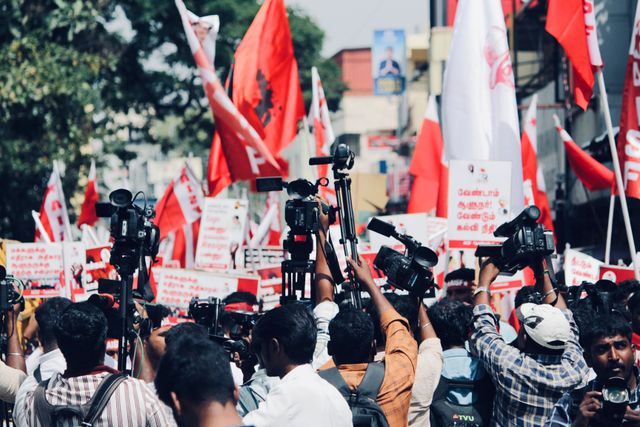

Protests are among the most visible expressions of democratic participation. They allow citizens to challenge government decisions, demand accountability and draw attention to social, political and economic concerns. Journalists play a critical role in documenting these events, providing verified information to the public and recording how protesters, authorities and bystanders are treated. However, when police detain journalists during demonstrations, a difficult question emerges: where does the state’s responsibility to maintain public order end, and where does its obligation to protect press freedom begin?
The detention of a journalist during a protest does not automatically establish that the police have acted unlawfully. Officers may need to respond to violence, prevent immediate threats, enforce lawful restrictions or investigate suspected offences. Journalists, like other citizens, are not exempt from laws that apply to everyone. Nevertheless, detaining a reporter merely for documenting a demonstration, questioning official conduct or publishing criticism raises serious concerns about freedom of expression and democratic accountability.
In India, this debate is particularly important because public demonstrations frequently concern elections, employment, education, civil liberties, government policies and institutional accountability. When journalists are prevented from reporting on such events, the consequences can extend beyond the individual detained. The public may lose access to reliable information about the protest, the police response and the circumstances that led to the detention.
The central issue is therefore not whether police authority or press freedom should prevail in every situation. It is whether restrictions on reporting are lawful, necessary, proportionate and open to scrutiny. A democratic society requires both effective law enforcement and independent journalism, and neither can function responsibly when the other operates without meaningful limits.
Understanding Press Freedom in a Democracy
Press freedom is an essential part of democratic accountability because citizens depend on independent reporting to understand public affairs. Journalists investigate government decisions, examine allegations of misconduct, report on public demonstrations and present information that may challenge official explanations. Their work helps citizens make informed decisions and enables public institutions to be examined beyond their own statements.
In India, press freedom is protected primarily through Article 19(1)(a) of the Constitution, which guarantees citizens the right to freedom of speech and expression. Although the Constitution does not establish a separate, unlimited fundamental right exclusively for the press, the Supreme Court has recognised press freedom as an important dimension of the constitutional guarantee of expression.
This protection includes the ability to gather and communicate information, criticise public authorities and report matters of public interest, subject to applicable law. Journalists must be able to investigate events and convey facts without being subjected to arbitrary interference simply because their reporting is inconvenient to those in power.
However, press freedom is not absolute. Article 19(2) permits reasonable restrictions on freedom of speech and expression on specified grounds, including public order, security of the state, defamation and incitement to an offence. These restrictions must operate within constitutional limits. The existence of a public-order concern does not automatically justify every restriction imposed on a reporter.
The important distinction is between a lawful restriction supported by specific circumstances and an arbitrary action intended to obstruct legitimate reporting. Press freedom protects journalism from unjustified interference, but it does not provide immunity from every generally applicable law. The challenge is ensuring that legal powers are used for legitimate purposes rather than as a means of suppressing scrutiny.
Why Police Authority Is Necessary During Protests
Police officers have a responsibility to protect life, prevent violence, maintain public order and respond to unlawful conduct. Large demonstrations can create difficult operational conditions, particularly when crowds gather near government buildings, transport infrastructure or other sensitive locations. Tensions may escalate quickly, and officers may have to separate opposing groups, protect bystanders or respond to immediate threats.
Authorities may also impose lawful restrictions on assemblies in particular circumstances. When violence occurs or there is credible evidence of an imminent threat, police may need to intervene. Depending on the facts and applicable law, they may direct people to move away from dangerous areas, establish security perimeters or take action against individuals suspected of committing offences.
Journalists covering these events may sometimes enter restricted areas, obstruct emergency operations or find themselves close to confrontations. A police officer may have legitimate grounds to move a reporter away from a dangerous location or temporarily restrict access to a specific area. Where the law permits, officers may also arrest a journalist suspected of a criminal offence.
However, these powers must be exercised for a legitimate purpose. Maintaining public order should not become a general justification for removing reporters from demonstrations or preventing them from recording police conduct. The mere presence of a camera, microphone, press identification card or notebook does not establish wrongdoing.
The appropriate response depends on the circumstances. An officer responding to an immediate safety risk has a different justification from an officer detaining a journalist who is peacefully recording an arrest from a safe distance. The lawfulness of police action must be assessed through the actual conduct involved, the legal basis for the intervention and the proportionality of the response.
When Does Detaining a Journalist Become an Abuse of Authority?
A detention becomes particularly concerning when it lacks a clear legal basis, is disproportionate to the circumstances or appears intended to prevent legitimate reporting. A journalist’s professional activity may expose official misconduct, contradict an authorised account of an incident or draw attention to excessive force. These possibilities make independent reporting valuable, but they can also create situations in which officials feel uncomfortable with being observed.
One warning sign is selective enforcement. If reporters are allowed to document a demonstration until they begin recording police action, and are then detained without a clear explanation, the circumstances may raise questions about whether the intervention is genuinely related to public safety. Similarly, confiscating equipment or deleting recordings without lawful authority can interfere with the ability to preserve evidence and report events accurately.
Another concern arises when vague accusations are used to justify detention. Describing a journalist as disruptive or a threat to public order is not, by itself, a substitute for identifying the conduct that provides a lawful basis for action. The facts, applicable legal provisions and circumstances surrounding the incident must be examined.
Repeated or prolonged detention can also have a chilling effect. Even if a reporter is eventually released without charges, the experience may discourage further coverage of sensitive demonstrations. Other journalists may begin avoiding particular locations or subjects because they fear similar consequences. This can weaken public scrutiny without the authorities having to impose a formal ban on reporting.
Nevertheless, the legality of an incident cannot be determined solely from a journalist’s professional identity or an initial social media account. A fair assessment should consider available footage, eyewitness testimony, police explanations, arrest records and subsequent judicial findings. The goal should be to establish the facts and hold institutions accountable where their actions violate the law.
Constitutional Protections and the Legal Rights of Journalists in India
Indian constitutional law provides important safeguards against arbitrary restrictions on expression and personal liberty. Article 19(1)(a) protects freedom of speech and expression, while Article 19(1)(b) protects the right of citizens to assemble peaceably and without arms, subject to reasonable restrictions under Article 19(3). These provisions support democratic participation and the public’s ability to receive information about matters of public importance.
Article 21 protects life and personal liberty, requiring that any deprivation of liberty follow a procedure established by law. Article 22 provides additional safeguards for people who are arrested, including requirements concerning communication of the grounds of arrest and production before a magistrate within the constitutionally prescribed period, subject to the applicable legal provisions and exceptions.
The Bharatiya Nagarik Suraksha Sanhita, 2023, which governs criminal procedure, also establishes requirements concerning arrest and related safeguards. The precise powers available to police depend on the alleged offence and the circumstances. An arrest cannot be justified merely by saying that a person was present at a protest or engaged in journalism.
The Supreme Court’s decision in D.K. Basu v. State of West Bengal established important safeguards concerning arrest and detention, including procedural requirements intended to reduce custodial abuse. These safeguards reflect the principle that police powers must remain accountable to the law.
Journalists do not possess blanket immunity from arrest or criminal investigation. However, their professional activities do not remove their constitutional protections either. If a journalist is suspected of a genuine offence, authorities must follow applicable legal procedures. If the intervention is intended simply to suppress lawful reporting, constitutional protections become central to challenging that action.
The Difference Between Lawful Reporting and Unlawful Conduct
The boundary between legitimate journalism and conduct that may justify police intervention depends on the facts rather than the label attached to an individual. A reporter documenting a peaceful demonstration, interviewing participants or recording the police response is generally engaged in ordinary journalistic activity. Criticism of public officials, even when strongly worded, does not automatically become a criminal offence.
The situation may be different if an individual participates in violence, deliberately obstructs lawful police operations or commits another offence for which the law authorises intervention. A journalist who engages in such conduct cannot necessarily avoid legal consequences by claiming professional status. Equally, a reporter should not be treated as a participant in unlawful activity merely because they are physically present where offences occur.
This distinction becomes especially important during fast-moving demonstrations. Journalists often stand near protesters to document events, while police officers may have limited time to assess the roles of people in a crowded area. Temporary instructions intended to prevent injury may be justified in some circumstances, but any subsequent detention or arrest still requires a proper legal basis.
Police training and operational protocols should recognise the difference between reporting on an event and participating in it. Clear communication, identifiable media access arrangements where practicable and proportionate restrictions can reduce unnecessary conflict. Journalists also have a responsibility to consider their own safety, avoid interfering with emergency operations and comply with lawful directions.
A functioning democracy benefits when both sides understand these boundaries. Police officers must be able to perform legitimate duties, while journalists must be able to document public events without being treated as adversaries simply because their work involves scrutiny.
The Chilling Effect on Journalism and Public Information
The detention of journalists can influence reporting long after a particular protest ends. When reporters face arrest, physical intimidation, threats or the seizure of equipment, news organisations may become more cautious about assigning staff to sensitive demonstrations. Freelancers and independent journalists, who may have fewer legal and financial resources than large media organisations, can be especially vulnerable.
This creates a chilling effect in which journalists begin avoiding stories that could expose them to official pressure. The result may be fewer independent accounts of police action, fewer interviews with affected citizens and less investigation into allegations of excessive force. Even where no formal censorship exists, fear of detention can limit the information reaching the public.
The consequences are not confined to professional media. Citizens increasingly document demonstrations through smartphones and share footage online. When the boundaries of lawful recording are unclear, ordinary people may also become reluctant to preserve evidence of public events. This can make it more difficult to verify competing accounts of what occurred.
Reliable reporting is particularly important during periods of political tension because official statements, protesters’ claims and circulating online videos may present different versions of the same incident. Independent journalists can verify timelines, identify witnesses and establish context. Preventing them from working can leave the public with incomplete or misleading information.
Protecting press freedom therefore serves a wider public interest. It helps preserve the evidence needed to evaluate government conduct, understand public grievances and distinguish substantiated allegations from misinformation. A society that cannot observe the exercise of public power has fewer opportunities to correct mistakes or expose abuses.
Digital Evidence, Live Reporting and New Challenges
Modern protest coverage increasingly relies on smartphones, livestreams, digital cameras and social media platforms. Journalists can publish footage almost immediately, allowing people outside a demonstration to observe events as they unfold. This can improve transparency, but it also creates new challenges for police operations and media responsibility.
Live broadcasts may reveal the location of officers, security arrangements or the movement of crowds. In certain circumstances, unrestricted publication of sensitive information could create genuine safety risks. Authorities may have legitimate reasons to restrict specific information when a lawful and proportionate basis exists, but general discomfort with public scrutiny is not sufficient justification for suppressing reporting.
Digital evidence also raises questions about access to devices and recorded material. A phone may contain footage of a police intervention, interviews with witnesses and unrelated private information. Any search, seizure or examination of such material must have an appropriate legal basis and comply with relevant safeguards. Arbitrary access to a journalist’s device can expose confidential sources and compromise ongoing investigations.
Journalists, for their part, must verify footage, preserve context and avoid publishing material that could put vulnerable individuals at unnecessary risk. Videos can be edited, circulated without dates or misrepresented as events from another location. Professional reporting requires careful verification, even when a clip appears to support a compelling allegation.
The goal should be to establish a framework in which digital evidence can support accountability without compromising legitimate security needs, privacy or the integrity of investigations.
International Standards and the Importance of Independent Media
Press freedom is recognised internationally as a core element of freedom of expression. Article 19 of the Universal Declaration of Human Rights recognises the right to seek, receive and impart information and ideas through any media and regardless of frontiers. The International Covenant on Civil and Political Rights also protects freedom of expression under Article 19, while allowing specified restrictions that meet the applicable legal standards.
These protections do not mean that journalists can never be restricted during demonstrations. Rather, restrictions must satisfy relevant requirements of legality, legitimate purpose and necessity. Measures that are broader than required or designed to silence criticism undermine the principle that public authority should remain open to scrutiny.
International standards also emphasise the importance of protecting journalists from violence, intimidation and arbitrary interference. Authorities should facilitate the work of media professionals covering public events and investigate credible allegations of attacks or unlawful detention. Independent review can help establish whether police actions were justified and whether procedural safeguards were followed.
For India, these principles reinforce the importance of constitutional protections and institutional accountability. The country’s democratic institutions are strengthened when the public can observe how decisions are implemented, how protests are managed and how allegations of misconduct are investigated.
International comparisons can provide useful lessons, but the legal assessment of any specific incident must ultimately consider Indian constitutional law, applicable legislation and the facts of the case. The broader principle remains that press freedom is most meaningful when it protects reporting that is uncomfortable for those exercising power.
What Accountability Should Look Like
When a journalist is detained during a protest, accountability requires a transparent examination of the circumstances. Authorities should be able to identify the legal basis for the action, explain the relevant facts and demonstrate that applicable procedures were followed. Where the law requires grounds of arrest to be communicated or other safeguards to be observed, those requirements must be respected.
If a detention appears arbitrary, affected journalists may seek legal assistance and challenge the action through appropriate legal mechanisms. Courts can examine questions of legality and constitutional rights, while other competent authorities may investigate allegations of misconduct. The precise remedy depends on the facts, the legal grounds involved and the procedural stage of the case.
Media organisations can also strengthen protection for their staff through safety training, legal support and clear protocols for covering demonstrations. Preserving footage, recording the time and location of an incident, identifying witnesses and documenting interactions with authorities may help establish what happened. Such measures must be undertaken safely and without interfering with lawful operations.
Police departments should provide appropriate training on press freedom, constitutional rights and the distinction between observation and participation in unlawful conduct. Clear internal procedures for handling media access and complaints can reduce misunderstandings and make it easier to identify misconduct when it occurs.
Ultimately, accountability must apply to both the exercise of police powers and the standards of journalism. Officers should not be subjected to unsupported accusations, and journalists should not face arbitrary punishment for legitimate reporting. Evidence-based review offers a stronger foundation for public trust than assumptions based solely on institutional position or political affiliation.
Conclusion: Public Order Must Not Become a Tool of Silence
The detention of journalists during protests raises a fundamental democratic question about the limits of state authority. Police have a legitimate responsibility to maintain public order, protect lives and enforce the law. Yet these responsibilities do not provide unrestricted power to prevent journalists from recording demonstrations, investigating allegations or reporting criticism of public officials.
In India, constitutional protections for freedom of expression and personal liberty establish important boundaries around state action. Journalists remain subject to generally applicable laws, but their professional role must not be used as a reason to deny them the safeguards available to other citizens. Restrictions on reporting must be grounded in law and justified by the circumstances rather than by a desire to avoid scrutiny.
The consequences of arbitrary detention extend beyond the person affected. They can discourage independent reporting, weaken the public record and reduce citizens’ ability to evaluate the conduct of institutions that exercise power in their name. Protecting journalists is therefore not simply a matter of professional privilege; it is an essential part of protecting the public’s access to information.
A democratic society does not require police authority and press freedom to compete as opposing forces. It requires a system in which officers can perform legitimate duties, journalists can report independently and alleged abuses can be investigated through transparent procedures. The boundary between authority and freedom must be determined by constitutional principles, lawful conduct and accountability.
Online Internship with Certificate
You may be interested
Why Internal Disagreements Within Constitutional Institutions Matter to Public Trust
Anshika Jain - Oct 14, 2026Constitutional institutions are the foundations of a democratic system. They establish the rules through which public power is exercised, protect citizens' rights, oversee elections, interpret laws and…
When Police Try to Close a Case: What Legal Remedies Can Victims and Families Pursue?
Anshika Jain - Oct 14, 2026For victims of crime and their families, registering a police complaint is often the first step towards justice. They may provide statements, submit documents, identify witnesses and…
Murder Case: Court Sentenced Muskan Rastogi and Sahil Shukla to Death
Anshika Jain - Oct 14, 2026The Meerut blue drum murder case has become one of India's most widely discussed criminal cases because of the circumstances surrounding the killing of Saurabh Rajput, the…
Most from this category
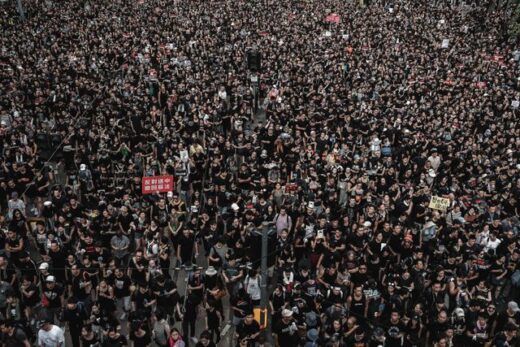
Politics of Protest Bans: Balancing Public Order With the Right to Demonstrate
Anshika Jain - Oct 14, 2026
AI as a Government Tool: Where Real-Time Algorithms Are Already Entering Public Administration
Anshika Jain - Oct 13, 2026
Why Are Young Indians Protesting Against Voter-List Revisions?
Anshika Jain - Oct 14, 2026Politics of Protest Bans: Balancing Public Order With the Right to Demonstrate
Anshika Jain - Oct 14, 2026Why Digital Payments Are Entering a New Regulatory Phase in India
Anshika Jain - Oct 13, 2026