When Police Try to Close a Case: What Legal Remedies Can Victims and Families Pursue?

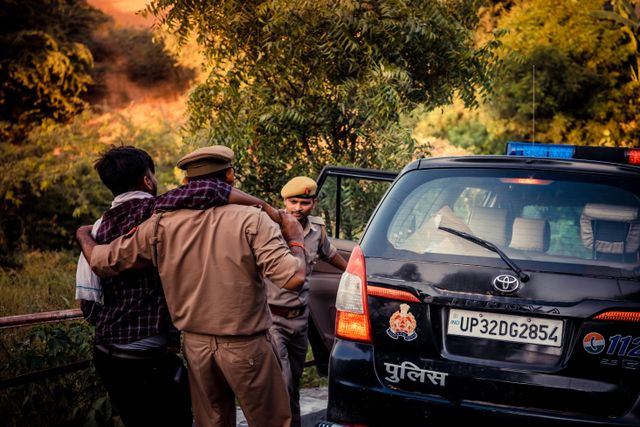

For victims of crime and their families, registering a police complaint is often the first step towards justice. They may provide statements, submit documents, identify witnesses and cooperate with investigators, expecting that the evidence will eventually lead to accountability. However, the process can become deeply frustrating when the police conclude that there is insufficient evidence, recommend closing the case or fail to investigate important allegations. In serious cases, families may suspect that witnesses have been ignored, evidence has been overlooked or the investigation has been influenced by external pressure.
A police decision to close a case does not necessarily mean that every legal avenue has been exhausted. Indian criminal procedure provides judicial safeguards through which complainants and victims can challenge an investigation’s conclusions, request additional investigation and ask a competent court to consider the available evidence. The precise remedy depends on whether the police have refused to register a case, failed to investigate properly, submitted a closure report or obtained a judicial order accepting that report.
Understanding these distinctions is essential because police recommendations and judicial decisions are not the same thing. A closure report is a conclusion submitted by the investigating agency; it is not automatically the final word on whether criminal proceedings can continue.
Understanding a Police Closure Report
A closure report, sometimes called a cancellation report or final report, is submitted when the investigating officer concludes that the available material does not justify filing a charge sheet against the suspected accused. This may happen when the alleged offence cannot be established, the evidence is insufficient, the allegations appear unsubstantiated or the available information does not identify a person responsible for the crime.
Under Section 193 of the Bharatiya Nagarik Suraksha Sanhita, 2023 (BNSS), the police submit a report to the competent Magistrate after completing an investigation. The provision also addresses further investigation after a report has been submitted. The Magistrate, rather than simply accepting the police conclusion without scrutiny, has a judicial role in deciding how the matter should proceed.
A crucial distinction exists between the police recommending closure and the court accepting that recommendation. If the police have filed a closure report but the Magistrate has not yet decided whether to accept it, the complainant may have an important opportunity to present objections. If the court has already accepted the report, the available remedies become more procedurally complicated and may involve challenging the judicial order or pursuing another legally permissible course.
The applicable procedure can also depend on when the criminal proceedings began. The BNSS came into force on 1 July 2024, replacing the Code of Criminal Procedure, 1973 (CrPC), subject to applicable transitional provisions. Older proceedings may continue under the earlier law. Therefore, the relevant statutory provisions should be identified before filing an application.
The Right to Challenge a Closure Report
One of the most important remedies available to a complainant is a protest petition. This is a written objection asking the Magistrate not to accept the police conclusion that the case should be closed. Although the expression is not a separate, comprehensively codified procedure in the same way as some statutory applications, protest petitions have become an established feature of criminal practice.
A protest petition should explain why the investigating agency’s conclusion is disputed. For example, the complainant may identify a witness whose statement was never recorded, medical evidence that was not properly considered, CCTV footage that was not collected, discrepancies in the investigation or documentary material that contradicts the closure report. The objection should connect each concern to the facts and explain why the omission or error matters.
Merely expressing dissatisfaction with the police is generally less persuasive than identifying specific investigative shortcomings. If a family alleges that a suspicious death was not properly investigated, it may need to explain which medical findings, witness accounts, call records or other relevant evidence were overlooked and how those materials could affect the conclusions.
In Bhagwant Singh v. Commissioner of Police, decided in 1985, the Supreme Court recognised that an informant should receive an opportunity to be heard before a Magistrate accepts a police report that would result in dropping proceedings. The principle remains significant when a closure report is under consideration.
A complainant should therefore monitor the case before the Magistrate and seek legal advice promptly after learning that a closure report has been submitted. Waiting until the case has been formally closed may make the next procedural steps more difficult.
What Can a Magistrate Do After Receiving a Closure Report?
The Magistrate is not automatically bound by the investigating officer’s opinion. Depending on the report, the case record and the applicable law, the court may accept the closure report, disagree with the police conclusion and take cognizance where legally justified, or direct further investigation.
If the Magistrate accepts the closure report, the proceedings may end at that stage, subject to available legal remedies. If the court finds that the investigation has left significant questions unanswered, it may consider directing further investigation. If the case record itself provides sufficient grounds to proceed, the Magistrate may also consider taking cognizance in accordance with the applicable procedure.
These options are important because the police investigate, but the judicial authority determines whether the material before it warrants further criminal proceedings. The court must exercise its powers according to law rather than treating either the police report or the complainant’s objections as automatically conclusive.
The Supreme Court has repeatedly considered the options available to a Magistrate when a final report states that no offence is made out. The governing principles recognise that the court may disagree with the investigating agency and that a protest petition can be considered within the framework of the law. The precise route depends on the record and the procedural requirements of the case.
Requesting Further Investigation
A further investigation request may be appropriate when important evidence remains uncollected or material aspects of the case have not been examined. Unlike a protest petition, which primarily challenges the police conclusion, such a request focuses on what additional investigative steps are necessary to establish the facts.
Suppose a family disputes the findings in a road accident case because nearby CCTV footage was never obtained. It may explain the location of the cameras, the approximate time of the incident and why the footage could help establish the sequence of events. In another case, a complainant may identify witnesses whose statements could clarify conflicting accounts or point to digital records that were never examined.
A useful application identifies the specific evidence sought, explains its relevance and sets out the investigative gap that remains. A general demand to reopen every aspect of the case, without identifying a clear reason, may be less effective. At the same time, victims should not be expected to prove the entire criminal case before the court will consider whether a genuine investigative deficiency exists.
Under Section 193(9) of the BNSS, further investigation may be undertaken after a police report has been forwarded, subject to the applicable legal requirements. The provision also requires court permission for further investigation during trial. The Supreme Court addressed the need for judicial permission in Pramod Kumar v. State of Uttar Pradesh, decided on 4 February 2026, holding that the investigating agency cannot simply bypass the court’s authority in the circumstances considered in that case.
Further investigation is not the same as a completely fresh or de novo investigation. The court must consider the legally available remedy and the circumstances justifying it. A complainant should therefore describe the requested steps precisely instead of assuming that every procedural challenge entitles them to an entirely new investigation.
What If the Police Refuse to Register a Complaint?
Sometimes the problem arises before any closure report exists. A person may approach a police station to report a cognizable offence and find that the police refuse to register the information or fail to take appropriate action.
In such circumstances, the complainant should preserve a record of the complaint and any supporting documents. A written representation can be sent to the Superintendent of Police or the relevant senior police authority, explaining the alleged offence, the steps already taken and the action requested. Proof of delivery, acknowledgements and copies of earlier representations may be useful if judicial intervention later becomes necessary.
If the matter remains unresolved, the complainant may approach the jurisdictional Magistrate through the procedure available under the BNSS. Section 175(3) provides a route for a Magistrate to order an investigation in accordance with the statutory conditions. The application should present the facts clearly and include the relevant representations and supporting material.
The legal route is not identical for every grievance. Whether the allegations disclose a cognizable offence, whether the police have already initiated an investigation and whether another statutory mechanism applies can affect the appropriate remedy. Seeking legal assistance before filing a court application can help avoid procedural errors.
Filing a Private Criminal Complaint
A further option may be a complaint directly before the competent Magistrate. This can become relevant when a person seeks judicial consideration of alleged criminal conduct independently of the police conclusion, subject to the procedural requirements of criminal law.
A private complaint generally sets out the facts constituting the alleged offence and identifies the supporting evidence and witnesses. The Magistrate may examine the complainant and witnesses, where required, and decide whether there are sufficient grounds to proceed. The court may also follow other procedures authorised by law, including ordering an inquiry in appropriate circumstances.
However, a private complaint should not be confused with an automatic right to have an accused summoned. The complainant must satisfy the relevant legal requirements, and the court must independently assess whether the allegations and supporting material justify proceeding.
A protest petition also does not automatically become a private complaint merely because the complainant disagrees with the police. The court must consider the substance of the application and whether it meets the requirements for complaint proceedings. The Supreme Court’s discussion of these procedural options has emphasised that a fresh complaint may remain a possible remedy in appropriate circumstances when a protest petition is rejected without being treated as a complaint.
Escalating Allegations of Bias or Deliberate Negligence
When a complainant believes that the investigation has been deliberately compromised, it is important to distinguish demonstrable investigative failures from suspicions that have not yet been supported by evidence. Allegations of bias, improper influence or intentional suppression of evidence are serious and should be presented carefully.
A representation to senior police officials may request supervisory review and explain the specific acts or omissions that raise concern. Where the facts justify it, a complainant may also seek appropriate judicial directions. In exceptional cases involving serious investigative failures, credible allegations of influence or circumstances that undermine confidence in the investigation, a constitutional court may be asked to consider whether a transfer of investigation to an independent agency or another appropriate arrangement is warranted.
Such relief is not automatic. Courts generally examine the circumstances, the seriousness of the alleged deficiencies, the available material and whether ordinary remedies can address the problem. A request for an independent investigation is more persuasive when it identifies concrete reasons why the existing investigation cannot reliably resolve the allegations.
Victims and families should also avoid making unsupported public accusations against named individuals. Preserving evidence, documenting procedural failures and using the appropriate legal channels can help protect the credibility of the complaint while reducing the risk of defamation or other legal complications.
Challenging a Court Order That Accepts the Closure Report
If the Magistrate has already accepted the closure report, the complainant may need to challenge that order through an appropriate higher-court remedy. The correct procedure depends on the nature of the order, the grounds of challenge, the procedural stage and the applicable statutory framework.
A lawyer may examine whether a revision petition, another legally available challenge or a fresh complaint is appropriate in the circumstances. The availability of a particular remedy cannot be assumed in every case, and a complainant should not file overlapping proceedings without understanding their legal consequences.
The challenge should focus on identifiable errors. These may include a failure to provide a meaningful opportunity to object where required, a failure to consider material evidence, a legally incorrect approach to the police report or an order that does not adequately address significant objections. The higher court will assess the legality of the decision rather than simply substitute the complainant’s preferred conclusion.
Time limits and procedural requirements matter. Families should obtain a copy of the relevant order, establish when it was passed and seek advice promptly. If a limitation period applies, delay may complicate the challenge, although the availability of an extension or other relief depends on the law and the circumstances.
Preserving Evidence While Legal Proceedings Continue
Evidence can become difficult to obtain as time passes. CCTV recordings may be overwritten, electronic communications may disappear, witnesses may relocate and physical records may be lost. A complainant who disputes the investigation should therefore maintain an organised record of relevant information while pursuing the appropriate legal remedy.
Original documents, medical records, photographs, messages, call records and correspondence with police authorities should be preserved in their existing form wherever possible. Digital evidence should not be altered or circulated unnecessarily. Where appropriate, a lawyer can advise on lawful methods of preservation, authentication and submission before the competent authority.
Families should also maintain a chronology of events, including when complaints were submitted, which officers or authorities were approached, what responses were received and when they learned of the closure report. This can help establish the procedural history and identify specific unanswered questions.
Witnesses should not be threatened, coached or pressured to change their statements. Attempts to influence evidence can undermine a case and create additional legal problems. Any concern about witness intimidation should be documented and reported through appropriate channels.
Victims’ Rights and the Importance of Legal Representation
The criminal justice system must balance the rights of victims and complainants with the rights of accused persons and the requirement that decisions be made according to evidence and law. A closure report is not necessarily proof that a complaint was false, just as a complainant’s objection does not by itself establish the guilt of a suspect.
Legal representation can help a victim’s family identify the correct procedural route, obtain relevant records, prepare a focused protest petition and distinguish between an application for further investigation and a challenge to a judicial order. A lawyer can also assess whether special laws apply, particularly in cases involving children, sexual offences, caste-based violence or other offences governed by specific statutory provisions.
People who cannot afford private legal representation may approach the relevant District Legal Services Authority or State Legal Services Authority to ask whether they qualify for free legal aid under applicable law. Eligibility depends on statutory categories and other relevant conditions.
The objective should be to secure a lawful and evidence-based assessment of the allegations. Effective advocacy is not about guaranteeing a particular outcome; it is about ensuring that relevant evidence is considered and that the authorities follow the proper procedure.
Conclusion
When police attempt to close a criminal case, victims and families are not necessarily without options. Depending on the stage of the proceedings, they may object to a closure report through a protest petition, ask the Magistrate to consider further investigation, pursue a private complaint, approach senior police authorities or challenge an adverse judicial order through an appropriate legal remedy.
The most important step is to identify precisely what has happened. A refusal to register a complaint, an incomplete investigation, a pending closure report and a court order accepting that report raise different legal questions. Each requires a remedy suited to its procedural stage.
Families should preserve evidence, keep copies of every representation and court order, document specific investigative shortcomings and seek timely legal advice. Indian criminal procedure provides mechanisms for judicial scrutiny of police conclusions, but their effectiveness depends on presenting the facts clearly and following the correct process. Justice is not guaranteed by filing an objection alone; it is pursued through evidence, procedural safeguards and independent judicial consideration.
Online Internship with Certificate
You may be interested

Why Internal Disagreements Within Constitutional Institutions Matter to Public Trust
Anshika Jain - Oct 14, 2026Constitutional institutions are the foundations of a democratic system. They establish the rules through which public power is exercised, protect citizens' rights, oversee elections, interpret laws and…
Murder Case: Court Sentenced Muskan Rastogi and Sahil Shukla to Death
Anshika Jain - Oct 14, 2026The Meerut blue drum murder case has become one of India's most widely discussed criminal cases because of the circumstances surrounding the killing of Saurabh Rajput, the…
Journalists Detained During Protests: Police Authority End and Press Freedom Begin?
Anshika Jain - Oct 14, 2026Protests are among the most visible expressions of democratic participation. They allow citizens to challenge government decisions, demand accountability and draw attention to social, political and economic…
Most from this category


Politics of Protest Bans: Balancing Public Order With the Right to Demonstrate
Anshika Jain - Oct 14, 2026

AI as a Government Tool: Where Real-Time Algorithms Are Already Entering Public Administration
Anshika Jain - Oct 13, 2026
Why Are Young Indians Protesting Against Voter-List Revisions?
Anshika Jain - Oct 14, 2026Politics of Protest Bans: Balancing Public Order With the Right to Demonstrate
Anshika Jain - Oct 14, 2026Why Digital Payments Are Entering a New Regulatory Phase in India
Anshika Jain - Oct 13, 2026