Why Authorities Are Rethinking the Management of Large Public Demonstrations

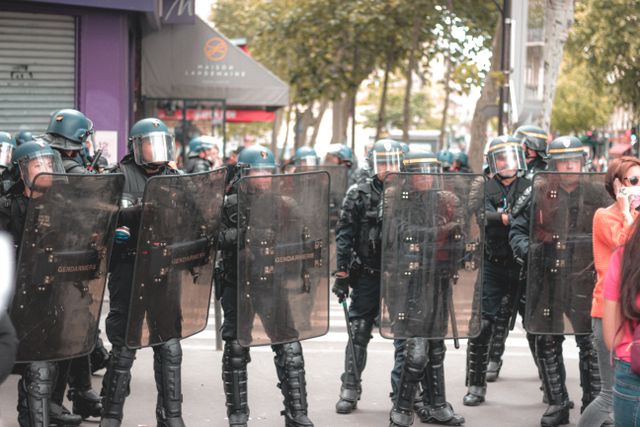

Large public demonstrations have become an important feature of modern democratic societies. From student movements and workers’ strikes to political rallies, environmental campaigns and protests demanding government accountability, public gatherings provide citizens with a platform to express their concerns and demand change. However, as demonstrations grow in size, intensity and political significance, authorities face increasingly complex challenges in maintaining public order while protecting the fundamental freedoms of participants.
The management of large public demonstrations is no longer limited to deploying police personnel, installing barricades or regulating traffic. It requires careful planning, communication with organisers, crowd safety assessments, emergency preparedness and an understanding of the constitutional rights of citizens. Authorities must also consider how their decisions will be perceived by the public, particularly when restrictions, detentions or the use of force become controversial.
In India and other democratic countries, debates over protest management have intensified because of questions about excessive policing, restrictions on assembly, disruptions to public life and the proportionality of preventive measures. Recent disputes over protest restrictions in Delhi have once again brought the relationship between public order and the right to peaceful assembly into focus. These developments demonstrate why authorities are being encouraged to reconsider traditional approaches and develop more transparent, rights-based and effective systems for managing demonstrations.
The Changing Nature of Public Demonstrations
Public demonstrations have evolved considerably in their organisation, scale and political influence. Earlier, many protests were organised through established political parties, labour unions, student organisations or community groups. Today, digital platforms allow individuals to mobilise large numbers of participants within a short period, sometimes without a central organising body or clearly defined leadership structure.
Social media has made it easier to circulate protest announcements, share information about meeting points and communicate demands directly to the public. A local grievance can quickly become a national issue when videos, personal accounts and campaign messages attract widespread attention. While this development strengthens public participation, it also creates planning difficulties for authorities who may struggle to estimate attendance, identify organisers or assess changing circumstances.
Demonstrations can also change direction rapidly. A gathering that begins peacefully may become more complicated because of unexpected crowd growth, counter-protests, misinformation, disagreements between participants and police personnel, or the presence of individuals attempting to provoke confrontation. Authorities therefore need flexible arrangements that can respond to changing conditions rather than relying entirely on fixed deployment plans.
This changing environment has encouraged a broader understanding of crowd management. The objective is not simply to control the movement of people but to create conditions in which peaceful demonstrations can take place safely while preventing foreseeable risks to participants and the wider public.
Balancing Public Order With the Right to Protest
One of the most significant reasons authorities are rethinking demonstration management is the need to balance public order with democratic freedoms. Governments have a responsibility to protect public safety, prevent violence and maintain access to essential services. At the same time, citizens must be able to express disagreement, criticise government decisions and assemble peacefully.
In India, Articles 19(1)(a) and 19(1)(b) of the Constitution protect freedom of speech and expression and the right to assemble peacefully and without arms. These rights are subject to reasonable restrictions under Articles 19(2) and 19(3), including restrictions connected with public order. The challenge is to ensure that such restrictions remain justified and proportionate rather than becoming a means of preventing legitimate dissent.
Recent legal discussions in India have highlighted this tension. In July 2026, the Supreme Court emphasised that a peaceful agitation does not, by itself, justify excessive police action. The Court’s observations emerged amid proceedings concerning the policing of demonstrations and requests for broader guidelines governing public protests. These developments have renewed attention to the need for restraint, accountability and consistent standards in the handling of assemblies. Source: The Indian Express.
Authorities are consequently being challenged to distinguish between regulating a demonstration and effectively preventing it. Restrictions may be necessary when a credible threat exists, a location cannot safely accommodate the crowd or essential access routes must remain open. However, a blanket prohibition or disproportionate response can undermine public confidence and raise serious questions about the protection of constitutional rights.
The emerging principle is that public safety and peaceful protest should not automatically be treated as opposing objectives. With adequate preparation, communication and proportionate regulation, authorities can often protect both.
Why Traditional Crowd-Control Methods Are Under Scrutiny
Traditional demonstration management has frequently relied on barricades, police cordons, prohibitory orders, route restrictions and dispersal measures. These tools may serve legitimate purposes in particular situations, but their effectiveness depends on how they are planned and applied. A response that prioritises immediate control without considering crowd behaviour, communication or available alternatives can increase rather than reduce tension.
For example, poorly positioned barricades may restrict the movement of a large crowd and create dangerous bottlenecks. If participants do not understand why an area has been closed or where they are expected to move, confusion can spread quickly. Similarly, sudden changes to an agreed protest route can lead to confrontation when organisers and participants receive insufficient information.
The use of force is another area of concern. When police action appears excessive or indiscriminate, it can damage public trust, intensify anger and shift attention away from the original demands of the demonstration. It can also create legal and institutional consequences for the authorities involved.
International guidance on policing public assemblies recommends prioritising communication, de-escalation and techniques that minimise the need for force. It also stresses that peaceful participants should not automatically be treated as violent because some individuals in a gathering engage in unlawful conduct. Source: United Nations guidance on human rights and public assemblies.
Rethinking traditional methods does not mean abandoning enforcement. It means making enforcement more targeted, better planned and proportionate to the actual circumstances. Authorities increasingly need to assess whether a particular intervention will resolve a risk or create additional problems.
Crowd Safety Is Becoming a Central Priority
Large gatherings create physical risks that may not be immediately visible. Overcrowding, blocked exits, inadequate medical access, extreme weather, poor visibility and sudden changes in crowd movement can endanger participants even when no violence occurs. In densely populated urban areas, the consequences can extend to nearby residents, commuters, businesses and emergency services.
Effective management therefore begins before a demonstration takes place. Authorities need to assess the expected number of participants, the capacity of the proposed location, available entry and exit routes, transport connections and access for ambulances and fire services. The assessment should also consider whether another large event is scheduled nearby and whether the surrounding infrastructure can accommodate both activities.
A demonstration site that is suitable for a small gathering may become unsafe when attendance exceeds its capacity. Authorities and organisers need practical arrangements for responding to unexpected increases in participation, including clear communication about alternative areas and safe movement routes.
Medical preparedness is equally important. First-aid teams, emergency vehicles and accessible treatment points can help reduce the consequences of injuries, dehydration or other health emergencies. Communication systems should allow participants to receive reliable instructions without causing unnecessary alarm.
These measures demonstrate why modern crowd management must include public health and emergency planning rather than focusing exclusively on policing. A successful operation is one in which people can participate safely, emergency services can function effectively and avoidable injuries are prevented.
The Impact of Demonstrations on Ordinary Public Life
Large demonstrations can significantly affect people who are not participating in them. Road closures, transport delays, business interruptions and restricted access to hospitals, schools or workplaces can create genuine difficulties for the surrounding community. Authorities must consider these consequences while preserving the importance of public protest.
The challenge is particularly visible in major cities, where government offices, transport hubs, commercial districts and sensitive public institutions are often located close to one another. A large gathering near a busy junction may affect thousands of commuters even if the demonstration itself remains peaceful.
However, public inconvenience should not automatically become a justification for prohibiting a protest. Demonstrations are a recognised form of democratic participation, and some level of disruption may be unavoidable when citizens seek public attention for an important issue. The responsibility of authorities is to minimise unnecessary harm while allowing peaceful assembly to remain meaningful.
Advance route planning, temporary traffic diversions, public transport announcements and clearly communicated access arrangements can reduce disruption. Authorities can also coordinate with protest organisers to identify suitable locations that allow demonstrations to remain visible without creating avoidable risks.
A balanced approach recognises that the rights of protesters and the needs of other members of the public both matter. Instead of assuming that one must always take priority over the other, officials should seek practical arrangements that accommodate both wherever reasonably possible.
The Role of Communication and Negotiation
Communication is one of the most important tools in managing a large demonstration. When authorities maintain an open channel with organisers, they can understand the purpose of the gathering, estimate likely attendance and address concerns before they become difficult to manage. Organisers can also communicate safety requirements and lawful instructions to participants more effectively than authorities may be able to do independently.
A lack of communication can create avoidable misunderstandings. Participants may interpret a sudden restriction as an attempt to silence their demands, while police personnel may view an unexpected change in crowd movement as a threat to public order. Clear explanations can reduce the likelihood of such situations escalating.
Authorities can designate liaison officers who remain in contact with organisers before, during and after an event. These officers can explain restrictions, receive complaints, coordinate responses to emerging problems and help resolve disagreements through negotiation.
Communication must also extend to the general public. Residents, commuters and businesses need timely information about road closures, alternative routes and expected delays. During rapidly developing situations, official updates can help counter rumours and reduce confusion.
The objective is not to eliminate disagreement. Demonstrations often exist precisely because participants disagree with government policies or institutional decisions. Instead, communication should help ensure that disagreement can be expressed without creating unnecessary danger.
Digital Technology and Data-Driven Planning
Technology is becoming an increasingly important part of public-event management. Digital mapping, transport information systems, emergency communication networks and real-time operational updates can help authorities understand how a demonstration is developing. When used responsibly, these tools can improve preparation and make it easier to respond to emerging safety concerns.
For instance, traffic monitoring can help identify congested routes, while digital maps can support the planning of emergency access corridors. Public information channels can distribute instructions quickly when a venue becomes overcrowded or a transport diversion is introduced. Coordinated communication between police, medical teams, transport departments and municipal authorities can also reduce delays during emergencies.
Nevertheless, technological capability must be accompanied by safeguards. The collection and use of personal information, facial recognition, location data and online monitoring raise concerns about privacy, surveillance and the potential targeting of peaceful demonstrators. Technology designed for public safety should not become an unrestricted mechanism for identifying or intimidating people who exercise their democratic rights.
Authorities must therefore establish clear rules about what information can be collected, why it is necessary, who may access it and how long it can be retained. Decisions affecting fundamental freedoms should remain subject to legal oversight and accountability.
The future of demonstration management will depend not only on the availability of advanced technology but also on the principles governing its use. Better information can support safer decisions, but it cannot replace sound judgement, transparent procedures and respect for civil liberties.
Accountability and Public Trust
Public trust is essential to effective policing. When citizens believe that authorities will treat them fairly, communicate clearly and respond proportionately to risks, they are more likely to cooperate with safety arrangements. When they expect arbitrary restrictions or excessive force, even routine instructions may be met with suspicion.
Accountability becomes especially important when a demonstration results in injuries, property damage, detentions or allegations of misconduct. Authorities should be able to explain the legal basis for significant decisions, document the reasons for using force and provide a process through which complaints can be investigated independently.
Clear operational records can help establish what happened, which instructions were issued and whether interventions were necessary. Independent review may also identify weaknesses in planning, communication or training that need to be addressed before future demonstrations.
Accountability should apply to all relevant parties. Public officials must answer for unlawful or disproportionate actions, while individuals who commit violence or damage property may also be held responsible under applicable law. The conduct of a few participants should not automatically determine how an entire gathering is treated.
A credible system distinguishes between peaceful assembly, individual unlawful conduct and genuine threats to public safety. Such distinctions protect citizens’ rights while allowing authorities to respond appropriately to specific misconduct.
The Importance of Clear and Consistent Rules
Another reason authorities are reconsidering demonstration management is the need for predictable and consistent procedures. When similar gatherings receive significantly different treatment without clear explanations, questions may arise about fairness, political influence or selective enforcement.
Transparent rules can clarify how organisers notify authorities, how venues and routes are assessed, what conditions may be imposed and how decisions can be challenged. They can also explain the circumstances in which a demonstration might be restricted or dispersed and the safeguards that must be followed before such action is taken.
Consistency does not mean every demonstration must be managed identically. A gathering involving several hundred people in an open public park presents different risks from a march involving thousands of participants through a crowded commercial district. Decisions should reflect relevant differences in scale, location, credible threats and the availability of safe alternatives.
However, those differences should be supported by objective reasons rather than assumptions about the political views or identity of participants. Authorities should explain restrictions as clearly as circumstances permit and provide meaningful opportunities for organisers to discuss practical alternatives.
Clear procedures can reduce uncertainty for both protesters and law enforcement personnel. They also make it easier for courts, oversight bodies and the public to assess whether decisions were lawful and proportionate.
Training Police Personnel for Modern Demonstrations
Effective demonstration management requires more than a sufficient number of police officers. Personnel need training in crowd behaviour, negotiation, conflict de-escalation, emergency response and the legal principles governing peaceful assembly. Supervisors must also be prepared to make difficult decisions under pressure while ensuring that officers understand the limits of their authority.
Communication skills are particularly important. An officer who can explain an instruction calmly and recognise signs of rising tension may help prevent a confrontation from developing. Training should also prepare personnel to distinguish between individuals engaging in violence and participants who are exercising their right to peaceful protest.
Operational planning should establish clear responsibilities, reporting structures and procedures for escalating concerns to senior officers. Where force becomes necessary to address a legitimate threat, personnel should follow applicable law and use only the level of force justified by the circumstances.
After a major event, authorities should review the operation to identify what worked, what failed and what needs improvement. Feedback from organisers, emergency responders, independent observers and affected residents can help create more effective practices over time.
Professional training supports both public safety and police personnel. Clear rules and sound preparation reduce uncertainty during difficult situations and help prevent avoidable mistakes.
The Role of Protest Organisers and Participants
Although authorities have major responsibilities, organisers and participants also influence the safety of a demonstration. Organisers can support effective planning by communicating expected attendance, discussing routes with officials where required, identifying event coordinators and informing participants about safety arrangements.
During a gathering, organisers can help communicate changes, discourage violence and encourage participants to avoid blocking emergency access. Where appropriate, trained stewards can assist with movement and provide a point of contact for resolving minor problems before they escalate.
Participants also have a responsibility to respect lawful safety directions and avoid violence, threats or damage to property. Peaceful conduct strengthens the legitimacy of a demonstration and helps protect the ability of others to participate.
These responsibilities should not be used to transfer the entire burden of safety onto organisers. Authorities must still fulfil their legal obligations, including protecting demonstrators from foreseeable harm and responding appropriately to misconduct. Cooperation works best when each side understands its role and recognises the rights of the other.
What a Better Model of Demonstration Management Should Look Like
A modern approach should begin with the presumption that peaceful assembly is a legitimate democratic activity. Authorities should assess risks in advance, consult organisers where practicable and select measures that address specific safety concerns without imposing unnecessary restrictions.
Planning should combine crowd-capacity assessments, emergency access, transport coordination and clear communication. Police deployment should be proportionate to the circumstances, with trained personnel available to negotiate and de-escalate tensions. Any decision to disperse a gathering should follow applicable legal standards and careful consideration of less restrictive alternatives.
Transparency must continue after the event. Authorities should document significant decisions, investigate credible allegations of misconduct and publish relevant findings where appropriate. Lessons from previous demonstrations should inform future planning, rather than encouraging automatic restrictions on gatherings associated with earlier incidents.
This model requires institutional commitment. It depends on clear rules, professional training, cooperation between public agencies and recognition that democratic disagreement is not itself a public-order failure. Its success should be judged not simply by whether a crowd was dispersed or traffic returned to normal, but by whether safety was maintained, rights were respected and unnecessary confrontation was avoided.
Conclusion
Authorities are rethinking the management of large public demonstrations because traditional crowd-control approaches cannot, on their own, address the complexity of modern public gatherings. Digital mobilisation, unpredictable attendance, urban congestion, public safety concerns and greater scrutiny of police conduct have made planning, communication and accountability more important than ever.
The central challenge is to protect the public without treating peaceful dissent as a threat by default. Restrictions may sometimes be necessary, but they should be based on credible circumstances, justified under the law and proportionate to the risks involved. At the same time, organisers and participants must recognise their responsibilities in maintaining peaceful and safe gatherings.
Ultimately, effective demonstration management is not measured by how firmly authorities exercise control. It is measured by their ability to maintain public safety while protecting democratic freedoms, responding fairly to genuine threats and preserving public confidence in institutions. A system that combines preparation, negotiation, professional policing and accountability offers a stronger foundation for managing demonstrations in a democratic society.
Online Internship with Certificate
You may be interested

TVK’s Bypoll Wins: What the Party’s First Electoral Test Reveals About Its Political Position
Anshika Jain - Oct 15, 2026The Tamilaga Vettri Kazhagam (TVK), led by Tamil Nadu Chief Minister C. Joseph Vijay, has cleared its first major electoral test since forming the state government. The…
Why Tribal Students Are Marching for Education and Equal Opportunities
Anshika Jain - Oct 15, 2026Education is widely recognised as a pathway to social mobility, economic independence and equal participation in society. For many tribal students in India, however, the journey towards…
Student Protests Over Hostel Facilities: Basic Infrastructure Is Political Issue
Anshika Jain - Oct 15, 2026Hostels are an essential part of higher education, particularly for students who travel from rural areas, smaller towns and economically disadvantaged backgrounds to attend universities in major…
Most from this category

Campus Curfews and Women’s Freedom: Safety Rules Become a Discrimination?
Anshika Jain - Oct 15, 2026
When Opposition Leaders Face Detention: The Legal Boundaries of Political Protest
Anshika Jain - Oct 15, 2026
Why Internal Disagreements Within Constitutional Institutions Matter to Public Trust
Anshika Jain - Oct 14, 2026
When Police Try to Close a Case: What Legal Remedies Can Victims and Families Pursue?
Anshika Jain - Oct 14, 2026
Campus Curfews and Women’s Freedom: Safety Rules Become a Discrimination?
Anshika Jain - Oct 15, 2026When Opposition Leaders Face Detention: The Legal Boundaries of Political Protest
Anshika Jain - Oct 15, 2026Why Internal Disagreements Within Constitutional Institutions Matter to Public Trust
Anshika Jain - Oct 14, 2026